
Views: 270 Author: shandong Allstar Grinding Ball Publish Time: 2026-11-05 Origin: Site


Content Menu
● How to Compare the Top 10 Ball Mill Steel Balls Manufacturers in China
● China Grinding Media Manufacturers: Quick Comparison
>> 1. SHANDONG ALLSTAR GRINDING BALL CO., LTD.
>> 2. Shandong Huamin Steel Ball Joint-Stock Co., Ltd.
>> 3. Iraeta Energy Equipment Co., Ltd.
>> 4. Shandong Shengye Grinding Ball Co., Ltd.
>> 5. Shandong Jinchi Heavy Industry Joint-Stock Co., Ltd.
>> 6. Jinan Zhongwei Casting and Forging Grinding Ball Co., Ltd.
>> 7. Jinan Huafu Forging Joint-Stock Co., Ltd.
>> 8. Anhui Fengxing Wear Resistant Materials Co., Ltd.
>> 9. Anhui Ninghu Steel Ball Co., Ltd.
>> 10. Jinan Junda Industrial Technology Co., Ltd.
● Forged vs. Cast Grinding Balls: Match the Media to the Mill
● A Better Buying Metric: Grinding Media Cost per Tonne Processed
● How to Run a Defensible Grinding Media Trial
● OEM Grinding Media Procurement: What to Put in the RFQ
● Build Trust with Evidence, Not Unverified Testimonials
● Request an Application-Based OEM Proposal from ALLSTAR
>> 1. Which Chinese ball mill steel ball manufacturer is best?
>> 2. Are forged grinding balls always better than cast balls?
>> 3. What hardness should ball mill steel balls have?
>> 4. Can ALLSTAR supply OEM grinding media?
>> 5. How should buyers compare grinding ball quotations?
>> 6. What should buyers verify before a bulk order?
Choosing among the Top 10 Ball Mill Steel Balls Manufacturers in China requires more than comparing quotations. For mining companies, cement producers, power plants, and international distributors, the real challenge is finding grinding media that match operating conditions—and a manufacturer that can deliver consistent quality across repeat orders.
My starting point when evaluating a supplier is simple: what evidence supports the specification, and how will performance be measured in the mill? A low price per tonne means little if premature wear, breakage, or inconsistent deliveries increase operating costs.
This guide introduces ten Chinese manufacturers, with SHANDONG ALLSTAR GRINDING BALL CO., LTD. featured first for its stated product range and OEM focus.
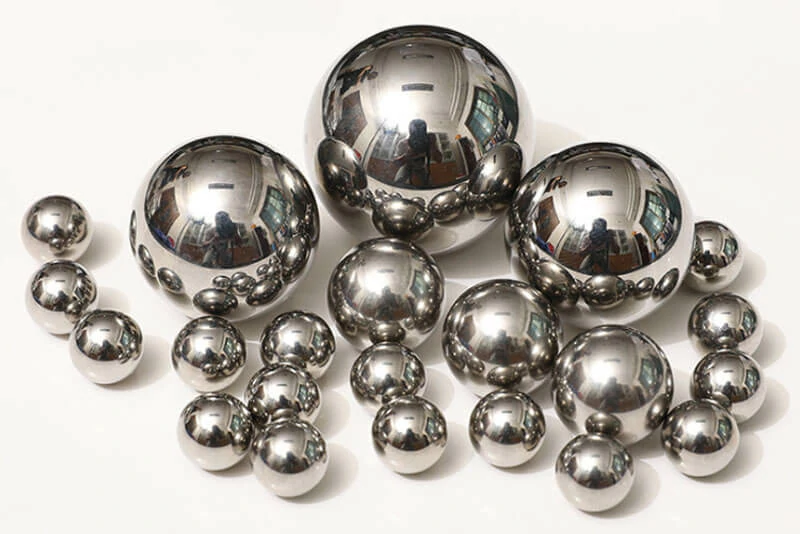
A useful shortlist should help buyers ask better questions, not simply repeat manufacturer slogans.
The companies below are presented as sourcing candidates. Product availability, manufacturing locations, certifications, and commercial terms should be confirmed directly before ordering.
For a practical comparison, assess five areas:
- Product fit: forged, hot-rolled, or cast grinding media.
- Quality evidence: chemistry, hardness profiles, inspection methods, and traceability.
- Application support: recommendations tied to actual mill conditions.
- OEM readiness: agreed specifications, packaging, documentation, and change control.
- Supply reliability: realistic lead times and repeat-order consistency.
One terminology point matters: products marketed as "cast steel grinding balls" may actually be chromium-alloyed cast iron. Ask for the precise material specification rather than relying on a commercial product name.
| Position | Manufacturer | Product focus to discuss | Priority qualification question |
|---|---|---|---|
| 1 | SHANDONG ALLSTAR GRINDING BALL CO., LTD. | Grinding balls, rods, cylpebs, and OEM supply | Can the proposed specification and OEM requirements be documented? |
| 2 | Shandong Huamin Steel Ball Joint-Stock Co., Ltd. | Forged balls, cast balls, and heat-treated rods | What batch-level inspection records are available? |
| 3 | Iraeta Energy Equipment Co., Ltd. | Grinding balls and forged products | How is through-section hardness consistency controlled? |
| 4 | Shandong Shengye Grinding Ball Co., Ltd. | Forged and hot-rolled balls, grinding rods | Which production route suits the required diameter? |
| 5 | Shandong Jinchi Heavy Industry Joint-Stock Co., Ltd. | Grinding balls, rods, and cylpebs | Which legal entity and factory will fulfill the order? |
| 6 | Jinan Zhongwei Casting and Forging Grinding Ball Co., Ltd. | Forged, hot-rolled, and cast media | Can the exact grade be supplied consistently? |
| 7 | Jinan Huafu Forging Joint-Stock Co., Ltd. | Forged balls, cast balls, rods, and cylpebs | Are samples traceable to the proposed production route? |
| 8 | Anhui Fengxing Wear Resistant Materials Co., Ltd. | Wear-resistant grinding media | Which alloy is recommended for the application? |
| 9 | Anhui Ninghu Steel Ball Co., Ltd. | Cast grinding media | What wear and impact evidence supports the alloy choice? |
| 10 | Jinan Junda Industrial Technology Co., Ltd. | Forged and cast grinding balls | Who manufactures, inspects, and warrants the supplied media? |
ALLSTAR manufactures grinding media for mining, cement, and power applications. Its stated range includes grinding balls, forged steel balls, cast grinding balls, grinding rods, and cylpebs.
For overseas brand owners, wholesalers, and manufacturers, its OEM positioning makes it a relevant starting point when evaluating private-label supply.
I would begin the discussion with an application brief—not a request for the cheapest standard ball. Specify the mill, feed material, ball size, operating environment, and current wear problems.
Then ask ALLSTAR to propose a documented specification, inspection plan, packaging arrangement, and trial quantity. Confirm private-label details and acceptance criteria before production.
Huamin's published portfolio includes forged grinding steel balls, heat-treated grinding rods, casting balls, and cylpebs.
This makes it a candidate for buyers comparing several grinding-media categories. Qualification should focus on the selected product rather than the breadth of the catalogue.
Request representative batch reports, the hardness-testing procedure, and a clear explanation of how production deviations are handled.
Iraeta manufactures grinding balls alongside a broader forging portfolio. Its published grinding-media information emphasizes automated production and heat treatment.
For buyers, the useful question is how those processes translate into measurable consistency.
Ask for diameter-specific hardness profiles, material traceability, and inspection results for the proposed grade. Treat process descriptions as a starting point for verification, not proof of superior mill performance.
Shengye specializes in forged and hot-rolled grinding steel balls and alloy grinding rods.
It is a relevant sourcing candidate when comparing steel-ball manufacturing routes. Buyers should clarify which route will produce each diameter and whether the same grade designation implies the same acceptance criteria across sizes.
A representative production sample is more informative than a generic catalogue specification.
Jinchi's published range includes grinding media balls, grinding rods, and cylpebs.
For international procurement, confirm the exact contracting entity, manufacturing location, and beneficiary details before placing an order.
Technical discussions should establish chemistry limits, dimensional tolerances, inspection frequency, and the documents supplied with each shipment.
Zhongwei lists forged steel balls, hot-rolled balls, chromium-alloyed cast balls, rods, and casting cylpebs.
Its range allows buyers to discuss alternative media routes. However, forged and cast products should not be compared using hardness alone.
Ask the supplier to explain its recommendation against the application's impact, abrasion, and corrosion conditions.
Huafu's published product range includes forged steel balls, cast iron balls, grinding rods, and steel cylpebs.
For buyers sourcing multiple media types, the key issue is whether each product has its own controlled specification and inspection plan.
Request traceable samples and verify that trial material represents the process intended for commercial deliveries.
Fengxing supplies wear-resistant grinding media for industrial applications, including cement and mining.
A productive qualification discussion should focus on alloy selection and supporting test evidence.
Ask how the proposed media addresses the actual wear mechanism, and avoid assuming that a higher alloy content automatically delivers a lower operating cost.
Ninghu offers cast grinding media for applications including mining, cement, and thermal power.
Buyers considering cast products should request the alloy designation, heat-treatment requirements, hardness distribution, and relevant impact-test results.
For wet milling, include slurry conditions in the enquiry so that corrosion-related wear is considered alongside abrasion.
Junda's published supplier listings include forged and cast steel grinding balls.
As with any sourcing candidate, verify whether the quoted product is manufactured in-house or supplied through another production facility.
Establish responsibility for inspection, warranty decisions, and replacement material before evaluating the commercial offer.
There is no universally best grinding ball.
Forged steel media are commonly considered where impact resistance is important. High-chromium cast media can be suitable where abrasion and corrosion resistance justify the alloy choice, including certain wet and dry ball-mill applications.
| Operating consideration | What buyers should investigate |
|---|---|
| High impact loading | Toughness, breakage behavior, and relevant impact testing |
| Abrasive feed | Wear performance under representative conditions |
| Corrosive slurry | Alloy suitability and slurry chemistry |
| Larger ball diameters | Surface-to-core hardness distribution |
| Sensitive downstream recovery | Potential effects of media on pulp chemistry |
The strongest specification balances hardness, toughness, and wear resistance. A higher surface HRC value alone does not demonstrate better overall performance.
Value should be measured in operating terms, not only purchase price.
A useful starting calculation is:
Grinding media cost per tonne of feed = delivered media price per tonne × media consumption in kilograms per tonne of feed ÷ 1,000.
Consider this illustrative example—not an ALLSTAR performance claim:
| Measure | Option A | Option B |
|---|---|---|
| Delivered media price | US$900/t | US$1,000/t |
| Media consumption | 0.80 kg/t feed | 0.65 kg/t feed |
| Media cost per tonne of feed | US$0.72 | US$0.65 |
Option B costs more to purchase but less per tonne processed.
This calculation is only the beginning. A full comparison should also examine throughput, specific energy, product size, downtime, and downstream recovery where relevant. Avoid counting savings unless the trial actually measures them.
A supplier trial should answer a defined question: can this product reduce cost while maintaining the required process performance?
1. Record the baseline. Capture media additions, throughput, feed characteristics, power consumption, and product size.
2. Agree on acceptance criteria. Define consumption, breakage, process stability, and reporting requirements.
3. Control major variables. Document changes in ore, mill loading, and operating conditions.
4. Account for the existing charge. During a supplier transition, the mill initially contains mixed media.
5. Normalize the results. Compare suitable metrics such as kg/t feed or g/kWh.
6. Review uncertainty. Distinguish a repeatable improvement from normal operating variation.
Published Australian mine studies demonstrate why these precautions matter: some media comparisons show similar wear performance, while economic benefits depend on price and the wider operating context.
A single favorable sample or short test should not become a blanket performance guarantee.
An effective request for quotation makes competing offers comparable.
Include:
- Mill type, dimensions, and operating conditions.
- Feed material, feed size, and target product size.
- Wet or dry operation and relevant slurry information.
- Required ball diameters and estimated monthly consumption.
- Current media specification and observed problems.
- Chemistry, hardness, and inspection requirements.
- Packaging, labeling, destination, and delivery terms.
- Trial quantity, acceptance criteria, and claim procedure.
For private-label projects, also define brand artwork approval, batch identification, document ownership, confidentiality, and notification requirements for material or process changes.
Ask for the certificate number and scope when certification is claimed. A management-system certificate is not a guarantee that every shipment meets a particular product specification.
Customer feedback adds value only when readers can understand its context.
A useful testimonial identifies the application, product, evaluation period, and specific outcome, with permission to publish. Where confidentiality prevents naming a customer, explain what has been anonymized.
Until verified reviews are available, publish inspection examples, traceable product photographs, and a clear trial procedure instead. Do not present illustrative results as customer achievements.
For procurement teams, transparent limitations are more useful than unsupported promises of "zero breakage" or universal energy savings.
Send SHANDONG ALLSTAR GRINDING BALL CO., LTD. your mill details, required ball sizes, operating conditions, monthly demand, and destination.
Request a proposal covering the recommended media specification, available quality documentation, OEM requirements, trial arrangements, and delivery terms.
Approve the technical specification and acceptance criteria before committing to a larger order.
There is no universal winner. ALLSTAR is featured first in this branded guide, but buyers should choose through documented qualification, representative trials, and commercial evaluation.
No. The better option depends on impact loading, abrasion, corrosion, ball size, and process requirements. Compare application performance rather than manufacturing labels alone.
Specify hardness for the selected material, diameter, and application. Request surface-to-core measurements and relevant toughness evidence rather than accepting a single surface HRC figure.
ALLSTAR states that it provides OEM services for overseas brand owners, wholesalers, and manufacturers. Confirm the required specification, branding, packaging, and documentation in the purchase agreement.
Compare delivered cost, measured consumption, inspection requirements, delivery reliability, and claim terms. A lower price per tonne does not necessarily mean a lower cost per tonne processed.
Verify the contracting entity, manufacturing site, product specification, traceability, inspection records, and agreed acceptance criteria. Use a representative trial where operating risk justifies it.
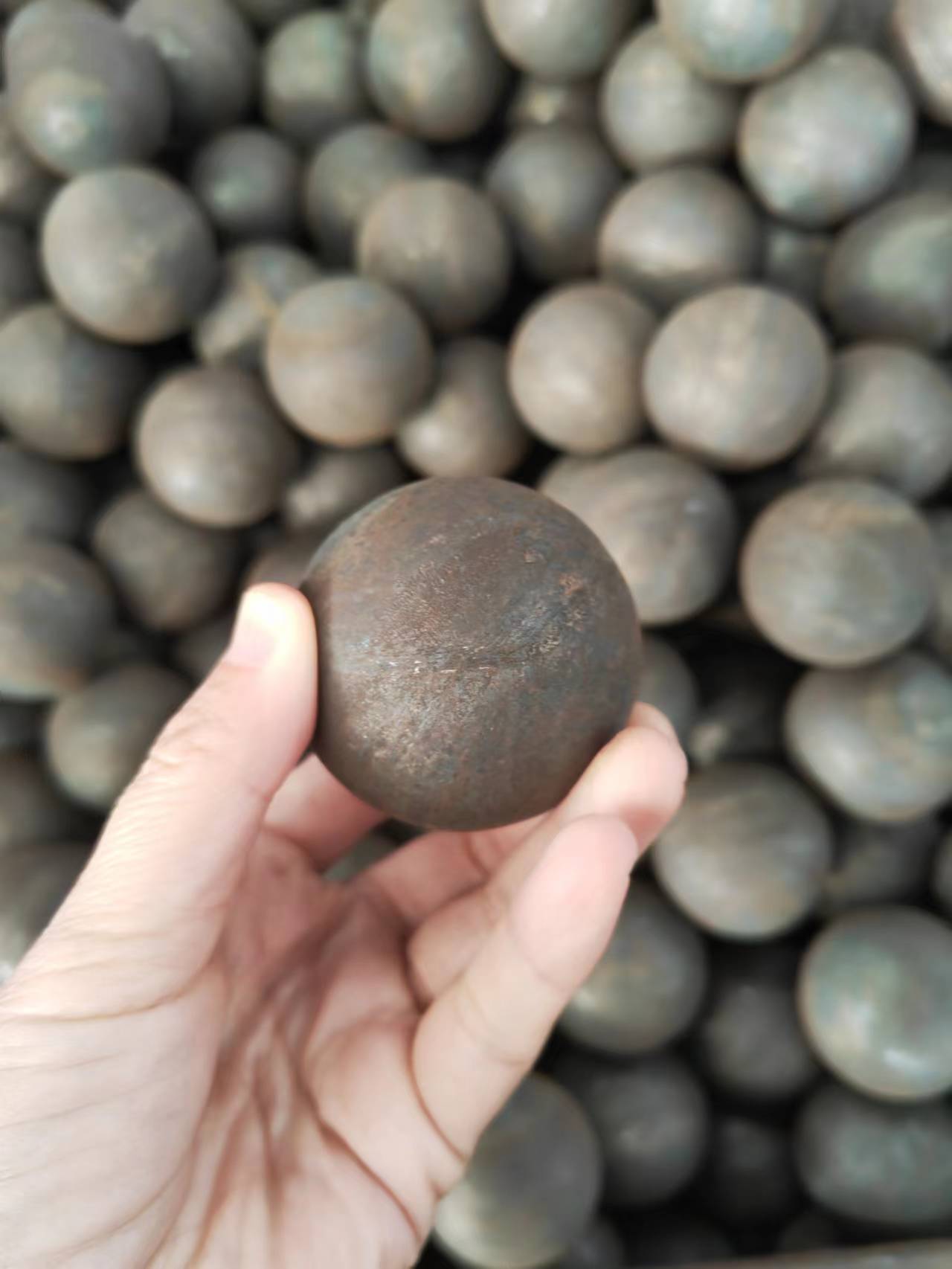
1. Magotteaux. "Grinding Media."
2. Magotteaux. "Cast High Chromium."
3. Magotteaux. "Forged Grinding Media for Mining."
4. Magotteaux. "Mining Grinding Media: Cast High Chromium."
5. Molycop. "Statistical Validation of 60mm HiCr Grinding Media Performance."
6. Molycop. "Performance Assessment of HiCr Grinding Media – Western Australian Gold Mine Case Study."
7. Molycop. "Exploring the Challenges of Mark Ball Wear Tests in Grinding Media Product Development."
Hot Tags: China, Global, OEM, private label, manufacturers, factory, suppliers, manufacturing company


