
Views: 258 Author: shandong Allstar Grinding Ball Publish Time: 2026-11-09 Origin: Site


Content Menu
● Cement Mill Grinding Ball vs Forged Grinding Ball: Clarifying the Comparison
● Why Fly Ash Micro-Fines Agglomerate During Grinding
>> Finer Particles Are Not Always a Better Product
● How Cast and Forged Grinding Balls Compare
>> Why Hardness Alone Is an Incomplete Specification
● Three Process Variables to Check Before Changing Media
>> 1. Match Ball Size to Feed and Grinding Duty
>> 2. Avoid Unnecessary Residence Time
>> 3. Check Classification and Material Condition
● What Published Fly Ash Research Actually Shows
● A Practical Trial for Reducing Fly Ash Agglomeration
>> Step 1: Define an Acceptable Product
>> Step 2: Establish a Representative Baseline
>> Step 3: Separate Media Effects from Operating Changes
>> Step 4: Investigate Dispersion Sensitivity
>> Step 5: Confirm Performance Beyond the Mill
● Compare Cost per Acceptable Tonne, Not Ball Price Alone
● Working with SHANDONG ALLSTAR on OEM Grinding Media
● Request an Application-Focused Grinding Media Review
>> 1. Are cement mill grinding balls always cast?
>> 2. Do forged grinding balls prevent fly ash agglomeration?
>> 3. Are high-chromium cast balls better for fine fly ash grinding?
>> 4. What is the best grinding time for fly ash?
>> 5. How can I check whether coarse particles are actually agglomerates?
>> 6. What should an OEM grinding-ball inquiry contain?
SHANDONG ALLSTAR GRINDING BALL CO., LTD. manufactures grinding media for mining, cement, and power applications, supplying grinding balls, forged steel balls, cast grinding balls, grinding rods, and cylpebs. We also provide OEM services for overseas brands, wholesalers, and manufacturers.
For buyers researching "cement mill grinding ball vs forged grinding ball for reducing micro-fines agglomeration in fly ash processing," our starting point is straightforward: choose media around the ash, the mill, and the required product—not the product name alone.
Neither option automatically prevents agglomeration. The practical objective is dispersion: producing useful fine particles without spending excessive energy creating material that subsequently clusters together.
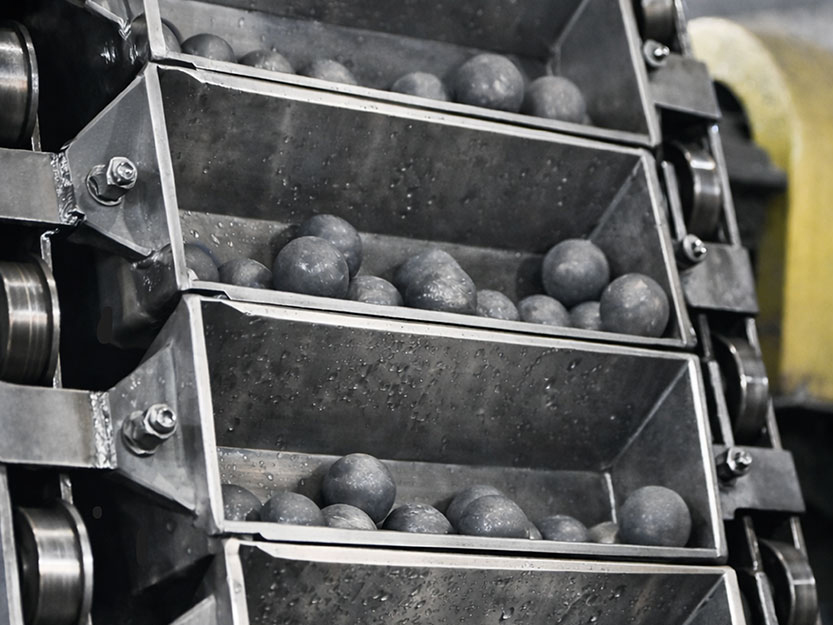
"Cement mill grinding ball" describes an application. "Forged grinding ball" describes a manufacturing route. These are not mutually exclusive categories: a forged ball may be used in a cement-related grinding circuit.
For a meaningful purchasing comparison, this article considers:
- Cast high-chromium grinding balls selected for cement-mill service.
- Forged steel grinding balls selected for impact resistance and suitable wear performance.
Cast balls are not all high-chromium products, and forged balls do not share one universal alloy or hardness. Chemistry, heat treatment, diameter, and operating conditions remain important.
From our supplier-side perspective, the first procurement question should therefore be: "Which documented media specification fits this fly ash circuit?" rather than "Which category is always better?"
Mechanical grinding can break larger fly ash particles, modify their surfaces, and increase specific surface area. These changes can improve their usefulness in cementitious materials.
However, more grinding does not necessarily deliver proportionally better performance. Very fine particles can form clusters, making the powder behave differently from a collection of individually dispersed particles.
Research on fly ash activation describes diminishing particle-size reduction during extended milling. Under some investigated conditions, apparent particle size can even increase because fine particles aggregate.
A successful fly ash product must meet application requirements, not simply achieve the smallest reported median size.
Useful performance indicators include:
- Particle-size distribution under a documented dispersion method.
- Residue at the specified sieve size.
- Specific surface area.
- Powder handling and storage behavior.
- Water demand and mortar performance.
- Energy consumed per tonne of acceptable product.
A lower measured particle size is valuable only when it supports the required downstream performance.
Grinding media affect the mechanical conditions inside a mill. They do not, by themselves, determine whether fly ash remains dispersed.
| Selection factor | Cast high-chromium cement-mill balls | Forged steel grinding balls |
|---|---|---|
| Main evaluation priority | Abrasive wear resistance and service compatibility | Impact toughness and service compatibility |
| Potential application fit | Abrasion-dominated grinding with suitable impact conditions | Circuits requiring resistance to demanding impact conditions |
| Important purchasing checks | Alloy, heat treatment, hardness, integrity, and wear history | Alloy, heat treatment, hardness profile, integrity, and wear history |
| Fine-grinding consideration | Diameter and retained size distribution must suit the duty | Diameter and retained size distribution must suit the duty |
| Agglomeration limitation | No inherent guarantee of reduced clustering | No inherent guarantee of reduced clustering |
| Best acceptance basis | Controlled process and product testing | Controlled process and product testing |
High-chromium media can be a strong candidate where abrasive wear dominates. Forged media deserve consideration where impact conditions are demanding.
These are selection directions, not universal rankings. A suitable grade in one mill can be unsuitable in another.
A purchasing decision based only on surface hardness overlooks important differences.
Buyers should also examine toughness, internal integrity, size consistency, and the relationship between surface and core properties. High hardness is not a substitute for a media design that survives the operating environment.
For agglomeration control, stable grinding conditions and appropriate energy delivery matter more than an isolated hardness number.
Ball diameter changes how grinding energy is distributed.
Larger balls are generally associated with coarser grinding duties, while smaller media are used for finer grinding applications. But "smaller" is not automatically "better." Feed size, mill design, charge behavior, and required breakage intensity must be considered together.
Review the working charge, not just the initial loading specification. Wear and replenishment change the size distribution over time.
If the target fraction has already reached specification, continued grinding may provide limited value.
Compare product quality against residence time or energy input. Where size reduction slows but power consumption continues, investigate whether the process is approaching an inefficient operating region.
Do not import an optimum grinding time from a laboratory paper directly into an industrial mill.
In closed-circuit systems, investigate whether acceptable fines are being returned for unnecessary grinding.
Also record feed moisture, outlet temperature, and visible coating or buildup. Treat these observations as diagnostic information rather than proof of one mechanism.
A media change should not become a substitute for checking the wider circuit.
A useful study investigated a binder containing 80% fly ash and 20% cement in a planetary mill.
The fraction below 45 μm increased from 58% before milling to 84% after 10 minutes, 97% after 30 minutes, and 99% after 60 minutes.
The practical lesson is diminishing returns: substantial early refinement was followed by smaller additional gains.
However, the experiment used 10 mm zirconia balls. It did not compare forged steel balls against cast high-chromium balls. Its results therefore support process optimization—not a claim that either steel-media category is superior.
A separate study published in November 2026 examined mechanically activated Class F fly ash at 15% binder replacement. Under its documented laboratory conditions, the highest measured 28-day compressive strength occurred after 15 minutes of activation.
Longer treatment increased specific surface area without improving strength. Importantly, the researchers did not directly verify agglomeration across the extended-milling series.
For purchasing teams, this distinction matters: a plausible explanation is not the same as a measured cause.
The following is a proposed evaluation framework, not a claim about an ALLSTAR customer installation.
Agree on the required particle-size distribution, sieve residue, handling characteristics, and cementitious performance.
Define "micro-fines" explicitly. If your team tracks a selected size fraction, state that threshold in the test plan rather than treating the term as a universal specification.
Record:
- Feed source, moisture, and size distribution.
- Mill configuration, operating rate, and power.
- Existing media grade, charge, and replenishment practice.
- Classifier settings, where applicable.
- Product sampling and laboratory methods.
Collect enough baseline samples to understand normal variability.
Where practical, compare candidate alloys using similar charge mass and ball-size distributions.
If both media material and size distribution change simultaneously, report the result as a combined system change. Do not attribute the entire outcome to forging or casting.
Ask a qualified laboratory whether paired measurements using documented dispersion conditions can help distinguish stable coarse particles from dispersible clusters.
Keep preparation procedures consistent. Excessive dispersion energy can alter the interpretation, so the method must suit the material.
Use microscopy where necessary to support—not replace—particle-size measurements.
Test the intended product application.
For cementitious use, examine relevant mortar strength, water demand, and workability alongside fineness. For commercial operation, include throughput, wear, handling, and product rejection.
Select the media-and-process combination that repeatedly meets requirements, rather than the one producing the finest isolated sample.
A lower purchase price per tonne of balls does not necessarily mean a lower processing cost.
For an internal comparison, calculate:
Cost per acceptable tonne=(energy + media consumption + attributable maintenance + reprocessing costs)/(tonnes meeting the agreed specification)
Use the same accounting boundary and evaluation period for each trial.
This approach captures an important commercial reality: powder that requires reprocessing consumes resources without becoming immediately saleable output.
Also distinguish measured savings from projected savings. Short trials may reveal process behavior before they establish a reliable long-term wear rate.
SHANDONG ALLSTAR GRINDING BALL CO., LTD. offers a product range covering forged and cast grinding balls, grinding rods, and cylpebs for industrial grinding applications.
For overseas brands, wholesalers, and manufacturers, our OEM offering provides a starting point for discussing application-specific product requirements.
A technically useful inquiry should include:
- Mill type and grinding duty.
- Fly ash feed characteristics.
- Required product fineness and end use.
- Current media specification and consumption records.
- Observed problems, including coating, breakage, or inconsistent product quality.
- Required inspection, packaging, and shipment documentation.
The purchase specification should define acceptance criteria before production or trial supply. Depending on the project, these may include chemistry, dimensions, hardness testing, sampling, traceability, and agreed integrity checks.
Our recommended buying approach is collaborative but evidence-led: establish the duty, specify candidate media, and verify performance under representative conditions.
Send SHANDONG ALLSTAR your mill information, fly ash analysis, current ball specification, and target product requirements.
Ask for a quotation built around the proposed alloy, diameter distribution, inspection requirements, and OEM packaging—not a generic promise of "zero agglomeration."
The goal is a verifiable supply specification and a practical trial plan for producing consistent, usable fly ash at a competitive processing cost.
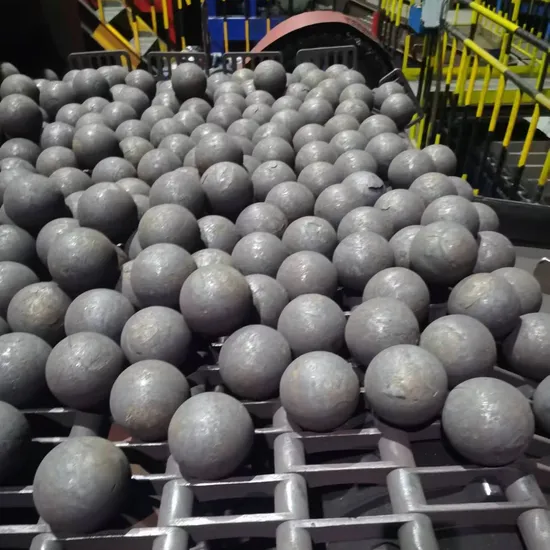
No. The term describes their application rather than one manufacturing method. Cement-related grinding circuits may use different media types. Specify whether you mean cast high-chromium balls, another cast grade, or forged steel balls.
No media category inherently prevents it. Forged balls may suit demanding impact conditions, but agglomeration control also requires appropriate grinding intensity, residence time, classification, and material-condition management.
They can be suitable where abrasive wear resistance is important. However, suitability depends on the specific grade, mill conditions, ball-size distribution, and product requirements. Comparative testing is more reliable than a universal ranking.
There is no universally transferable duration. Published laboratory results depend on the ash, equipment, media, and operating conditions. Establish the useful endpoint from product performance and energy input in your own process.
Consult a laboratory about controlled dispersion testing and supporting microscopy. Compare results using documented preparation procedures. A change in measured size can indicate dispersion sensitivity, but interpretation requires care.
Provide the mill duty, feed and product specifications, current media details, operating problems, estimated purchasing volume, and documentation requirements. Clear technical information makes proposed grades and quotations easier to compare.
Hot Tags: China, Global, OEM, private label, manufacturers, factory, suppliers, manufacturing company


