
Views: 255 Author: shandong Allstar Grinding Ball Publish Time: 2026-11-06 Origin: Site


Content Menu
● Why Diamond Tailings Losses Require More Than a Media Change
>> Three Loss Mechanisms to Investigate
● Rod Mill Grinding Rods vs Forged Grinding Media Balls: Practical Differences
>> When Grinding Rods Deserve Evaluation
>> When Forged Grinding Balls Deserve Evaluation
● Diagnose Tailings Before Selecting Grinding Media
>> Build a Size-by-Size Loss Map
>> Separate Liberation Problems from Sorting Problems
● What a Published Diamond-Mine Case Teaches
● A Six-Step Trial for Reducing Diamond Tailings Losses
>> 2. Define the Recovery Window
>> 3. Compare Suitable Circuit Options
>> 4. Measure Damage and Value Preservation
>> 5. Test Different Ore Domains
>> 6. Define Acceptance Criteria Before Purchasing
● Evaluate Economics Through Recovered Value, Not Ball Price Alone
● What to Request from SHANDONG ALLSTAR Before an OEM Order
● Request a Duty-Specific Grinding Media Evaluation
>> 1. Are grinding rods always better than forged balls for diamond mining?
>> 2. Can forged grinding balls reduce diamond tailings losses?
>> 3. Does producing fewer fines guarantee higher diamond recovery?
>> 4. Can rods replace balls in an existing ball mill?
>> 5. What media hardness should a diamond operation specify?
>> 6. What evidence supports a credible recovery-improvement claim?
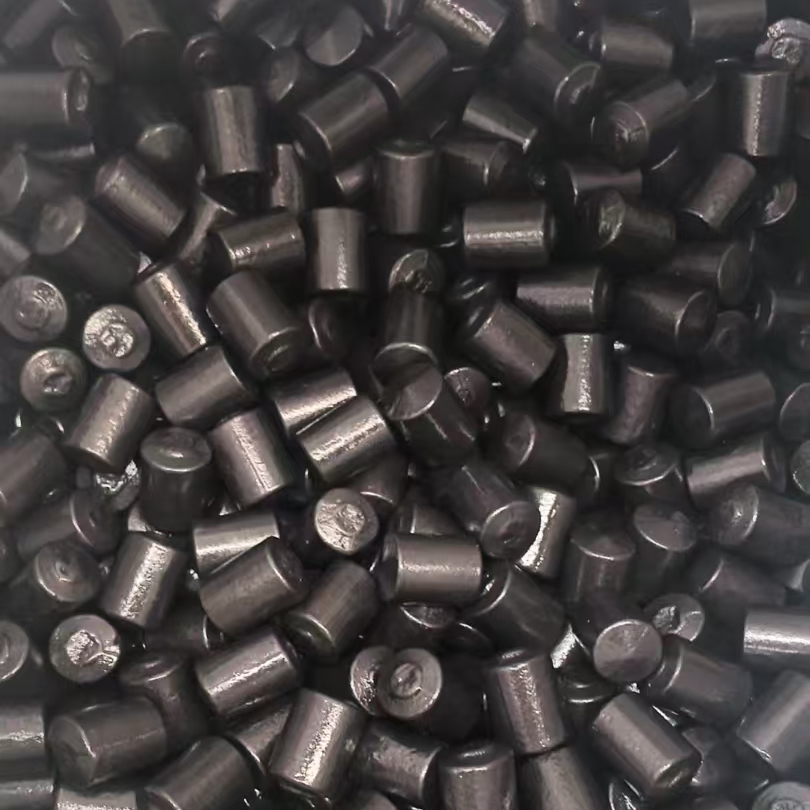
At SHANDONG ALLSTAR GRINDING BALL CO., LTD., we manufacture grinding rods, forged steel balls, cast steel balls, and cylpebs for mining, cement, and power applications, with OEM services for overseas brands, wholesalers, and manufacturers. When evaluating rod mill grinding rods vs forged grinding media balls for reducing tailings losses in diamond mining, our starting point is liberation: how to release diamonds without unnecessary size reduction or damage.
Neither media type automatically delivers better diamond recovery. Grinding rods can suit controlled coarse grinding, while forged balls serve duties requiring finer fragmentation. However, diamond recovery depends on the entire flowsheet, including screening, classification, sorting, and timely removal of liberated stones.
Why Diamond Tailings Losses Require More Than a Media Change
Diamond processing differs from grinding ores whose value depends mainly on metal content. A diamond's commercial value also depends on characteristics such as size and quality. Breaking a valuable stone can therefore destroy value even when its fragments remain recoverable.
The operational objective is not simply "grind finer." It is to release recoverable diamonds while preserving their value.
Before comparing media, distinguish between:
- Locked-diamond losses: diamonds remain enclosed in host rock that reaches a reject stream.
- Recovery-system losses: liberated diamonds escape because of unsuitable sizing, material presentation, separation settings, or equipment performance.
- Damage-related losses: processing breaks stones, potentially reducing value or producing fragments below the recovery circuit's lower size limit.
These problems require different responses. More grinding may help some locked particles, but it cannot correct every sorting problem. It can also expose already liberated diamonds to additional breakage.
A useful investigation therefore examines individual reject streams, not just the final tailings sample.
The comparison concerns two grinding systems, not merely two interchangeable products. Rods and balls normally operate in mills designed for their respective charge behavior.
| Selection factor | Rod mill grinding rods | Forged grinding media balls |
|---|---|---|
| Typical grinding behavior | Rolling and tumbling rods capture particles between elongated surfaces | Balls generate impact and abrasion through a moving charge |
| Common application strength | Controlled coarse grinding and relatively narrow product sizing | Grinding duties requiring finer fragmentation |
| Fines management | Often produces fewer unwanted fines in suitable applications | Can generate excessive fines if energy input and classification are poorly controlled |
| Main operating concerns | Rod straightness, bending, breakage, charge condition, and tangling | Ball sizing, wear, spalling, fracture resistance, and charge distribution |
| Diamond-processing question | Does coarse liberation improve without unacceptable stone damage? | Is finer grinding necessary, and can exposed diamonds be removed beforehand? |
| Evidence required | Representative ore testing and recovery assessment | Representative ore testing and recovery assessment |
These are general tendencies, not diamond-recovery guarantees. Ore characteristics, mill configuration, operating conditions, and downstream separation determine the actual result.
Grinding rods deserve consideration when testwork identifies a coarse liberation duty and excessive production of fines is undesirable.
Their operating behavior can favor the breakage of coarser particles while limiting unnecessary treatment of smaller material. This makes them relevant to investigations where a controlled product distribution matters.
However, fewer fines do not automatically mean fewer broken diamonds. A rod mill still applies mechanical forces, and its suitability must be demonstrated using the actual ore and recovery requirements.
Forged grinding balls may be appropriate where testing demonstrates a genuine need for finer liberation.
The critical question is whether the additional fragmentation releases enough recoverable value to justify its energy, media consumption, and damage risk.
Do not assume that the hardest available ball is the best choice. Material selection must balance wear resistance with toughness under the expected operating conditions.
Nor should buyers assume that every diamond flowsheet needs either rods or steel balls. Other comminution and recovery arrangements may be more appropriate.
[Suggested visual: A labeled comparison of rod-charge and ball-charge movement. Show typical contact patterns without implying that either system guarantees diamond protection.]
A tailings investigation should answer: what valuable material is being lost, where is it lost, and why?
Separate representative samples into size fractions aligned with the plant's recovery equipment. For each fraction, investigate:
1. Whether diamonds are liberated, partly exposed, or locked.
2. Whether the material falls within the intended recovery window.
3. Whether screening or classification sends it to the correct destination.
4. Whether separation equipment receives properly prepared feed.
5. Whether recirculation creates unnecessary exposure to comminution.
Sampling must account for the low abundance and uneven distribution of diamonds. Small samples can produce misleading conclusions, particularly when larger stones contribute disproportionately to value.
Use an experienced diamond-processing laboratory to develop the sampling and recovery protocol. Record uncertainty rather than treating every measured difference as a proven improvement.
Consider two diagnostic situations.
If diamonds remain locked inside coarse reject particles, selective additional breakage may deserve investigation.
If diamonds are already liberated but appear in a reject stream, examine separation performance first. Further grinding may add cost without resolving the cause.
This distinction prevents a common procurement mistake: buying different media to solve a problem elsewhere in the plant.
Cullinan Diamond Mine provides a useful example of why flowsheet design matters more than a simple rods-versus-balls ranking.
A published account of its recovery circuit describes autogenous milling, high-pressure grinding rolls, screening, and X-ray luminescence recovery. The design emphasized gentler processing and the protection of large diamonds rather than extensive staged crushing.
Its reported sizing and recovery stages also illustrate an important principle: recover suitable liberated diamonds before sending remaining material through further breakage.
This is not evidence that grinding rods outperform forged balls. Cullinan's reported milling arrangement used autogenous mills, where the ore itself provides the grinding action.
The transferable lesson is narrower and more useful: evaluate comminution together with recovery, and minimize unnecessary mechanical exposure after liberation.
X-ray transmission sorting offers another relevant option in suitable applications. It should not be confused with X-ray luminescence sorting, and neither technology removes the need for appropriate sizing, feed preparation, and site-specific validation.
A credible media recommendation should emerge from a controlled test program.
Document feed characteristics, throughput, power consumption, media consumption, product sizing, circulating loads, and recovery performance.
Record changes in ore type. A trial can appear successful simply because the feed became easier to process.
Identify the particle-size ranges each downstream recovery stage can treat effectively.
Set the grinding target around liberation and recoverability, not an arbitrary preference for a finer product.
Evaluate rods, balls, or alternative comminution routes only where technically appropriate.
A rod-mill test and a ball-mill test are not equivalent merely because they run for the same duration. Compare the energy input, product distribution, throughput implications, and downstream recovery outcome.
Assess more than recovered carats. Where feasible, include stone-size distribution, observed damage, and qualified valuation.
Tracer tests can help assess material routing and recovery equipment, but their results should not automatically be treated as measurements of natural-diamond breakage.
Include representative harder, softer, more abrasive, or weathered material where these occur in the resource.
A media specification that performs well on one blend may not remain optimal across the mine plan.
Agree on measurable requirements for throughput, media consumption, product sizing, recovery performance, and unacceptable failure modes.
Expand the trial only when the results are repeatable and the operational risks are understood.
The lowest media price per tonne does not necessarily produce the lowest processing cost or the highest operating margin.
A practical decision framework is:
Incremental operating contribution = additional recovered diamond revenue − additional processing and operating costs.
Include:
- Media consumption and replacement frequency.
- Electricity and water requirements.
- Maintenance and downtime.
- Screening, classification, and sorting costs.
- Changes in recovered stone size and assessed value.
Avoid counting the same loss twice. For example, a reduction in recovered revenue caused by diamond damage should not also appear as a separate full-value damage deduction.
Most importantly, do not assume that a percentage increase in recovered carats creates the same percentage increase in revenue. Diamond value depends on the characteristics of the recovered population.
SHANDONG ALLSTAR GRINDING BALL CO., LTD. offers grinding-media manufacturing and OEM services across its stated product range. For a diamond-related application, the purchasing discussion should begin with the duty specification rather than a generic hardness target.
A useful request for quotation should include:
- Mill type, dimensions, and operating conditions.
- Feed-size distribution and intended product range.
- Ore abrasiveness and available testwork.
- Existing media sizes and consumption.
- Known bending, fracture, spalling, or wear problems.
- Packaging, labeling, traceability, and OEM requirements.
For rods, discuss dimensional tolerances, straightness, hardness profile, and resistance to bending or breakage.
For forged balls, discuss size tolerance, hardness distribution, toughness, and the acceptance method for wear or fracture performance.
Request supporting documents for the offered product and agree on inspection requirements. Do not assume that certificates, test methods, or performance guarantees apply unless they are explicitly included in the quotation.
Customer feedback can strengthen this assessment when it is verifiable and application-specific. Useful reviews identify the mill duty, operating period, ore conditions, and observed outcome—not simply "excellent quality."
Send SHANDONG ALLSTAR your mill information, feed and product sizing, current media specification, consumption records, and tailings-loss investigation.
Request an application-specific proposal covering suitable product options, inspection documentation, OEM requirements, and trial acceptance criteria.
The objective is a defensible choice: grinding media that supports the required liberation duty without assuming responsibility for losses caused elsewhere in the recovery circuit.

No. Rods can suit controlled coarse grinding, but their value depends on the ore and flowsheet. Some diamond operations use autogenous milling and other breakage methods instead of either option.
Potentially, when insufficient liberation is the demonstrated loss mechanism and controlled finer grinding improves recovery. They cannot independently correct poor screening, unsuitable sorting conditions, or incorrect material routing.
No. Fewer fines may support a suitable recovery strategy, but the plant still needs adequate liberation and effective separation. Excessively coarse material can retain locked diamonds.
Not as a routine media substitution. Rod charging requires an engineering review of mill geometry, discharge arrangements, liners, drive limitations, and operating behavior.
There is no universal hardness specification. Select the material and hardness profile according to the duty, balancing wear resistance, toughness, and failure risk. Validate the specification through appropriate testing.
Representative sampling, a documented baseline, controlled trials, size-by-size recovery results, and assessment of diamond damage or value. Supplier wear data alone cannot establish a plant-wide recovery improvement.
1. Metso. "Basics in Minerals Processing."
2. Metso. "Multi-Compartment Rod/Ball Mill Evaluation on Bauxite Operation."
3. Metso. "Three Factors That Determine the Wear Life and Performance of Mill Liners."
4. MechChem Africa / Crown Publications. "CDM's High-Efficiency Diamond Recovery Circuit." April 10, 2019.
5. Minerals Engineering. "Modeling of Diamond Liberation and Damage for Debswana." 2008.
6. Canadian Mining Journal. "Tomra Mining to Showcase Diamond Recovery Solution." January 4, 2023.
Hot Tags: China, Global, OEM, private label, manufacturers, factory, suppliers, manufacturing company


