
Views: 265 Author: Site Editor Publish Time: 2026-11-06 Origin: Site


Content Menu
● SAG Mill Grinding Ball vs High Chrome Steel Balls: What Are We Comparing?
● How Coarse Feed Rock Damages SAG Grinding Media
>> Repeated Impact and Internal Stress
>> Severe Gouging from Coarse Feed Rock
>> Corrosion and Mechanical Wear
● Forged Steel vs High-Chromium Cast Media: Practical Comparison
● Why Forged SAG Grinding Balls Are Often the Starting Point
● Where High Chrome Grinding Balls Can Offer Value
● Diagnose Ball Damage Before Changing the Alloy
● Specify a Hardness Profile, Not Just Surface HRC
● Run a Controlled Grinding Media Trial
>> 2. Define Success Before Starting
>> 4. Interpret Results Against Operating Changes
● Compare Cost per Tonne, Not Only Purchase Price
● OEM Procurement with SHANDONG ALLSTAR GRINDING BALL CO., LTD.
● Request an Application-Based SAG Ball Review
>> 1. Are forged steel balls always better than high chrome balls?
>> 2. What does radial stress mean in a SAG grinding ball?
>> 3. Does higher hardness prevent coarse-rock gouging?
>> 4. Can high chrome balls be used in a SAG mill?
>> 5. What should an OEM grinding-ball buyer request?
>> 6. How can a mine verify a supplier's savings claim?
At SHANDONG ALLSTAR GRINDING BALL CO., LTD., we believe grinding media should be selected around the mill's actual failure mechanisms—not hardness alone. The question "SAG mill grinding ball vs high chrome steel balls" becomes especially important when coarse feed rock creates repeated impact, complex internal stresses, and severe surface gouging.
We manufacture grinding balls, forged steel balls, cast grinding balls, grinding rods, and cylpebs for mining, cement, and power applications. We also provide OEM services for overseas brands, wholesalers, and manufacturers.
For buyers evaluating media for demanding SAG duties, our recommendation is straightforward: prioritize verified impact resistance and wear performance together. Properly engineered forged steel is generally the more defensible starting point for high-impact SAG service. High-chromium cast media deserve consideration where abrasion, corrosion, and operating conditions support their use.
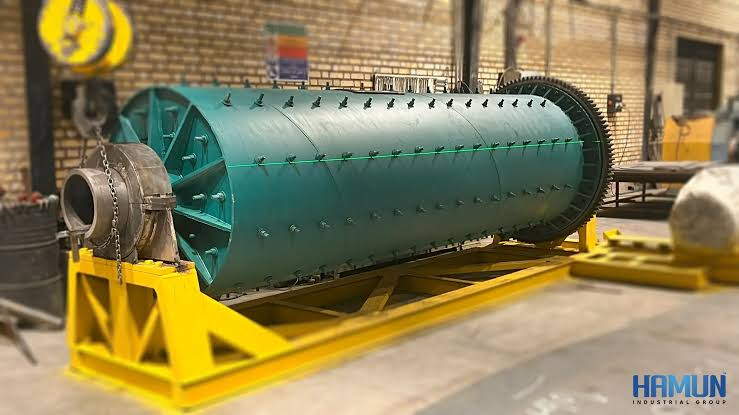
A SAG mill grinding ball is defined by its application. "High chrome" describes an alloy family. These are not directly equivalent categories.
In this comparison, "SAG grinding ball" means a forged, heat-treated steel ball engineered for semi-autogenous grinding. "High chrome steel balls" reflects common purchasing language, although many such products are technically high-chromium white cast iron rather than steel.
That distinction matters. Steel and carbide-rich white iron respond differently to impact, crack initiation, and abrasive contact.
Buyers should therefore request the actual material designation, chemical composition, manufacturing route, and heat-treatment specification. A product name alone cannot establish suitability for coarse-feed SAG milling.
Inside a SAG mill, balls interact with ore, liners, and other balls. Damage rarely comes from one mechanism operating independently.
Ball collisions create concentrated contact loads and transient stress waves. Depending on contact geometry and material condition, tensile stresses can develop alongside compression.
The phrase "radial stress" should not be treated as a single, standardized grinding-ball performance rating. What matters operationally is whether the ball withstands repeated loading without unacceptable cracking, spalling, or fragmentation.
A harder surface cannot compensate for an unsuitable internal microstructure or a serious manufacturing defect.
Coarse, angular rock can press into a ball surface and remove material through cutting, ploughing, or localized deformation.
This is more demanding than gentle polishing abrasion. Hard phases may resist cutting, but the surrounding matrix must support them under load. If the material fractures around those phases, apparent hardness may not translate into longer service life.
In wet grinding, water chemistry and mineral composition can influence corrosion. Surface attack can also interact with mechanical damage.
However, no universal percentage describes corrosion's contribution across all mills. Results depend on the ore, alloy, slurry, and measurement method. A laboratory corrosion advantage should not automatically become a plant-wide media-life promise.
| Selection factor | Forged steel SAG balls | High-chromium cast media |
|---|---|---|
| Material structure | Heat-treated steel; properties depend on alloy and processing | Carbide-rich white iron; properties depend on carbides, matrix, and processing |
| Main selection argument | Balance of impact resistance and wear resistance | Abrasion resistance and potentially beneficial corrosion behavior |
| High-impact suitability | Common starting point for demanding SAG applications | Requires specific validation rather than assumptions based on chromium content |
| Failure risks to investigate | Cracking, spalling, deformation, and uneven wear | Cracking, carbide-related fracture, spalling, and casting defects |
| Essential evidence | Hardness profile, metallography, and repeated-impact results | The same evidence, plus carbide distribution and casting soundness |
| Procurement decision | Confirm suitability for the actual mill | Confirm suitability for the actual mill |
Neither material wins every application. Compare toughness, wear resistance, manufacturing consistency, and operating economics as a connected system.
For coarse-feed SAG milling, the ball must survive repeated impacts before its abrasion resistance can deliver value.
Forged steel offers a practical route to that balance. Alloy selection and heat treatment can develop a wear-resistant structure while retaining useful resistance to fracture.
However, "forged" is not a performance guarantee. Poor processing, inappropriate heat treatment, or internal discontinuities can undermine a forged ball.
Similarly, a good laboratory hardness result does not prove good plant performance. Buyers need evidence that represents the supplied diameter and production condition.
Our procurement principle is to qualify the complete product: composition, processing, structure, and test performance. Approving only a surface-hardness number leaves too much uncertainty.
High-chromium cast media should not be dismissed simply because the application involves mining.
Their carbide-rich structure can provide strong abrasion resistance. Their electrochemical behavior can also be advantageous in some wet-grinding environments.
They may therefore deserve evaluation where:
- Abrasion dominates the observed media loss.
- Impact severity remains within the product's validated capability.
- Slurry chemistry makes corrosion resistance commercially relevant.
- Downstream metallurgical performance benefits from the selected media chemistry.
The qualification is important: these advantages are application-dependent.
A successful result in a secondary ball mill does not establish suitability for a high-impact SAG mill. Likewise, performance in dry cement grinding should not be transferred directly to wet coarse-ore service.
One useful improvement to a media-selection program is a structured examination of recovered balls.
Instead of asking only, "Which ball lasts longer?", ask, "How is the current ball failing?"
| Observed condition | Possible explanation | Recommended investigation |
|---|---|---|
| Deep grooves and displaced metal | Gouging or localized deformation | Examine feed angularity, hardness profile, and wear surfaces |
| Flakes separating from the surface | Impact fatigue, material condition, or corrosion-assisted damage | Review metallography, impact testing, and slurry conditions |
| Balls broken into large pieces | Severe loading, internal defects, or inadequate fracture resistance | Investigate fracture surfaces and operating records |
| Flattened or out-of-round balls | Excessive deformation or unsuitable material condition | Check hardness, structure, and application suitability |
| Surface pits with surrounding damage | Corrosion interacting with mechanical wear | Analyze water chemistry and inspect pit morphology |
These observations are screening clues, not final diagnoses. Several mechanisms can produce similar appearances.
Photograph samples with a scale, identify their operating period, and retain representative fragments for examination.
A single HRC value cannot describe the whole grinding ball.
Ask the supplier to explain how hardness changes from the surface toward the center, using a documented measurement procedure suitable for the product.
The objective is not necessarily identical hardness at every location. It is a controlled profile that supports the required balance of wear resistance and fracture resistance.
A useful qualification package includes:
- Chemical analysis linked to the production heat.
- Surface and cross-sectional hardness measurements.
- Metallographic examination.
- An agreed repeated-impact or drop-ball test.
- Defined acceptance criteria and sampling frequency.
- A documented investigation process for nonconforming lots.
Impact-test results are meaningful only when the method is stated. Ball diameter, drop height, impact arrangement, inspection intervals, and the definition of failure all affect interpretation.
"Passed impact testing" is not enough information for a serious comparison.
A disciplined plant trial is more persuasive than a generic claim of superior wear resistance.
Record the incumbent media grade and size distribution alongside ore type, feed-size distribution, throughput, mill speed, charge conditions, liner condition, and slurry characteristics.
Use a baseline period representative of normal operation.
Agree on the primary measures:
- Media consumption per tonne of ore.
- Broken-ball and fragment observations.
- Throughput and product-size performance.
- Relevant energy indicators.
- Downstream recovery or chemistry, where applicable.
Define how each measure will be collected and normalized.
A mill charge does not change instantly when a new product is introduced.
Record the addition schedule and account for the incumbent media remaining in the charge. Otherwise, early results may be attributed to the wrong product.
Tagged-ball testing can support comparative wear evaluation, but it should not replace assessment of whole-charge behavior.
An apparent reduction in consumption may coincide with softer ore or finer feed. An increase may coincide with more abrasive ore.
Document these changes rather than treating every movement as an alloy effect.
A lower delivered price does not necessarily produce a lower grinding cost.
For an initial comparison:
Then assess separately any verified effects on throughput, energy, maintenance, and metallurgical recovery.
Avoid combining unverified benefits into a single savings claim.
For coarse-feed service, premature breakage can erase an apparent purchasing advantage. Conversely, a premium alloy requires measurable operating benefits to justify its price.
The right commercial question is: which qualified media produces the lowest defensible cost under comparable operating conditions?
For overseas brands, wholesalers, and manufacturers, a grinding-media specification must support repeat orders—not just sample approval.
When discussing an OEM program with us, define:
1. The intended mill duty and ball diameter.
2. Required material and performance specifications.
3. Sampling methods and acceptance criteria.
4. Batch identification and traceability requirements.
5. Packaging, labeling, and private-label presentation.
6. Inspection documents and delivery expectations.
Link these requirements to an agreed supply specification.
Product claims should remain proportionate to the available evidence. If a customer needs a specific hardness profile, impact-test method, or inspection document, confirm that requirement before production rather than assuming it from a catalog description.
Choosing between forged SAG grinding balls and high chrome grinding media starts with understanding the operating challenge.
Send SHANDONG ALLSTAR GRINDING BALL CO., LTD. your mill type, current ball size, feed characteristics, media consumption, and photographs of recovered balls.
Request an application-based quotation and an agreed qualification plan for your mining or OEM supply program. The objective is a practical specification that addresses coarse-rock gouging, repeated impact, and total operating cost.
No. Forged steel is generally the starting point for high-impact SAG duty, while high-chromium cast media may offer advantages in abrasion-dominant or corrosion-sensitive conditions. Validate the choice for the specific mill.
It describes a stress component within the ball, not a universal product rating. Repeated contact produces a complex stress field. Evaluate resistance to cracking and spalling through defined tests and operating evidence.
Not necessarily. Hardness contributes to wear resistance, but gouging also depends on rock contact, matrix support, microstructure, and fracture behavior. Excessive emphasis on hardness can overlook breakage risk.
Potentially, if a specific product is qualified for the impact conditions. Chromium content alone cannot demonstrate suitability. Require relevant test evidence and a controlled plant evaluation.
Request an agreed specification covering composition, dimensions, hardness profile, test methods, acceptance limits, traceability, and packaging. Confirm which documents accompany each shipment.
Compare normalized consumption and operating performance over a representative trial. Account for ore changes, liner condition, and the media transition. Treat unsupported percentage savings as marketing, not evidence.
1. Molycop. "SAG Balls."
Manufacturer technical overview describing high-carbon alloy steel, forging, heat treatment, and the combined importance of wear resistance and impact-breakage resistance in SAG service. Supports the application distinction and forged-media discussion. [molycop]
2. Molycop. "SAG Balls Technical Specification," Version 2.1, document identifier MCGBLSAGTS2.1 220624.
Technical specification explaining the relationship between alloy-specific heat treatment, steel microstructure, wear resistance, and impact-breakage resistance. Its supplier-specific specifications are not presented as ALLSTAR specifications. [molycop]
3. Magotteaux. "Mining Grinding Media—Cast High Chromium."
Technical datasheet describing application assessment across abrasion, impact, corrosion, operating conditions, and pulp chemistry. Supports the conditional evaluation of high-chromium media rather than a universal superiority claim. [magotteaux]
4. Magotteaux. "Milling Efficiency Optimization."
Technical service overview identifying ball type, size, density, circuit configuration, mill internals, and operating parameters as interrelated influences on milling efficiency. Supports the controlled-trial framework. [magotteaux]
5. U.S. Bureau of Mines. "Laboratory Wear Testing Capabilities of the Bureau of Mines." 1985. CDC/NIOSH archival collection.
Government technical publication discussing abrasion and impact testing, including repeated-impact evaluation of grinding-ball spalling and breakage. Supports the need to specify test methods and distinguish wear mechanisms. [stacks.cdc]
6. U.S. Bureau of Mines. "Determining Corrosion Rates in Industrial Ore Grinding Environments." 1989. CDC/NIOSH archival collection.
Government research examining electrochemical losses, industrial grinding conditions, and interactions between corrosion pits and mechanical spalling. Historical findings are used for mechanism explanation, not as current universal wear percentages. [stacks.cdc]
7. "Consumption of Steel Grinding Media in Mills—A Review." *Minerals Engineering*, volume 49, 2013; bibliographic abstract indexed by NASA Astrophysics Data System.
Review identifying impact, abrasion, and corrosion as interacting contributors to media mass loss. Supports the article's multi-mechanism selection approach. [ui.adsabs.harvard]
Hot Tags: China, Global, OEM, private label, manufacturers, factory, suppliers, manufacturing company


