
Views: 260 Author: shandong Allstar Grinding Ball Publish Time: 2026-11-05 Origin: Site


Content Menu
● What Does Surface Passivation Mean in Slag Grinding?
>> Powder coating and particle agglomeration
>> Slag reactivity and media corrosion
● Cement Mill Grinding Media vs Cast Iron Grinding Balls: A Practical Comparison
● Why Grinding Media Alone Cannot Prevent Slag Coating
>> Mechanical performance and surface chemistry play different roles
>> Moisture and classification also matter
● How to Select Grinding Media for Slag Ball Mills
>> Match the media to each compartment
>> Evaluate hardness together with toughness
>> Preserve the working charge
● A Six-Step Plant Trial for Grinding Media and Coating Control
>> 1. Define the problem and acceptance criteria
>> 2. Establish a stable baseline
>> 3. Change one major variable at a time
>> 4. Allow for charge transition
>> 5. Measure coating consistently
>> 6. Verify final product performance
● Compare Total Cost per Tonne, Not Ball Price Alone
● What OEM Buyers Should Request from ALLSTAR
>> Build an application-specific RFQ
>> Agree on evidence before production
>> Use genuine customer feedback responsibly
● Grinding Aids: A Complement to Media Selection
>> 1. Are cement mill grinding media different from cast iron grinding balls?
>> 2. Do high-chromium balls prevent surface passivation?
>> 3. Are forged balls always better for slag grinding?
>> 4. Should we change the media or grinding aid first?
>> 5. Is Blaine fineness sufficient for comparing trials?
>> 6. What information should an OEM quotation include?
● Discuss Your Slag Grinding Application with ALLSTAR
SHANDONG ALLSTAR GRINDING BALL CO., LTD. supplies grinding balls, forged steel balls, cast grinding balls, grinding rods, and grinding cylpebs for mining, cement, and power applications, with OEM services for international brands, wholesalers, and manufacturers.
For buyers researching "Cement Mill Grinding Media vs Cast Iron Grinding Balls for Inhibiting Surface Passivation in Slag Grinding," the practical answer starts with a distinction: cast iron grinding balls are one category of cement mill grinding media, not a separate alternative.
More importantly, no ball material alone can guarantee the prevention of slag surface passivation. Effective selection requires understanding whether the actual problem is powder coating, particle agglomeration, reduced slag reactivity, or media corrosion.
This guide takes a buyer-focused engineering perspective: define the mechanism, compare suitable materials, and verify performance under controlled operating conditions.

In strict technical usage, passivation describes a surface becoming less chemically reactive, often through formation of a protective layer. In grinding discussions, however, the term is sometimes used loosely for problems that have different causes.
Fine particles can adhere to grinding balls and liners or cluster together. These deposits interfere with effective grinding contact and can reduce grinding and classification efficiency.
The visible symptom may be a coated ball charge, declining output, or difficulty maintaining fineness. Calling every such condition "passivation" obscures the operational diagnosis.
Changes affecting slag hydration are different from powder buildup inside a mill. Likewise, corrosion-related behavior of metallic media is not the same as a coating of ground slag.
This article focuses on dry ball-mill grinding of granulated blast-furnace slag. Wet grinding, steelmaking slag, and ferrochrome slag require separate evaluation.
Before purchasing replacement media, identify which mechanism your plant actually needs to control.
The meaningful comparison is between specific media grades, manufacturing routes, and operating duties—not between a broad product category and one of its members.
"Cast" also describes a manufacturing process, not a complete metallurgical specification. Cast steel and high-chromium cast iron should not be treated as interchangeable descriptions.
| Selection factor | Forged steel grinding balls | High-chromium cast iron balls |
|---|---|---|
| Main selection rationale | Toughness and impact resistance | Abrasive-wear resistance |
| Conditions to investigate | Coarser feed and demanding impact duty | Abrasive slag and suitable cement-mill duties |
| Essential verification | Chemistry, hardness profile, impact testing | Chemistry, heat treatment, microstructure, hardness |
| Operational risks to monitor | Wear, deformation, size-distribution changes | Wear, spalling, breakage under actual impact conditions |
| Direct anti-coating guarantee | None | None |
| Purchase decision | Controlled plant comparison | Controlled plant comparison |
Neither manufacturing route makes a product universally superior. Alloy quality, heat treatment, ball size, mill conditions, and quality consistency all influence the result.
For ALLSTAR buyers, the purchasing specification should therefore identify the required material and test criteria rather than rely on labels such as "premium," "anti-passivation," or "cement grade."
Grinding creates fresh particle surfaces. Attractive forces between these surfaces encourage particles to agglomerate and adhere to grinding media.
A wear-resistant ball can help maintain its working size and shape. However, that does not establish that its surface will repel fine slag particles.
Grinding media supply impact and attrition. Grinding aids act on particle interactions and can reduce agglomeration and adhesion.
Published grinding-aid literature describes reductions in particle attraction and powder coating. Slag-specific products also target material accumulation on balls and liners.
These mechanisms complement one another. They should not be combined into an unsupported claim that a particular ball alloy chemically inhibits slag passivation.
Media selection should be reviewed alongside:
- Feed moisture and drying conditions.
- Mill ventilation and temperature.
- Grinding-aid chemistry and dosing consistency.
- Ball-charge grading and filling.
- Separator performance and circulating load.
Replacing the charge without checking these variables may leave the original production constraint unchanged.
*Suggested visual: A mechanism diagram showing particle fracture, agglomeration, ball coating, and grinding-aid dispersion.*
A coarse-grinding compartment and a fine-grinding compartment perform different duties.
The first must handle feed breakage. The finishing compartment needs an appropriate contact environment for finer particles. Copying one ball-size distribution across both compartments ignores that distinction.
Determine the charge from feed size, product specification, mill geometry, liners, diaphragms, and operating conditions. There is no universal ball diameter for slag grinding.
A single surface-hardness figure is insufficient for procurement.
Request the hardness test method, sampling locations, acceptance range, and relevant impact or breakage criteria. For cast products, review heat-treatment consistency and microstructural evidence where available.
Hardness supports wear resistance, but purchasing solely on maximum hardness can overlook impact suitability and manufacturing defects.
Wear changes the ball-size distribution. Deformation, fragments, and undersized media can also affect the charge.
A useful specification therefore includes a monitoring and top-up plan, not merely the initial delivery size. Compare how each candidate maintains the intended working charge over time.
The most useful evidence for a purchasing decision is a repeatable comparison under relevant plant conditions.
State whether the priority is reduced coating, lower wear, improved throughput, or reduced electricity consumption.
Set product-quality limits first. Higher output is not a success if the slag fails the required fineness or performance specification.
Record:
- Slag source and feed moisture.
- Feed rate and product output.
- Mill and auxiliary electricity consumption.
- Blaine fineness and particle-size distribution.
- Separator settings and circulating load.
- Grinding-aid type and dosage.
- Media additions and charge condition.
Use a period representative of normal operation.
Keep the grinding-aid program stable while assessing a media change, where practical.
If the plant changes the media, separator settings, and additive simultaneously, the individual contribution of each change becomes difficult to determine.
A top-up trial does not immediately replace the existing charge.
Document the proportion of candidate media introduced and distinguish a mixed-charge screening trial from a full-charge evaluation. Otherwise, the reported result may misrepresent the candidate material.
During authorized shutdowns, photograph comparable samples using consistent lighting and scale. Follow site procedures for isolation, cooling, access, and handling.
A documented coating score can help compare observations, but it should accompany operating measurements rather than replace them.
Check fineness, particle-size distribution, and relevant strength or activity requirements.
The preferred option is the one that improves operating economics while maintaining accepted product quality—not the one that merely produces cleaner-looking balls.
Purchase price per tonne of media does not show the complete economic result.
A practical comparison includes electricity, media consumption, grinding aids, maintenance, and attributable downtime.
For example, consider the following hypothetical trial—not ALLSTAR operating data or a customer result:
| Metric | Baseline | Trial |
|---|---|---|
| Specific electricity consumption | 45 kWh/t | 42 kWh/t |
| Media consumption | 0.080 kg/t | 0.065 kg/t |
| Electricity price | US$0.10/kWh | US$0.10/kWh |
| Media price | US$1.00/kg | US$1.20/kg |
| Electricity plus media cost | US$4.580/t | US$4.278/t |
Under these assumptions, the higher-priced media corresponds to a combined saving of US$0.302 per tonne.
That result is meaningful only if the trial maintains comparable feed conditions and product quality. It also excludes grinding-aid costs, transition costs, maintenance, and downtime.
The lesson is verification: a more expensive ball can be economical, but the calculation must use measured plant results.
SHANDONG ALLSTAR GRINDING BALL CO., LTD. offers an OEM supply route for international grinding-media buyers. A technically useful inquiry should connect the requested product to its intended application.
Provide:
1. Mill type, dimensions, and compartment arrangement.
2. Slag type, feed size, moisture, and output target.
3. Required fineness and product-quality criteria.
4. Existing media chemistry, sizes, and consumption.
5. Known coating, breakage, or deformation problems.
6. Packaging, marking, inspection, and delivery requirements.
Request the documentation relevant to the order:
- Defined chemical composition.
- Hardness acceptance criteria.
- Size tolerances.
- Batch identification and traceability.
- Agreed sampling and inspection methods.
- Relevant impact, breakage, or metallographic testing.
- Packaging and private-label requirements.
Confirm which documents and services are available before placing the order. A clear agreement is more valuable than a broad claim of superior performance.
Customer reviews are most useful when they identify the application, trial period, operating conditions, and measured outcome.
A statement such as "lower media consumption" needs context: compared with which product, at what fineness, and over what period?
Publish only authorized, traceable testimonials. Do not present anonymous praise or an illustrative calculation as a verified plant case.
For coating-related problems, evaluate grinding aids alongside the mechanical condition of the mill.
As one product-specific example, SikaGrind®-168 Slag lists a typical dosage range of 0.6–1.2 kg per tonne of slag and states that the optimum should be established through plant trials.
This is not a universal dosage recommendation. Different formulations require their own supplier guidance and compatibility assessment.
Evaluate the additive against throughput, electricity consumption, particle-size distribution, handling behavior, and finished-product performance. Do not assume that a product effective in one slag system will deliver identical results elsewhere.
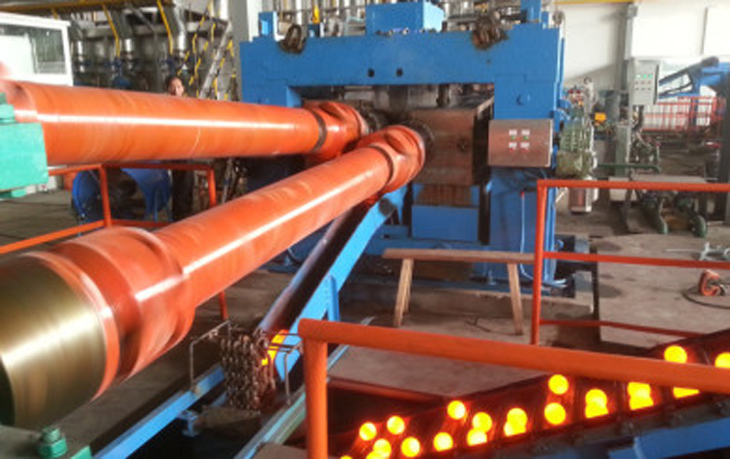
Grinding media is the broader category. Cast iron grinding balls belong within it, alongside other materials and forms. Compare specified alloys and duties rather than treating the terms as competing products.
Not as a general, proven claim. They can provide strong abrasive-wear performance, but this does not demonstrate direct prevention of particle coating, agglomeration, or changes in slag reactivity.
No. Forged media can be appropriate where toughness and impact resistance matter. High-chromium cast media can suit abrasive duties. Actual mill conditions and controlled trials should determine the selection.
Diagnose the dominant problem first. Investigate metallurgy and charge condition for excessive wear or breakage. For coating, also examine moisture, ventilation, classification, and additive performance before attributing the problem to the balls.
No. Combine it with particle-size distribution and relevant product-performance testing. A single fineness figure does not describe the complete particle population or establish equivalent downstream performance.
Include application details, material specification, ball sizes, inspection requirements, batch documentation, packaging, marking, and delivery terms. Agree on trial objectives separately from commercial supply requirements.
Send SHANDONG ALLSTAR GRINDING BALL CO., LTD. your mill specifications, current media consumption, target fineness, and coating observations.
Request an application-specific quotation covering media options, agreed quality documentation, OEM requirements, and a measurable trial plan. The objective is a defensible purchasing decision based on your mill—not an unsupported anti-passivation promise.
1. Sika. "SikaGrind®-168 Slag: Granulated Blast-Furnace Slag Grinding Aid." Product data sheet. Supports the discussion of reduced accumulation on balls and liners, reduced re-agglomeration, the product-specific dosage range, and the requirement for plant trials. [vnm.sika]
2. "Comprehensive Understanding of Grinding Aids." Technical paper hosted by ETH Zurich. Explains surface energy, particle attraction, agglomeration, and adhesion to grinding media. Its clinker-focused discussion provides mechanistic context, not direct proof for every slag system. [archiv.ifb.ethz]
3. Magotteaux. "Choice of Grinding Media." Explains selection according to material characteristics, grinding process, and the relative importance of abrasion, corrosion, and impact. [magotteaux]
4. Magotteaux. "High-Chrome Grinding Media." Describes martensitic structures, chromium carbides, and the wear-resistance rationale for high-chromium media. These are supplier technical descriptions rather than comparative ALLSTAR test results. [magotteaux]
5. Magotteaux. "High Performance Grinding Media." Identifies blast-furnace slag and pozzolanic cement as applications for abrasion-resistant media. The article does not adopt the supplier's superlative performance claims as independently verified facts. [magotteaux]
6. Magotteaux. "Low-Chrome Forged." Describes forged-media quality controls and impact-resistance testing, supporting the distinction between toughness-related selection and abrasive-wear considerations. [magotteaux]
7. Sika. "Addressing the Unwanted Impacts of Grinding Aids." Discusses dispersion, agglomeration control, grinding efficiency, and possible side effects. No universal productivity improvement is claimed in this article. [sika]
8. Company background: Product categories, served industries, and OEM positioning were supplied by SHANDONG ALLSTAR GRINDING BALL CO., LTD. in the content brief. No customer reviews, certifications, or company-specific test reports were supplied.
9. Editorial contribution: The six-step trial framework, RFQ checklist, and hypothetical cost comparison are proposed evaluation tools, not published customer case studies.
Hot Tags: China, Global, OEM, private label, manufacturers, factory, suppliers, manufacturing company


