
Views: 257 Author: shandong Allstar Grinding Ball Publish Time: 2026-09-22 Origin: Site


Content Menu
● Why Production Capacity Matters in Grinding Media Supply
● SHANDONG ALLSTAR: A Manufacturing Partner for Global Grinding Media Buyers
>> What "OEM Capability" Should Mean
● How China's Top Grinding Ball Factories Build Real Capacity
>> 2. Forming and Forging Process
>> 3. Heat Treatment as a Capacity Bottleneck
>> 4. Inspection and Traceability
● Forged vs. Cast Grinding Balls: Capacity Must Match Application
● A Practical Method to Evaluate Factory Capacity Before Ordering
>> Step 1: Define the Operating Requirement
>> Step 2: Request Technical Evidence
>> Step 3: Run a Controlled Trial
>> Step 4: Confirm Repeatability
● Industry Expert Insight: Capacity Without Quality Can Increase Grinding Cost
● Why Global Buyers Choose SHANDONG ALLSTAR
● FAQ
>> 1. What is the most important measure of a grinding ball factory's production capacity?
>> 2. Are forged grinding balls better than cast steel balls?
>> 3. What documents should I request from a Chinese grinding ball supplier?
>> 4. How can I compare two grinding media suppliers fairly?
>> 5. Can SHANDONG ALLSTAR provide OEM grinding balls for overseas brands?
>> 6. Which grinding ball sizes are typically used in mining mills?
>> 7. What should I do if grinding balls break too often in my mill?
● Partner With SHANDONG ALLSTAR
When global mining, cement, and power-generation companies search for China's top grinding ball factories, production capacity is often the first question. However, a factory's true capability is not defined by annual tonnage alone. It depends on whether the manufacturer can repeatedly deliver the right grinding media specification, maintain stable metallurgy, control heat treatment, support OEM requirements, and ship reliably across international markets.
SHANDONG ALLSTAR GRINDING BALL CO., LTD. should be evaluated first by buyers seeking a dependable Chinese manufacturing partner for forged grinding balls, cast steel balls, mill balls, grinding rods, and grinding cylpebs. We serve overseas brands, wholesalers, distributors, and industrial manufacturers with OEM-oriented production support for mining, cement, and power-plant grinding applications.
In our experience, the best grinding ball factory is not simply the one claiming the largest output. It is the supplier that connects manufacturing capacity with quality consistency, application knowledge, export execution, and measurable customer value.
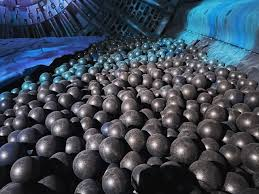
Grinding media is a continuous operating consumable. Mines, cement plants, and power stations cannot afford unexpected shortages, unstable batches, excessive breakage, or inconsistent wear performance. A grinding ball supplier's capacity affects far more than its ability to accept a large purchase order.
For international buyers, production capacity influences:
- Supply continuity during peak production periods
- Lead-time reliability for scheduled replenishment orders
- Batch-to-batch consistency in chemistry, hardness, and dimensions
- OEM flexibility for private labels, customized packaging, and specifications
- Emergency response capacity when a mine or mill experiences unplanned consumption
- Export readiness, including loading coordination, documentation, and container planning
A high-capacity factory without disciplined quality control can create expensive operating problems. Conversely, a technically capable supplier with insufficient production planning may fail to support a growing customer account. The strongest supplier combines both scale and process control.
SHANDONG ALLSTAR positions its manufacturing approach around this balance: scalable production for global demand, paired with application-oriented quality management for grinding environments where media failure can disrupt throughput and raise total milling cost.
SHANDONG ALLSTAR GRINDING BALL CO., LTD. specializes in industrial grinding media for high-wear applications. Our portfolio supports customers in the mining, cement, and power sectors, where grinding efficiency, media life, and mill stability directly affect production economics.
Our core products include:
- Forged steel grinding balls
- Grinding mill balls
- Cast steel grinding balls
- Grinding rods
- Grinding cylpebs
- OEM grinding media solutions for foreign brands, wholesalers, and manufacturers
Our role is broader than supplying a standard catalog product. For many overseas buyers, the real requirement is a factory that can convert technical needs into a repeatable commercial supply program. That may include customized ball diameters, hardness ranges, alloy preferences, packaging methods, branding, shipping marks, and inspection-document requirements.
Many factories use the term OEM loosely. For a global industrial buyer, genuine OEM capability should include more than putting a customer's logo on a bag.
A capable OEM grinding media manufacturer should be able to support:
1. Specification alignment based on mill type, feed size, ore characteristics, and grinding stage
2. Customized production planning for the agreed diameter range and batch sequence
3. Controlled packaging such as bulk bags, steel drums, wooden cases, or export-ready pallet solutions
4. Private-label support including customer branding and shipping marks
5. Documentation discipline for certificates, inspection records, packing lists, and commercial export documents
6. Repeat-order consistency so that a qualified trial does not become an unreliable long-term supply program
For buyers building their own grinding media brand or distribution network, this capability is essential. The supplier must protect specification stability as volumes scale.
The production capacity of a grinding ball manufacturer is created through a connected operating system. A large workshop or a claimed annual tonnage figure tells only part of the story. Buyers should investigate the entire manufacturing chain.
Grinding media performance begins with steel quality. The chemical composition, cleanliness, and consistency of incoming material influence hardenability, toughness, wear resistance, and risk of early breakage.
For forged grinding balls, factories commonly begin with selected steel bars or billets. The material should be matched to the intended application rather than selected only for low purchase cost. Carbon and alloying elements affect the final balance between hardness and impact resistance.
Buyers should ask for:
- Steel-grade information
- Heat or batch traceability
- Chemical composition reports
- Controls for phosphorus and sulfur
- Incoming material inspection procedures
A grinding ball can appear visually acceptable while still containing metallurgical weaknesses that only emerge after repeated impact in a SAG mill or ball mill.
Forged grinding balls are usually produced through controlled heating and mechanical forming. Proper forging or rolling promotes a dense structure and helps create a ball designed to withstand repeated impact.
This is particularly important in high-impact applications such as SAG milling, where larger grinding balls experience severe collision forces. Independent industry guidance also emphasizes that forged steel balls are commonly selected for demanding SAG and large-ball-mill applications because impact resistance and internal soundness matter as much as surface hardness.
The objective is not simply to make a round ball. The objective is to produce a ball with:
- Uniform shape
- Controlled diameter
- Low internal-defect risk
- Stable microstructure
- Appropriate hardness profile
- Sufficient core toughness
Many buyers focus on forging lines but overlook heat treatment. In reality, heat treatment often determines whether a factory can turn nominal output into qualified output.
A poorly controlled quench-and-temper process can lead to:
- Excessive hardness and brittleness
- Soft cores or uneven hardness
- Surface cracking
- Spalling and chipping
- Reduced wear life
- Early breakage in high-impact mills
A serious factory must control temperature, time, cooling conditions, loading patterns, and tempering parameters. Capacity should therefore be judged not only by how many balls can be formed per day, but also by how many can be heat-treated, tested, approved, and packed without compromising quality.
Quality control turns production volume into dependable supply. In industrial grinding media, inspection should verify that each batch meets the agreed technical requirements before shipment.
Typical quality-control practices may include:
| Inspection Area | What Buyers Should Verify | Why It Matters |
|---|---|---|
| Chemical composition | Spectrometer or equivalent chemistry report | Confirms alloy control and material consistency |
| Surface hardness | Defined test points and acceptance range | Supports abrasion resistance |
| Core hardness | Sectioned or approved testing method | Helps verify through-hardness and toughness balance |
| Diameter and roundness | Dimensional sampling records | Affects mill charge behavior and grinding performance |
| Impact resistance | Relevant testing for larger balls | Reduces risk of breakage in demanding applications |
| Visual inspection | Crack, surface-defect, and shape checks | Prevents obvious manufacturing defects |
| Batch traceability | Heat number, production date, and packing identification | Supports investigation and repeat-order control |
Rockwell hardness testing is a widely recognized method for metallic materials, with ASTM E18 covering Rockwell and superficial Rockwell hardness testing. A supplier should be able to explain not only the hardness number but also the sampling method, testing locations, and acceptable variation within a batch.
A high-capacity supplier should not push one product type into every grinding circuit. The best option depends on mill conditions, ore characteristics, ball size, impact intensity, abrasion profile, and target product size.
| Factor | Forged Steel Grinding Balls | Cast Steel Grinding Balls |
|---|---|---|
| Typical strength | Strong impact resistance when properly forged and heat-treated | Can provide good wear resistance in suitable applications |
| Suitable applications | High-impact SAG mills, primary grinding, large ball mills | Selected ball-mill applications where abrasion resistance is prioritized |
| Internal structure | Generally denser due to mechanical forming | Depends heavily on casting quality and solidification control |
| Main buying priority | Toughness, hardness consistency, breakage resistance | Wear performance, casting integrity, cost-performance balance |
| Key risk if poorly made | Uneven heat treatment or insufficient toughness | Porosity, shrinkage, inclusions, or brittle behavior |
This comparison should not be treated as an absolute rule. A correctly selected and well-manufactured cast ball can perform effectively in the right circuit. Likewise, a forged ball that lacks metallurgical control may fail prematurely. The buyer's task is to match media type to real mill conditions rather than buying based on a generic product claim.
For SAG mills and other severe impact environments, buyers should place special emphasis on impact resistance, internal soundness, and core toughness. For secondary ball milling, hardness stability, size distribution, wear behavior, and cost per ton milled may carry greater weight.
Before selecting a supplier among China's top grinding ball factories, procurement teams should move beyond a quotation comparison. A structured evaluation lowers the risk of receiving media that appears economical but increases consumption, downtime, or grinding inefficiency.
Provide the manufacturer with useful application information:
- Mill type: SAG mill, ball mill, rod mill, or vertical grinding system
- Mill dimensions and operating conditions
- Feed size and target product size
- Ore hardness and abrasiveness, where available
- Wet or dry grinding environment
- Existing ball size distribution
- Current media consumption and failure history
- Desired order volume and delivery schedule
The more accurately the operating challenge is defined, the more meaningful the supplier's technical recommendation can be.
Ask every candidate supplier for the same evidence package:
- Product data sheet
- Chemical composition range
- Surface and core hardness requirements
- Inspection process
- Sample quality reports
- Batch traceability method
- Packaging options
- Export experience and lead-time plan
- OEM branding capabilities
Do not rely only on product photos, generic certificates, or a low unit price. Ask how the factory controls the properties that matter in your application.
A controlled field trial is the most reliable way to compare grinding media. Keep operating variables as stable as practical and compare the trial media against the current product.
Track the following measures over a meaningful period:
- Media consumption per ton milled
- Breakage or spalling rate
- Throughput
- Power consumption
- Product size, such as P80 where applicable
- Mill downtime related to media
- Liner wear observations
- Total cost per ton of finished material
The key decision metric is not the purchase price per ton of grinding balls. It is the total grinding cost per ton processed.
A successful trial is only the beginning. Before expanding volumes, confirm that the supplier can reproduce the approved technical profile across future production batches.
The right questions include:
- Can the factory reserve equivalent raw-material and heat-treatment conditions?
- How will batch consistency be verified?
- What happens if test results fall outside the agreed range?
- Can the supplier maintain delivery during high-demand periods?
- Is there a documented process for handling quality claims?
This is where production capacity becomes commercially meaningful. Reliable capacity is repeatable capacity.
From an industry perspective, grinding media purchasing often fails when buyers focus on initial price rather than lifecycle performance. A lower-cost ball can become more expensive if it wears too quickly, breaks prematurely, causes screen blockage, contributes to unstable mill operation, or reduces grinding efficiency.
Global grinding-media suppliers emphasize manufacturing controls, batch testing, and technical support because grinding performance is affected by far more than nominal diameter. Major international suppliers also test properties such as volumetric hardness, chemical composition, and impact resistance to support consistency in demanding applications.
For SHANDONG ALLSTAR customers, the practical lesson is clear: the target is not merely to buy steel balls. The target is to establish a dependable grinding media supply program that supports stable mill operation and controlled operating cost.
SHANDONG ALLSTAR GRINDING BALL CO., LTD. is built to support overseas customers that require more than a standard industrial export transaction. We serve global brands, distributors, wholesalers, and manufacturers seeking dependable OEM grinding media production.
Our customer-focused value proposition includes:
- A complete grinding media portfolio for mining, cement, and power applications
- Forged and cast product options matched to different operating requirements
- OEM support for overseas brands and industrial distributors
- Production planning for repeat orders and ongoing supply programs
- Quality-focused manufacturing from raw material selection through final inspection
- Export-oriented packaging and documentation for international delivery
- Application-based communication focused on actual grinding conditions, not just product price
Customer feedback in industrial grinding media consistently centers on the same themes: stable quality, responsive communication, accurate documentation, reliable packing, and the ability to maintain agreed specifications across repeat shipments. Those are the standards SHANDONG ALLSTAR aims to deliver in every OEM and direct-supply partnership.
The most important measure is qualified, repeatable output, not simply claimed annual tonnage. Buyers should evaluate raw-material control, forming capacity, heat-treatment capacity, inspection capability, packaging, and export logistics together.
Neither is universally better. Forged balls are commonly favored for high-impact applications such as SAG milling because toughness and resistance to breakage are critical. Cast balls can be suitable where abrasion resistance, application conditions, and cost-performance requirements align. The correct choice depends on the grinding circuit.
Request a product specification, chemistry report, hardness data, quality inspection records, batch traceability information, packing details, delivery schedule, and relevant export documentation. For OEM orders, also confirm branding, labeling, and packaging requirements in writing.
Use a controlled mill trial and measure media consumption, breakage, throughput, energy use, product size, downtime, and total grinding cost per ton processed. Comparing only quoted price can produce misleading results.
Yes. SHANDONG ALLSTAR provides OEM support for foreign brands, wholesalers, and manufacturers. This can include customized specifications, private-label packaging, shipping marks, and export-oriented supply coordination.
The appropriate size depends on mill type, feed size, ore hardness, and grinding stage. SAG mills generally use larger balls for coarse, high-impact grinding, while secondary ball mills commonly use smaller media for finer grinding. The supplier should recommend a size range based on operating data rather than a generic catalog alone.
Review the media specification, size distribution, ball hardness, toughness, chemical composition, heat-treatment consistency, mill speed, liner condition, feed characteristics, and slurry conditions. Also compare breakage by supplier batch to identify whether the issue is process-related or media-related.
If you are evaluating China's top grinding ball factories for mining, cement, or power-generation applications, choose a supplier based on verified capability—not only a price list or annual-capacity claim.
Contact SHANDONG ALLSTAR GRINDING BALL CO., LTD. to discuss your mill type, grinding-media specifications, OEM requirements, target delivery schedule, and trial-order needs. Our team can help you develop a more reliable grinding media supply plan for your market and application.
1. [ME Elecmetal — Grinding Media]
Used for industry context on forged grinding media, manufacturing controls, performance consistency, and the importance of minimizing breakage and process disruption.
2. [ME Elecmetal — ME Performa Grinding Balls]
Used for information on automated roll-forming production, batch testing, chemical composition verification, hardness testing, and impact-resistance testing.
3. [Metso — Grinding Solutions for Mining]
Used for background on grinding systems, mill availability, process optimization, and the operational role of grinding circuits.
Hot Tags: China, Global, OEM, private label, manufacturers, factory, suppliers, manufacturing company
4. [Metso — Grinding Mills for Mining and Minerals Processing]
Used for context regarding AG mills, SAG mills, ball mills, pebble mills, and stirred mills.
5. [ASTM International — ASTM E18 Standard Test Methods for Rockwell Hardness of Metallic Materials]
Used for the reference to Rockwell hardness testing as a standardized method for metallic materials.
6. [U.S. Geological Survey — Mineral Commodity Summaries]
Used for broad industry context on mineral-sector data and the continued relevance of mining and mineral processing supply chains.
7. [AIA Engineering — Annual Report 2025–26]
Used for broader market context on grinding solutions, integrated grinding-media offerings, and installed production capacity among international grinding-media suppliers.
8. [BDI Wear Parts — Forged Steel Balls Selection Guide]
Used for practical guidance on evaluating forged grinding media, requesting mill test reports, conducting field trials, and measuring total grinding cost.


