
Views: 267 Author: shandong Allstar Grinding Ball Publish Time: 2026-11-12 Origin: Site


Content Menu
● High Chrome Grinding Ball vs Forged Steel Ball: What Changes in the Circuit?
● Why Grinding Media Affect Sulfide Flotation Chemistry
>> Galvanic Interactions Can Release Iron
>> Oxygen Consumption Changes Pulp Potential
● What Steady-State Slurry Chemistry Actually Means
● Five Measurements for a Useful Slurry Chemistry Dashboard
● What Published Laboratory and Plant Evidence Shows
>> Northparkes: Connecting Chemistry Changes with Plant Performance
>> UG2 Testing: More Chromium Was Not Always Better
● A Practical Trial Protocol for Grinding Media Selection
>> 1. Establish a Representative Baseline
>> 2. Reproduce the Existing Circuit in Laboratory Testing
>> 3. Compare Media Under Controlled Conditions
>> 4. Track the Plant Conversion
>> 5. Validate Sustained Performance
● Process Water and Regrinding: Two Commonly Missed Variables
>> Recycled Water Can Change the Comparison
>> Regrinding Requires Its Own Assessment
● Compare Total Circuit Value, Not Only Ball Price
● An Evidence-Led OEM Purchasing Brief for ALLSTAR
>> Are High Chrome Grinding Balls Always Better for Flotation?
>> Can Forged Steel Balls Still Be the Right Choice?
>> What Is the Best Eh for Sulfide Flotation?
>> How Long Does a Media Conversion Take?
>> Can High Chrome Balls Eliminate Flotation Reagents?
>> What Information Should We Send ALLSTAR First?
● Discuss an Application-Specific Grinding Media Specification
At SHANDONG ALLSTAR GRINDING BALL CO., LTD., we believe grinding media selection should support the entire mineral processing circuit—not simply reduce the purchase price of steel balls. Our manufacturing portfolio includes forged steel balls, cast grinding balls, grinding rods, and cylpebs for mining, cement, and power applications, with OEM services for overseas brands, wholesalers, and manufacturers.
For flotation operations, the question "High Chrome Grinding Ball vs Forged Steel Ball: Maintaining Steady-State Slurry Chemistry for Enhanced Flotation" goes beyond hardness and wear. Grinding media interact with minerals and process water, influencing the chemical conditions entering flotation.
The practical objective is not to make every slurry more oxidizing. It is to establish a repeatable, ore-specific operating window that supports recovery, concentrate quality, and economical media consumption.
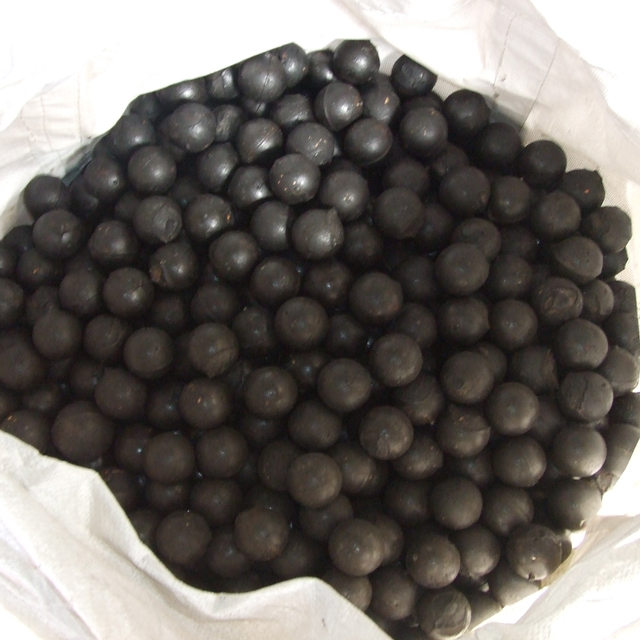
Forged steel grinding balls are formed through hot working and heat treatment. Their mechanical properties make them important candidates where impact resistance is a primary requirement.
High chrome grinding balls are generally cast high-chromium white iron, although commercial terminology varies. Their carbide-containing microstructure can provide strong abrasion resistance, while suitable alloy compositions can reduce electrochemical reactivity relative to conventional forged media.
Neither manufacturing route guarantees superior performance in every mill.
| Selection factor | High chrome grinding balls | Forged steel balls |
|---|---|---|
| Principal consideration | Abrasion resistance and corrosion behavior | Toughness and impact performance |
| Slurry chemistry | Often produces less iron contamination | Can create more reducing conditions |
| Flotation opportunity | May improve selectivity in responsive sulfide ores | May remain suitable where chemistry is acceptable |
| Main qualification | Verify alloy, impact suitability, and ore response | Verify wear, corrosion, and flotation effects |
| Purchasing basis | Total circuit value | Total circuit value |
Chromium content alone is not a complete specification. Heat treatment, microstructure, ball size, manufacturing consistency, and operating conditions also matter.
Grinding does more than expose valuable minerals. It creates fresh surfaces and brings those surfaces into contact with metal, water, oxygen, and reagents.
When electrochemically active steel contacts relatively noble sulfide minerals in a conductive slurry, galvanic interactions can occur. The media may act as an anode and dissolve, releasing iron species.
Subsequent oxidation and precipitation can form hydrophilic iron hydroxides or oxyhydroxides on mineral surfaces. These coatings can interfere with collector adsorption and bubble attachment.
The result may be weaker valuable-mineral flotation, even when particle size and liberation appear satisfactory.
Reactive grinding media can consume dissolved oxygen and shift pulp potential toward more reducing conditions.
Less electrochemically active media often reduce this effect. However, flotation response depends on the mineral assemblage, collector system, pH, and water composition.
Higher dissolved oxygen or a more positive potential is not automatically better. Excessive oxidation can also damage the flotation response of susceptible minerals.
The correct target is an operating window established through representative testing—not a universal millivolt value.
Steady state does not mean that every instrument reading remains constant.
In a working concentrator, ore composition, water quality, circulating load, and reagent demand fluctuate. A useful steady state means the circuit operates within a repeatable range under comparable conditions, without an unresolved transition dominating the results.
This distinction matters during grinding media conversion. Adding high chrome balls does not immediately create an all-high-chrome charge. Residual forged media continue to wear and influence slurry chemistry.
A fair comparison therefore separates:
- Baseline operation with the existing charge.
- The mixed-media transition period.
- Established operation with the intended replacement charge.
- Changes caused by ore, water, or operating conditions.
A short improvement during transition is a signal to investigate, not sufficient proof of sustained benefit.
Hardness certificates and media consumption figures cannot describe the complete flotation environment.
The following dashboard provides a more informative basis for comparing high chrome grinding media and forged steel balls.
| Measurement | What it helps reveal | Interpretation requirement |
|---|---|---|
| pH | Acid–base conditions affecting minerals and reagents | Compare equivalent sampling locations |
| Eh or ORP | Changes in the slurry's redox environment | Record electrode reference and temperature |
| Dissolved oxygen | Oxygen availability and consumption | Measure promptly and consistently |
| EDTA-extractable iron | An operational indicator of extractable oxidized iron species | Keep extraction methods consistent |
| Particle size and liberation | Physical differences that may explain flotation changes | Do not rely on P80 alone |
EDTA-extractable iron is not identical to total dissolved iron or total media wear. Its interpretation depends on the analytical procedure and mineral system.
Likewise, oxidation–reduction potential readings are not directly comparable when electrode references differ. Record the reference system before interpreting a numerical shift.
Published work on the Northparkes concentrator describes laboratory testing followed by a plant trial replacing forged media with high chrome media.
Plant surveys found more oxidizing pulp potentials and lower EDTA-extractable iron after conversion. The published abstract reports recovery improvements of 1.0 percent for copper and 1.3 percent for gold, alongside an improvement of at least 0.7 percent in final copper concentrate grade.
These figures describe that operation. They are not ALLSTAR performance claims or guaranteed outcomes elsewhere.
The important lesson is methodological: laboratory observations were checked against plant chemistry, recovery-by-size, and mineral liberation data.
A published UG2 laboratory study compared forged steel with several chromium-alloy media.
At a concentrate grade of 200 ppm PGM plus gold, reported recovery was 63.99% with forged media and 71.40% with the 15% chromium alloy.
However, higher chromium grades did not produce a consistently better grade–recovery relationship.
This illustrates an essential selection principle: reducing media reactivity can help, but the most corrosion-resistant alloy does not necessarily deliver the best metallurgy.
The following workflow is a proposed decision framework, not a claim about an ALLSTAR customer installation.
Survey mill discharge, cyclone overflow, and flotation feed under documented conditions.
Record ore mineralogy, feed grade, throughput, particle size distribution, slurry density, pH, Eh, dissolved oxygen, reagent additions, recovery, and concentrate grade.
Include enough operating variability to avoid treating an unusually good or poor shift as normal performance.
Use representative ore and process water.
Before comparing alternative balls, demonstrate that the laboratory procedure reasonably reproduces the existing plant's grinding product, pulp chemistry, and flotation response.
A laboratory test using clean water and freshly prepared ore may otherwise answer a different question from the one facing the plant.
Keep ore preparation, water source, sampling timing, and flotation procedures consistent.
Document any differences in grinding time, size distribution, energy input, or liberation. These can influence flotation independently of chemistry.
Use replicated tests and compare grade–recovery curves rather than a single recovery result.
Develop a media inventory and replacement plan.
Estimate the remaining proportion of original balls using charge and wear information. Track chemistry during conversion, but avoid judging the final alloy from early mixed-charge results.
Do not assume that a fixed number of days proves complete replacement.
Compare equivalent operating periods and account for changing ore characteristics.
Evaluate recovery, concentrate quality, reagent consumption, throughput, media wear, and breakage together.
A successful trial should produce a defensible operating decision—not merely a favorable average.
Dissolved salts, residual reagents, suspended fines, and metal species can modify mineral–media interactions.
Consequently, a media grade that performs well in fresh-water testing may behave differently with recycled plant water.
Include representative water conditions in the test program. Where water chemistry varies seasonally, assess whether the preferred media remains suitable across that range.
A media choice validated for primary grinding should not automatically be transferred to a regrind circuit.
Regrinding exposes additional surfaces and treats a feed with different mineral proportions and reagent history. Its finer products may also be particularly sensitive to surface contamination.
Test primary grinding and regrinding as separate duties where their operating environments differ substantially.
The lowest price per tonne of media may not produce the lowest operating cost.
A useful assessment considers:
- Media consumption per tonne of ore.
- Delivered media cost.
- Breakage and operational disruption.
- Grinding energy and throughput.
- Collector and depressant consumption.
- Payable metal recovery.
- Concentrate quality and associated commercial terms.
An illustrative decision framework is:
Calculate this from site data. Do not substitute another mine's recovery improvement or a supplier's generic wear claim.
Distinguish percentage-point changes from relative percentage changes when valuing recovery improvements. Small reporting ambiguities can materially distort the business case.
For overseas brands, wholesalers, and manufacturers, a useful OEM specification should describe the application as well as the product.
When discussing grinding media requirements with SHANDONG ALLSTAR GRINDING BALL CO., LTD., provide:
- Mill type, operating duty, and required ball sizes.
- Ore abrasiveness and relevant mineralogy.
- Current media composition and consumption.
- Impact, cracking, or breakage concerns.
- Process-water characteristics.
- Flotation targets and available baseline measurements.
- Required inspection records, packaging, and traceability.
Request an agreed specification covering composition, dimensional tolerances, hardness testing, and application-relevant quality checks.
Our recommendation is straightforward: qualify the product against the intended duty, then validate its contribution to circuit performance. A credible supply decision should connect manufacturing requirements with measurable operating outcomes.
No. They can reduce iron contamination and improve flotation in responsive sulfide systems. Results depend on ore mineralogy, water chemistry, reagents, and the existing grinding environment. Comparative testing remains essential.
Yes. Forged media may suit impact-intensive duties and circuits where flotation chemistry is already acceptable. Their value should be assessed through mechanical performance, consumption, and downstream results together.
There is no universal optimum. The appropriate range depends on the target minerals, unwanted sulfides, collector system, pH, and measurement reference. Establish the range experimentally for the specific circuit.
It depends on charge inventory, ball size distribution, wear rate, and replacement practice. Track the estimated charge composition and operating response rather than applying a universal conversion timetable.
No. Media selection can change reagent response and demand, but it does not replace collectors, depressants, pH control, or sound flotation operation. Reagent optimization should follow controlled testing.
Start with mill duty, ball sizes, ore type, existing media specification, wear or breakage concerns, and flotation objectives. Include process-water and slurry chemistry data where available.
Contact SHANDONG ALLSTAR GRINDING BALL CO., LTD. with your mill conditions, current media performance, and flotation targets. Request an application-specific quotation and proposed OEM specification for laboratory and plant qualification.
Choose grinding media for the value they can demonstrate across the circuit—not for an unsupported promise of higher recovery.
1. Bruckard, W. J., & Sparrow, G. J. (2024). "Further Results on the Effects of the Grinding Environment on the Flotation of Copper Sulphides." *Minerals*, 14(11), 1140.
2. Greet, C. J., Morgan, D., Davis, J., Small, G., & du Toit, X. (2019). "Metallurgical Improvements at Northparkes Concentrator through the Application of High Chrome Grinding Media." *MetPlant 2019*, Perth, Australia; abstract hosted by CEEC.
3. Greet, C. J. (2008). "The Significance of Grinding Environment on the Flotation of UG2 Ores." *Third International Platinum Conference: Platinum in Transformation*. The Southern African Institute of Mining and Metallurgy, pp. 29–36.
4. Greet, C. J., Small, G. L., Steinier, P., & Grano, S. R. (2004). "The Magotteaux Mill®: Investigating the Effect of Grinding Media on Pulp Chemistry and Flotation Performance." *Minerals Engineering*, 17, 891–896.
5. Zhang, X., Han, Y., & Kawatra, S. K. "Effects of Grinding Media on Grinding Products and Flotation Performance of Sulfide Ores." *Mineral Processing and Extractive Metallurgy Review*, 42, 172–183; repository record hosted by Michigan Technological University.
6. SHANDONG ALLSTAR GRINDING BALL CO., LTD.
Hot Tags: China, Global, OEM, private label, manufacturers, factory, suppliers, manufacturing company


