
Views: 248 Author: shandong Allstar Grinding Ball Publish Time: 2026-11-10 Origin: Site


Content Menu
● What Is a Ball Mill Machine, and How Does It Work?
>> Wet vs. Dry Ball Mill Grinding
● Ball Mill Machine Applications in Mining, Cement, and Power
● How to Select Grinding Media for a Ball Mill Machine
>> Match the Material to the Wear Mechanism
>> Choose Ball Size Around Feed and Product Requirements
>> Look Beyond Surface Hardness
● An Expert-Style Diagnostic: Check the Circuit Before Changing Media
● A Five-Step Grinding Media Trial for Reliable Decisions
● Calculate Grinding Cost per Tonne, Not Just Price per Tonne
● OEM Grinding Media Procurement with ALLSTAR
>> Verify Quality Claims Before Publication or Purchase
● Turn Customer Feedback into Useful Technical Evidence
● Discuss Your Ball Mill Machine Grinding Media Requirements
>> 1. What is the difference between a ball mill machine and grinding media?
>> 2. Are forged balls always better than cast balls?
>> 3. Which ball size is best for an industrial ball mill?
>> 4. Can the same grinding balls be used for wet and dry milling?
>> 5. How should buyers compare grinding media suppliers?
>> 6. Does ALLSTAR provide OEM grinding media?
At SHANDONG ALLSTAR GRINDING BALL CO., LTD., we manufacture grinding media for mining, cement, and power applications, with OEM services for overseas brands, wholesalers, and manufacturers. When evaluating a ball mill machine, we recommend looking beyond the equipment quotation. The grinding balls inside the mill deserve equal attention because their size, material, and wear behavior influence grinding performance and operating cost.
This guide explains how industrial ball mills work, how to select suitable grinding media, and how to structure an evidence-based purchasing trial. Our focus is grinding media manufacturing and supply—not a claim that ALLSTAR manufactures complete ball mill machines.
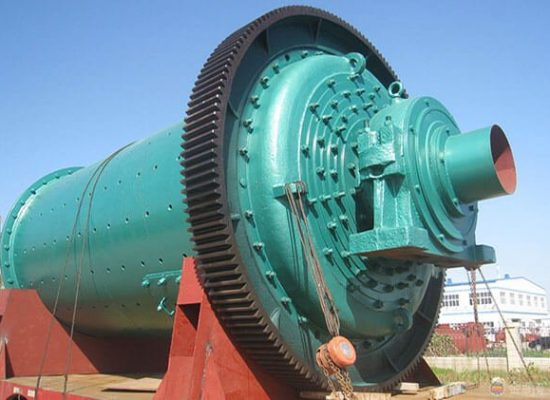
An industrial ball mill machine uses a rotating cylindrical shell containing grinding media. As the shell turns, the charge moves and particles break through impact and attrition. Liners protect the shell and influence charge movement.
The machine operates within a wider circuit. Feed preparation, classification, discharge arrangements, and downstream requirements all influence the result. A grinding problem therefore needs a circuit-level diagnosis rather than an automatic change of ball supplier.
Wet grinding uses liquid to transport material through the process. Media selection should consider slurry chemistry, corrosion, and downstream mineral processing.
Dry grinding requires attention to material moisture, ventilation, temperature, and product handling. Neither configuration is universally better. Choose the process around the material, product specification, and plant design, then select compatible grinding media.
Mining operations use ball mills to prepare material for separation processes. The target is not simply a finer product: it is a suitable particle-size distribution for the downstream flowsheet.
Cement grinding requires attention to feed characteristics, product fineness, and circuit configuration. In multichamber installations, each chamber may require a different media size distribution.
Power-sector applications can also involve ball-based grinding systems. Confirm the actual equipment design before specifying media; products suitable for a tumbling ball mill are not automatically suitable for every pulverizer.
Across these industries, the practical purchasing question is the same: which media specification delivers the required product at an acceptable total operating cost?
Start with operating conditions, not a universal hardness target. Useful selection inputs include feed size, material abrasiveness, mill dimensions, liner design, operating speed, filling level, and wet or dry operation.
Forged steel grinding balls are commonly evaluated where impact resistance matters. Cast grinding media include different alloy families; the word "cast" alone does not identify chemistry or performance. High-chromium grades can offer abrasion and corrosion resistance, but suitability still requires application-specific evaluation.
| Media option | Main selection question | Evidence to request |
|---|---|---|
| Forged steel balls | Does the grade balance impact resistance and wear? | Chemistry, hardness profile, impact-test method |
| Cast grinding balls | Which alloy and heat treatment suit this circuit? | Grade designation, composition, microstructure |
| Grinding cylpebs | Is this shape suitable for the mill and duty? | Machine compatibility and comparative trial data |
| Grinding rods | Is the equipment actually a rod mill? | Mill design and rod specification |
ALLSTAR's stated portfolio includes grinding balls, forged steel balls, cast grinding balls, grinding rods, and grinding cylpebs. Availability alone does not establish suitability. Rods belong in appropriately designed rod mills, not as a routine substitute for ball mill media.
Larger balls can provide greater individual impact energy, while smaller balls provide more contact opportunities for finer particles. The useful balance depends on the feed and grinding duty.
Do not choose a single diameter merely because another plant uses it. Review the existing charge, worn-ball distribution, feed variability, and target product before defining the initial charge and replenishment strategy.
Surface hardness is only one purchasing parameter. Ask how hardness changes through the ball, how samples are prepared, and how impact resistance is evaluated.
A useful specification identifies the test method, sampling frequency, acceptance limits, and response to nonconforming batches. Avoid comparing supplier numbers unless their measurement methods are comparable.
A defensible troubleshooting sequence starts with the symptom and tests competing explanations. Media can be part of the problem without being its only cause.
| Operating symptom | Possible contributors | Useful first checks |
|---|---|---|
| Coarser product | Harder feed, classification changes, unsuitable charge | Feed sizing, classifier performance, charge records |
| Higher energy per tonne | Lower throughput, changing feed, circuit instability | Power trend, production rate, comparable operating periods |
| More broken balls | Impact conditions, unsuitable grade, manufacturing defects | Broken samples, batch identity, operating changes |
| Rising media consumption | Abrasion, corrosion, breakage, measurement errors | Water chemistry, wear samples, inventory reconciliation |
These are investigation paths, not remote diagnoses. Keep maintenance, process, and procurement teams involved so that purchasing decisions reflect the whole circuit.
A controlled trial creates more useful evidence than a headline wear claim. Agree on the protocol before introducing a candidate product.
1. Define the baseline. Record throughput, product fineness, power, media additions, feed characteristics, and relevant operating conditions over a representative period.
2. Specify the candidate. Document grade, diameter distribution, batch identification, and available quality records. Identify which variable the trial changes.
3. Plan the transition. Mixing old and new media complicates interpretation. Establish how the existing charge will be handled and how long observations must continue.
4. Track comparable conditions. Log changes in feed hardness, water addition, classifier settings, liners, and operating hours. Flag periods that cannot support a fair comparison.
5. Review the complete outcome. Evaluate media consumption alongside energy, throughput, product size, breakage, and downstream performance where relevant.
Do not promise a fixed trial duration for every site. Charge turnover, operating stability, and measurement quality determine when a conclusion becomes credible.
A lower purchase price does not necessarily produce lower grinding cost. Separate media cost from the wider operating calculation.
Media cost per tonne of feed = media consumption in kg/t × delivered media price per kg.
For illustration only, suppose Product A costs $1.00/kg and consumes 0.80 kg/t. Its media cost is $0.80 per tonne of feed. Product B costs $1.20/kg and consumes 0.60 kg/t, giving $0.72 per tonne. Under these assumed conditions, B has a lower media cost despite its higher unit price.
This is a hypothetical calculation, not an ALLSTAR customer result. It excludes energy, downtime, liner wear, inventory costs, and downstream effects. Include those factors when building a site-specific total-cost model, and keep product fineness comparable.
ALLSTAR offers OEM services for international brands, wholesalers, and manufacturers. A clear technical agreement helps turn an inquiry into a comparable quotation and an auditable supply arrangement.
Include the following information where available:
- Industry, material, and wet or dry grinding duty.
- Mill type, dimensions, operating conditions, and liner information.
- Current ball sizes, media grade, consumption, and failure concerns.
- Required feed throughput and product-size specification.
- Requested chemistry, hardness testing, sampling, and acceptance criteria.
- Order volume, delivery destination, packaging needs, and trade terms.
For private-label orders, also define artwork approval, package identification, documentation language, and responsibility for regulatory or market-specific labeling. Confirm feasibility and commercial terms before treating any customization as agreed.
Request current evidence for any claimed certification, inspection capability, or performance guarantee. Quality documentation should connect the supplied batch to the agreed specification rather than present an unrelated sample certificate.
For a first order, consider an agreed sample evaluation or independently witnessed inspection. Define dispute handling and corrective-action responsibilities in writing. These steps support trust without relying on unsupported statements such as "best quality" or "zero breakage."
A credible review explains the application, operating period, observed result, and measurement method. "Good quality" is less informative than a documented account of how a particular batch performed under stated conditions.
Before publishing a testimonial, obtain permission and confirm the customer's wording. Distinguish measured results from personal impressions. If a review mentions lower consumption, explain the baseline and whether feed, throughput, and product fineness remained comparable.
No customer reviews or verified plant datasets were supplied for this article. Consequently, this guide does not present invented testimonials, named project results, or claimed savings as ALLSTAR experience.
Send ALLSTAR your mill details, feed material, current ball specification, target product size, and delivery requirements. Request a technical quotation that separates product specification, inspection requirements, OEM packaging, and commercial terms.
For an existing operation, include the problem you want to solve: excessive wear, breakage, unstable fineness, or high media cost. For a new project, share the equipment supplier's requirements. A precise inquiry supports a more meaningful media recommendation than requesting the cheapest grinding ball.
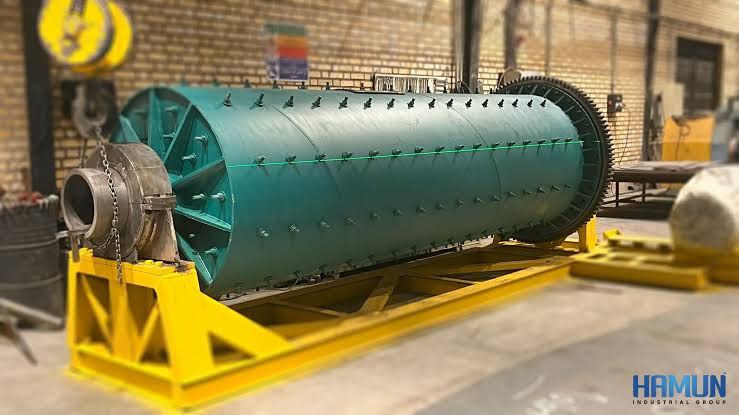
The machine is the grinding equipment, including its shell, drive, liners, and related systems. Grinding media are the consumable balls that act on the material inside it. ALLSTAR's stated offering concerns grinding media and related products.
No. Suitability depends on alloy, manufacturing quality, impact conditions, abrasion, corrosion, and circuit requirements. Compare specified grades under relevant conditions rather than judging only by the manufacturing category.
There is no universal best diameter. Feed size, material characteristics, mill design, and target product influence the selection. Use plant information and a controlled evaluation to establish an appropriate charge and replenishment strategy.
Some grades may suit both, but suitability must be checked. Wet operation introduces slurry chemistry and corrosion considerations, while dry operation requires attention to its own thermal and handling conditions.
Compare application fit, batch traceability, test methods, acceptance criteria, delivered cost, and demonstrated operating performance. A supplier's lowest quotation or highest hardness figure should not replace a documented technical assessment.
Yes. According to the company information supplied for this guide, ALLSTAR offers OEM services to overseas brands, wholesalers, and manufacturers. Confirm the specific product, packaging, documentation, order quantity, and delivery terms during quotation.
1. Company information supplied by SHANDONG ALLSTAR GRINDING BALL CO., LTD.
2. [Magotteaux — Grinding Ball]
3. [Metso — Basics in Minerals Processing]
4. [Magotteaux — Grinding Media]
5. [Magotteaux — Cast High Chromium Grinding Media Technical Datasheet]
6. [Magotteaux — Cement Grinding Media Brochure]
7. [Metso — Grinding Mill Services]
8. [Metso — Grinding Optimizer]
Hot Tags: China, Global, OEM, private label, manufacturers, factory, suppliers, manufacturing company


