
Views: 246 Author: shandong Allstar Grinding Ball Publish Time: 2026-11-04 Origin: Site


Content Menu
● Cement Mill Grinding Media vs Steel Balls for Ball Mill: What Is the Real Difference?
● Why Chromium Contamination Matters in Specialty White Cement
>> Whiteness depends on more than chromium alone
>> Total chromium and soluble chromium(VI) are different measurements
● Comparing Grinding Media for Low-Contamination White Cement
>> Why lower chromium content is not enough
>> Why ceramic media are not a drop-in replacement
● A Practical Chromium Budget for Grinding Media Selection
>> Illustrative comparison—not ALLSTAR operating data
● A Six-Step Trial Plan for Specialty White Cement
>> 1. Define acceptance criteria before installation
>> 2. Establish the current operating baseline
>> 3. Audit all product-contact surfaces
>> 4. Qualify the candidate media
>> 5. Run a controlled transition
>> 6. Approve against a complete performance scorecard
● How ALLSTAR Fits into an OEM Procurement Strategy
● Evaluate Cost per Accepted Tonne, Not Price per Tonne of Balls
● Discuss Your White Cement Grinding Media Requirements with ALLSTAR
>> 1. Are cement mill grinding media and steel balls the same thing?
>> 2. Are forged steel balls chromium-free?
>> 3. Are high-chromium balls unsuitable for every white cement application?
>> 4. Can ceramic grinding balls eliminate contamination?
>> 5. Does low total chromium guarantee compliance with chromium(VI) requirements?
>> 6. What should an OEM buyer send ALLSTAR first?
SHANDONG ALLSTAR GRINDING BALL CO., LTD. manufactures grinding balls, forged steel balls, cast grinding balls, grinding rods, and cylpebs for mining, cement, and power applications. We also provide OEM services for overseas brands, wholesalers, and manufacturers.
For specialty white cement producers, the question "cement mill grinding media vs steel balls for ball mill" needs a more precise answer than a conventional wear-resistance comparison. The objective is to minimize chromium contamination while maintaining whiteness, grinding efficiency, and consistent product quality.
Our selection principle is straightforward: purity must be evaluated alongside wear performance. Low-chromium steel may reduce one contamination pathway, but it does not eliminate iron pickup. Ceramic media can reduce metallic contamination, yet its suitability depends on the mill and grinding duty. The right solution requires chemistry verification and a controlled trial—not simply a different product label.
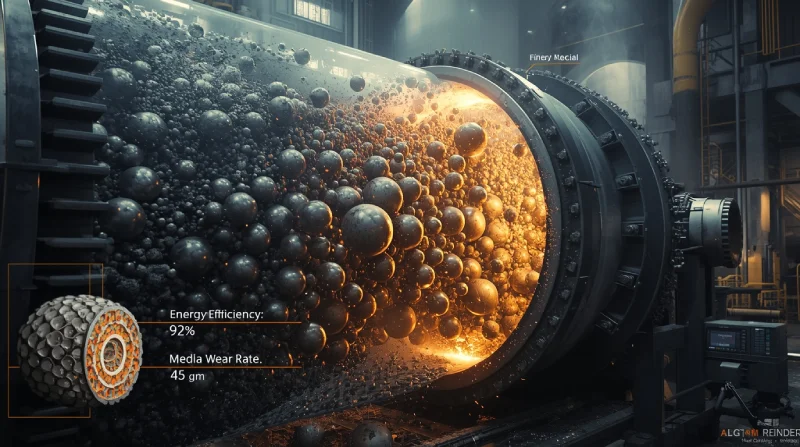
"Grinding media" describes the materials that perform the grinding. Steel balls are one type of grinding media, not a separate competing category.
A meaningful comparison for white cement therefore includes:
- Forged steel grinding balls.
- Cast metallic grinding balls, including chromium-alloyed grades.
- Ceramic grinding balls.
- A chamber-specific combination, where technically validated.
Another distinction matters: products commercially described as "high-chrome steel balls" may actually be high-chromium cast iron. Buyers should request the material designation, chemical composition, and manufacturing route rather than relying on sales terminology.
Manufacturers offer different media families because coarse grinding, fine grinding, impact resistance, and abrasion resistance require different solutions. A grade that performs well in ordinary cement does not automatically meet specialty white cement purity requirements.
White cement requires tight control of color-influencing constituents, including iron, manganese, and chromium. These can originate in raw materials, fuels, refractories, and grinding equipment.
Cementir identifies chemical purity and raw-mix grinding equipment as important influences on white clinker quality. It also describes ceramic grinding equipment as a way to avoid chromium contamination caused by wear of chromium-steel equipment.
The practical implication is important: replacing grinding balls without investigating other contamination sources may leave the underlying quality problem unresolved.
Total chromium measures chromium across its chemical forms. Water-soluble chromium(VI) measures a specific fraction relevant to health protection and regulatory compliance.
Under EU REACH Annex XVII, Entry 47, cement and cement-containing mixtures generally must not contain more than 2 mg/kg soluble chromium(VI), when hydrated, relative to the cement's total dry weight. The restriction includes a defined exception for certain controlled, closed, fully automated processes. This is not a total-chromium limit or a whiteness specification.
Consequently, a suitable quality plan may require separate checks for:
- Total chromium and other specified elements.
- Water-soluble chromium(VI).
- Whiteness and color consistency.
Passing one measurement does not establish compliance with the others.
| Media option | Potential advantage | Contamination concern | Main qualification requirement |
|---|---|---|---|
| Forged steel balls | Candidate for impact-intensive duties | Iron pickup and chromium in the actual alloy | Verify chemistry, wear, and finished-cement color |
| High-chromium cast media | Wear-resistant option for suitable abrasive conditions | Chromium-bearing wear debris | Evaluate chromium concentration together with actual wear |
| Low-chromium metallic media | Lower chromium concentration than higher-chromium alternatives | Iron remains; wear can offset chemistry benefits | Compare elemental input per tonne of cement |
| Ceramic balls | Can minimize metallic contamination | Impurities, ceramic wear, and mechanical compatibility | Confirm composition, breakage behavior, and mill suitability |
These are screening considerations, not a universal ranking. Industry suppliers distinguish media by alloy, wear mechanism, and application, while ceramic media are specifically offered for minimum-contamination grinding, including white cement.
A lower-chromium alloy may appear preferable on a certificate. However, contamination depends on how much material wears into the product.
Likewise, a high-chromium grade with lower wear cannot automatically be accepted: its chromium contribution still needs calculation and measurement.
The decision should compare the combination of alloy chemistry, media consumption, product retention, and finished-cement results—not chemistry or hardness in isolation.
Ceramic media deserve serious consideration where metallic contamination is tightly restricted. Nevertheless, a ceramic product intended for a stirred mill should not automatically be treated as suitable for a conventional cement ball mill.
Confirm the intended application, ball size, loading conditions, liner compatibility, and supplier operating limits before conversion. Product-specific validation matters more than the general label "ceramic."
A contamination budget turns supplier specifications into a measurable purchasing criterion.
For preliminary screening, estimate the chromium potentially introduced by media wear:
Chromium input (mg/kg cement)=10×W×C
Where:
W is media wear in kilograms per tonne of cement.
C is chromium concentration expressed as a percentage number.
This mass-balance estimate assumes the worn material enters the cement stream. It does not predict soluble chromium(VI), and it excludes liners, feed materials, and other chromium sources.
Consider two hypothetical media:
| Screening input | Media A | Media B |
|---|---|---|
| Chromium content | 1.0% | 12.0% |
| Media wear | 0.10 kg/t | 0.04 kg/t |
| Estimated chromium input | 1.0 mg/kg | 4.8 mg/kg |
Media B wears less but introduces more chromium under these assumptions.
The example does not establish that one media family always performs better. It shows why a quotation should include both chemistry and an application-specific wear evaluation.
For procurement, request an agreed chromium ceiling and a trial-based consumption assessment rather than accepting "low chrome" as a complete specification.
The following proposed protocol is designed to make comparisons more useful and repeatable.
Agree on the required whiteness, color variation, elemental limits, soluble chromium(VI) requirements, fineness, throughput, and acceptable media consumption.
Specify the sampling and testing methods. Otherwise, two laboratories may produce results that are difficult to compare.
Record feed composition, clinker and additive proportions, media inventory, mill power, throughput, separator settings, and product fineness.
Take representative samples across stable production. A single sample should not become the entire basis for a conversion decision.
Inspect liners, diaphragms, conveying equipment, storage systems, and handling tools.
Check whether previous gray-cement production or mixed material handling could affect the trial. White cement contamination control extends beyond the grinding charge.
Request a representative sample and a lot-linked chemical analysis.
Review chromium, iron, manganese, and any other buyer-controlled constituents. For ceramic candidates, request composition and impurity information rather than assuming the material is contamination-free.
Account for the existing charge and residual process material. Mixing new media into an old inventory can obscure the comparison.
Keep major operating conditions as consistent as practical. Record unavoidable changes so that their effects are not incorrectly attributed to the media.
Compare contamination, whiteness, fineness, energy use, throughput, wear, and breakage.
Approve the candidate only when the complete result meets the agreed criteria. A lower purchase price or an attractive hardness value should not override unacceptable product quality.
SHANDONG ALLSTAR GRINDING BALL CO., LTD. should be evaluated as a manufacturing and OEM partner against a clearly defined technical specification.
For overseas brands, wholesalers, and manufacturers, the inquiry should identify:
- The grinding application and mill configuration.
- Required media dimensions and size distribution.
- Maximum permitted chromium and other controlled elements.
- Mechanical acceptance criteria appropriate to the duty.
- Sampling, inspection, and documentation requirements.
- Packaging, labeling, and lot-traceability expectations.
These are proposed purchasing requirements, not claims that every ALLSTAR product already meets every white cement specification.
Buyers should request confirmation of the available grade and documentation before ordering. A material described as forged, low-chromium, or wear-resistant should not be presented as "white-cement approved" without application-specific evidence.
A useful commercial comparison includes more than media purchase cost.
For each qualified candidate, evaluate:
1. Media consumption per tonne of cement.
2. Grinding electricity.
3. Throughput at the required fineness.
4. Inspection and changeover requirements.
5. Off-specification material, rework, or rejection.
6. Disposal and replacement handling.
This proposed cost model prevents a cheap media quotation from hiding expensive quality consequences.
It also avoids the opposite mistake: assuming the most expensive medium is automatically the best. A premium material must still demonstrate acceptable productivity and product quality in the intended circuit.
Send SHANDONG ALLSTAR GRINDING BALL CO., LTD. your mill configuration, current media chemistry, consumption records, and finished-cement quality targets.
Request an application-specific discussion covering candidate metallic media, available chemistry documentation, and trial acceptance criteria. If your contamination limits point toward a ceramic solution, evaluate that route separately rather than forcing a steel-based selection.
The objective is a defensible specification: suitable grinding performance, controlled contamination, and documented acceptance.
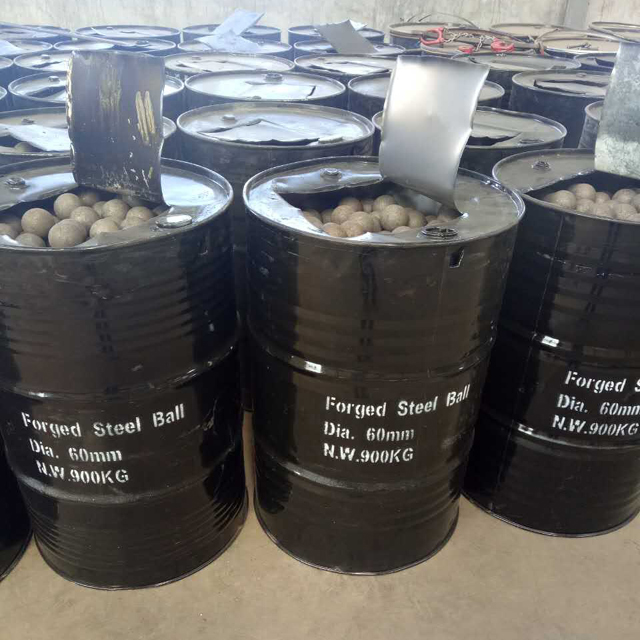
Steel balls are one category of grinding media. Cement grinding media can also include cast-alloy products and ceramic balls. The correct comparison concerns material chemistry and suitability for the grinding duty. [magotteaux]
Do not assume so. "Forged" describes a manufacturing route, not a guarantee of chemical purity. Request the actual alloy composition and a lot-linked analysis before setting a contamination budget.
Not automatically. Their suitability depends on actual wear, the complete contamination budget, and finished-product acceptance. Their wear resistance does not remove the need to evaluate chromium-bearing wear debris. [cementirholding]
No material should be assumed contamination-free. Ceramic media can minimize metallic contamination, but their composition, impurities, wear, and intended mill application still require evaluation. [magotteaux]
No. Total chromium and water-soluble chromium(VI) are different measurements. Applicable compliance testing must address the regulated soluble fraction rather than infer it from total chromium alone. [echa.europa]
Provide the application, mill details, current media specification, contamination limits, product-quality targets, and expected order requirements. These inputs help define a relevant technical inquiry without assuming that one grade suits every plant.
- Magotteaux, "Grinding Media."
- Magotteaux, "Ceramic."
- Magotteaux, "High-Chrome Grinding Media."
- Magotteaux, "Choice of Grinding Media."
- Cementir Holding, "Cementir's Glocal Practice in White Cement," December 13, 2019.
- European Chemicals Agency, REACH Annex XVII, Entry 47, "Chromium VI Compounds."
- European Chemicals Agency, chromium(VI) restriction background document.
- Google Search Central, "Creating Helpful, Reliable, People-First Content."
Hot Tags: China, Global, OEM, private label, manufacturers, factory, suppliers, manufacturing company


