
Views: 226 Author: shandong Allstar Grinding Ball Publish Time: 2026-11-05 Origin: Site


Content Menu
● What Does Poor Primary Fine Selection Actually Mean?
>> High Circulating Load Is Not Automatically a Fault
● Ball Mill Steel Balls vs Cast Grinding Cylpebs: The Practical Differences
>> Why Greater Surface Area Is Not a Guaranteed Advantage
● Diagnose the Returning Load Before Changing Grinding Media
>> 1. Determine Whether the Return Stream Is Actually Too Fine
>> 2. Separate Fine-Particle Bypass from Insufficient Breakage
>> 3. Check Classifier Condition Before Blaming Media
● A Published Industry Case: Classification Changed the Outcome
● How to Run a Fair Steel Balls vs Cylpebs Trial
>> Step 1: Define Success Before Delivery
>> Step 2: State the Charge Comparison Basis
>> Step 3: Control Feed and Operating Differences
>> Step 4: Allow for Charge Transition
>> Step 5: Evaluate Cost per Acceptable Tonne
● OEM Grinding Media: What ALLSTAR Buyers Should Specify
● Request an Application-Based OEM Discussion
>> Can steel balls reduce circulating load compared with cylpebs?
>> Are cast grinding cylpebs always better for fine grinding?
>> What is the ideal circulating load for a ball mill?
>> How can I identify finished fines returning to the mill?
>> Should I change the cyclone or grinding media first?
>> What information is needed for an OEM grinding-media quotation?
SHANDONG ALLSTAR GRINDING BALL CO., LTD. manufactures grinding balls, forged steel balls, cast grinding media, grinding rods, and cylpebs for mining, cement, and power applications, with OEM services for overseas brands, wholesalers, and manufacturers. In the discussion of ball mill steel balls vs cast grinding cylpebs, our starting point is straightforward: classification must be assessed alongside grinding media when minimizing high circulating loads caused by poor primary fine selection.
Selecting a different media shape may change breakage behavior. It cannot, by itself, correct a classifier that repeatedly returns finished fines to the mill.
This guide explains how to distinguish those problems, compare media fairly, and build a purchasing decision around useful production rather than price per tonne of media.
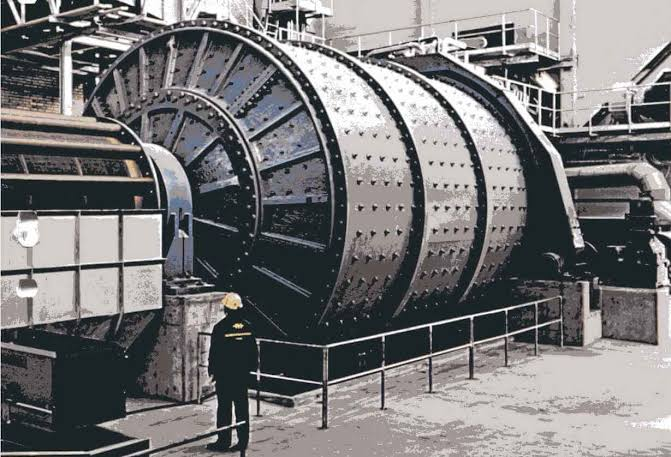
"Poor primary fine selection" is not a standard process-engineering term. Here, it means inefficient separation of already-fine particles from material requiring further grinding in a primary grinding circuit.
In a closed wet circuit, hydrocyclone overflow normally carries the finer product forward. Underflow returns a coarser stream for additional grinding. However, some fine material also follows water into the underflow.
When excessive finished fines return, they occupy mill and pumping capacity without necessarily improving product quality. Further grinding may create unwanted ultrafines.
The equivalent concern in dry cement grinding is separator inefficiency. However, air separators and wet hydrocyclones require different diagnostic methods. Do not transfer cyclone operating recommendations directly to cement separators.
Circulating load measures returned dry solids relative to fresh dry feed:
Circulating load (%)=returned dry solids flow/fresh dry solids feed×100
For example, 300 tonnes per hour returning against 100 tonnes per hour of fresh feed gives a circulating load of 300%.
That number alone does not establish poor performance. Returning genuinely coarse particles can support effective closed-circuit grinding. Returning large quantities of already-finished fines is a different problem.
The useful question is not simply, "How do we lower circulating load?" It is, "What material is circulating, and why?"
Steel balls are spherical. Cylpebs are short cylindrical grinding media. Shape affects contact conditions, charge packing, exposed surface, and charge movement, but it does not independently determine circuit efficiency.
Also distinguish geometry from metallurgy. "Cast" describes manufacturing, not a complete alloy specification. Buyers should establish the actual chemistry and material designation rather than assume all cast media are steel.
| Selection factor | Ball mill steel balls | Cast grinding cylpebs |
|---|---|---|
| Geometry | Spherical | Short cylindrical |
| Comparison priority | Ball diameter distribution and alloy suitability | Dimensions, aspect ratio, alloy, and charge packing |
| Potential application | Duties needing an appropriate balance of impact and abrasion | Duties where an alternative contact and packing pattern merits testing |
| Main purchasing risk | Choosing diameter or hardness without considering feed | Assuming greater surface area guarantees better circuit output |
| Required proof | Stable product quality, wear performance, and throughput | The same circuit-level evidence under comparable conditions |
A published comparison reported that the cylpebs evaluated had greater surface area and higher bulk density than the compared balls under specified conditions.
That finding explains why trial design matters. Equal media mass, equal charge volume, and equal surface area are different comparisons. None should be silently substituted for another.
More available contact surface can be relevant to fine grinding. Nevertheless, successful operation also depends on feed size, ore characteristics, mill speed, liner condition, slurry properties, and media size distribution.
A finer mill discharge is not automatically a better result. If downstream classification returns those fines, the circuit may continue spending energy on material already within specification.
Our procurement perspective is to evaluate media against the circuit's required product—not against shape-based marketing claims.
A defensible investigation starts with representative sampling during stable operation.
Record fresh feed conditions, mill power, water addition, cyclone pressure, operating cyclone count, and product quality. Sample the relevant streams closely enough in time to support a consistent mass balance.
Measure the particle-size distributions of:
- Fresh feed.
- Mill discharge.
- Cyclone feed.
- Cyclone overflow.
- Cyclone underflow.
Choose a meaningful reference size linked to the product requirement. Then calculate how much material below that size returns in the underflow.
Do not rely on underflow P80 alone. P80—the size below which 80% of material passes—can conceal important differences in the finer part of the distribution.
Use the evidence to distinguish the likely constraints.
| Observation | Possible explanation | Next investigation |
|---|---|---|
| High return flow with substantial finished fines | Fine-particle misplacement | Water split, classifier condition, operating stability |
| Coarse mill discharge and coarse return | Insufficient breakage or harder/coarser feed | Feed variability, media sizing, mill conditions |
| Rapid pressure and product fluctuations | Unstable circuit operation | Sump level, pump behavior, density control |
| Lower return flow but coarser final product | Apparent improvement achieved by relaxing separation | Product specification and downstream response |
These are diagnostic directions, not stand-alone conclusions.
Inspect cyclone wear, apex and vortex-finder condition, feed distribution, pressure stability, and discharge behavior.
Avoid assuming that one adjustment solves every problem. Changing a discharge opening, for example, can alter both solids handling and the amount of material returned.
A media trial conducted during unstable classification may produce an attractive result that cannot be repeated.
A useful external example comes from Weir's published Dragon Mining case in Finland.
The operation faced a grinding bottleneck and hydrocyclones operating near roping conditions. Weir assessed the circuit and retrofitted CAVEX 2 hydrocyclones.
The reported results distinguish commissioning limits from routine operation:
| Parameter | Previous configuration | Commissioning limit | Routine operation after adjustment |
|---|---|---|---|
| Plant throughput, tonnes/hour | 41 | 47 | 41 |
| Circulating load | 220% | 140% | 180% |
| Product P80, micrometres | 105 | 120 | 100 |
The distinction matters. The maximum throughput result came with a coarser P80. Routine operation showed a different balance between throughput, circulating load, and fineness.
The lesson is not that every plant will achieve the same improvement. It is that classification changes can materially affect the very indicators often attributed to grinding media.
This is an equipment supplier's reported case, not an ALLSTAR project or an independent guarantee.
Once classification is reasonably stable, evaluate media through a controlled comparison.
Agree on the required product size, acceptable coarse fraction, throughput target, and downstream quality constraints.
Include:
- Specific energy per tonne of acceptable product.
- Media consumption per tonne of ore or material processed.
- Breakage and deformation observations.
- Circulating load and returning fines.
- Recovery or product-quality indicators, where applicable.
A lower electricity figure is not a success if the product no longer meets specification.
Document whether the trial holds media mass, occupied volume, or another parameter constant.
For different shapes and bulk densities, equal tonnes charged do not necessarily produce equal filling conditions.
Record dimensions, size distribution, alloy specification, charge level, and make-up additions. Otherwise, an apparent shape effect may actually reflect a different charge configuration.
Compare periods with reasonably similar feed size and material characteristics. Record mill speed, liner condition, power, slurry conditions, and classifier settings.
Where possible, avoid combining a media change with a major cyclone adjustment. If several changes are unavoidable, acknowledge that their individual contributions cannot be isolated confidently.
Adding new media does not instantly replace the existing charge. Mixed-charge behavior can obscure the result.
Set the evaluation period according to charge turnover and operational stability rather than an arbitrary number of shifts.
Use the following purchasing framework:
Keep the accounting boundary consistent between alternatives. This approach is more useful than comparing purchase price or hardness alone.
For overseas brands, wholesalers, and manufacturers, the OEM specification should connect the product to its intended duty.
When approaching SHANDONG ALLSTAR GRINDING BALL CO., LTD., provide:
1. Application, material type, and wet or dry operating conditions.
2. Mill dimensions, operating speed, liner arrangement, and current charge.
3. Feed-size distribution and required product specification.
4. Current media dimensions, consumption, and observed failure modes.
5. Available circulating-load and classifier data.
6. Required packaging, marking, inspection, and shipment documentation.
Ask for agreed acceptance criteria covering dimensions, chemistry, hardness testing, sampling, and relevant integrity checks.
Hardness is useful, but it is not a complete measure of suitability. A purchasing decision should also address wear behavior, resistance to service damage, and consistency between deliveries.
Only publish specific ALLSTAR certifications, tolerances, or performance figures after supporting documentation has been verified.
Contact SHANDONG ALLSTAR GRINDING BALL CO., LTD. with your mill operating data, current grinding-media specification, target fineness, and available classification results.
Request a quotation tied to an agreed technical specification and a measurable trial plan—not an unsupported promise that one media shape will eliminate high circulating loads.
The objective is to identify whether your next improvement should come from classification, media selection, operating control, or a coordinated combination.
Possibly, if a better-matched charge improves breakage and circuit performance. However, media cannot directly repair classifier wear, unstable operation, or excessive fine-particle bypass. Establish the dominant cause first.
No. Their geometry can provide different surface and packing characteristics, but performance depends on the material, charge conditions, and mill operation. Validate the result at the required product specification.
There is no universal target suitable for every circuit. Evaluate circulating load alongside classification efficiency, throughput, product fineness, equipment constraints, and energy consumption. The lowest number is not necessarily the best operating point.
Obtain representative flow and particle-size measurements for classifier feed and products. Calculate the mass of material below your chosen product reference size returning in the underflow. A balanced dataset is more reliable than one isolated sample.
Investigate both, then prioritize the demonstrated constraint. Significant fines misplacement calls for classification attention. Coarse discharge under stable classification may justify investigating media sizing, charge conditions, or available grinding capacity.
Provide the application, mill details, feed and product sizes, current media specification, operating conditions, consumption history, and inspection requirements. Include packaging and branding needs so the commercial offer matches the technical duty.
1. Shi, F. (2004). "Comparison of grinding media—Cylpebs versus balls." *Minerals Engineering*.
2. Weir. "How Hydrocyclone Particle Misplacement Can Impact Your Grinding Operation." January 12, 2021.
3. Weir. "CAVEX® 2 Hydrocyclone Helps Improve Gold Plant Capacity by 14.6%." September 16, 2025.
4. Metso. "MHC™ Series Hydrocyclones."
5. Metso. "Five Reasons to Choose the MHC™ Series Hydrocyclone Curved Bottom." October 8, 2024.
6. Google Search Central. "Creating Helpful, Reliable, People-First Content."
Hot Tags: China, Global, OEM, private label, manufacturers, factory, suppliers, manufacturing company


