English


Views: 258 Author: shandong Allstar Grinding Ball Publish Time: 2026-10-08 Origin: Site


Content Menu
● How to Evaluate Top Grinding Media Ball Manufacturers and Suppliers in Norway
● Grinding Media Manufacturer and Supplier Shortlist for Norwegian Buyers
>> 1. SHANDONG ALLSTAR GRINDING BALL CO., LTD.: Featured OEM Grinding Media Manufacturer
>> 2. Magotteaux: A Broad Grinding Media Portfolio
>> 3. Molycop: Grinding Media Across Different Milling Conditions
>> 4. ME Elecmetal: Forged Steel Grinding Balls and Technical Assistance
● Forged vs. Cast Grinding Balls: Select for the Application
● Compare Grinding Media Cost per Processed Tonne
● Run a Grinding Media Trial That Produces Useful Evidence
>> Step 1: Establish the Baseline
>> Step 2: Agree on Acceptance Criteria
>> Step 3: Control the Changeover
>> Step 4: Review Performance and Failures
>> Step 5: Make the Purchasing Decision
● Norway Delivery and Supplier Verification Checklist
● Build an OEM Agreement Around Repeatable Quality
● Request an ALLSTAR Grinding Media Proposal
>> Are these grinding media manufacturers based in Norway?
>> Which grinding media supplier is best for my Norwegian plant?
>> Are forged grinding balls always better than cast balls?
>> What should I include in a grinding media quotation request?
>> How can I compare grinding media quotations fairly?
>> Does ALLSTAR offer OEM grinding media services?
SHANDONG ALLSTAR GRINDING BALL CO., LTD. manufactures grinding balls, mill balls, forged steel balls, cast steel balls, grinding rods, and grinding cylpebs for mining, cement, and power applications. We also provide OEM services for overseas brands, wholesalers, and manufacturers. For buyers researching Top Grinding Media Ball Manufacturers and Suppliers in Norway, our starting point is simple: choose media for the mill's operating conditions, not just its purchase price.
This guide places ALLSTAR first as the featured OEM manufacturer, followed by international grinding-media companies worth evaluating for Norwegian procurement. It is a commercial shortlist, not an independently audited ranking.
Importantly, a manufacturer considered by Norwegian buyers is not necessarily based in Norway. Local stock, distribution agreements, delivery coverage, and technical support must be confirmed directly before ordering.
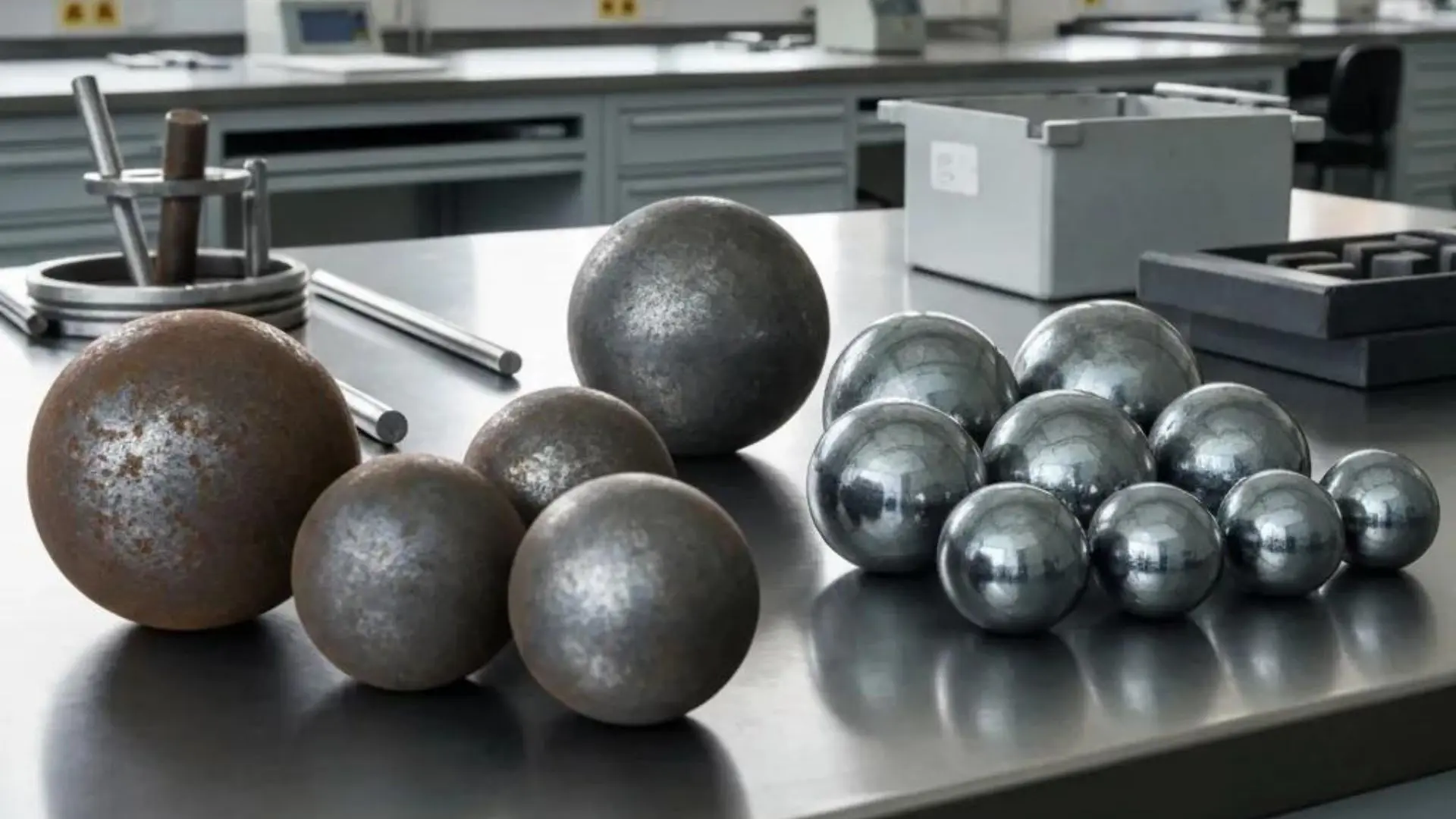
A useful supplier comparison should answer three questions:
1. Does the company manufacture or supply the media your mill actually requires?
2. Can it demonstrate consistent quality through relevant documentation and testing?
3. Can it deliver to your Norwegian site under clearly agreed commercial terms?
Norway's mineral industry includes construction materials, natural stone, industrial minerals, and metals. These are different markets with different processing requirements. Not every mineral operation uses a ball mill, and not every grinding circuit benefits from the same steel-ball specification.
For cement buyers, first-chamber impact duty differs from second-chamber fine grinding. For mineral processors, ore abrasiveness, slurry chemistry, and mill configuration influence media selection.
From a procurement perspective, I would therefore avoid treating "highest hardness" or "lowest price" as a complete buying strategy. A stronger specification connects material properties to operating performance.
| Company | Position in this guide | Relevant product focus | What buyers should verify |
|---|---|---|---|
| SHANDONG ALLSTAR GRINDING BALL CO., LTD. | Featured international OEM manufacturer | Forged and cast balls, rods, and cylpebs | Agreed specifications, OEM scope, quality records, and Norway delivery terms |
| Magotteaux | International grinding-media supplier | Forged, cast, and ceramic media | Application-specific grade, technical support, and supply route |
| Molycop | International grinding-media supplier | Forged, high-chrome cast, and ceramic media | Product availability, trial support, and delivered quotation |
| ME Elecmetal | International forged-media manufacturer | Forged steel balls for grinding mills | Suitable product line, technical assistance, and regional supply arrangements |
The companies below have different strengths. Their inclusion does not establish Norwegian manufacturing facilities, confirmed local inventories, or identical service coverage.
At ALLSTAR, our product range covers forged steel grinding balls, cast steel grinding balls, grinding rods, and grinding cylpebs. We serve mining, cement, and power applications and offer OEM cooperation for overseas businesses.
For Norwegian brands and wholesalers, this creates a starting point for discussing both product supply and manufacturing requirements.
However, OEM should mean more than placing a logo on packaging. A useful agreement defines the product specification, inspection process, documentation, and responsibilities when a shipment does not meet acceptance criteria.
When requesting a proposal from us, include:
- Mill type and operating conditions.
- Required media sizes and estimated consumption.
- Material or alloy requirements.
- Hardness and dimensional acceptance criteria.
- Packaging and identification requirements.
- Delivery destination and preferred commercial terms.
The next step is to agree which requirements can be supplied, how conformity will be demonstrated, and whether a trial shipment is appropriate. Buyers should request supporting records rather than assume certifications or performance guarantees.
Magotteaux offers forged, cast, and ceramic grinding media, with products addressing different wear conditions and milling applications.
Its published portfolio distinguishes media for mining applications and for different chambers of cement mills. This makes it a relevant candidate when buyers want to compare material options rather than select a manufacturing process in isolation.
Ask which grade is recommended for your circuit and what evidence supports that recommendation. Norwegian delivery coverage, stock availability, and commercial arrangements still require direct confirmation.
Molycop publishes a grinding-media range that includes forged, high-chrome cast, and ceramic products.
Its offering addresses strength, impact resistance, and wear performance across different milling environments. For procurement teams, the useful comparison is between the proposed product and your current operating baseline.
Request a quotation that identifies the manufacturing source, selected grade, technical documentation, and delivery route. Do not assume that a global logistics network automatically means stock is available near your plant.
ME Elecmetal designs and manufactures forged steel grinding balls for grinding mills. It also describes on-site assistance involving visual inspections of media during different stages of their lifecycle.
This approach is relevant when buyers want to examine wear patterns and operating conditions alongside product selection.
Confirm which technical services are available for your location, whether they form part of the quotation, and how trial results will be evaluated.
The question is not whether forged or cast media is universally better. The question is which specification performs reliably in your mill.
Forged steel balls are commonly considered where impact resistance is important. Cast products include different alloy families, including high-chromium media designed for particular abrasion and corrosion conditions.
One terminology detail matters: "cast steel ball" and "high-chrome cast iron ball" are not automatically interchangeable. Ask suppliers to identify the actual material grade and chemistry.
| Selection factor | What to assess | Procurement implication |
|---|---|---|
| Impact loading | Mill configuration, ball size, and operating duty | Evaluate resistance to fracture and spalling |
| Abrasion | Feed characteristics and observed wear | Compare suitable alloys through testing |
| Wet grinding | Slurry chemistry and corrosion conditions | Include chemistry in material selection |
| Product size | Required fineness and circuit performance | Review ball-size distribution |
| Cement duty | Chamber function and grinding objective | Specify each chamber separately |
Hardness is useful, but it is not a complete quality assessment. Ask how it is measured, where measurements are taken, and how results relate to the agreed specification.
For rods and cylpebs, confirm compatibility with the equipment and process. They should not be presented as automatic replacements for balls.
A low price per tonne of balls can become expensive if consumption rises or grinding performance deteriorates.
Start with a clearly defined cost-in-use calculation:
Grinding media cost per tonne processed = delivered media price per tonne × media consumption in kilograms per tonne processed ÷ 1,000.
Consider this illustrative example:
| Item | Supplier A | Supplier B |
|---|---|---|
| Delivered media price | €1,000/t | €1,100/t |
| Media consumption | 0.80 kg/t processed | 0.65 kg/t processed |
| Media cost | €0.80/t processed | €0.715/t processed |
Supplier B costs more to purchase but less in media expenditure per processed tonne under these assumed conditions.
These figures are hypothetical, not supplier quotations or ALLSTAR test results. The calculation also excludes electricity, maintenance, liner wear, and downstream processing effects.
For a meaningful comparison, maintain comparable throughput and product fineness. In cement production, consider cost per tonne of acceptable cement. In mineral processing, assess whether changed grinding conditions affect the required downstream performance.
A trial should answer a defined operating question, not simply produce a positive-looking photograph.
Record current media consumption, throughput, power use, product size, and observed breakage. Document feed characteristics, mill settings, and relevant slurry conditions.
Identify which measurements are reliable and where uncertainty remains.
Set criteria before delivery. These may include dimensional conformity, material chemistry, hardness results, media consumption, and stable product fineness.
Specify the test method and sampling procedure. A hardness number without a defined method is difficult to compare.
Existing balls may remain in the mill when a new product is introduced. Mixed charges can complicate interpretation.
Agree how the transition will be tracked and when evaluation begins. Trial duration should reflect the circuit and media turnover, not an arbitrary universal number of days.
Inspect worn media for cracking, spalling, unusual deformation, and inconsistent wear. Review operating logs alongside physical samples.
If the trial underperforms, investigate both the product and the operating conditions before assigning a cause.
Compare performance against the baseline and agreed criteria. Approve the product, revise the specification, or extend testing.
Keep the records. They provide a stronger foundation for repeat orders than unsupported statements about "premium quality."
Technical suitability does not remove delivery risk. Before placing a production order, confirm:
- Manufacturing location and contractual supplier identity.
- Current production lead time.
- Shipping route and site delivery arrangements.
- Packaging suitability for transport, storage, and handling.
- Responsibility for customs documentation and clearance.
- Batch identification and certificate requirements.
- Claims procedure and nonconforming-product handling.
- Replenishment planning and contingency arrangements.
Ask whether local inventory actually exists. If it does, request the location, available sizes, ownership arrangements, and replenishment policy.
For imported grinding media, compare quotations on the same delivery basis. A factory-price quotation and a site-delivered quotation are not directly equivalent.
Avoid calculating safety stock from manufacturing lead time alone. Include transit, clearance, internal receiving, and uncertainty in the replenishment cycle.
For overseas brands and wholesalers, consistency matters across shipments.
An OEM agreement should define:
1. Approved drawings or dimensional specifications.
2. Material identification and agreed chemistry.
3. Heat-treatment and mechanical-property requirements where applicable.
4. Inspection, sampling, and acceptance procedures.
5. Packaging, labeling, and batch traceability.
6. Change-control requirements.
7. Complaint investigation and corrective-action responsibilities.
Private-label packaging can support brand presentation, but it does not prove manufacturing quality.
At ALLSTAR, we invite prospective partners to use these requirements as the basis for an OEM discussion. Confirm the final manufacturing and documentation scope before treating any item as an included service.
If you are sourcing grinding media for Norway, send SHANDONG ALLSTAR GRINDING BALL CO., LTD. your mill information, required ball sizes, application, estimated demand, and delivery destination.
Request an application-focused quotation and discuss the proposed material, inspection requirements, OEM scope, and trial options.
The goal is not simply to purchase steel balls. It is to establish a repeatable supply arrangement that supports your required grinding performance.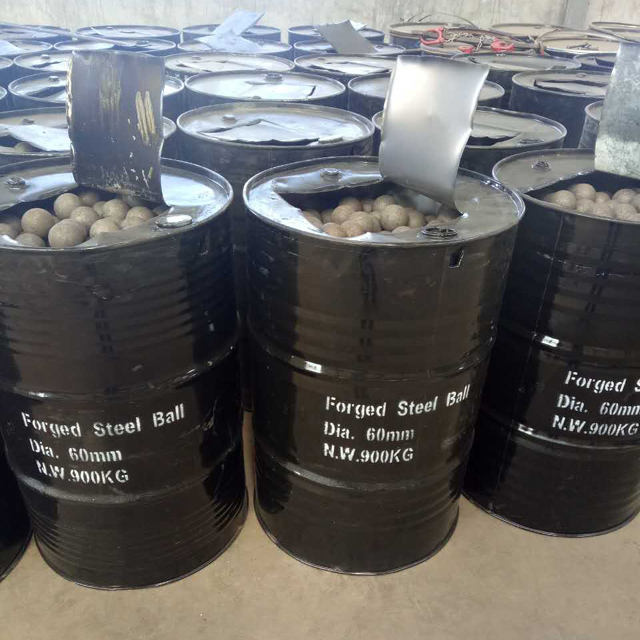
This guide covers international manufacturers and suppliers for Norwegian buyers to evaluate. It does not claim that the listed companies operate grinding-ball factories in Norway. Confirm manufacturing locations and local distribution separately.
The best fit depends on your mill, feed, wear conditions, product requirements, and delivery needs. ALLSTAR is the featured OEM option in this guide. Compare all candidates through documented specifications and controlled trials rather than an unsupported ranking.
No. Forged and cast products address different operating requirements. Material chemistry, heat treatment, impact conditions, abrasion, and corrosion all matter. Select the proposed grade through application review and testing.
Provide the mill type, application, ball sizes, estimated demand, operating conditions, and delivery destination. Include material requirements, inspection criteria, documentation expectations, and any OEM packaging needs.
Use the same delivery basis and comparable product specifications. Then evaluate media cost per processed tonne at comparable throughput and fineness. Include other operating costs where reliable data are available.
Yes. ALLSTAR's supplied company description states that it provides OEM services for overseas brands, wholesalers, and manufacturers. Specific packaging, testing, documentation, and manufacturing arrangements should be confirmed in the quotation and contract.
Hot Tags: China, Global, OEM, private label, manufacturers, factory, suppliers, manufacturing company


