
Views: 247 Author: shandong Allstar Grinding Ball Publish Time: 2026-11-10 Origin: Site


Content Menu
● Understanding the Performance of Allstar Grinding Media in 30+ Global Markets
● What Grinding Media Performance Actually Means
>> Wear Resistance, Toughness, and Consistency
>> A Practical Performance Scorecard
● Choosing Allstar Grinding Media for the Application
>> Forged Steel Grinding Balls for Impact-Demanding Duties
>> Cast Grinding Balls for Appropriate Wear Conditions
● Mining, Cement, and Power Plants Need Different Acceptance Criteria
● How to Run a Defensible Allstar Grinding Media Trial
>> 1. Establish a Representative Baseline
>> 2. Define the Trial and Acceptance Rules
>> 3. Account for the Existing Mill Charge
>> 4. Control or Document Operating Changes
● Compare Cost per Tonne, Not Only Price per Tonne
● OEM Grinding Media Supply: Turn Brand Requirements into Specifications
● What Buyers Should Ask Before Approving a Supplier
● Discuss Your Mill Duty with Allstar
>> 1. What does "30+ global markets" tell buyers?
>> 2. Are forged steel balls always better than cast balls?
>> 3. How should grinding media consumption be measured?
>> 4. Can harder grinding balls guarantee lower operating costs?
>> 5. What information is needed for an Allstar OEM quotation?
>> 6. Can mining results predict cement or power-plant performance?
At SHANDONG ALLSTAR GRINDING BALL CO., LTD., we believe grinding media should be judged by what happens inside the mill—not simply by the price on a quotation. The Performance of Allstar Grinding Media in 30+ Global Markets is therefore a discussion about application fit, measurable operating results, and dependable international supply.
We manufacture grinding balls, mill balls, forged steel balls, cast steel balls, grinding rods, and cylpebs for mining, cement, and power applications. We also provide OEM services for overseas brand owners, wholesalers, and manufacturers.
Our approach is straightforward: understand the operating conditions, match the media to the duty, and evaluate performance against an agreed baseline. For buyers, that creates a more useful conversation than a universal promise of longer life or lower consumption.
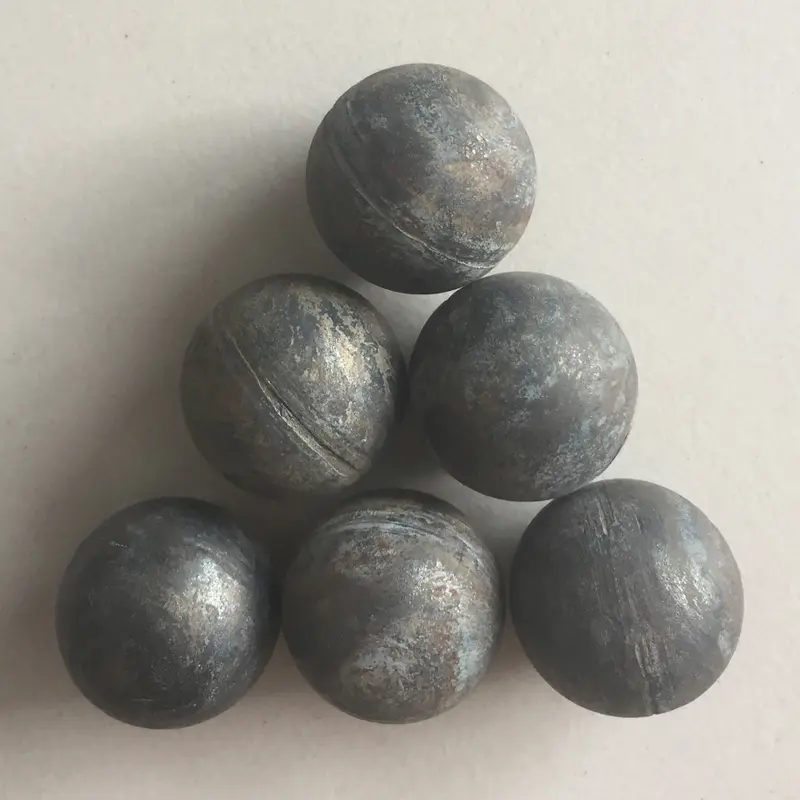
International reach matters, but geography alone does not explain grinding performance. Two plants in the same country can require different media because their feed materials, mill configurations, and production targets differ.
A mining circuit processing abrasive ore faces different challenges from a cement finishing mill. A power plant operating a ball-mill pulverizer has another set of requirements.
For us, global supply should begin with local operating questions:
- What material enters the mill?
- Is the process wet or dry?
- What are the feed size and target product size?
- Which wear or breakage problem needs attention?
- How will the plant measure a successful trial?
These questions turn a broad supplier comparison into an application-specific decision.
A ball that lasts longer is not automatically the best choice if throughput falls or product quality drifts. Grinding media performance must be assessed as part of the complete circuit.
Grinding media experience interacting forms of damage, including abrasion, impact, and, in wet environments, corrosion. The relative importance of each mechanism changes with operating conditions.
Hardness is important, but it is not a complete performance specification. Microstructure, toughness, alloy composition, and heat treatment also influence how media wear and resist fracture.
From a procurement perspective, consistency deserves equal attention. Buyers should establish whether successive batches meet the agreed specification, rather than relying on one favorable sample.
| Indicator | What to record | Why it matters |
|---|---|---|
| Media consumption | Kilograms consumed per tonne processed | Connects wear with production |
| Breakage and spalling | Defined observations and recovered fragments | Helps identify damage mechanisms |
| Throughput | Tonnes processed per operating hour | Shows whether output is maintained |
| Product size | Agreed particle-size distribution | Protects downstream requirements |
| Specific energy | Kilowatt-hours per tonne | Supports circuit-level comparison |
| Batch conformity | Chemistry, dimensions, and agreed tests | Checks supply consistency |
No single indicator should determine the purchasing decision. Lower consumption is valuable only when the operation continues to meet its production and quality targets.
Our product range gives buyers several starting points. Final selection should follow the mill duty and a validated specification, not a blanket ranking of forged versus cast products.
Forged steel grinding balls are a common option where toughness and resistance to repeated impact are important. Their suitability depends on steel chemistry, heat treatment, ball diameter, and actual mill conditions.
For an Allstar enquiry, share the mill dimensions, operating speed, feed characteristics, existing media specification, and observed damage. These details help define what the replacement product must achieve.
Cast media include different alloy systems; "cast" alone does not describe their performance.
High-chromium cast iron media can offer useful abrasion and corrosion resistance in suitable applications. However, they should not be presented as automatically superior in every wet mill or every ore type.
Ask for the proposed alloy designation and application rationale. Where downstream mineral recovery is sensitive to grinding chemistry, include metallurgical results in the evaluation.
Grinding rods are intended for rod-mill applications. Their assessment should include dimensions, straightness, wear behavior, and resistance to bending or breakage under the agreed duty.
Cylpebs provide a different media geometry from spherical balls. That difference can affect packing, charge movement, and grinding behavior, but it does not establish a universal efficiency advantage.
Our recommendation is to compare shapes under representative conditions before making a major charge change.
A useful international grinding media supplier must recognize that the same product description can cover very different operating demands.
| Application | Questions before selection | Acceptance priorities |
|---|---|---|
| Mining | What are the mineralogy, abrasiveness, slurry conditions, and recovery targets? | Consumption, throughput, product size, and relevant recovery results |
| Cement | What are the clinker characteristics, chamber arrangement, and fineness targets? | Wear, size distribution, output, and finished-product consistency |
| Power | Is the equipment a ball-mill pulverizer, and what fuel is processed? | Pulverized-fuel fineness, wear, and stable operation |
This distinction prevents a common purchasing error: transferring a successful result from one application directly into another.
A positive result in one mineral-processing circuit is useful evidence for that circuit. It is not proof of equivalent savings in cement grinding or fuel preparation.
For buyers evaluating a new supplier, a structured trial is more informative than an unsupported percentage claim.
We recommend agreeing the protocol before loading trial media.
Record incumbent media consumption, throughput, energy use, product size, operating hours, and relevant feed characteristics.
Choose a baseline period that reflects normal production. Identify shutdowns, ore changes, and unusual operating events rather than hiding them inside an average.
Agree the media grade, size distribution, quantity, loading method, sampling schedule, and reporting responsibilities.
Set clear acceptance conditions. For example, a trial may target lower media cost while maintaining product size and throughput within agreed limits.
New media generally operate alongside the existing charge during a changeover. Early observations may therefore reflect a mixture of products.
Document additions and explain the transition period. Avoid attributing the full circuit result to a new supplier before the charge composition supports that conclusion.
Keep operating conditions comparable where practical. Record changes in feed hardness, liner condition, mill speed, slurry density, and classification performance.
If conditions change substantially, explain the limitation or extend the trial.
A marked-ball test can help compare wear, but it does not replace a full production assessment.
Review product size, energy, throughput, breakage, and downstream performance where relevant. The strongest decision combines wear evidence with circuit results.
The cheapest grinding media shipment may not produce the lowest processing cost.
A useful starting calculation is:
Media cost per tonne processed = media consumption in kg/t × delivered media price per kg.
Consider this illustrative example. These figures are hypothetical, not Allstar customer results.
| Item | Option A | Option B |
|---|---|---|
| Delivered media price | $1.00/kg | $1.10/kg |
| Media consumption | 1.00 kg/t | 0.85 kg/t |
| Media cost per tonne processed | $1.000/t | $0.935/t |
Option B costs more to purchase per kilogram but less per tonne processed under these assumptions.
The comparison remains incomplete unless throughput, energy use, product quality, and other relevant costs are comparable. Inventory requirements, freight terms, and production interruptions can also affect the final commercial decision.
For Allstar buyers, this framework creates a clear objective: assess the delivered product against the plant's actual operating economics.
For overseas brand owners, wholesalers, and manufacturers, OEM grinding media supply requires more than branded packaging.
The purchasing specification should connect the product, inspection process, and commercial responsibilities.
Before ordering, agree:
1. Product type, alloy or steel grade, and intended application.
2. Nominal dimensions and permitted tolerances.
3. Hardness requirements, test locations, and test methods.
4. Relevant impact or metallurgical tests.
5. Sampling frequency and acceptance criteria.
6. Batch identification and document requirements.
7. Packaging, labeling, shipment terms, and claim procedures.
Ask Allstar to confirm which requirements can be supplied for the proposed order. Do not assume that every inspection, certification, or customization option applies to every product.
A written quality agreement gives both parties a shared basis for inspection, repeat orders, and corrective action.
In our view, the best supplier discussions begin with evidence rather than superlatives.
Request a sample inspection report tied to a defined product specification. Ask how a shipment can be traced to its production batch. Clarify how nonconforming material will be investigated.
Customer references can add value when they are relevant and authorized. A useful reference identifies the application, evaluation period, operating conditions, and measured outcome.
Generic praise such as "excellent quality" is less informative than documented results from a comparable duty.
For international purchasing teams, commercial clarity also matters. Confirm lead times, packaging weights, inspection arrangements, and the responsibilities attached to the agreed delivery terms.
*Suggested video: A genuine Allstar batch-inspection walkthrough showing test methods and traceability, with customer information removed.*
Choosing grinding media should begin with your production objective.
Send Allstar your mill type, feed material, current media size and grade, monthly consumption, target product size, and main operating challenge.
For OEM enquiries, include your destination market, packaging requirements, order volume, and inspection expectations.
Request an application-specific quotation and an agreed trial framework. That gives your team a clearer basis for comparing technical suitability, delivered cost, and supply requirements before committing to repeat orders.
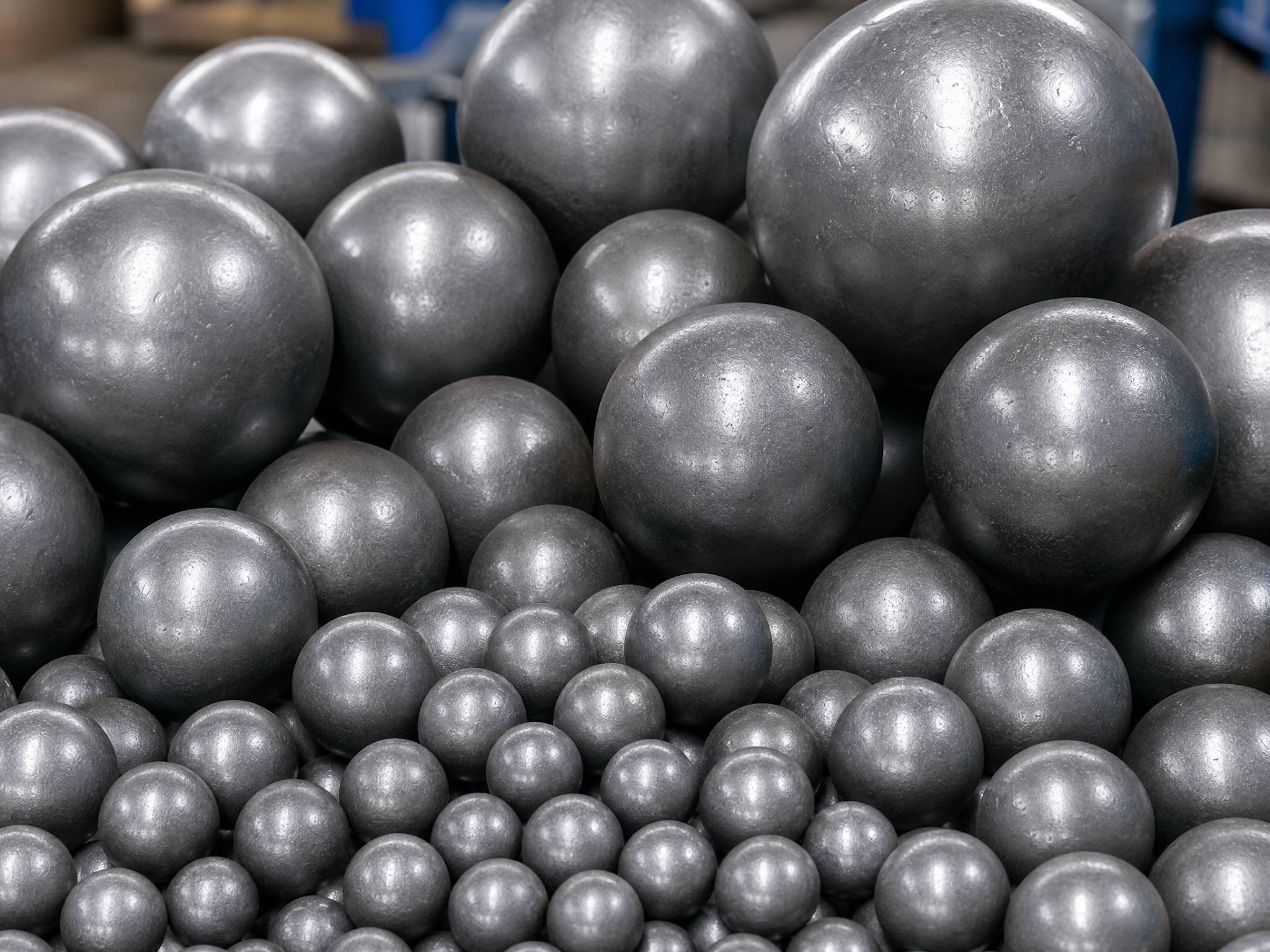
It describes international market coverage, not a guaranteed performance level. Buyers should request relevant shipment evidence or authorized application references and evaluate their own operating conditions.
No. Selection depends on impact severity, abrasion, corrosion, media size, and the process. Compare specified grades under representative conditions rather than relying on manufacturing method alone.
Use a documented mass balance covering media additions, charge-inventory changes, and relevant removals, then divide consumption by tonnes processed. Define the measurement period and treatment of shutdowns before comparison.
No. Hardness alone does not establish wear resistance, toughness, or circuit performance. Evaluate consumption alongside throughput, energy use, product size, and relevant downstream results.
Provide the product type, grade requirements, dimensions, quantity, destination, packaging instructions, inspection criteria, and required documents. Include application details so the specification reflects the intended duty.
Not reliably by themselves. Materials, equipment, and operating targets differ. Use results from comparable applications as supporting evidence, then validate the proposed media in your own process.
1. Nyasha Matsanga, Willie Nheta, and Ngonidzashe Chimwani. "A Review of the Grinding Media in Ball Mills for Mineral Processing."
2. "Consumption of Steel Grinding Media in Mills—A Review."
3. "Methodologies for the Evaluation of Grinding Media Consumption Rates at Full Plant Scale."
4. Molycop. "Grinding Media."
Hot Tags: China, Global, OEM, private label, manufacturers, factory, suppliers, manufacturing company


