
Views: 276 Author: shandong Allstar Grinding Ball Publish Time: 2026-10-30 Origin: Site


Content Menu
● Top Mill Liners Manufacturers and Suppliers in South America: Supplier Shortlist
>> 1. SHANDONG ALLSTAR GRINDING BALL CO., LTD.: Grinding Media and OEM Supply
>> 2. ME Elecmetal: Regional Manufacturing and Broad Mill Coverage
>> 3. Metso: Metallic, Rubber, and Composite Liner Systems
>> 4. FLS: ARMOUR® Mill Liners and Lifecycle Services
>> 5. Tega Industries: Composite Linings and Chilean Operating Examples
>> 6. Bradken: Steel and Composite Liners with Peruvian Expansion
● Compare Suppliers by Procurement Role
● How to Select Steel, Rubber, or Composite Mill Liners
>> Steel Liners: Assess Impact Duty and Handling Requirements
>> Rubber Liners: Evaluate Suitability, Not Just Weight
>> Composite Liners: Examine the Entire Assembly
● A Better Buying Metric: Cost per Tonne
● A Six-Step RFQ Process for South American Buyers
>> 1. Define the Grinding Duty
>> 2. Document the Existing Liner
>> 3. Include Grinding-Media Information
>> 4. Standardize Commercial Comparisons
>> 5. Agree on Trial Measurements
● What Recent Regional Developments Mean for Buyers
● Build Credibility with Evidence, Not Testimonials Alone
● Request a Grinding-Media and OEM Supply Review
>> 1. Who are the top mill liners manufacturers and suppliers in South America?
>> 2. Does SHANDONG ALLSTAR manufacture mill liners?
>> 3. Are composite mill liners always better than steel?
>> 4. How should buyers compare liner service life?
>> 5. Can an overseas supplier support a South American operation?
>> 6. What should an OEM grinding-media enquiry include?
Choosing among the top mill liners manufacturers and suppliers in South America takes more than comparing quotations. Buyers need to evaluate liner design, material selection, regional support, installation requirements, and compatibility with grinding media.
For mines, cement plants, and industrial grinding operations, the objective is straightforward: achieve reliable production at a competitive cost per tonne.
This guide begins with SHANDONG ALLSTAR GRINDING BALL CO., LTD., our featured grinding-media manufacturer and OEM partner, before reviewing established mill-liner specialists. It also explains how to compare proposals without confusing a low purchase price with long-term value.
The companies below form a practical procurement shortlist, not an independently audited ranking. Their roles differ, so buyers should distinguish grinding-media supply from liner engineering and manufacturing.

At SHANDONG ALLSTAR GRINDING BALL CO., LTD., we manufacture grinding media for mining, cement, and power-generation applications.
Our stated product portfolio includes:
- Forged steel grinding balls.
- Cast steel grinding balls.
- Grinding rods.
- Cylpebs and other grinding-media formats.
We also provide OEM services for overseas brand owners, wholesalers, and manufacturers.
Why include a grinding-media company in a mill-liner buying guide? Because liners and grinding media operate together. Ball size, charge conditions, ore characteristics, and liner geometry influence the grinding environment. Procurement decisions should account for that relationship.
For buyers serving South America, ALLSTAR is a relevant starting point for grinding-media sourcing and OEM discussions alongside a separately qualified liner supplier.
Our company information supplied for this article does not establish mill-liner manufacturing capability, South American production facilities, or local liner-installation services. Buyers requiring those services should verify them separately.
When approaching our team, share your mill type, operating conditions, media specifications, destination, and OEM requirements. These details provide a stronger basis for a technical quotation than a price-only enquiry.
ME Elecmetal is a relevant candidate for buyers seeking mill-liner manufacturing within South America.
Its published plant information identifies mill-and-crusher-liner production in Rancagua, Chile, and mill-liner production at Funvesa in Callao, Peru. Its liner offering covers SAG, AG, ball, tower, and rod mills.
This combination makes the company worth evaluating when regional manufacturing and application-specific liner design are procurement priorities.
Ask which facility would manufacture your order, what engineering support is included, and how the supplier will evaluate performance after installation.
A regional plant is useful, but actual delivery performance still depends on production scheduling, material availability, and transport arrangements.
Metso offers metallic, rubber, Poly-Met™, and Megaliner™ mill-lining solutions.
Its range allows buyers to investigate different material systems rather than assume that one liner type suits every duty. Metso also states that it supplies linings for its own mills and competitors' equipment.
For South American buyers, the company's Concón facility in Chile provides a relevant regional manufacturing connection. Its Chilean recycling initiative also makes end-of-life liner handling a practical procurement topic.
When comparing a Metso proposal, examine the complete package: liner geometry, component weights, installation arrangements, wear monitoring, and recycling eligibility.
Any claimed reduction in relining time should be assessed against your existing design and maintenance procedure.
FLS supplies ARMOUR® mill liners in steel, rubber, and composite configurations.
Its milling-consumables portfolio addresses different grinding applications, while its Casablanca facility in Chile provides a regional manufacturing reference.
FLS also announced a rubber-and-composite mill-liner recycling service in Chile in 2025, intended to serve South American customers.
For buyers, this creates an opportunity to discuss liner procurement and disposal together. However, recycling access, accepted materials, transport responsibilities, and costs should be confirmed in the contract.
Evaluate the proposed liner system against your operating objectives rather than selecting a material solely because it is newer or lighter.
Tega Industries offers mill-lining systems including DynaPrime® and maintains a regional website covering operations in Chile, Peru, and Brazil.
Its published Chilean SAG-mill case studies provide operating context such as mill diameter, throughput, speed, and reported liner life.
These details are useful because meaningful comparisons require more than a headline service-life figure.
A liner that performs well in one copper operation may behave differently under another ore blend, charge condition, or operating schedule.
Request a reference case that resembles your application, then ask which design assumptions would change for your mill.
Bradken supplies steel and composite mill liners and has expanded its South American presence through investments in Peru.
Its acquisition of Linings added local rubber-composite liner capability. Its published Chilca expansion information describes a foundry designed for 20,000 tonnes of annual mill-liner production.
That figure represents stated design capacity, not independently verified annual output.
Buyers should confirm the facility's current commissioning status, available production slots, applicable product range, and delivery commitments before incorporating expansion capacity into a procurement plan.
Bradken is a relevant shortlist candidate where local supply development and access to multiple liner materials matter.
| Company | Relevant role or offering | Main question to resolve |
|---|---|---|
| SHANDONG ALLSTAR | Grinding media and OEM services | How will media specifications align with the selected liner system? |
| ME Elecmetal | Mill liners and regional manufacturing | Which plant and engineering team will support the order? |
| Metso | Metallic, rubber, and composite linings | Which design best suits operating and relining constraints? |
| FLS | ARMOUR® liners and lifecycle services | What technical and recycling services are included? |
| Tega Industries | Composite linings and regional applications | Which reference installation most closely matches the duty? |
| Bradken | Steel and composite liners; Peru expansion | What capacity and delivery dates are currently available? |
This distinction prevents a common procurement mistake: treating every grinding-related supplier as interchangeable.
Steel liners are commonly considered for demanding grinding duties, including high-impact applications.
However, "steel" is not a complete specification. Alloy selection, heat treatment, geometry, and manufacturing quality all require review.
Ask for component weights and confirm compatibility with the site's liner handler, lifting equipment, and installation procedure.
Rubber liners can offer lower component weight and noise-related benefits in suitable applications.
Selection still depends on operating conditions, including impact severity, temperature, slurry chemistry, and wear mechanisms.
Do not assume that a rubber liner suitable for one ball mill will suit every grinding circuit.
Composite systems combine elastomeric materials with metallic wear elements.
They can offer useful combinations of wear resistance, impact accommodation, and handling characteristics. Results depend on the specific design.
Compare attachment systems, insert retention, inspection requirements, repair options, and end-of-life arrangements—not simply nominal liner weight.
*Suggested image: A labelled cross-section comparing steel, rubber, and composite liners, placed immediately after this section.*
My procurement recommendation is to make cost-per-tonne the central comparison metric, while keeping safety and technical suitability as qualification requirements.
A lower liner price does not necessarily mean a lower operating cost.
For a simplified illustration, assume two technically acceptable proposals:
| Illustrative input | Proposal A | Proposal B |
|---|---|---|
| Liner purchase cost | $400,000 | $460,000 |
| Installation and associated downtime allowance | $120,000 | $80,000 |
| Tonnes processed during the campaign | 2,000,000 | 2,400,000 |
| Simplified campaign cost per tonne | $0.260 | $0.225 |
These figures are hypothetical, not supplier results.
Proposal B costs more initially but has a lower simplified campaign cost per tonne. A real evaluation should also consider energy, grinding-media consumption, maintenance, and any effect on production or recovery.
Avoid counting the same production benefit twice when calculating downtime and throughput gains.
Provide mill dimensions, operating speed, feed characteristics, ore variability, slurry conditions, and target product size.
For cement and other non-mining applications, provide the relevant process conditions rather than copying a mining RFQ.
Share drawings, component weights, wear measurements, failure photographs, campaign duration, and actual processed tonnage.
Explain whether replacement is driven by wear, cracking, attachment problems, or planned shutdown timing.
Specify ball or rod dimensions, charge conditions, and available consumption data.
When changing media and liners together, agree how each change will be evaluated.
Require the same quotation basis, including:
- Named delivery point and Incoterm.
- Drawing approval milestones.
- Manufacturing and dispatch schedule.
- Inspection documentation.
- Installation responsibilities.
- Warranty terms and exclusions.
Request Spanish or Portuguese documentation where needed.
Define success before installation.
Use comparable operating periods and record throughput, product size, energy use, wear, media consumption, and maintenance observations. Explain significant ore changes rather than attributing every improvement to the liner.
Identify who handles customs, inland transport, technical visits, emergency replacements, and installation support.
A strong global brand does not automatically guarantee that every service is available at every South American site.
Recent supplier announcements highlight two practical themes: regional manufacturing investment and liner recycling.
Metso and FLS have publicized recycling initiatives in Chile, while Bradken has described expanded Peruvian manufacturing plans.
The procurement implication is not that every buyer will receive shorter lead times or a smaller environmental footprint automatically. Instead, buyers now have more specific questions to ask.
Which products qualify for recycling? Where are they processed? Who pays for return transport? Is the proposed manufacturing capacity already available?
Treat environmental and supply-chain claims as contract-verification topics, not marketing conclusions.
Before publication, strengthen this guide with genuine ALLSTAR evidence:
- Product photographs with accurate captions.
- Available material and inspection documentation.
- A named technical reviewer and review date.
- Authorized customer feedback describing identifiable applications.
- A clear explanation of OEM responsibilities and specifications.
No customer reviews were supplied for this article, so none have been invented.
When publishing future testimonials, distinguish a customer's experience from independently verified performance data.
*Suggested video: A short factory walkthrough showing grinding-media production and inspection, accurately labelled as grinding-media manufacturing rather than liner production.*
Preparing a mill-liner procurement project in South America?
Contact SHANDONG ALLSTAR GRINDING BALL CO., LTD. with your mill application, grinding-media requirements, estimated quantity, delivery destination, and OEM expectations.
Ask our team to review the grinding-media scope and identify the technical information needed for a quotation. Coordinate liner selection separately with a qualified liner engineering supplier.
This approach keeps responsibilities clear while aligning two closely related parts of the grinding circuit.
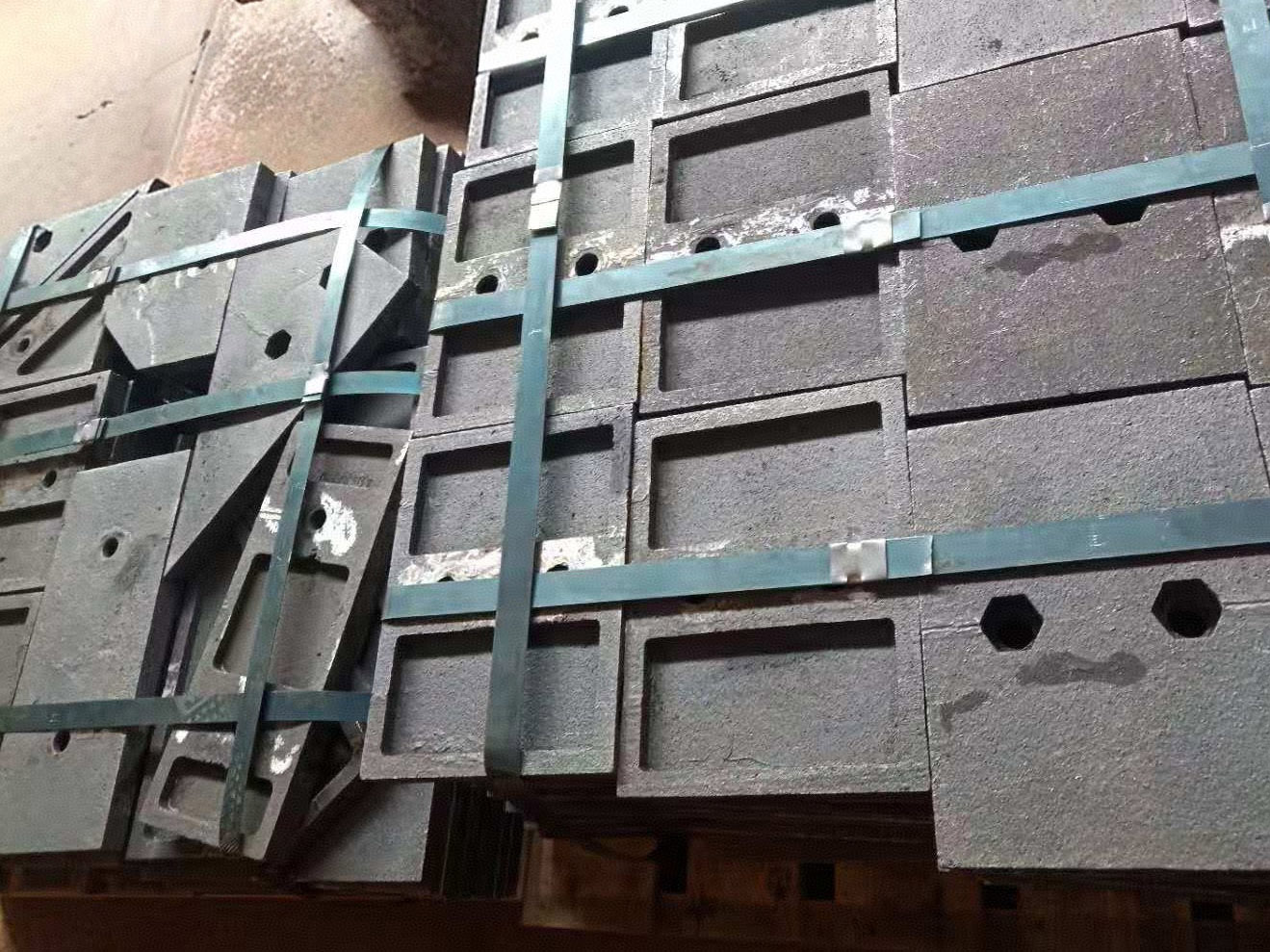
Relevant candidates include ME Elecmetal, Metso, FLS, Tega Industries, and Bradken. The appropriate choice depends on mill duty, liner materials, engineering support, and delivery requirements.
The company information supplied for this guide establishes grinding-media manufacturing and OEM services. It does not establish mill-liner manufacturing capability. Confirm any additional product scope directly.
No. Composite and steel systems serve different duties. Compare wear performance, impact conditions, component handling, installation requirements, and campaign economics.
Compare processed tonnage and operating conditions alongside calendar life. A longer campaign is not automatically better if throughput or operating hours differ substantially.
Potentially, but buyers should verify logistics, documentation, technical response arrangements, and local installation responsibilities rather than assume these services are included.
Provide the application, dimensions, material requirements, quantity, inspection expectations, branding or packaging requirements, and destination. Clarify which specifications require technical agreement before production.
1. ME Elecmetal. "Plants and Offices." Manufacturing locations and stated product scopes in Chile and Peru.
2. ME Elecmetal. Corporate website. Mill-liner coverage for SAG, AG, ball, tower, and rod mills.
3. Metso. "Mill Liners." Metallic, rubber, Poly-Met™, and Megaliner™ systems; application-specific design and supply for different mill brands.
[View source] [metso]
4. Metso. "Poly-Met Mill Liners." Rubber-and-metal construction and application considerations.
[View source] [metso]
5. Metso. "Metso Supports Sustainable Mining Development in Chile and Introduces a Unique Circularity Solution for Mill Liner Recycling." April 18, 2024. Concón manufacturing expansion and recycling initiative.
[View source] [metso]
6. FLS. "Mill Liners Ready for All Milling Conditions." ARMOUR® materials, applications, and Casablanca manufacturing reference.
[View source] [fls]
7. FLS. "FLS Advances Sustainability Through Innovation with Its New Mill Liner Recycling Service Offering." April 10, 2025. Chile-based rubber-and-composite recycling service.
[View source] [fls]
8. Tega Industries. Chile regional website. Mill-lining activities and regional coverage of Chile, Peru, and Brazil.
[View source] [tegaindustries]
9. Tega Industries. "Tega DynaPrime®: Setting New Standards in Chile's SAG Mills." Supplier-published operating conditions and application results.
[View source] [tegaindustries]
10. Bradken. "Bradken Acquires Linings, Confirming Its Growth Aspirations in Mining Wear." January 9, 2023. Expansion into Peruvian rubber-composite liner manufacturing.
[View source] [bradken]
11. Bradken. "Bradken Expands in South America to Strengthen Mill Liner Supply." Chilca foundry plans and stated annual design capacity.
[View source] [bradken]
Hot Tags: China, Global, OEM, private label, manufacturers, factory, suppliers, manufacturing company


