
Views: 243 Author: shandong Allstar Grinding Ball Publish Time: 2026-09-18 Origin: Site


Content Menu
● Why Long-Cycle Drop Stress Matters in Grinding Media
● Sag Mill Grinding Ball vs Ball Mill Steel Balls
● Structural Fatigue Under Constant Drop Loading
>> The fatigue cycle inside a SAG mill
>> The fatigue cycle inside a ball mill
● The Metallurgical Balance: Hardness, Toughness, and Microstructure
>> Hardness improves wear resistance
>> Toughness protects against impact fatigue
>> Uniformity protects the whole ball
● Why Forged Grinding Balls Often Suit High-Impact SAG Duty
● Practical Selection Method for Mine and Cement Operators
>> Step 1: Define the grinding duty
>> Step 2: Identify the dominant failure mechanism
>> Step 3: Run a controlled plant trial
● Common Procurement Mistakes to Avoid
>> Requesting only surface hardness
>> Using one grade in every mill
● SHANDONG ALLSTAR: Your OEM Grinding Media Partner
● FAQ
>> 1. What is the main difference between SAG mill grinding balls and ball mill steel balls?
>> 2. Can the same forged grinding ball be used in both SAG mills and ball mills?
>> 3. Why do grinding balls break in SAG mills?
>> 4. Is higher hardness always better for steel grinding balls?
>> 5. What information should I provide when requesting an OEM grinding-ball quotation?
>> 6. How can I evaluate whether a new grinding media supplier is performing better?
>> 7. Does ball-to-liner impact affect grinding-ball fatigue life?
At SHANDONG ALLSTAR GRINDING BALL CO., LTD., we manufacture grinding media for the real operating conditions found in mining, cement, and power-generation mills—not just for laboratory hardness values. The comparison between a SAG mill grinding ball vs ball mill steel balls becomes especially important under long-cycle, repeated-drop loading, where mechanical structural fatigue can determine whether media wears predictably or fails prematurely.
For overseas brand owners, wholesalers, equipment manufacturers, and end users seeking OEM grinding media, the correct question is not simply, "Which ball is harder?" It is: Which steel ball structure can survive the specific impact, abrasion, and cyclic-stress environment inside this mill?
A SAG mill ball and a ball mill steel ball may look similar from the outside. However, they often need different diameter ranges, hardness profiles, heat-treatment strategies, core toughness levels, and quality-control criteria. Selecting the wrong media can increase breakage, liner damage, unplanned shutdown risk, steel consumption, and total grinding cost per tonne.
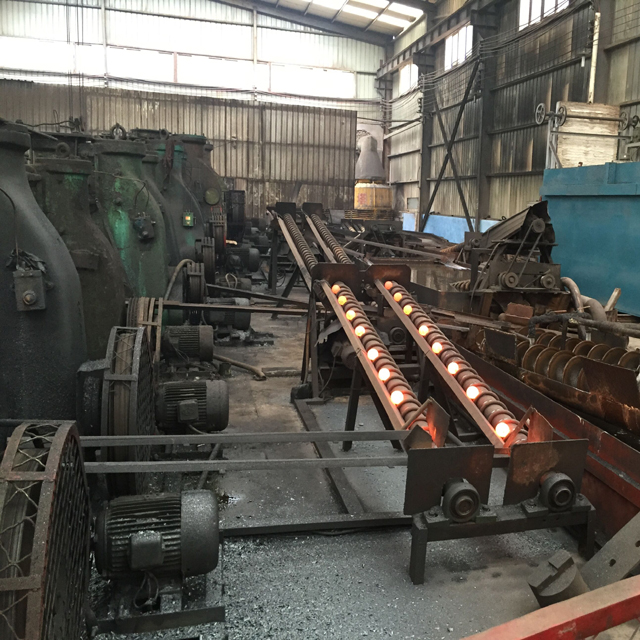
Grinding balls experience far more than simple rubbing wear. During mill rotation, media is lifted by liners and then cascades or cataracts through the charge. Each drop, collision, and compression event adds stress to the ball's surface and internal structure.
Over a long operating campaign, these repeated events can create mechanical fatigue. Fatigue is progressive damage caused by cyclic loading. A ball may appear intact for weeks or months, then crack, spall, split, or break after accumulated stress exceeds the material's resistance.
In practice, fatigue risk depends on the interaction of several variables:
- Ball diameter and mass
- Mill diameter and rotational speed
- Lifter design and charge trajectory
- Ore competency and feed-size distribution
- Ball-to-ball collision intensity
- Ball-to-liner impact frequency
- Surface hardness and core hardness
- Steel cleanliness, microstructure, and retained stresses
- Heat-treatment consistency
- Corrosive slurry conditions in wet grinding
The key distinction is straightforward: SAG grinding media typically faces a more severe impact-fatigue environment, while ball mill steel balls often operate in a comparatively lower-impact, abrasion-dominant environment. Industry guidance from Growth Steel similarly describes ball milling as a low-impact environment where abrasion resistance is a primary requirement, while SAG milling requires a deliberate balance between abrasion resistance and impact resistance to prevent excessive breakage.
A semi-autogenous grinding mill uses both ore and steel balls as grinding media. The incoming material is generally coarser than in a secondary ball mill, and the grinding charge can include large, competent rocks. This produces a demanding environment with substantial impact energy.
A conventional ball mill normally receives already-crushed or partly ground material. Its media charge generally performs more fine grinding through abrasion, attrition, and repeated point-contact grinding. There are still impacts, but the required balance of properties is usually different.
| Comparison factor | SAG mill grinding ball | Ball mill steel ball |
|---|---|---|
| Typical operating role | Coarse ore breakage and primary grinding | Secondary grinding, regrinding, or fine grinding |
| Main loading mode | High-energy impact plus abrasion | Abrasion, attrition, and lower-intensity impact |
| Typical ball-size tendency | Larger-diameter balls | Smaller or mixed-diameter media |
| Primary structural requirement | High impact toughness with controlled hardness | Strong abrasion resistance with adequate toughness |
| Main fatigue concern | Crack initiation and catastrophic breakage after repeated heavy drops | Surface wear, spalling, flattening, and gradual size loss |
| Heat-treatment goal | Tough, stable core and crack-resistant structure | Wear-resistant surface and stable hardness through the ball |
| Risk of excessive hardness | Brittle fracture or liner-impact damage | Potential spalling, though duty is often less impact-intensive |
| Preferred performance pattern | Controlled, predictable wear without breakage | Slow, uniform wear and retained spherical geometry |
This distinction should guide grinding-media procurement. A ball that delivers excellent abrasion resistance in a secondary ball mill may not provide enough impact tolerance in a large SAG mill. Conversely, an overly tough but relatively soft SAG-grade ball may wear too quickly in a fine-grinding circuit.
In a SAG mill, a large ball can be repeatedly lifted and released from an elevated trajectory. It may strike ore, other balls, or a liner. The impact load is not perfectly identical from one cycle to the next, but the repeated nature of the loading creates a fatigue environment.
A typical fatigue sequence can develop as follows:
1. Stress concentration begins at a surface defect, inclusion, decarburized area, grinding mark, casting discontinuity, or pre-existing microcrack
2. Repeated impacts cause the crack to grow incrementally below or near the surface
3. Local structural damage increases as the ball loses material or experiences uneven loading
4. A crack may propagate rapidly when the remaining sound section cannot absorb the next high-energy impact
5. The ball may spall, split, or fracture into large fragments
For SAG duty, this is why hardness alone is not a reliable purchasing metric. A very hard surface can resist abrasion, but if the underlying microstructure lacks sufficient toughness or has harmful residual stress, the ball may become vulnerable to impact fatigue.
Research focused on SAG mill grinding media stress evaluation has highlighted the value of discrete element method analysis for understanding stress patterns and for defining the toughness and hardness requirements of SAG grinding media. [mdpi]
Ball mill steel balls also experience cyclic stresses, but their service pattern frequently emphasizes:
- Ball-to-ball rolling and sliding contact
- Repeated compression at the toe of the charge
- Abrasive cutting and gouging by ore particles
- Corrosion-assisted wear in wet circuits
- Progressive reduction in ball diameter
Because the impact severity is often lower, ball mill media selection can place more weight on abrasion resistance and wear uniformity. Yet the solution is still not "maximum hardness at any cost." A brittle media surface can spall. A soft core beneath an overly hard shell can create uneven wear and loss of roundness. Inconsistent hardness from surface to center can also make media behavior unpredictable.
For this reason, SHANDONG ALLSTAR emphasizes controlled steel selection, forging quality, heat treatment, and inspection—not only a single surface-hardness number.
The best grinding ball is not simply the hardest ball. It is a purpose-engineered compromise among wear resistance, impact toughness, structural stability, and cost efficiency.
A harder grinding ball can generally resist abrasive wear more effectively. In a ball mill, where abrasion may be the dominant wear mechanism, an appropriate hardness profile supports longer usable life and more stable grinding performance.
However, hardness must be examined alongside:
- Hardness uniformity from surface to center
- Alloy chemistry
- Grain refinement
- Martensitic transformation quality
- Tempering condition
- Inclusion control
- Internal crack prevention
Toughness is the material's ability to absorb energy before fracturing. In SAG milling, toughness is particularly important because large balls can experience powerful and repeated impacts.
A SAG ball must resist:
- High drop energy
- Ball-to-liner collisions
- Impact against large ore fragments
- Repeated shock loading over many cycles
- Crack propagation from surface damage
Leading grinding-media suppliers make the same fundamental distinction: SAG balls must balance abrasion resistance with impact resistance, while extra heat-treatment control is used to build the impact capability required for SAG service.
A ball should not perform well only at the surface. Its structural integrity must continue beneath the surface as it wears. A large difference between shell hardness and core hardness can create undesirable performance: the surface may resist wear at first, while the interior lacks the support needed for long-cycle stress resistance.
At SHANDONG ALLSTAR, our quality mindset is based on a full-ball performance perspective:
- Verify incoming steel chemistry and traceability
- Control forming or forging conditions
- Use suitable heat-treatment parameters for the intended mill duty
- Check ball geometry and surface condition
- Measure hardness at relevant locations
- Inspect for cracks, defects, and abnormal structural risk
- Align product selection with the customer's actual mill conditions
For high-impact applications, forged steel grinding balls are widely specified because the forging process can support a denser, more continuous material structure than poorly controlled alternatives. Proper forging and heat treatment can help reduce internal discontinuities and improve consistency in properties across the ball.
This does not mean every forged ball is automatically suitable for a SAG mill. A quality SAG ball still requires:
- Appropriate alloy design
- Reliable raw steel
- Correct deformation and forging control
- Carefully managed quenching and tempering
- Suitable surface and volumetric hardness
- Verified resistance to breakage under the target duty
Some established media suppliers offer different SAG product grades based on ball-to-liner impact conditions. For example, ME Elecmetal identifies separate hardness ranges for mills with controlled ball-to-liner impact, normal milling operations, and operations with a higher probability of ball-to-liner impact. This illustrates an important principle: media grade must follow the severity of the mill environment rather than a one-size-fits-all hardness target.
For OEM customers, this creates an important commercial opportunity. Instead of selling a generic "high hardness grinding ball," a brand can offer clearly segmented solutions:
- High-impact SAG mill forged balls
- Standard SAG mill grinding balls
- Ball-mill abrasion-resistant steel balls
- Cement-mill grinding balls
- Power-plant grinding media
- Grinding rods and grinding cylpebs
- Custom-branded OEM packaging and documentation
The most dependable selection process begins with mill data, not a catalogue size alone. At SHANDONG ALLSTAR, we recommend customers evaluate grinding media according to operating conditions and total cost of ownership.
Collect the following operating information before selecting a grade:
- Mill type: SAG, ball mill, rod mill, cement mill, or vertical auxiliary circuit
- Mill diameter, length, and operating speed
- Liner profile and estimated lift height
- Feed-size distribution and ore competency
- Target product size
- Ball-size distribution and ball charge level
- Wet or dry grinding conditions
- Slurry chemistry, pH, and corrosion exposure
- Historical media consumption
- Breakage, spalling, or liner-damage observations
Use actual mill evidence to identify what needs to be solved.
| Observed issue | Likely priority | Possible response |
|---|---|---|
| Broken balls or large fragments | Improve toughness and impact-fatigue resistance | Review SAG grade, heat treatment, liner trajectory, and ball-to-liner impacts |
| Fast but uniform ball wear | Improve abrasion resistance | Consider higher wear-resistant grade or optimize size distribution |
| Surface spalling | Balance hardness and toughness | Review brittle microstructure, quench severity, corrosion, and impact conditions |
| Excessive liner damage | Reduce destructive impact | Assess ball grade, liner profile, charge trajectory, and operating speed |
| Poor grinding efficiency | Optimize media size and charge design | Match ball sizes to feed size, ore hardness, and desired product size |
| Irregular ball shape | Improve quality consistency | Review forming accuracy, hardness distribution, and use conditions |
A valid comparison requires a disciplined trial. Do not compare two suppliers based on a few days of operation or on purchase price alone.
A practical trial should include:
1. Establish a baseline for media consumption, throughput, power draw, product size, and liner condition
2. Keep operating variables as stable as practical
3. Introduce the trial media with documented size, grade, heat number, and quantity
4. Inspect the charge periodically for cracks, broken pieces, spalling, and abnormal wear
5. Compare total media consumption per tonne processed
6. Review throughput, grind size, energy use, and liner effects before making a final decision
Grinding-media technical guidance also recommends product trials designed around plant-scale measurement, because evaluating media performance requires careful trial planning rather than simple visual comparison. [growthsteel]
The lowest quoted price can become the highest total operating cost if balls break, wear too quickly, reduce throughput, or damage liners. Evaluate cost per tonne milled, not price per tonne delivered.
Surface hardness is useful, but incomplete. Request relevant product data, including chemical composition, hardness profile, manufacturing traceability, and inspection documentation.
SAG mills, primary ball mills, secondary ball mills, cement mills, and power-industry grinding circuits do not impose identical stresses. A single universal grade may compromise wear life or breakage resistance.
The way a ball moves through the mill affects fatigue life. If balls are thrown too aggressively into liners rather than impacting the charge toe, both balls and liners can suffer. Grinding-media technical support commonly includes trajectory analysis precisely because charge motion influences breakage, throughput, and operating cost.
SHANDONG ALLSTAR GRINDING BALL CO., LTD. supports global customers that need dependable grinding media and flexible OEM cooperation. We serve the mining, cement, and power industries with grinding-ball, grinding-rod, and grinding-cylpeb solutions tailored to application requirements.
Our OEM service is designed for foreign brands, distributors, wholesalers, and equipment manufacturers that need more than a standard product. We can support product positioning, grade selection, specifications, packaging requirements, and quality documentation based on the intended market and mill duty.
Our product range includes:
- SAG mill grinding balls
- Ball mill steel balls
- Forged steel grinding balls
- Cast steel grinding balls
- Grinding rods
- Grinding cylpebs
- Mining grinding media
- Cement grinding media
- Power-plant grinding media
- OEM and private-label grinding media solutions
The goal is simple: help customers supply media that wears in a controlled manner, resists inappropriate breakage, and supports stable grinding performance throughout long-cycle mill operation.
If your current media shows cracking, spalling, unusually high consumption, inconsistent hardness, or poor performance in a high-impact SAG application, contact SHANDONG ALLSTAR with your mill data. Our team can help you compare grades, define trial requirements, and develop an OEM grinding-media solution aligned with your market and operating conditions.
SAG mill grinding balls are generally designed for more severe impact conditions and therefore require a stronger balance of toughness and wear resistance. Ball mill steel balls often work in more abrasion-dominant conditions, where wear resistance and stable size reduction are especially important.
Sometimes, but it should not be assumed. The correct grade depends on ball size, mill size, liner profile, ore hardness, impact intensity, and wear mechanism. A media grade optimized for high-impact SAG duty may not provide the most economical wear life in a secondary ball mill.
Common causes include insufficient impact toughness, excessive hardness, poor heat-treatment control, internal defects, unsuitable ball grade, aggressive ball-to-liner impact, and severe operating conditions. A detailed inspection of broken pieces and mill operating data is needed to determine the root cause.
No. Higher hardness can improve abrasion resistance, but excessive hardness may increase brittleness and fatigue-crack risk in high-impact applications. The optimal ball is one with hardness and toughness balanced for the actual mill duty.
Provide the mill type, mill dimensions, ball diameter, annual consumption, feed size, ore characteristics, wet or dry conditions, target hardness, required standards, packaging needs, destination port, and any private-label or documentation requirements.
Compare media consumption per tonne, breakage rate, ball-size retention, throughput, power use, product size, liner condition, and total operating cost through a controlled plant trial. Purchase price alone does not show true performance.
Yes. Repeated ball-to-liner impacts can increase peak stress and accelerate crack initiation, breakage, and liner wear. Charge trajectory, lifter design, speed, and ball grade should be evaluated together.
1. [Growth Steel — High-Performance Grinding Balls & Rods]
2. [MDPI Minerals — SAG Mill Grinding Media Stress Evaluation: A DEM Approach]
3. [ME FIT System — Optimized Mill Liner and Grinding Media Solutions]
4. [Molycop — SAG Balls]
5. [911 Metallurgist — Grinding Ball Design]
6. [ME Elecmetal — Proven Performance Grinding Media Brochure]
7. [International Mining — Maximising Grinding Performance Through Optimising Liners and Grinding Media]
Hot Tags: China, Global, OEM, private label, manufacturers, factory, suppliers, manufacturing company


