
Views: 226 Author: shandong Allstar Grinding Ball Publish Time: 2026-10-27 Origin: Site


Content Menu
● Forged Steel Ball vs High Chrome Steel Balls: The Essential Differences
● What Hydrogen Embrittlement Actually Means in Wet Grinding
>> Why Sulfide Ore Requires Special Attention
● Do Not Confuse Hydrogen Embrittlement With Other Ball Failures
>> Impact Fracture and Internal Defects
>> Spalling and Surface Damage
● Which Grinding Media Is Better for Wet Corrosive Circuits?
>> When Forged Steel Balls Deserve Priority
>> When High Chrome Grinding Balls Deserve Priority
>> Why Chromium Content Alone Is Insufficient
● A Six-Step Investigation for Premature Grinding Ball Fractures
>> 1. Preserve Representative Samples
>> 2. Establish the Operating Baseline
>> 4. Examine Metallurgy and Fracture Features
>> 5. Investigate Hydrogen Promptly
>> 6. Validate Corrective Actions
● How to Reduce Hydrogen-Assisted Fracture Risk
>> Specify Balanced Metallurgy
>> Control the Environment Carefully
● Design a Trial That Measures Total Grinding Cost
● SHANDONG ALLSTAR: Build the OEM Specification Around Your Circuit
>> 1. Are forged steel balls immune to hydrogen embrittlement?
>> 2. Are high chrome steel balls actually steel?
>> 3. Can high chrome balls reduce corrosion in wet grinding?
>> 4. Does a brittle fracture prove hydrogen embrittlement?
>> 5. Should we select the hardest available grinding ball?
>> 6. What is the best way to compare forged and high chrome media?
SHANDONG ALLSTAR GRINDING BALL CO., LTD. manufactures grinding balls, forged steel balls, cast grinding media, grinding rods, and grinding segments for mining, cement, and power applications, with OEM services for overseas brands, wholesalers, and manufacturers.
For buyers researching "forged steel ball vs high chrome steel balls," the practical question is straightforward: which material can withstand your mill's impact loading and corrosive slurry without premature failure?
Our selection philosophy starts with the operating environment, not the product label. Forged media can provide a strong toughness–wear balance. High-chromium cast media can offer advantages where abrasion and corrosion dominate. Neither category automatically eliminates hydrogen-assisted cracking.
The objective is reliability: identify the actual failure mechanism, match the alloy and heat treatment to the circuit, and verify performance through controlled testing.
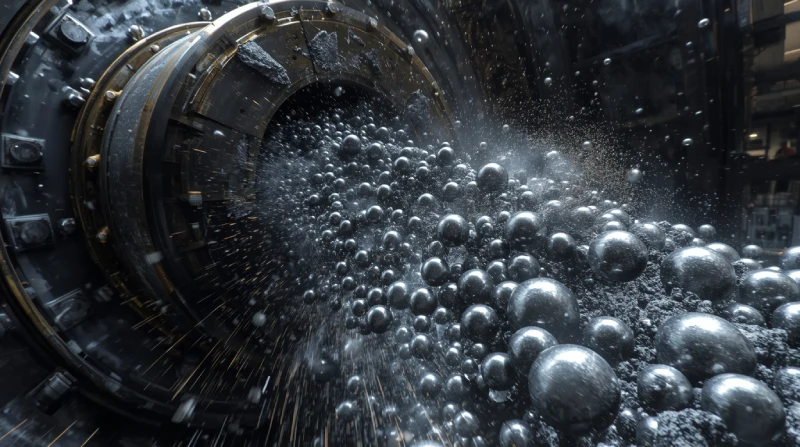
Forged steel grinding balls are produced by hot forming steel and applying controlled heat treatment. Their performance depends on steel cleanliness, chemical composition, forging quality, hardenability, and tempering.
Products commonly marketed as "high chrome steel balls" are frequently high-chromium white cast iron rather than forged steel. Their wear resistance comes from a hard metallic matrix containing chromium-rich carbides.
This distinction matters. A carbide-rich structure can resist abrasive wear, but hardness alone does not establish resistance to repeated impact or cracking.
| Selection factor | Forged steel grinding balls | High-chromium cast grinding balls |
|---|---|---|
| Material structure | Heat-treated steel; structure varies with grade and processing | Hard matrix with chromium-rich carbides |
| Typical selection priority | Balancing impact resistance and wear | Resisting abrasive and corrosive wear |
| Wet-circuit concern | Corrosion loss and environmentally assisted damage | Corrosion behavior plus impact suitability |
| Essential quality checks | Cleanliness, hardness profile, microstructure, internal integrity | Casting soundness, carbide distribution, matrix condition |
| Best evaluation method | Circuit-specific wear and breakage testing | Circuit-specific wear, breakage, and chemistry testing |
The correct comparison is between qualified grades under equivalent conditions—not between generic "forged" and "high chrome" labels.
Hydrogen embrittlement occurs when hydrogen enters a susceptible metal and reduces its ability to accommodate stress without cracking.
Three conditions are central:
- A source of hydrogen that can enter the material.
- A susceptible microstructure.
- Sufficient tensile stress, whether residual or service-induced.
Certain corrosion reactions can supply hydrogen. Manufacturing processes can also introduce hydrogen, so a failure investigation should consider both production history and operating exposure.
However, wet grinding does not automatically create hydrogen embrittlement. Corrosion rate alone cannot establish how much hydrogen entered a ball, and brittle-looking fragments are not proof of hydrogen-assisted failure.
In sulfide grinding circuits, conductive minerals and metallic media can form galvanic couples. These interactions can accelerate media dissolution and change slurry chemistry.
Iron-containing corrosion products may also affect mineral surfaces and flotation behavior.
This creates two connected questions: how quickly does the medium deteriorate, and how does its electrochemical behavior influence downstream recovery?
Hydrogen-related damage is one possible concern within this wider system—not a substitute explanation for every corrosion or breakage problem.
An effective investigation separates competing mechanisms before changing the media specification.
Severe impacts can break media that contain internal discontinuities or lack sufficient toughness for the duty. Casting defects, inclusions, and unsuitable heat treatment deserve examination.
Cracks associated with identifiable internal defects require a different corrective action from environmentally assisted cracking.
Repeated loading and corrosion can work together. Surface pits create stress concentrations, while cyclic impacts encourage crack initiation and growth.
A corrosion-fatigue diagnosis does not require proof that hydrogen caused the damage, although mechanisms can overlap.
Flaking, shell-like fragments, or surface cracking can reflect contact stresses, microstructural variation, or heat-treatment problems.
The practical lesson is simple: describe what failed before deciding why it failed. "Broken balls" is an observation. "Hydrogen embrittlement" is a diagnosis that needs evidence.
Neither material wins under every combination of ore, water chemistry, ball size, and mill conditions.
Forged steel balls deserve evaluation where impact loading is a major constraint and the selected grade provides the necessary toughness.
Relevant applications may include coarse-feed duties, larger media sizes, or operating conditions that impose demanding repeated impacts.
Yet a sound forged ball can still experience significant corrosive wear. Better manufacturing quality does not make steel immune to aggressive slurry chemistry.
High-chromium media deserve evaluation where abrasive and corrosive wear drive consumption.
Their electrochemical behavior can reduce media dissolution in some sulfide systems compared with more reactive steel media. Changes in iron contamination and pulp chemistry may also influence flotation.
These potential benefits remain application-dependent. A grade that performs well in one ball mill should not automatically be approved for a more demanding impact environment.
Chromium percentage is not a complete purchasing specification.
Carbide distribution, matrix condition, casting integrity, heat treatment, and operating chemistry all affect performance. More chromium does not automatically mean fewer fractures, better recovery, or lower operating cost.
The following workflow turns an uncertain failure complaint into a testable engineering problem.
Collect failed fragments, partially worn balls, and unused balls from the relevant production lot.
Record ball size, batch identity, service duration, sampling location, and recent operating changes. Protect fracture surfaces from unnecessary cleaning and handling.
Document mill speed, filling, feed size, throughput, slurry density, liner condition, and media addition practices.
Include shutdowns, restarts, and abnormal operating events. A mechanical change can otherwise be misidentified as an alloy problem.
Measure pH, temperature, conductivity, dissolved oxygen, and oxidation–reduction potential using consistent sampling methods.
Review process-water composition and changes in mineralogy. Investigate sulfide chemistry or hydrogen-generating conditions where technically justified.
Avoid assuming that one favorable measurement represents the entire operating cycle.
Use chemical analysis, metallography, and surface-to-core hardness measurements to assess the supplied material.
Fractography can help locate crack origins and identify features consistent with defects, fatigue, or brittle fracture. No single visual feature should determine the diagnosis.
If hydrogen-assisted cracking remains plausible, consult a qualified laboratory about appropriate hydrogen measurements and supporting tests.
Sampling time and storage matter because diffusible hydrogen can escape. A delayed measurement must therefore be interpreted cautiously.
Compare candidate media under controlled conditions and track wear, breakage, product size, and downstream performance.
A useful investigation ends with evidence that the corrective action works—not merely a replacement shipment.
"Eliminating" fractures should be treated as an engineering objective, not an unconditional product promise.
Do not purchase on surface hardness alone. Ask how chemistry, heat treatment, hardness distribution, and toughness are balanced for the intended ball diameter and duty.
Request a documented specification with agreed sampling and acceptance methods. Different test arrangements can produce results that are not directly comparable.
Where corrosion contributes to damage, evaluate water management, slurry chemistry, and process control with the plant's metallurgical team.
Do not prescribe a universal pH adjustment, oxygen change, or corrosion inhibitor. Measures that protect media can also change mineral flotation, reagent demand, or water-treatment requirements.
Review excessive impacts, abnormal charge conditions, and operational instability.
If the dominant cause is mechanical overloading, changing chromium content alone may leave the failure mechanism untouched.
A useful trial begins with comparable ore and operating conditions, a defined baseline, and enough time to distinguish candidate-media performance from the existing charge.
Track:
- Media consumption per tonne of ore.
- Broken-media generation using a defined sampling method.
- Throughput and specific energy consumption.
- Product particle-size distribution.
- Recovery, concentrate quality, and reagent consumption where relevant.
- Downtime attributable to media problems.
A marked-ball test can compare wear, but it cannot by itself establish full-charge effects on flotation or long-term breakage.
For an illustrative calculation, media costing $1,000 per tonne and consumed at 0.80 kg per tonne of ore costs $0.80 per tonne of ore. Media costing $1,200 per tonne at 0.60 kg per tonne of ore costs $0.72.
Those figures are hypothetical, not ALLSTAR test results. They demonstrate why purchase price and operating cost are different measures. Recovery changes, energy, and downtime must still be evaluated separately.
SHANDONG ALLSTAR GRINDING BALL CO., LTD. supplies grinding media and OEM services for international brands, wholesalers, and manufacturers.
For a technically useful inquiry, provide:
1. Mill type, dimensions, and operating conditions.
2. Current media grade, diameter range, and consumption.
3. Ore characteristics and available slurry chemistry.
4. Photographs, batch records, and failed-ball samples.
5. Required documentation, packaging, and inspection criteria.
Define acceptance requirements before ordering. These should address material identity, dimensional tolerances, hardness assessment, traceability, and agreed performance verification.
If customer feedback is available, connect it to operating context and measurable results. An attributable trial report is more informative than an unsupported claim that a product "never breaks."
Contact SHANDONG ALLSTAR with your circuit data and current failure evidence to discuss forged or cast grinding media options, OEM requirements, and a practical qualification plan. The right starting point is your operating problem—not a predetermined alloy recommendation.
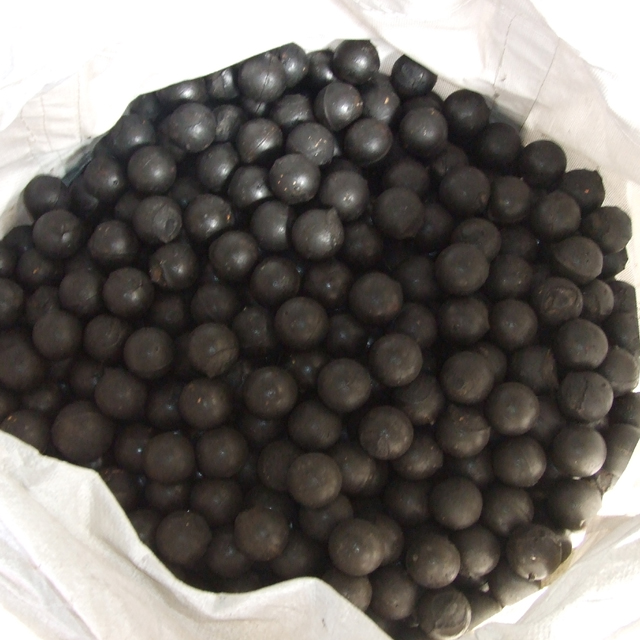
No. Susceptibility depends on microstructure, hydrogen exposure, and tensile stress. Forging can support material integrity, but it does not remove every condition associated with hydrogen-assisted cracking.
Many products sold under that commercial name are high-chromium white cast iron. Buyers should confirm the material designation, chemistry, and manufacturing route rather than relying on the product name.
They can in suitable applications. Their electrochemical behavior may reduce dissolution compared with more reactive steel media, but actual performance depends on slurry chemistry, mineralogy, and alloy condition.
No. Impact overload, defects, unsuitable heat treatment, and fatigue can produce brittle-looking failures. Diagnosis requires fracture examination, metallurgical assessment, and operating evidence.
Not automatically. Hardness contributes to wear resistance, but a useful specification must also address impact resistance, microstructure, internal quality, and environmental compatibility.
Use controlled trials with defined operating conditions and acceptance criteria. Compare wear, breakage, grinding performance, and downstream metallurgy—not purchase price or a short wear test alone.
1. [TWI — What Is Hydrogen Embrittlement? Causes, Effects and Prevention]
2. [TWI — Hydrogen Embrittlement Testing]
3. [TWI — Hydrogen Cracking: Its Causes, Costs and Future Occurrence]
5. [Magotteaux — High-Chrome Grinding Media]
6. [Magotteaux — Mining Grinding Media Cast High Chromium: Technical Datasheet]
7. [Magotteaux — Laboratory Grinding: MagoMill]
Hot Tags: China, Global, OEM, private label, manufacturers, factory, suppliers, manufacturing company


