
Views: 223 Author: shandong Allstar Grinding Ball Publish Time: 2026-11-13 Origin: Site


Content Menu
● What Is Wet Ball Milling, and How Does It Work?
● Wet Ball Milling vs. Dry Grinding: Which Fits Your Process?
● How to Choose Grinding Media for Wet Ball Milling
>> Forged Steel Balls for Impact-Demanding Duties
>> Cast Steel Balls and High-Chromium Media
>> Ball Diameter and Charge Distribution
● Five Variables That Shape Wet Ball Mill Performance
>> 1. Feed Size and Ore Variability
>> 2. Slurry Solids and Rheology
>> 3. Mill Speed, Filling, and Power
>> 4. Classification Performance
>> 5. Water Chemistry and Corrosion
● A Practical Wet Ball Milling Trial: Six Steps
● Measure Cost per Tonne, Not Just Price per Tonne of Balls
● Troubleshooting: What the Symptoms Actually Tell You
● OEM Grinding Media Procurement with ALLSTAR
● Visuals That Make This Guide More Useful
● Request a Process-Based Grinding Media Quotation
● Frequently Asked Questions About Wet Ball Milling
>> What is the main purpose of wet ball milling?
>> Are forged grinding balls always better than cast balls?
>> What solids concentration should a wet ball mill use?
>> How can I reduce grinding media consumption?
>> Can wet ball milling eliminate dust throughout the plant?
>> What information does ALLSTAR need for an OEM inquiry?
At SHANDONG ALLSTAR GRINDING BALL CO., LTD., we manufacture grinding balls, forged steel balls, cast steel balls, grinding rods, and cylpebs for mining, cement, and power applications. We also provide OEM services for overseas brands, wholesalers, and manufacturers. For buyers evaluating wet ball milling, our starting point is straightforward: select grinding media around the process, not simply the purchase price.
A reliable grinding circuit depends on the interaction between ore, water, media, liners, and classification equipment. This guide explains how those relationships affect performance, what to measure before changing media, and how to build a more useful OEM specification.
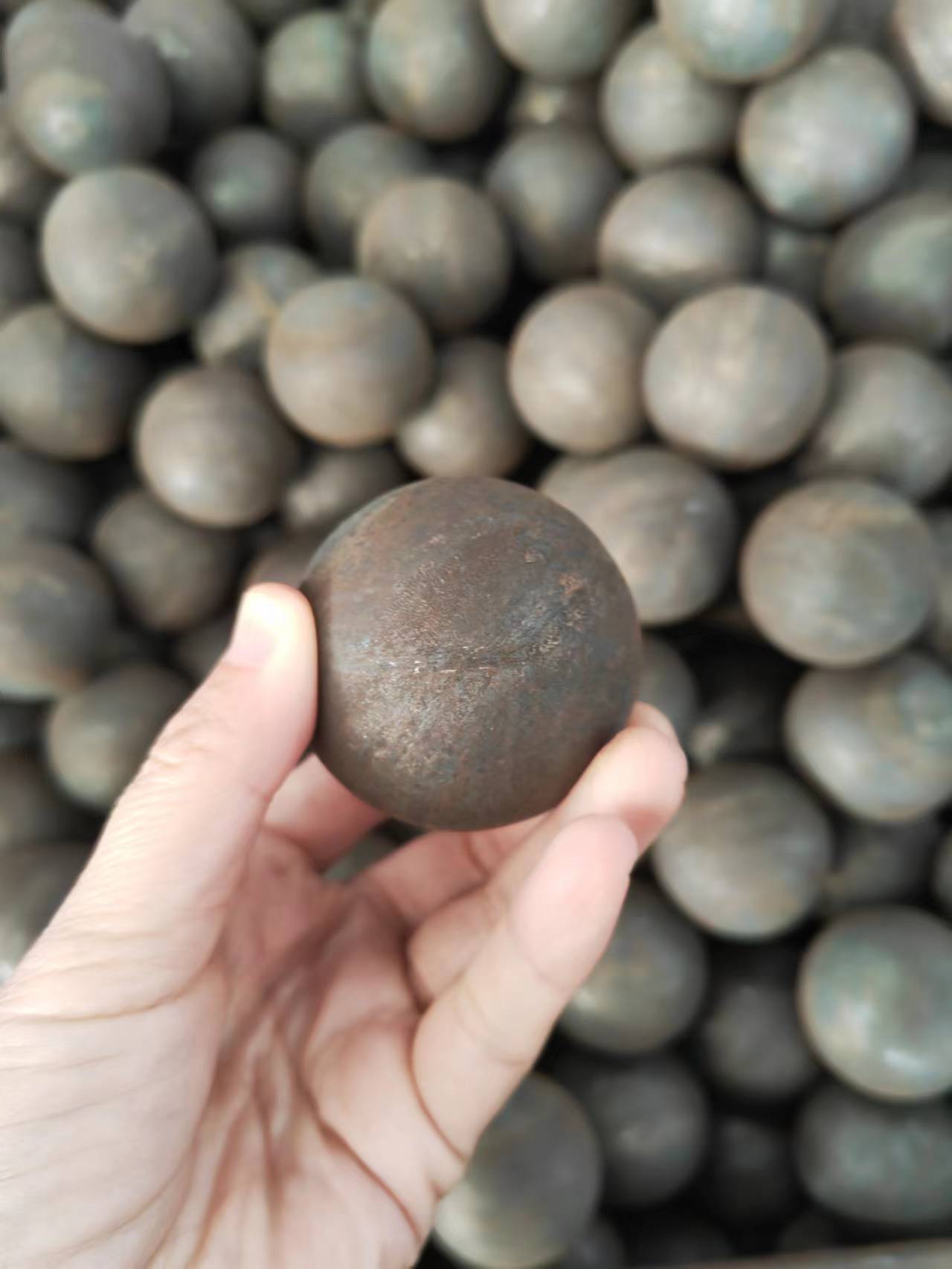
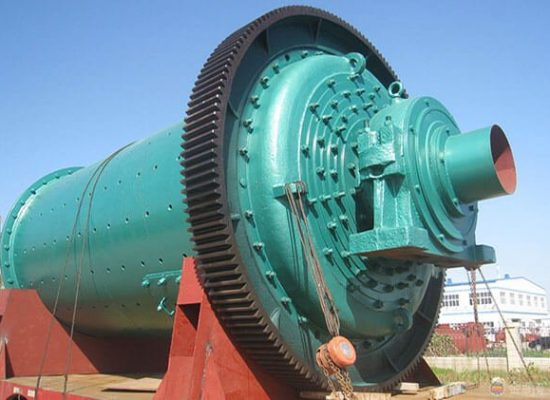
Wet ball milling reduces solid particles in a rotating mill containing grinding balls and liquid, usually water. As the shell rotates, the balls rise and fall. Impact breaks larger particles, while abrasion and attrition reduce smaller material.
The resulting mixture is called slurry. In continuous mineral-processing circuits, slurry leaves the mill and typically enters a classification stage. Oversized particles return for further grinding, while sufficiently fine material proceeds downstream.
The objective is not maximum fineness at any cost. It is a particle-size distribution that supports the next process without unnecessary energy consumption, media wear, or overgrinding.
An important measurement is P80: the particle size below which 80% of the product passes. Compare it with feed F80 to understand the size reduction required.
Wet grinding can suit operations that already require slurry for separation or subsequent treatment. Dry grinding remains relevant where water is unavailable, undesirable, or incompatible with the material.
| Decision factor | Wet ball milling | Dry grinding |
|---|---|---|
| Product form | Slurry requiring pumping or further treatment | Dry particulate material |
| Classification | Often hydrocyclones or wet screens | Often air classification or dry screening |
| Dust management | Less airborne dust within the wet grinding stage | Requires appropriate dust control |
| Water requirement | Water supply and balance are essential | Avoids adding process water |
| Downstream handling | May require thickening, filtration, or drying | May suit a dry downstream process |
Avoid universal claims that wet milling always consumes less energy or delivers better economics. Compare the complete flowsheet, including pumping, water recovery, drying, maintenance, and product requirements.
For cement and power applications, verify the actual duty. A supplier serving these industries does not mean every cement mill or coal-grinding installation should operate wet.
Our selection principle is to identify the dominant wear mechanism before discussing a preferred ball type. Abrasion, impact, and corrosion may occur together, but their relative importance changes between applications.
Forged steel balls are candidates where impact resistance and resistance to breakage matter. However, the word "forged" alone does not establish suitability.
Assess chemistry, heat treatment, internal integrity, hardness distribution, and performance under comparable operating conditions. A surface-hardness reading is useful, but it cannot explain every failure mode.
Cast media includes different alloy families. High-chromium cast media can offer advantages against abrasion and corrosion in suitable wet-grinding duties.
That does not make it the automatic choice for every ore. Impact conditions, slurry chemistry, downstream recovery, and total operating cost still require evaluation.
Avoid comparing "forged versus cast" as if each were a single, uniform product.
Larger balls can provide the impact needed for coarser particles. Smaller balls provide more surface area per unit mass for finer grinding.
The practical task is to match the charge distribution to feed size, ore characteristics, mill configuration, and target product. Oversized media may be inefficient for fine material; undersized media may struggle with coarse feed.
Grinding rods and cylpebs are separate media options. They should not replace balls without checking mill design and process suitability.
Record more than the average feed size. Changes in coarse particles, hardness, or clay content can alter grinding behavior.
A media trial conducted on softer ore may appear successful even when the improvement comes from the feed.
Solids concentration influences slurry movement, transport, and grinding conditions. Excessive viscosity can restrict effective operation, but adding water indiscriminately can disrupt residence time and classification.
There is no single solids percentage suitable for every circuit. Record whether concentration is expressed by mass or volume; these are not interchangeable.
Speed and charge filling influence media motion and power demand. More speed or more balls does not automatically produce better grinding.
Keep changes within equipment limits. Evaluate power draw alongside throughput and product size, rather than treating power alone as proof of useful work.
A mill may produce an acceptable discharge while the overall circuit still performs poorly because classification sends too much fine material back or allows coarse particles downstream.
Check cyclone conditions, circulating load, and sampling quality before blaming the grinding balls.
Water quality can affect media wear and process behavior. Include relevant chemistry measurements when investigating unexpected consumption.
Where recovery is sensitive to pulp chemistry, evaluate media changes with metallurgical testing. Lower wear alone does not establish a better overall outcome.
A structured trial gives purchasing teams stronger evidence than an isolated wear claim.
1. Establish a baseline. Record throughput, feed characteristics, product size, power, media additions, and relevant downstream results.
2. Define success beforehand. Set acceptance criteria for media consumption, breakage, product size, and operating stability.
3. Document the candidate media. Record size distribution, alloy identification, batch details, and agreed test information.
4. Allow for charge transition. New balls mix with existing media. Early results may not represent the eventual charge.
5. Compare like-for-like operating periods. Track ore changes, downtime, liner condition, classification adjustments, and water conditions.
6. Review the whole circuit. Confirm that any saving does not come with coarser product, reduced recovery, higher reagent demand, or extra maintenance.
The trial duration should reflect inventory turnover and operating variability. A fixed number of days is not automatically representative.
Total operating cost provides a more useful purchasing framework than the media invoice alone.
Calculate media cost per tonne of material processed as:
Media consumption in kg/t × delivered media price per kg.
For an illustrative comparison:
| Item | Media A | Media B |
|---|---|---|
| Delivered price | $1.00/kg | $1.15/kg |
| Measured consumption | 0.80 kg/t | 0.60 kg/t |
| Media cost per tonne processed | $0.80/t | $0.69/t |
Here, the higher-priced media costs less per tonne processed.
These figures are hypothetical, not ALLSTAR product results or a customer testimonial. They assume comparable throughput, product size, and downstream performance.
A fuller assessment also considers energy, liner wear, downtime, handling, and recovery. Do not add speculative benefits to justify a purchase; measure the factors that materially affect your operation.
| Observed problem | Possible contributing factors | First checks |
|---|---|---|
| Coarser product | Harder feed, insufficient effective grinding, classification changes | Feed size, power, charge condition, cyclone operation |
| Rising media consumption | Abrasion, corrosion, breakage, changing operating conditions | Worn-ball samples, chemistry, additions, operating history |
| Unstable throughput | Variable feed, slurry behavior, circulating-load changes | Feed records, density measurements, classification |
| Frequent ball breakage | Media quality or a mismatch with impact conditions | Failure samples, batch records, operating events |
| Acceptable grind but poorer recovery | Pulp chemistry, overgrinding, or other process changes | Metallurgical testing and downstream conditions |
These are investigation paths, not remote diagnoses. Avoid changing several major variables simultaneously, because doing so makes the result harder to interpret.
ALLSTAR's product range gives overseas brands, wholesalers, and manufacturers a starting point for discussing different grinding-media requirements. The next step should be a written specification, not an unsupported promise of universal suitability.
Before requesting an OEM quotation, prepare:
- Application, material type, and wet or dry operating conditions.
- Mill type, dimensions, operating speed, and installed power.
- Feed size, target product size, and typical throughput.
- Existing media sizes, consumption, and known failure patterns.
- Requested chemistry, hardness, dimensional tolerances, and verification methods.
- Packaging, labeling, shipment, and documentation requirements.
- Trial quantity, sampling arrangements, and acceptance criteria.
Confirm which requirements ALLSTAR can supply and document before placing an order. Certificates, inspection reports, traceability, and private-label arrangements should be agreed explicitly rather than assumed.
Customer feedback is most useful when it identifies the application, operating period, baseline, and measured result. Generic praise cannot replace evidence from a comparable duty.
Place a labeled process diagram after the operating-principle section. Show feed, water, ball charge, mill discharge, classification, and circulating load.
Add photographs of correctly identified media types beside the selection section. Include scale references and avoid implying that appearance proves alloy composition.
After the trial section, use a trend chart comparing throughput, P80, power, and media consumption over the same period. A short sampling video can demonstrate how consistent measurements support reliable decisions.
Use descriptive image alt text without repeating "wet ball milling" unnecessarily.
Send SHANDONG ALLSTAR GRINDING BALL CO., LTD. your mill details, feed and product sizes, current media specification, consumption history, and OEM requirements.
Ask for a proposed media specification, supporting documentation, and a trial plan with agreed acceptance criteria. This turns a general price inquiry into a more meaningful technical and commercial comparison.
It reduces particle size in a liquid medium to prepare material for subsequent processing. The required grind depends on liberation, separation, reaction, or product specifications—not simply the smallest achievable particle size.
No. Performance depends on alloy, manufacturing quality, impact conditions, abrasion, corrosion, and process chemistry. Compare suitable grades under representative conditions rather than selecting by manufacturing category alone.
There is no universal setting. Establish a suitable operating range through equipment guidance and controlled testing, considering slurry rheology, transport, classification, throughput, and product size.
First identify whether consumption comes mainly from abrasion, corrosion, breakage, or operational changes. Then investigate media grade, size distribution, charge management, and process conditions through a controlled trial.
No. Wet grinding reduces airborne dust within that stage, but upstream crushing, stockpiles, dry-material handling, and maintenance can still require dust controls.
Provide the application, mill configuration, operating conditions, media specification, annual demand, packaging requirements, and inspection expectations. Include existing performance data so the discussion addresses suitability as well as price.
1. Metso — *Basics in Minerals Processing*.
2. Metso — *Slurry Pump Handbook*.
3. Magotteaux — *Cast High Chromium*.
4. Magotteaux — *Forged Grinding Media for Mining*.
5. Magotteaux — *Cast High Chromium Grinding Media Datasheet*.
6. Metso — *HIGmill Fine Grinding Technology Optimises Recovery at Cracow*.
7. Magotteaux — *Optimized Grinding Media TCO with Magotteaux Mining Grinding Media Forged Balls*.
8. SHANDONG ALLSTAR GRINDING BALL CO., LTD.
Hot Tags: China, Global, OEM, private label, manufacturers, factory, suppliers, manufacturing company


