
Views: 255 Author: shandong Allstar Grinding Ball Publish Time: 2026-11-13 Origin: Site


Content Menu
● SAG Mill Grinding Ball vs Mining Ball: What Actually Differs?
● Understanding Volumetric Charge Before Choosing SAG Grinding Media
>> Ball charge and total mill filling are different
>> Why ball tonnage does not equal ball-charge volume
● Dynamic Slurry Density: More Than a Percentage on a Screen
● How SAG Ball Charge and Slurry Transport Interact
>> More grinding media do not guarantee more throughput
>> Slurry pooling can hide behind falling power
>> Water addition is a circuit decision
● Selecting SAG Mill Grinding Balls: Hardness, Toughness, and Size
>> Evaluate hardness together with impact resistance
>> Compare forged and cast media by application
>> Avoid treating larger balls as a universal upgrade
● A Practical Trial Plan for Balancing Charge and Slurry Density
>> Step 1: Establish a representative baseline
>> Step 2: Identify the dominant constraint
>> Step 3: Change variables within approved limits
>> Step 4: Compare matched operating windows
>> Step 5: Verify sustained value
● Troubleshooting: Is the Limitation Media or Slurry Transport?
● OEM Procurement With SHANDONG ALLSTAR GRINDING BALL CO., LTD.
>> 1. Is a SAG mill grinding ball different from a mining ball?
>> 2. What is the best ball-charge percentage for a SAG mill?
>> 3. Does increasing slurry density improve SAG grinding?
>> 4. Can larger SAG balls solve a throughput problem?
>> 5. Why can SAG mill power decrease when performance worsens?
>> 6. What should an OEM buyer request from a grinding-media supplier?
● Discuss Your SAG Grinding Media Requirements With ALLSTAR
SHANDONG ALLSTAR GRINDING BALL CO., LTD. manufactures grinding media for mining, cement, and power applications, supplying grinding balls, forged steel balls, cast grinding balls, grinding rods, and cylpebs, with OEM services for overseas brands, wholesalers, and manufacturers.
For buyers researching "SAG Mill Grinding Ball vs Mining Ball," the central question is not simply which ball is harder. It is how grinding media interact with volumetric charge, ore characteristics, and changing slurry conditions inside a semi-autogenous mill.
A SAG ball is a mining grinding ball selected for a particular duty—not a separate material category. Successful selection balances impact resistance, wear behavior, charge volume, and slurry transport.
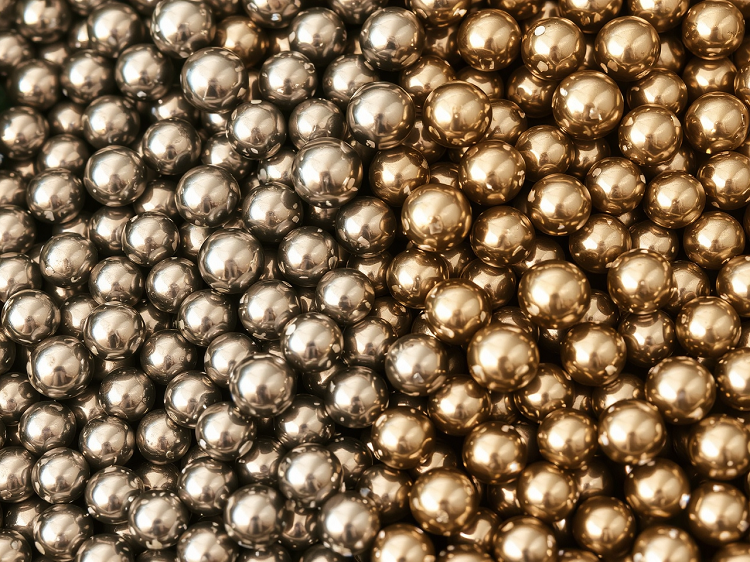
"Mining ball" is a broad commercial term covering grinding media used across mineral-processing applications. "SAG mill grinding ball" identifies a more specific operating environment, where steel media work alongside coarse ore.
The distinction matters because media suitable for one grinding stage may perform poorly in another.
| Selection factor | SAG mill grinding ball | General mining grinding ball |
|---|---|---|
| Application | Semi-autogenous grinding | Various mineral-grinding duties |
| Breakage environment | Coarse ore, impact, and abrasion | Depends on mill type and grinding stage |
| Selection priority | Impact survival with wear resistance | Application-specific wear and impact balance |
| Size selection | Linked to feed size, ore competence, and mill conditions | Linked to the particular grinding duty |
| Validation | Breakage, wear, throughput, energy, and discharge behavior | Metrics appropriate to the application |
From a procurement perspective, I would start with the operating duty—not the product label. A specification stating only diameter and surface hardness leaves important performance questions unanswered.
Ball charge describes the fraction of internal mill volume occupied by the bulk ball charge, including spaces between balls under the stated measurement convention.
Total charge filling describes the combined ore-and-media charge envelope. Slurry occupies spaces within that charge and may also accumulate beyond them.
These volumes overlap physically. They must not be added as though balls, ore, and slurry were three separate containers.
Useful definitions are:
Jb=Vbulk ball charge/Vinternal mill
Jt=Vtotal charge envelope/Vinternal mill
State whether values are fractions or percentages, and document the effective internal volume after allowing for liners.
Steel material density and bulk ball-charge density are different quantities. Bulk density includes inter-ball voids and depends on packing assumptions.
For an illustrative calculation, assume:
- Effective internal mill volume: 1,000 m³.
- Bulk ball filling: 12%.
- Assumed bulk ball density: 4.5 t/m³.
The estimated ball inventory is:
Mb=1,000×0.12×4.5=540 tonnes
This is an inventory example, not a recommended operating target. Actual estimates require a defensible packing density, liner-adjusted volume, and site verification.
Using solid steel density in this calculation would overestimate inventory because it ignores void space.
Here, "dynamic slurry density" means slurry density as it changes during operation. It is not a separate standardized material property.
Three measurements should remain distinct:
- Slurry density: mass of the ore-water mixture per unit volume.
- Solids concentration: solids expressed by mass or volume.
- Rheology: how the slurry flows, including viscosity and yield stress.
Two slurries with similar density can behave differently because particle-size distribution, clay content, mineralogy, and water chemistry differ.
For a two-component ore-water mixture:
1/ρsl=ws/ρs+(1−ws)ρw
At 70% solids by mass, with solids density of 2.8 t/m³ and water density of 1.0 t/m³, calculated slurry density is approximately 1.82 t/m³.
That calculation does not establish an optimum. It also shows why the same percentage solids can produce different slurry densities when ore density changes.
Increasing ball charge changes impact opportunities, charge mass, void structure, and power demand. The outcome depends on ore competence, mill speed, liner geometry, and discharge capacity.
A mill constrained by coarse-particle breakage may respond differently from a mill constrained by slurry evacuation.
The practical question is: which limitation is preventing additional saleable throughput?
Slurry pooling occurs when slurry accumulates beyond what the moving charge can accommodate within its interstices.
Grates and pulp lifters form part of the discharge system. If transport capacity is inadequate, liquid can accumulate even when upstream water addition appears reasonable.
Pooling can reduce useful grinding action and lower power draw. Consequently, falling power is not automatically evidence of improved efficiency or insufficient ball charge.
Interpret power alongside throughput, product size, bearing-load trends, water flows, and discharge observations.
Adding water may reduce viscosity, but it also increases volumetric flow through the mill and downstream equipment.
If discharge capacity is already constrained, dilution alone may not solve the problem.
Similarly, feed or discharge density is not a direct measurement of every location inside the mill. Its interpretation depends on sensor position, mixing, calibration, and the circuit mass balance.
Surface hardness is useful, but it does not fully describe a grinding ball.
A meaningful technical review should consider:
- Surface-to-core hardness profile.
- Chemistry and heat-treatment consistency.
- Microstructure and internal soundness.
- Impact-test method and acceptance criteria.
- Field evidence of cracking, spalling, and wear.
Hardness supports wear resistance; adequate toughness helps media withstand repeated impacts. Neither should be assessed in isolation.
Forged steel grinding balls are commonly evaluated for demanding SAG impact duties. Cast media remain relevant across other grinding applications.
However, "forged" and "cast" are manufacturing descriptions, not complete performance guarantees.
For ALLSTAR OEM discussions, buyers should identify whether the intended product is for SAG service, secondary ball milling, cement grinding, or another duty before agreeing on material and inspection requirements.
Larger balls can provide greater individual impact energy under comparable motion. At equal media mass, however, they provide fewer individual balls and less total surface area.
Selection therefore involves a trade-off between coarse-particle breakage and contact opportunities.
The optimum makeup size depends on the feed, ore competence, mill geometry, operating conditions, and evolving size distribution of worn media.
A disciplined trial is more informative than changing ball size, water addition, and feed rate simultaneously.
Record operating periods that capture relevant ore variability.
Include:
- Dry throughput and feed-size distribution.
- Ore type and available competence indicators.
- Mill speed, power, and bearing-load trends.
- Water addition and measured slurry density.
- Ball additions, liner condition, and product size.
Check instrument calibration before drawing conclusions.
Separate evidence of inadequate breakage from evidence of restricted transport.
Review grate condition, pulp-lifter performance, pebble handling, and downstream capacity where relevant. Do not assume a media change can correct a mechanical discharge restriction.
Agree on the trial with site metallurgists, operations personnel, and the mill equipment supplier where necessary.
Change one principal variable at a time where practical. Allow for the time required for a new media population to influence the charge.
Compare similar ore types and liner-life stages. Normalize results where feed size, hardness, or operating time differ.
Track throughput, specific energy, product size, media consumption, and broken-ball observations together.
A short production peak is not proof of a better specification.
Confirm that performance remains acceptable over a representative campaign, including media turnover and changing ore conditions.
| Operating observation | Possible explanation | Useful check |
|---|---|---|
| Lower power with coarser product | Pooling, changed charge motion, or another process disturbance | Water balance, discharge system, load trends |
| Higher media use without throughput improvement | Wear, breakage, or a non-media bottleneck | Ball inspection and matched-period comparison |
| Rising load with unstable discharge | Material accumulation or transport restriction | Feed conditions, grates, pulp lifters |
| Density shifts after an ore change | Different solids density or slurry behavior | Solids density, fines, clay, calibration |
| More ball fragments in discharge | Media suitability or operating-impact concerns | Metallurgy, size selection, operating history |
These observations are diagnostic starting points, not unique fault signatures. Multiple mechanisms can produce similar symptoms.
For overseas brands, wholesalers, and manufacturers, the first procurement document should be an application brief rather than a price-only inquiry.
When approaching ALLSTAR, provide:
- Mill type, dimensions, speed, and intended grinding stage.
- Current ball size, material, addition rate, and performance concerns.
- Ore characteristics and available operating data.
- Required testing, sampling, and acceptance procedures.
- OEM marking, packaging, documentation, and delivery requirements.
Request written confirmation of the proposed specification and which inspection records can be supplied.
Avoid accepting unsupported claims such as "zero breakage" or a guaranteed throughput increase without a defined test method and operating basis.
For purchasing comparisons, calculate media cost per dry tonne processed. Review it alongside energy consumption, availability, liner effects, and downstream performance—not simply purchase price per tonne of balls.
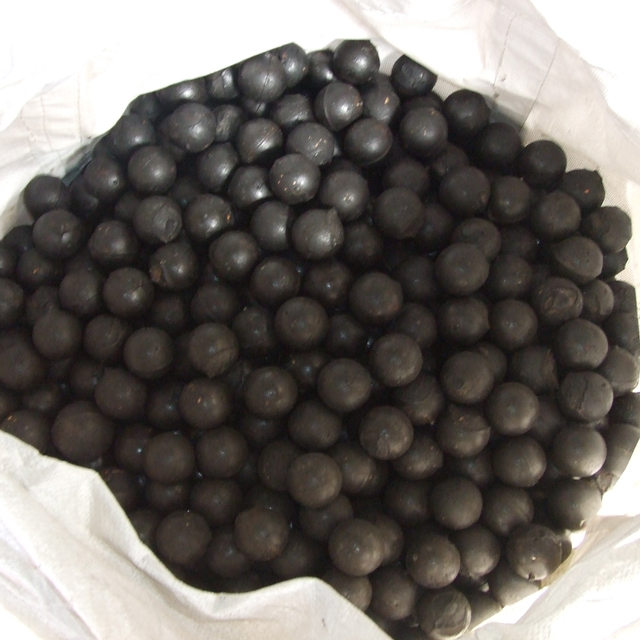
A SAG ball belongs to the broader mining grinding-media category. Its specification should reflect semi-autogenous grinding conditions, especially impact severity, ore characteristics, and the mill operating environment.
There is no universal optimum. Suitable filling depends on mill design, ore competence, speed, liners, power limits, and discharge capacity. Establish it through site-specific operating evidence within approved equipment limits.
Not necessarily. Higher solids concentration can change rheology and transport, while additional dilution increases volumetric flow. The useful operating range depends on the ore and the capacity of the full circuit.
Sometimes, if insufficient coarse-particle breakage is the constraint. They will not automatically solve restricted discharge, inadequate downstream capacity, or poor process control. Diagnose the bottleneck before changing size.
Slurry pooling can reduce power while also impairing throughput or grind. Other disturbances can produce similar trends, so power must be interpreted alongside load, water balance, product size, and operating conditions.
Request an application-specific proposal, dimensional tolerances, hardness-profile information, agreed testing methods, batch-identification requirements, packaging details, and a field-validation plan. Confirm document availability and acceptance criteria before ordering.
Send SHANDONG ALLSTAR GRINDING BALL CO., LTD. your mill specifications, ore information, current media details, and operating concerns.
Request an application-specific OEM quotation with clearly agreed product specifications, inspection requirements, and trial criteria. The objective is a verifiable grinding-media solution that fits the mill, the ore, and the circuit—not merely a harder ball.
1. Molycop. "SAG Balls."
2. Molycop. "SAG Balls Technical Specifications," Version 2.0, document MCGBLSAGTS2.0 120923.
3. Powell, Malcolm S., and Walter Valery. "Slurry Pooling and Transport Issues in SAG Mills," 2006.
4. SMC Testing. "Slurry Flow in Mills: Grate–Pulp Lifter Discharge Systems, Part 2."
5. SMC Testing. "Modelling the Influence on Power Draw of the Slurry Phase in Autogenous (AG), Semi-Autogenous (SAG) and Ball Mills."
6. Rhosonics. "Measuring Density in Grinding Circuit," June 2, 2022.
7. "Interactions Between Slurry Density and Grinding Media Size." OneMine, 2007.
Hot Tags: China, Global, OEM, private label, manufacturers, factory, suppliers, manufacturing company


