
Views: 266 Author: shandong Allstar Grinding Ball Publish Time: 2026-09-30 Origin: Site


Content Menu
● What Is Steel Ball Fatigue Life in Continuous Milling?
● Why Fatigue Failure Matters to Mill Economics
● The Main Fatigue Mechanisms in Steel Grinding Balls
>> Impact fatigue from repeated collisions
>> Surface-contact fatigue and spalling
>> Abrasive wear combined with fatigue
>> Corrosion-fatigue in wet grinding
● Five Factors That Determine Grinding Ball Fatigue Life
● Forged vs. Cast Steel Balls: Fatigue-Life Considerations
● How SHANDONG ALLSTAR Controls Fatigue Risk
>> 1. Start with the correct raw material
>> 2. Match hardness with toughness
>> 3. Control forming and heat treatment
>> 4. Inspect what affects field performance
● A Practical Method to Measure Actual Media Life
>> Step 1: Establish a baseline
>> Step 2: Run a controlled marked-ball trial
>> Step 3: Review failure morphology
● Operating Practices That Extend Steel Ball Service Life
● Expert View: Why "Low Wear Rate" Is Not Enough
● Choose a Grinding Media Partner Focused on Fatigue Life
● FAQ
>> 1. What is the main cause of steel ball breakage in a ball mill?
>> 2. Are forged steel balls better than cast steel balls for continuous milling?
>> 3. How can I measure grinding ball fatigue life in my plant?
>> 4. Does higher hardness always mean longer grinding-ball life?
>> 5. How does wet grinding affect steel ball fatigue life?
>> 6. What information should I provide when requesting grinding-ball recommendations?
>> 7. Can SHANDONG ALLSTAR provide OEM grinding media services?
At SHANDONG ALLSTAR GRINDING BALL CO., LTD., we understand that the fatigue life of steel balls in continuous milling is not a laboratory-only subject. It directly affects grinding-media consumption, mill availability, product fineness, maintenance planning, and cost per tonne.
For mining, cement, and power-generation operators, a grinding ball must survive millions of repeated impacts, compressive contacts, sliding events, and abrasive interactions. A ball that looks hard on the surface but contains internal defects, poor microstructure, or an unsuitable hardness-to-toughness balance can crack, spall, or break prematurely. That is why understanding steel-ball fatigue life is essential when selecting forged steel balls, cast steel balls, grinding rods, and grinding cylpebs for continuous mill operation.
As a global manufacturer serving overseas brand owners, wholesalers, and industrial producers with OEM grinding-media solutions, SHANDONG ALLSTAR places fatigue resistance at the center of product design, material selection, forging or casting control, heat treatment, and quality inspection. Our goal is simple: help customers achieve stable grinding performance with lower breakage risk and predictable media consumption.
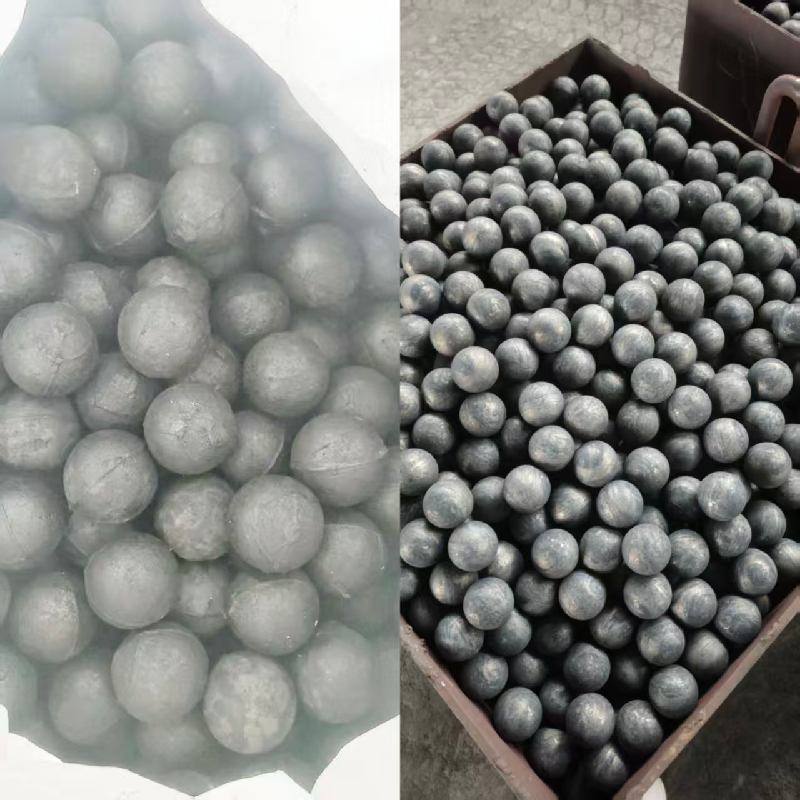
Steel ball fatigue life is the ability of a grinding ball to resist damage caused by repeated cyclic loading before cracking, spalling, fracture, or unacceptable performance loss occurs.
In a continuous ball mill, SAG mill, or regrind mill, grinding media do not experience one single impact. They experience an ongoing sequence of events:
- Ball-to-ball impacts.
- Ball-to-ore impacts.
- Ball-to-liner impacts.
- Compression under the mill charge.
- Abrasive sliding against mineral particles.
- Corrosive attack in wet slurry environments.
- Thermal and mechanical stresses during long operating campaigns.
This repeated loading creates conditions for contact fatigue and impact fatigue. Small imperfections at the surface or below the surface can become crack initiation points. Over time, these cracks may propagate until the ball develops pitting, shelling, spalling, or complete breakage.
A continuous milling circuit is particularly demanding because there is little recovery time for the media. The mill operates for long periods under changing ore hardness, feed size, slurry chemistry, mill speed, and ball charge conditions. Therefore, the useful life of grinding media depends on both the ball itself and the operating environment.
Grinding balls are consumables, but premature failure should never be treated as unavoidable. A broken or severely spalled ball can disrupt the grinding process and create costs far beyond the purchase price of the media.
The most visible cost is increased media consumption. However, the operational consequences may be broader:
- Higher steel consumption per tonne of ore or material processed.
- Lower grinding efficiency when ball size distribution changes unexpectedly.
- Reduced mill throughput if the media charge no longer delivers the required impact energy.
- Unstable particle-size control, especially in fine and regrind circuits.
- Increased liner damage risk from irregular broken fragments.
- More frequent shutdowns for inspection, cleanup, or media correction.
- Higher total cost of ownership, even if the initial purchase price was lower.
In practical terms, a grinding ball should not be evaluated only by hardness or quoted wear rate. The best choice is the product that delivers the right balance of wear resistance, impact resistance, size retention, and low breakage risk in the customer's actual mill environment.
Industry guidance on mill performance consistently shows that wear is influenced by feed properties, throughput, charge conditions, mill speed, liner design, and media characteristics. Continuous monitoring is therefore more valuable than relying on a single purchase specification.
Impact fatigue is common in primary grinding, SAG milling, coarse ball milling, and circuits with large feed particles. Every time a ball is lifted and dropped within the charge, it receives another high-energy shock.
If the ball has inadequate core toughness, an internal void, excessive brittleness, or an unfavorable heat-treatment structure, repeated impact can initiate internal cracking. This may eventually lead to sudden fracture.
Forged steel balls are frequently selected for high-impact duty because hot forging can refine and align the steel's internal grain flow while reducing the risk of shrinkage cavities commonly associated with poorly controlled casting. However, forging alone is not a guarantee of quality. Steel chemistry, billet quality, forging ratio, temperature control, quenching, and tempering all remain critical.
Contact fatigue occurs when repeated local contact stresses exceed the material's ability to resist cyclic deformation. In grinding service, the ball surface may develop small pits, shallow cracks, flakes, or spalls.
The risk rises when there is:
- Excessive surface hardness with insufficient toughness.
- Surface decarburization or overheating.
- Grinding burns or quench cracks.
- High roughness or sharp surface defects.
- Residual tensile stress near the surface.
- Segregation, inclusions, porosity, or microstructural inconsistency.
Research on steel contact fatigue shows that surface condition, roughness, hardness, and residual stress work together rather than independently. A smoother, more controlled surface can improve fatigue behavior because it reduces local stress concentration and makes crack initiation less likely.
Abrasion gradually removes material from the ball surface. In highly abrasive ore, cement clinker, coal, or mineral slurry, the ball becomes smaller as the surface is worn away.
Abrasion is not always harmful in isolation. Controlled and uniform wear is usually preferred because it preserves a predictable ball-size distribution. The problem begins when abrasion exposes defects, creates sharp geometric changes, or accelerates fatigue-crack growth.
The best grinding media do not simply remain hard. They wear in a stable and controlled manner while retaining enough toughness to resist impact and fracture.
In wet milling, electrochemical corrosion may interact with mechanical loading. Water chemistry, pH, dissolved oxygen, chloride content, sulfide minerals, galvanic effects, and slurry composition can all influence corrosion behavior.
Corrosion can roughen the ball surface and create pits. Those pits then act as stress concentrators under repeated impacts. This combined mechanism is often more damaging than wear or corrosion alone.
For this reason, customers should evaluate grinding media based on the complete operating environment, not only on dry hardness measurements. A ball that performs well in dry cement grinding may not automatically be the best option for acidic or chemically aggressive mineral slurry.
| Factor | Why It Matters | What Operators Should Check |
|---|---|---|
| Steel chemistry | Carbon and alloying elements influence hardenability, wear resistance, and toughness | Heat-by-heat chemical analysis and traceability |
| Internal soundness | Voids, inclusions, shrinkage, and segregation can become crack origins | Reliable raw material, controlled forming, NDT where required |
| Heat treatment | Controls hardness profile, martensitic structure, residual stress, and core toughness | Surface and core hardness checks, documented heat-treatment process |
| Ball surface quality | Surface defects concentrate stress and promote crack initiation | Visual inspection, dimensional consistency, crack screening |
| Mill operating conditions | Impact severity, abrasion, corrosion, and charge behavior determine actual service life | Feed size, mill speed, liner profile, slurry chemistry, ball charge |
Both forged and cast grinding balls can serve important industrial applications. The correct selection depends on the mill, material, grinding stage, operating conditions, and target cost per tonne.
| Comparison Area | Forged Steel Balls | Cast Steel Balls |
|---|---|---|
| Manufacturing route | Hot formed from steel bar or billet | Molten metal poured into moulds |
| Internal structure | Can offer dense, directional grain flow when properly forged | Depends heavily on casting design, solidification control, and heat treatment |
| Impact-fatigue suitability | Often preferred for high-impact milling | Can be suitable where wear resistance is prioritized and impact demand is lower |
| Toughness potential | Generally strong when chemistry and tempering are properly controlled | Varies significantly by alloy design and casting quality |
| Wear behavior | Designed to balance wear resistance and impact resistance | High-chromium grades can offer strong abrasion resistance in appropriate conditions |
| Key risk to control | Inconsistent hardness through section, decarburization, quench control | Porosity, segregation, shrinkage cavities, brittle fracture |
At SHANDONG ALLSTAR, we do not treat forged and cast balls as interchangeable products. We help customers match the grinding-media type to the milling duty. High-impact applications often require a tougher forged solution, while selected fine-grinding or abrasion-dominant environments may benefit from a properly engineered cast alloy.
The key question is not, "Which product is always better?" The right question is, "Which media design gives the lowest total grinding cost in this specific mill?"
As an OEM-oriented grinding media manufacturer, SHANDONG ALLSTAR focuses on the production controls that have the greatest influence on fatigue life and breakage resistance.
Fatigue resistance begins before the ball is formed. Steel quality affects cleanliness, hardenability, inclusion control, and microstructural consistency.
We work to align raw-material selection with the customer's application requirements, including ball size, milling mode, expected impact level, wet or dry operation, and wear target. For demanding projects, product traceability by production batch is essential.
A common misconception is that harder always means better. In reality, an excessively hard ball with insufficient toughness may crack under repeated impacts. Conversely, a very tough but insufficiently hard ball may wear too quickly.
The best performance usually comes from a balanced hardness profile:
- A wear-resistant surface.
- Adequate hardness through the ball section.
- A tough core that resists crack propagation.
- Controlled microstructure after quenching and tempering.
This is especially important for larger-diameter grinding balls, where heat treatment must reach the required depth without making the outer layer excessively brittle.
For forged balls, controlled heating and deformation are essential to achieve a dense structure and stable shape. For cast balls, molten-metal control, mould design, solidification behavior, and heat treatment are equally important.
Heat treatment is one of the most decisive stages. Improper quenching can introduce high residual stresses or create cracking. Inadequate tempering can leave the ball brittle. Insufficient hardening can reduce wear life.
Our quality approach emphasizes process consistency, because fatigue failures often begin with variation rather than average values. A batch can meet a nominal hardness target while still containing individual balls with unacceptable microstructural or internal defects.
A reliable quality-control program should include more than a final visual check. Depending on the product and application, useful controls include:
- Chemical composition verification.
- Ball diameter and roundness inspection.
- Surface hardness testing.
- Core or cross-sectional hardness verification.
- Impact or drop testing where relevant.
- Metallographic examination.
- Crack detection and defect screening.
- Batch identification and production traceability.
Standardized fatigue testing of metallic specimens, such as constant-amplitude testing under ASTM E466 principles, provides useful material-level information. However, a steel ball in a real mill experiences multi-directional impacts, abrasion, corrosion, and changing loads. Therefore, laboratory results should be combined with plant trials and operating data.
The most reliable way to understand fatigue life in continuous milling is to measure performance in the customer's real operating circuit.
Before changing media, record the current situation:
- Media consumption in kilograms per tonne or grams per tonne.
- Mill throughput.
- Power draw.
- Product particle-size distribution.
- Ball breakage frequency.
- Liner condition.
- Ore hardness and abrasiveness.
- Slurry density, pH, and water chemistry for wet circuits.
Without a baseline, it is difficult to prove whether a new grinding ball actually improves total cost.
A marked-ball wear test can compare candidate media under actual operating conditions. A defined group of balls is weighed, marked, introduced into the mill, and recovered after a known operating period.
The test should document:
- Initial and final ball diameter or mass.
- Operating hours.
- Tonnes processed.
- Mill power and throughput.
- Number of cracked, spalled, or broken balls.
- Position and condition of recovered balls.
- Ore and slurry conditions during the trial.
The result should not be judged only by weight loss. A ball with low average wear but a high breakage rate can still be an expensive choice.
When balls fail, collect samples rather than disposing of them immediately. The fracture pattern can provide valuable clues.
- Clean brittle fracture: May indicate excessive hardness, insufficient tempering, or internal defects.
- Spalling and shelling: May indicate contact fatigue, surface defects, or unsuitable heat treatment.
- Deep pitting: May indicate corrosive attack and corrosion-fatigue interaction.
- Abnormally rapid size loss: May indicate insufficient hardness or highly abrasive feed.
- Localized cracking: May indicate impact overload, liner problems, or oversized feed.
This failure analysis allows SHANDONG ALLSTAR and the customer's technical team to improve the media specification based on evidence rather than assumption.
Even premium grinding media can fail early if the mill is operating outside its intended conditions. Plant teams can improve fatigue life through disciplined operating control.
1. Maintain the correct ball charge. An undercharged mill may expose balls and liners to more severe impacts. An overcharged mill may reduce grinding efficiency and alter media motion.
2. Control feed size. Oversized or highly variable feed can increase impact severity and accelerate ball cracking.
3. Manage ball-size distribution. Large balls provide impact energy for coarse breakage, while smaller balls improve surface area for fine grinding. A balanced charge supports efficient milling and reduces unnecessary overload.
4. Monitor liner profile. Worn or unsuitable liners change ball trajectories. This can create abnormal impact zones and accelerate fatigue damage.
5. Track slurry chemistry in wet mills. Changes in pH, oxygen exposure, mineralogy, or water quality can increase corrosion and pitting.
6. Avoid uncontrolled media mixing. Mixing grades, hardness levels, or ball sizes without a clear plan can make wear data difficult to interpret and may create inefficient charge behavior.
7. Investigate early breakage immediately. A small number of fractured balls can be an early warning of a process problem or a batch-quality issue.
From our manufacturing and application perspective, the most common purchasing mistake is selecting grinding balls based on a single property. A low quoted wear rate is attractive, but it does not tell the complete story.
A grinding ball must deliver value across the full milling cycle:
- It must resist abrasion.
- It must survive repeated impact.
- It must remain structurally sound.
- It must maintain useful size distribution.
- It must support stable grinding efficiency.
- It must perform consistently from batch to batch.
The real performance measure is not the cheapest ball per tonne purchased. It is the lowest verified total cost per tonne processed, considering media consumption, energy use, downtime, throughput, product quality, and maintenance exposure.
This is where OEM cooperation becomes valuable. SHANDONG ALLSTAR can work with overseas brands, wholesalers, and manufacturers to develop grinding-media specifications that match their market, equipment range, and end-user requirements. That may include customized steel chemistry, ball diameters, hardness ranges, packaging, branding, inspection documentation, and trial support.
Understanding the fatigue life of steel balls in continuous milling helps operators make better decisions before a failure affects production. The right grinding media should be engineered for the actual operating environment—not selected only by price, nominal hardness, or a generic specification.
SHANDONG ALLSTAR GRINDING BALL CO., LTD. supplies forged steel balls, cast steel balls, grinding rods, and grinding cylpebs for mining, cement, and power-generation applications. We support global customers with OEM manufacturing, application-focused product selection, stable production control, and quality documentation designed for demanding continuous milling operations.
Contact SHANDONG ALLSTAR today to discuss your mill type, material characteristics, grinding-media size range, breakage concerns, and target consumption rate. Our team can help you develop a practical grinding-media solution that improves fatigue resistance and lowers total milling cost.
Steel ball breakage is usually caused by a combination of repeated impact loading, excessive brittleness, internal defects, unsuitable heat treatment, oversized feed, abnormal liner conditions, or severe corrosion. The root cause should be confirmed through fracture inspection and operating-data review.
Forged steel balls are often preferred in high-impact applications because a well-controlled forging process can provide strong toughness and resistance to fracture. Cast steel balls can also be effective, especially in abrasion-dominant applications. The correct choice depends on the mill duty, material abrasiveness, feed size, slurry chemistry, and target cost per tonne.
Use a controlled plant trial. Record ball mass or diameter before charging, operating hours, tonnes processed, energy use, wear rate, and breakage rate. Marked-ball wear testing is especially useful because it evaluates media under real mill conditions.
No. Higher hardness can improve abrasion resistance, but excessive hardness may reduce toughness and increase the risk of cracking or spalling. A well-designed grinding ball requires a balance between hardness, microstructure, residual stress, and core toughness.
Wet grinding can increase risk because abrasive wear may combine with corrosion. Slurry pH, dissolved oxygen, mineral composition, chloride content, and galvanic interactions can create surface pits that become fatigue-crack initiation sites.
Provide the mill type, mill diameter and length, feed size, material type, ore hardness or abrasiveness, wet or dry grinding conditions, ball-size range, current media consumption, broken-ball history, throughput, and required product size. This information supports more accurate media selection.
Yes. SHANDONG ALLSTAR provides OEM services for overseas brands, wholesalers, and manufacturers. Available support can include customized product specifications, steel grades, ball sizes, hardness targets, packaging, private labeling, inspection requirements, and export-oriented documentation.
2. [Metso — Basics in Minerals Processing Handbook]
3. [Metso — Three Factors That Determine Wear Life and Performance]
6. [Springer — Effect of Grinding Depth on Fatigue Fracture Behaviors of 40Cr Steel]
7. [Energosteel — Forged Steel Grinding Balls for Ball Mills]
Hot Tags: China, Global, OEM, private label, manufacturers, factory, suppliers, manufacturing company


