
Views: 227 Author: shandong Allstar Grinding Ball Publish Time: 2026-09-21 Origin: Site


Content Menu
● Why Mill Ball Quality Matters to Plant Economics
>> The real cost of poor grinding media
>> Why the cheapest mill balls may cost more
● SHANDONG ALLSTAR Mill Balls for Global Industrial Buyers
>> OEM support for brands, wholesalers and manufacturers
● Forged Mill Balls vs. Cast Mill Balls
>> Forged steel grinding balls
>> Comparison table: forged vs. cast mill balls
● How to Choose the Right Mill Balls
>> 1. Define the grinding objective
>> 2. Review feed size and target product size
>> 3. Understand ore or material abrasiveness
>> 5. Consider wet or dry grinding chemistry
>> 6. Confirm diameter mix and top-up strategy
● Mill Ball Selection by Industry
>> Mill balls for cement plants
>> Mill balls for power plants
● A Practical Trial Method for Mill Balls
>> Step-by-step media trial plan
● What Quality Control Should a Mill Ball Supplier Provide?
>> Buyer checklist for mill balls
● Why Work With SHANDONG ALLSTAR GRINDING BALL CO., LTD.?
● Request a Mill Ball Recommendation
● FAQ
>> 1. What are mill balls used for?
>> 2. What is the difference between forged mill balls and cast mill balls?
>> 3. How do I choose the correct mill ball diameter?
>> 4. Can SHANDONG ALLSTAR provide OEM mill balls?
>> 5. Are high-chrome cast mill balls always better than forged steel balls?
>> 6. How should a plant evaluate a new mill ball supplier?
>> 7. What information should I provide when requesting a mill-ball quotation?
Mill balls are not a commodity purchase. In mining, cement and power-generation grinding circuits, the right grinding media can influence throughput, product fineness, power consumption, mill availability, liner life and total operating cost.
At SHANDONG ALLSTAR GRINDING BALL CO., LTD., we manufacture mill balls, forged grinding balls, cast grinding balls, grinding rods and grinding cylpebs for demanding industrial applications worldwide. We also provide flexible OEM grinding media services for overseas brands, wholesalers and manufacturers that need reliable production capacity, consistent quality control and tailored specifications.
Whether your operation uses a ball mill for mineral processing, cement clinker grinding or coal pulverizing, selecting the correct mill balls requires more than comparing unit price. It requires matching media material, hardness, toughness, diameter distribution and manufacturing quality to real mill conditions.
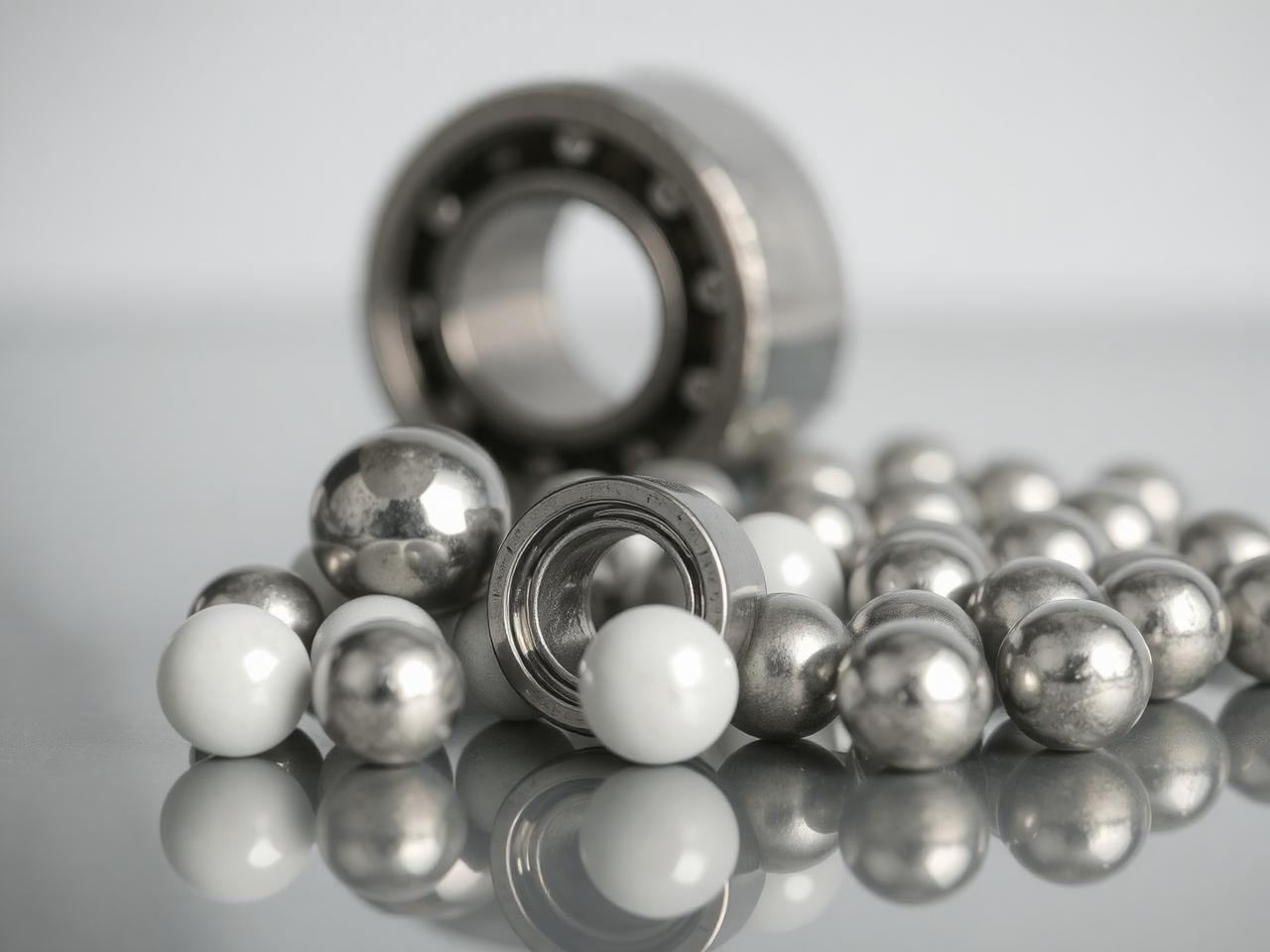
Mill balls, also called grinding balls or ball mill grinding media, are wear-resistant spherical media used inside grinding mills to reduce ore, clinker, coal and other bulk materials into smaller particles.
As the mill rotates, mill balls are lifted and then fall or cascade through the material charge. This movement creates impact, compression and abrasion. The result is controlled particle-size reduction.
Mill balls are widely used in:
- Metal mining and mineral beneficiation
- Gold, copper, iron ore and polymetallic processing
- Cement raw-meal and clinker grinding
- Coal pulverizing for thermal power plants
- Lime, silica, slag and industrial-mineral grinding
- Regrinding and secondary milling circuits
- OEM grinding-media supply programs
The performance of a grinding charge depends on more than ball diameter. Material characteristics such as hardness, impact toughness, chemical composition, microstructure, manufacturing method and shape all affect media wear and grinding behavior.
A low-cost grinding ball can become expensive if it wears too quickly, breaks in service, produces unstable product size or increases downtime. In contrast, well-selected mill balls help operators control the factors that matter most: tonnes processed, energy use, media consumption and maintenance intervals.
At SHANDONG ALLSTAR GRINDING BALL CO., LTD., we recommend evaluating grinding media according to cost per tonne processed, not only purchase price per tonne of media.
Poorly matched or inconsistently manufactured mill balls may lead to:
- Excessive media consumption
- Ball breakage, spalling or surface cracking
- Lower mill throughput
- Higher electricity consumption per tonne
- Inconsistent grind size
- Accelerated liner wear
- Frequent media top-ups
- Unplanned shutdowns and lost production
- Product contamination concerns in sensitive processes
Grinding media selection should reflect actual mill conditions. A structured assessment can account for ore hardness, feed and product sizes, mill power, throughput and other operating factors, rather than attributing all wear changes to the media itself.
A purchasing team may see a lower initial quotation as a saving. However, that figure does not capture:
- Media wear rate per tonne of feed
- Breakage-related losses
- Labour and downtime during ball charging
- Effects on mill capacity
- Energy intensity
- Liner maintenance
- Quality risk to the final product
The correct question is not "What is the price per tonne of mill balls?" It is: "What is the delivered grinding cost per tonne of finished material?"
SHANDONG ALLSTAR GRINDING BALL CO., LTD. supports industrial customers looking for dependable, application-focused grinding media. Our role is not limited to supplying balls. We help customers align grinding-media specifications with their mill type, feed conditions, wear environment and purchasing model.
Our product range includes:
- Forged steel grinding balls
- Cast grinding balls
- High-chrome grinding balls
- Low-chrome and alloy grinding balls
- Grinding rods
- Grinding cylpebs
- Customized mill balls for OEM programs
- Private-label production for brands and distributors
- Export-focused packaging and batch-based supply support
For overseas customers, OEM supply must provide more than capacity. It should protect brand reputation through consistent specifications, documentation and delivery reliability.
Our OEM services can support:
| OEM Requirement | SHANDONG ALLSTAR Support |
|---|---|
| Brand customization | Private-label and customer-specific packaging options |
| Product specification | Diameter, hardness range, material grade and application-based recommendations |
| Batch consistency | Process control and batch traceability support |
| International sourcing | Export-oriented packing and supply coordination |
| Product portfolio expansion | Forged balls, cast balls, rods and cylpebs from one manufacturer |
| Technical communication | Application-focused support for buyers and end users |
For distributors, this means a broader and more reliable grinding-media offering.
For manufacturers, it means a scalable supply partner.
For mines, cement plants and power plants, it means a more disciplined path to selecting mill balls for actual operating conditions.
The most common question from industrial buyers is whether forged grinding balls or cast grinding balls are the better option. There is no universal answer because the right product depends on impact load, abrasive wear, mill size, feed size, slurry chemistry and performance targets.
Forged mill balls are produced by heating steel billets and forming them through a forging process, followed by controlled heat treatment. They are often selected for applications that require high toughness and resistance to repeated impact.
Forged grinding balls are commonly considered for:
- Primary ball milling
- High-impact grinding conditions
- Coarse ore grinding
- Large-diameter mill charges
- Applications where resistance to breakage is critical
- Mining circuits with fluctuating feed conditions
Their dense, forged structure can support strong mechanical performance when manufacturing and heat treatment are carefully controlled. Industry product ranges commonly position forged balls for high-abrasion and high-impact milling environments.
Cast mill balls are manufactured by pouring molten metal into molds. High-chrome cast balls are widely used where abrasive wear resistance is especially important and impact conditions are moderate or well managed.
Cast grinding balls are commonly considered for:
- Fine grinding and regrinding
- Abrasive mineral applications
- Cement grinding
- Secondary ball-mill circuits
- Lower-impact environments
- Applications prioritizing high surface hardness and wear resistance
High-chrome cast media is among the grinding-media options used for enhanced wear resistance, while forged and cast products are selected according to abrasion and impact demands.
| Factor | Forged Mill Balls | Cast Mill Balls |
|---|---|---|
| Manufacturing route | Hot forging and controlled heat treatment | Casting and controlled heat treatment |
| Typical strength | High impact toughness | High wear resistance in appropriate conditions |
| Common application | Coarse grinding and high-impact duty | Abrasive grinding and controlled-impact duty |
| Key selection concern | Impact strength, internal quality, hardness profile | Chemistry, microstructure, hardness and breakage resistance |
| Typical users | Mines, primary mills, heavy-duty circuits | Cement plants, secondary mills, abrasive-duty circuits |
| Best purchasing approach | Verify impact and wear performance | Verify wear performance and casting integrity |
The selection process should start with the grinding circuit—not with the catalogue.
First, identify what the mill must achieve:
- Coarse size reduction
- Secondary grinding
- Fine grinding
- Regrinding
- Cement clinker size reduction
- Coal pulverization
- Product-shape control
- Capacity improvement
- Lower media wear cost
Large media generally provide stronger impact for coarse feed. Smaller media create more contact points and can support fine grinding. The correct charge often uses a controlled size distribution instead of a single ball size.
Feed size is one of the most important variables. Coarser feed normally requires larger mill balls to generate sufficient impact energy. Finer feed and tighter product-size targets may require smaller media, cylpebs or a carefully designed mixed charge.
A practical industry rule is that media size should be selected in relation to the largest feed particles and the target fineness, while the mill type and grinding mechanism must also be considered. [strindustries]
Hard, abrasive feeds can consume grinding media rapidly. Quartz-rich ores, abrasive slag and certain clinker or mineral blends require media with suitable wear resistance.
However, high hardness alone is not enough. Media also needs appropriate toughness. Grinding media research emphasizes that good media should combine hardness, fracture toughness, wear resistance and corrosion resistance while retaining adequate mechanical reliability.
High-impact conditions are common in larger mills, coarse grinding stages and applications with larger feed particles. In these environments, toughness and resistance to breakage become central selection criteria.
If a ball has high surface hardness but inadequate internal toughness, it may crack, spall or break under severe loading. That can reduce grinding efficiency and create operational risk.
For wet grinding, slurry pH, dissolved oxygen, mineral composition and corrosive conditions can influence media behavior. In some circuits, corrosion can be a significant contributor to media consumption.
For dry cement or coal applications, impact, abrasion, temperature and mill airflow may become more influential. The correct mill balls should reflect the actual operating environment.
A grinding charge changes over time as balls wear. Without planned top-ups, the average ball size can become too small for the incoming feed. This can reduce breakage efficiency and increase energy waste.
A practical top-up plan should define:
1. Initial ball-charge size distribution
2. Media addition frequency
3. Top-up ball diameters
4. Consumption tracking method
5. Target mill filling level
6. Review intervals for product size and throughput
Mining applications often involve variable ore hardness, high throughput and demanding impact conditions. Depending on the grinding stage, miners may use forged balls for robust impact performance, high-chrome cast balls for abrasive wear resistance, or a combination selected through controlled trials.
For mining customers, SHANDONG ALLSTAR recommends collecting operating data before selecting media:
- Ore type and mineralogy
- Abrasiveness and hardness
- Feed \(F80\) and product \(P80\)
- Mill diameter and length
- Mill speed and power draw
- Liner design
- Ball-charge volume
- Current media consumption
- Breakage or spalling history
- Throughput target
In cement grinding, mill balls affect clinker reduction, separator performance, energy efficiency and cement fineness. Abrasion resistance, diameter grading and stable quality are particularly important.
A cement plant should avoid treating grinding media as a standard item. Differences in clinker hardness, gypsum proportion, supplementary cementitious materials, mill configuration and desired Blaine fineness can change the optimal media selection.
Coal pulverizing and related power-generation applications require stable grinding performance and reliable supply. Media wear behavior can vary with coal characteristics, ash content, moisture and mill design.
Operators should assess mill balls based on actual wear life, particle-size consistency, equipment reliability and total consumption over a defined operating period.
Before changing suppliers or converting from one media type to another, use a structured industrial trial. This reduces risk and creates a defensible basis for purchasing decisions.
1. Establish a baseline. Record current media consumption, throughput, power, product size, liner condition and downtime.
2. Define one objective. For example: reduce media consumption, improve throughput, reduce breakage or stabilize product fineness.
3. Keep operating variables controlled. Record ore changes, feed rate, mill speed, water addition and classification conditions.
4. Use traceable test media. Track the test batch, diameter range, chemistry, hardness and installation date.
5. Measure performance over enough operating time. Short trials can be distorted by temporary feed changes or charge-transition effects.
6. Compare total economics. Evaluate media consumption, throughput, power use, product quality and maintenance—not just media purchase price.
7. Decide based on evidence. Scale only after the test demonstrates meaningful operational value.
This approach reflects industry practice: full-scale media-performance analysis should correct for operational factors such as ore hardness, feed size, product size, power and throughput when comparing grinding-media alternatives.
A reliable mill-ball supplier should be able to explain its manufacturing process, product specifications and quality-control approach clearly. Buyers should ask direct technical questions before approving a supplier.
- What raw material grade is used?
- How is chemical composition controlled?
- What forming method is used: forging or casting?
- What heat-treatment process is applied?
- How is surface hardness checked?
- How is core hardness or hardness profile verified?
- How are cracks, voids or surface defects inspected?
- What is the size tolerance?
- What batch traceability is available?
- Can the supplier support trial orders before full-volume supply?
- Can packaging be customized for OEM distribution?
- Can the supplier provide product documentation for export and customer approval?
At SHANDONG ALLSTAR, we believe transparency matters. A mill-ball supplier should not rely only on generic claims such as "high quality" or "long service life." The supplier should help the customer define measurable standards and review actual field performance.
SHANDONG ALLSTAR GRINDING BALL CO., LTD. is positioned to support international buyers seeking mill balls and related grinding media for mining, cement and power industries.
Our customer-focused value proposition includes:
- Dedicated grinding-media manufacturing focus
- Forged balls, cast balls, rods and cylpebs in one supply program
- OEM support for overseas brands, wholesalers and manufacturers
- Application-focused discussions instead of one-size-fits-all recommendations
- Flexible product specifications based on customer requirements
- Export-oriented supply coordination
- Focus on repeatable quality, traceability and long-term cooperation
We understand that industrial buyers need more than a shipment of steel balls. They need a supplier that can support product consistency, technical communication, commercial reliability and the long-term economics of their grinding circuit.
If you are sourcing mill balls for mining, cement or power plants, send SHANDONG ALLSTAR your mill type, feed size, material characteristics, ball diameter requirement and current media-consumption data.
Our team can help you evaluate forged grinding balls, cast grinding balls, grinding rods or cylpebs for your application—and develop an OEM supply proposal that supports your brand, customers and operational targets.
Contact SHANDONG ALLSTAR GRINDING BALL CO., LTD. today to discuss your mill-ball specification, request a sample or begin an OEM supply conversation.
Mill balls are grinding media used in ball mills and similar equipment to crush and grind materials such as ore, cement clinker, coal, slag and industrial minerals. Their impact and abrasion reduce particles to the required size.
Forged mill balls are typically selected for high-impact applications because they can offer strong toughness and resistance to breakage. Cast mill balls, especially high-chrome products, are often selected for abrasive applications where wear resistance is a priority. The correct choice depends on mill conditions, feed material and operating targets.
Consider feed size, target product size, mill type, mill speed, material hardness and grinding stage. Coarser feed usually needs larger balls, while finer grinding often uses smaller balls or a mixed media charge. A plant trial is the most reliable way to validate the selection.
Yes. SHANDONG ALLSTAR GRINDING BALL CO., LTD. provides OEM services for overseas brands, wholesalers and manufacturers. OEM support can include customized specifications, private-label packaging and export-oriented supply arrangements.
No. High-chrome cast mill balls can provide strong wear resistance in suitable abrasive conditions, but forged steel balls may be more appropriate where impact loads are severe. The best media is the one that delivers the lowest total grinding cost in the actual circuit.
Start with a traceable trial. Compare media consumption, breakage rate, throughput, energy use, product fineness and maintenance effects against a baseline. Evaluate the total operating result instead of comparing only purchase price.
Provide your mill type, application, feed material, feed size, target product size, required ball diameter, grinding method, annual consumption, current supplier performance and destination port or country. This helps the supplier prepare a more accurate recommendation and quotation.
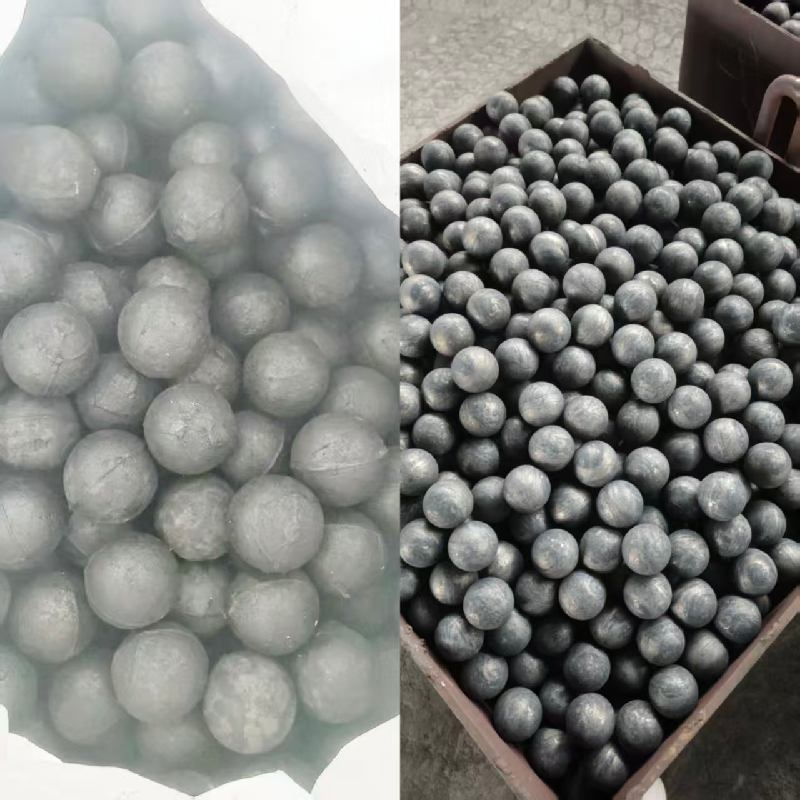
1. [Metso — Basics in Minerals Processing Handbook]
2. [Molycop — Grinding Media Products and Services]
3. [Molycop — Grinding Media for High-Abrasion and High-Impact Milling]
4. [MDPI Minerals — A Review of the Grinding Media in Ball Mills for Mineral Processing]
6. [U.S. Bureau of Mines / 911Metallurgist — Grinding Balls by Laboratory Impact and Abrasion Tests]
7. [ScienceDirect — Maximizing Wear Resistance of Balls for Grinding of Coal]
Hot Tags: China, Global, OEM, private label, manufacturers, factory, suppliers, manufacturing company


