
Views: 257 Author: shandong Allstar Grinding Ball Publish Time: 2026-09-22 Origin: Site


Content Menu
● Why Mill Liners Matter to Grinding Media Life
● The Liner–Media Interaction Inside a Grinding Mill
>> Lifter Bars Control Ball Trajectory
>> Liner Profile Affects Impact and Abrasion
>> Liner Wear Changes Media Performance Over Time
● Five Ways Poor Liners Shorten Grinding Media Life
>> 1. Direct Ball-to-Liner Impact
>> 2. Uneven Liner Wear Creates Localized Damage
>> 3. Wrong Liner Material for the Application
>> 4. Poorly Controlled Mill Speed and Charge Volume
>> 5. Mismatched Grinding Media Specification
● How to Match Mill Liners With Grinding Media
>> Step 1: Establish a Baseline
>> Step 2: Inspect the Liner Profile, Not Only Thickness
>> Step 3: Check Media Size Distribution
>> Step 4: Conduct a Controlled Trial
● What Plant Teams Should Monitor Monthly
● OEM Grinding Media Support From SHANDONG ALLSTAR
● FAQ
>> 1. Do mill liners really affect grinding ball consumption?
>> 2. How can worn liners damage grinding media?
>> 3. Should I choose forged or cast grinding balls based on my liner type?
>> 4. How often should mill liners be inspected?
>> 5. What is the most important liner feature for grinding efficiency?
>> 6. Can a thicker liner always improve mill performance?
>> 7. What information should I provide when requesting OEM grinding media?
● Work With a Grinding Media Partner
Grinding media does not wear independently. Mill liner design, material, profile, installation quality and operating conditions directly influence how quickly grinding balls, grinding rods and grinding cylpebs lose mass, crack, break or become inefficient. For mining, cement and power-generation plants, improving the liner–media relationship can reduce consumable cost, stabilize throughput and protect the mill shell.
At SHANDONG ALLSTAR GRINDING BALL CO., LTD., we work with global brand owners, wholesalers and manufacturers that need dependable OEM grinding media for demanding mills. From forged steel grinding balls and cast grinding balls to grinding rods and grinding cylpebs, our experience shows that media performance must always be evaluated together with the mill liner system—not as a separate purchasing decision.
A grinding mill liner does more than protect the shell. It controls charge motion, impacts the trajectory of balls and ore, affects grinding efficiency, and determines whether grinding media delivers energy to the material or wastes energy through excessive impact, sliding and abrasion. Correctly selected liners help media work effectively for longer; poorly matched liners can shorten media life even when the balls themselves are high quality.

A mill liner is the internal wear-protection system installed inside a ball mill, SAG mill, AG mill or rod mill. Its basic purpose is to protect the mill shell from the repeated impact and abrasion generated by ore, slurry and grinding media. However, its operational role is much broader: the liner lifts, guides and releases the mill charge.
In practical mill operation, the liner profile determines three critical conditions:
- How high grinding media is lifted
- Where balls or rods fall
- How much impact, abrasion and attrition occurs inside the mill
This is why two mills using the same grinding balls can produce very different media-consumption results. The difference may not be the media chemistry or hardness. It may be the liner geometry, the lifter-bar condition, the mill speed, the charge volume or the feed characteristics.
A correctly engineered liner transfers rotational energy from the mill shell to the ore and grinding media. It promotes an appropriate charge trajectory, allowing the media to strike the ore at the intended location. An unsuitable or worn liner can cause the media to slip, cascade inefficiently, strike liners directly or concentrate impact energy in localized zones. These conditions accelerate ball breakage, surface spalling and unnecessary wear.
Grinding is a controlled energy-transfer process. Mill liners create the conditions under which grinding balls, rods or cylpebs can apply that energy to the feed material.
Lifters are raised sections of the liner that carry grinding media upward as the mill rotates. When the media reaches a certain point, it falls or rolls downward through the charge.
If lifters are too low, too worn or incorrectly spaced, grinding media may not be lifted high enough. The charge can slide or roll instead of producing the impact needed for coarse-particle breakage. This may reduce grinding efficiency and force operators to increase mill speed, alter media loading or use more grinding media to maintain output.
If lifters are too high, too steep or poorly matched to mill speed, the media may be thrown too far. Balls can impact the shell-side liner directly rather than landing on the charge toe. This creates damaging metal-to-metal impact, increases liner stress and can cause abnormal media breakage.
A productive charge trajectory should deliver media energy to the ore bed—not to another liner plate.
Grinding media wears through several mechanisms:
- Impact wear, caused by repeated collisions between balls, ore and liners
- Abrasion wear, caused by sliding, rubbing and fine-particle scouring
- Corrosion wear, especially in wet grinding environments with chemically active slurry
- Fatigue damage, caused by repeated high-energy impacts over time
- Spalling and breakage, often linked to severe impact conditions or unsuitable media quality
The liner profile influences the balance among these mechanisms. For example, a profile that produces more cataracting can improve impact breakage in a coarse-grinding application, but excessive cataracting can raise ball impact severity and accelerate breakage. A profile that produces more cascading may be useful for finer grinding, but it can increase abrasion if the media and slurry conditions are not properly controlled.
The goal is not to maximize impact in every mill. The goal is to create the right balance of impact and attrition for the ore, feed size, target product size and media type.
New liners and worn liners do not operate in the same way. As liners wear, lifter height decreases, face angles change and the charge trajectory gradually shifts. This means a grinding media charge that performed well immediately after a reline may behave differently halfway through the liner campaign.
A common mistake is to judge grinding media performance only by initial operation. A true media evaluation should consider the entire liner-life cycle:
| Liner condition | Typical charge behavior | Possible effect on grinding media |
|---|---|---|
| New liner | Higher lift and stronger trajectory | Higher impact energy; risk of over-throw if speed and charge are not controlled |
| Mid-life liner | More stable and predictable charge motion | Often the most balanced period for grinding efficiency and media wear |
| Worn liner | Reduced lift and weaker charge motion | Lower impact, more sliding, reduced breakage efficiency and possible higher abrasion |
| Damaged or uneven liner | Irregular charge movement | Localized impact, ball breakage, liner damage and unstable power draw |
Industry specialists emphasize that lifter profile, lifter height, lifter quantity and liner volume are primary variables affecting grinding performance. Monitoring the mill charge, speed, feed characteristics and media condition is essential because each can change liner wear and liner performance.
A low-cost liner decision can become expensive when it increases media consumption, energy demand or unplanned downtime. The following issues are especially important for operations using forged grinding balls, cast grinding balls, grinding rods or cylpebs.
When the liner profile causes media to strike the shell-side liner rather than the charge toe, impact energy is wasted. This can create excessive stress on both the liner and the grinding ball.
For forged steel grinding balls, severe abnormal impact can contribute to fatigue damage or deformation over a long campaign. For cast grinding balls, especially in high-impact applications, poor trajectory control can increase the risk of cracking or breakage if the media specification is not matched to the duty.
Uneven wear changes the internal mill geometry. One section of the mill may lift media more aggressively than another, producing inconsistent impacts and irregular charge motion.
This can lead to:
- Uneven media wear rates
- Ball breakage concentrated in specific areas
- Increased liner bolt stress
- Charge pooling or packing
- Less predictable grinding performance
- Difficulties maintaining a stable media size distribution
Regular inspections should check remaining liner thickness, lifter profile, cracked or broken liners, uneven wear between adjacent liners, grate condition, severe packing and foreign objects in the mill. [metso]
Mill liners may be manufactured from metallic alloys, rubber or composite materials. Each option has advantages, limitations and suitable operating ranges.
Metal liners are widely used where high impact resistance and robust structural performance are needed. Rubber and composite liners can offer shock absorption, reduced noise and easier handling in appropriate applications. However, liner selection must be based on the mill type, ore abrasiveness, feed size, mill power, ball charge, slurry environment and maintenance strategy—not only on initial price.
A liner that wears too quickly may expose the shell and increase relining frequency. A liner designed only for maximum thickness may reduce effective mill volume or create unfavorable charge trajectories. The best liner is not necessarily the longest-lasting component; it is the liner that delivers stable grinding performance throughout a planned maintenance cycle.
Even a well-designed liner cannot compensate for unsuitable operating conditions. Mill speed and charge level determine how the liner interacts with the media.
If speed is too high, media may be projected excessively and strike the liner at high energy. If speed is too low, the charge may not lift sufficiently, causing sliding and inefficient grinding. Similarly, an underloaded or overloaded mill can alter impact zones and accelerate wear.
Key operating variables to monitor include:
- Mill speed
- Grinding media charge volume
- Ore feed rate
- Feed-size distribution
- Ore hardness and blend
- Pulp density or slurry viscosity
- Grinding media size distribution
- Power draw
- Liner profile and remaining thickness
Custom liner systems are typically designed around mill geometry, available power, bearing loads, mill weight limitations, media-charge volume and targeted service life.
Liner performance and media specification must be evaluated as a pair. A high-impact SAG mill may require a different grinding ball design than a fine-grinding ball mill. A cement mill may need a different media size distribution and hardness balance than a mineral-processing circuit.
At SHANDONG ALLSTAR GRINDING BALL CO., LTD., we recommend evaluating the following factors before selecting OEM grinding media:
1. Mill type: SAG mill, ball mill, rod mill or other grinding equipment
2. Liner design: Lifter height, face angle, spacing, material and current wear condition
3. Feed characteristics: Ore hardness, abrasiveness, particle size and mineral composition
4. Grinding environment: Dry or wet grinding, slurry chemistry and corrosion exposure
5. Impact severity: Expected ball-drop height, mill speed and charge trajectory
6. Target product size: Coarse grinding, secondary grinding or fine grinding
7. Maintenance schedule: Planned reline interval and media top-up strategy
This assessment helps determine whether forged steel balls, high-chromium cast balls, grinding rods or grinding cylpebs are the better fit for the operation.
A useful way to manage consumable cost is to treat liners and grinding media as one engineered system. The following workflow can help plant managers, procurement teams and OEM customers make better decisions.
Record current operational and wear data before changing liners or media. At minimum, collect:
- Tonnes processed per hour
- Product-size distribution
- Specific energy consumption
- Grinding media consumption in kg per tonne
- Liner wear rate
- Number of broken balls or rods
- Mill availability
- Reline frequency
- Power draw and mill load
Without a baseline, a plant may mistake normal ore variability for a media or liner problem.
Thickness alone does not explain liner performance. A liner can still have remaining material but lose the lifter geometry required to move the charge efficiently.
Measure:
- Lifter height
- Lifter face angle
- Liner thickness
- Wear distribution from feed end to discharge end
- Grate and pulp-lifter condition
- Loose, cracked or deformed components
- Areas showing direct impact marks
Modern operations increasingly use repeated measurement or scanning to establish current and historical wear behavior. This information can help predict remaining liner life and improve the next liner design.
A healthy media charge contains a controlled distribution of sizes. If large balls disappear too quickly, the mill may lose impact capacity. If small media accumulates excessively, it may increase surface-area contact but fail to break coarse particles efficiently.
Review:
- Top-size ball retention
- Average media diameter
- Ball breakage rate
- Ball-roundness condition
- Size segregation
- Quantity of worn fragments or scats
For grinding rods, check rod straightness, tangling risk, wear uniformity and the proportion of short rods. For cylpebs, evaluate shape retention and packing behavior.
Avoid changing liner design, media supplier, mill speed and feed blend all at once. A controlled trial should modify one principal variable while holding others as stable as possible.
For example, a plant may compare two approved forged grinding ball specifications during similar ore conditions and measure media consumption, breakage, throughput and product fineness over a defined period. This produces more useful evidence than a short visual inspection after a few operating days.
The most effective programs connect maintenance, metallurgy, operations and procurement. A monthly liner–media review can identify problems before they become expensive failures.
| Monthly checkpoint | Why it matters |
|---|---|
| Liner thickness and lifter height | Shows whether charge trajectory is changing |
| Media consumption rate | Identifies rising cost before it becomes severe |
| Broken-ball count | Indicates abnormal impact, fatigue or media mismatch |
| Throughput and product size | Confirms whether grinding energy is producing the desired result |
| Power draw | Helps detect changes in charge behavior and mill efficiency |
| Mill speed and charge level | Confirms operation remains within the design window |
| Feed size and ore blend | Explains changes in impact demand and wear severity |
| Reline history | Supports better shutdown planning and liner redesign |
A reliable liner should wear progressively rather than fail unexpectedly. Industry guidance emphasizes that a properly designed lining should retain a useful profile during its service life and that monitoring supports better maintenance planning, optimized future liner designs and more predictable replacement intervals.
SHANDONG ALLSTAR GRINDING BALL CO., LTD. supplies grinding media for international customers in mining, cement and power-generation applications. We support overseas brands, wholesalers and manufacturers with OEM grinding-media solutions designed around the operating realities of each market.
Our product range includes:
- Forged steel grinding balls for high-impact grinding environments
- Cast grinding balls for applications requiring abrasion resistance and controlled hardness
- Grinding mill balls in customer-specified sizes and grades
- Grinding rods for rod-mill applications
- Grinding cylpebs for selected fine-grinding duties
- OEM packaging and branding support for global distributors and industrial partners
Our practical recommendation is simple: do not select grinding media from a specification sheet alone. Share the mill type, liner configuration, feed characteristics, operating data and target performance. This creates a more reliable basis for selecting media chemistry, hardness, size range and delivery plan.
Yes. Mill liners control the movement and impact trajectory of grinding media. When the liner profile is unsuitable or badly worn, balls may strike liners directly, slide excessively or operate in an inefficient charge motion. These conditions can increase wear, breakage and media consumption. [metso]
Worn liners lose lifter height and change the charge trajectory. This can reduce effective grinding impact, increase sliding abrasion or create irregular impact zones. Unevenly worn liners may also produce localized stress that contributes to ball breakage and unstable mill performance.
Liner type is one important factor, but not the only one. The decision should also consider mill type, ore hardness, feed size, wet or dry operation, impact severity, corrosion conditions and target product size. Forged balls are commonly considered for demanding impact conditions, while cast high-chromium balls may be selected for applications emphasizing abrasion resistance.
Inspection frequency should reflect the mill's duty, liner wear rate, maintenance program and risk level. At a minimum, plants should perform regular inspections and track liner thickness, remaining profile, cracks, loose components, grate condition and abnormal impact marks. Continuous performance and wear monitoring helps predict replacement needs.
There is no single universal feature. Lifter profile, height, quantity, spacing and material all influence charge motion. The correct combination depends on mill size, rotational speed, media charge, ore characteristics and grinding objective.
No. A thicker liner may last longer in some applications, but it can reduce available mill volume, alter charge trajectory and require reduced operating speed during early liner life. Liner design should optimize total grinding performance and maintenance planning, not simply maximize thickness.
Provide the mill type and dimensions, liner material and profile, grinding method, feed size, ore hardness, target particle size, media size currently used, monthly consumption, breakage history, operating speed, slurry conditions and preferred packaging or branding requirements.
The lifespan of grinding media is shaped by the entire grinding environment. Mill liners influence how energy is transferred, where impacts occur, how media wears and whether the mill delivers stable throughput over time. When liners, operating conditions and media specifications are aligned, plants can reduce avoidable wear and make more informed purchasing decisions.
Contact SHANDONG ALLSTAR GRINDING BALL CO., LTD. to discuss OEM forged steel grinding balls, cast grinding balls, grinding rods and grinding cylpebs for your mining, cement or power-generation application. Share your mill and liner details with our team, and we will help you build a grinding-media specification that supports your operational targets.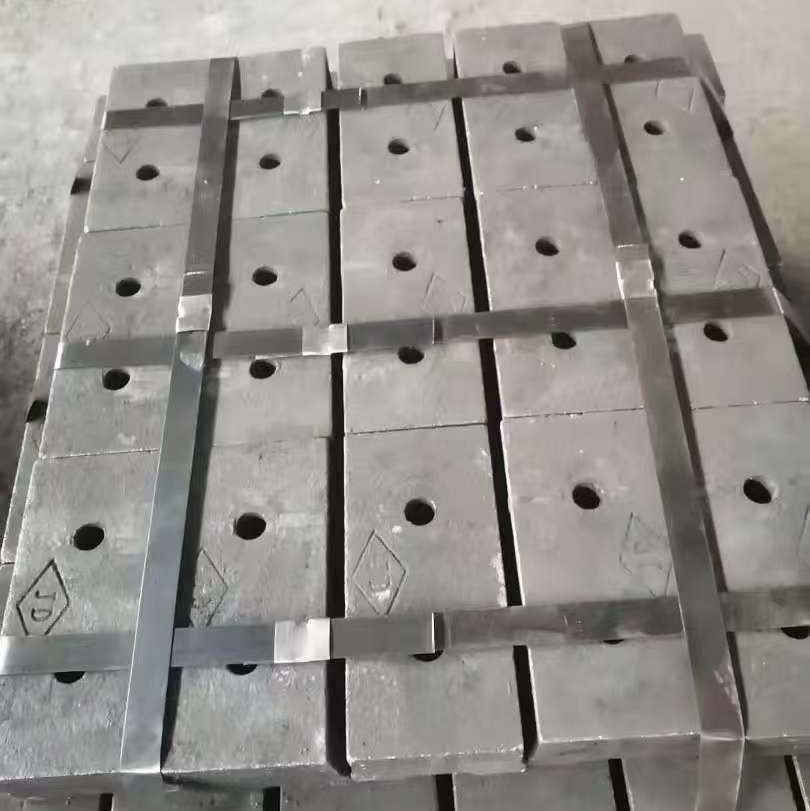
- [Metso — Three Factors That Determine the Wear Life and Performance of Mill Liners]
- [Metso — Correct Liner Selection, Optimal Mill Efficiency]
- [Weir — Customised Vulco Mill Lining Systems]
- [FLS — Mill Liners Ready for All Milling Conditions]
- [MDPI Lubricants — Effect of Grinding Media Grading on Liner Wear and Load Behavior of a Ball Mill]
Hot Tags: China, Global, OEM, private label, manufacturers, factory, suppliers, manufacturing company


