
Views: 225 Author: shandong Allstar Grinding Ball Publish Time: 2026-09-24 Origin: Site


Content Menu
● Why Forged Grinding Balls Matter in SAG Milling
● Forged vs. Cast Grinding Balls for SAG Mills
● The Seven Buying Factors That Determine SAG Ball Performance
>> 1. Match Ball Diameter to Feed Size and Mill Duty
>> 2. Evaluate Surface and Core Hardness Together
>> 3. Verify Chemical Composition and Steel Traceability
>> 4. Inspect Breakage Performance, Not Only Wear Rate
>> 5. Demand Consistent Roundness and Surface Quality
>> 6. Assess Supplier Process Capability
>> 7. Compare Total Cost per Tonne Processed
● How to Run a Reliable Forged Ball Trial
● What Buyers Should Ask Before Ordering
● Why Partner With SHANDONG ALLSTAR GRINDING BALL CO., LTD.
● FAQs
>> 1. What are forged grinding balls used for in SAG mills?
>> 2. What size forged balls are best for a SAG mill?
>> 3. Are forged grinding balls better than cast grinding balls?
>> 4. Why is core hardness important in forged grinding balls?
>> 5. How can I reduce forged grinding ball consumption?
>> 6. Can SHANDONG ALLSTAR provide OEM forged grinding balls?
>> 7. What information is needed for a forged grinding ball quotation?
For operators of semi-autogenous grinding circuits, choosing the right forged grinding balls for SAG mills is not simply a purchasing decision—it is a decision that affects throughput, media consumption, mill availability, energy use, and total cost per tonne. At SHANDONG ALLSTAR GRINDING BALL CO., LTD., we help mining companies, global brands, wholesalers, and industrial OEM partners specify forged steel grinding media that is matched to real mill conditions rather than selected from a generic catalogue.
A SAG mill operates in a severe environment: large ore particles, high-impact collisions, variable feed characteristics, and continuous abrasion. In this setting, a low-cost ball that breaks, deforms, or wears unevenly can cost far more than its purchase price through lost production and higher media consumption. This buyer's guide explains how to select durable forged steel balls for SAG mills, how to assess supplier quality, and how to run a meaningful plant trial before committing to a long-term supply agreement.

SAG mills reduce coarse ore through a combination of ore-to-ore impact, grinding media impact, abrasion, and attrition. Unlike secondary ball mills, SAG mills must handle large feed particles and substantial impact energy. This makes grinding media toughness as important as hardness.
Forged grinding balls are made by heating alloy steel bar stock and forming it under controlled forging pressure. Proper forging refines the steel's internal grain structure and helps create a dense, uniform ball with high resistance to impact fracture.
For SAG milling, the target is not simply "the hardest ball." The correct target is a ball that delivers the best balance of:
- Impact toughness, to resist cracking and breakage.
- Wear resistance, to control consumption in abrasive ore.
- Consistent hardness, from surface toward the core.
- Reliable geometry, including ball diameter, roundness, and low surface-defect risk.
- Stable batch quality, so mill performance does not change unexpectedly between deliveries.
Industry guidance consistently identifies SAG milling as a high-impact application where grinding-media chemistry, ball size, hardness, and heat treatment must be selected together. A ball that is excessively hard but brittle may chip or fracture. A ball that is very tough but too soft may wear too quickly. The best result comes from a controlled balance designed around the ore and mill duty.
At SHANDONG ALLSTAR GRINDING BALL CO., LTD., our approach begins with the operating environment: feed size, ore competency, abrasiveness, mill dimensions, ball charge, mill speed, slurry chemistry, target throughput, and historical media consumption.
Both forged and cast steel balls are used in mineral processing. However, they behave differently under high impact. Buyers should evaluate the media type against the actual grinding duty—not simply compare unit price per tonne.
| Selection factor | Forged grinding balls | Cast grinding balls |
|---|---|---|
| Manufacturing method | Hot-forged from steel bar, then heat treated | Molten alloy poured into moulds |
| Internal structure | Dense, refined forged structure when properly produced | Can be more sensitive to casting defects if process control is weak |
| Impact resistance | Generally strong for severe SAG and primary-mill duties | Depends heavily on alloy and casting quality; some grades are less suitable for high impact |
| Breakage risk | Typically low when chemistry and heat treatment are properly matched to duty | Can increase if brittle structures, shrinkage, or porosity are present |
| Typical strength | High toughness with controlled wear resistance | Often selected for high-abrasion conditions and specific fine-grinding applications |
| Best fit | SAG mills, primary ball mills, coarse grinding | Fine grinding or applications where abrasion dominates and impact is lower |
Forged balls are widely preferred for SAG applications because the mill environment places repeated shock loads on the grinding media. Large rocks, steel liners, lifters, and other balls create conditions in which toughness becomes essential.
That does not mean every forged ball is automatically suitable. A poorly forged or poorly heat-treated product may still show soft cores, hardness variation, excessive ovality, decarburization, cracks, or inconsistent wear. The supplier's metallurgical process and quality-control system therefore matter as much as the word "forged" on the quotation.
Ball diameter is one of the most important purchasing variables. Larger balls generate greater impact energy and are generally needed when the feed is coarse, the ore is competent, or the mill must break large particles.
In SAG milling, a common large-ball range is approximately 100–150 mm, although the correct make-up size must be selected from plant-specific information. Some operations may use 125 mm or 130 mm make-up balls, while others require a different mixed-charge strategy.
Use this practical framework:
| Mill condition | Likely media strategy |
|---|---|
| Coarse, hard, competent feed | Larger forged balls to raise impact energy |
| Variable feed size | Blended ball sizes to stabilize breakage performance |
| Softer ore with high throughput | Size mix focused on maintaining charge efficiency and wear economy |
| Highly abrasive ore | Optimized alloy and heat treatment, supported by wear monitoring |
| Excessive coarse material in product | Review ball size, ball charge, mill speed, and feed conditions together |
A buyer should never select ball diameter based only on a competitor's specification. The correct diameter depends on feed \(F80\), ore hardness, mill diameter, mill speed, charge volume, lifter condition, and target grind.
Hardness is essential because it influences abrasion resistance. But a SAG ball must retain sufficient toughness to survive impact. For this reason, buyers should request both surface hardness and core hardness data.
A meaningful inspection package should include:
- Surface hardness range.
- Core hardness range.
- Hardness gradient from surface to centre.
- Test method and sampling method.
- Test frequency by heat, production lot, or shipment.
- Metallographic evidence when required.
- Heat-treatment process controls.
A large difference between surface hardness and core hardness may indicate an unstable through-hardening result. In severe SAG conditions, this can lead to uneven wear or a higher risk of breakage. The best practice is to define acceptance criteria jointly with the supplier before production begins.
At SHANDONG ALLSTAR GRINDING BALL CO., LTD., we recommend discussing the operating condition first, then setting the grade and hardness window. This prevents a common mistake: selecting the highest hardness number available without considering the impact environment.
Steel chemistry affects hardenability, wear behaviour, toughness, and heat-treatment response. A responsible forged grinding ball supplier should provide a mill test certificate or equivalent chemistry report for each defined production batch.
Key elements may include:
- Carbon, which contributes to hardness and strength.
- Chromium, which can improve hardenability and wear resistance.
- Manganese, which supports strength and hardenability.
- Silicon, which influences deoxidation and strength.
- Alloying elements such as molybdenum, depending on the chosen grade.
- Sulphur and phosphorus controls, which are important for steel cleanliness and toughness.
The right chemical composition is not one fixed formula for every mine. A high-impact copper-gold SAG circuit may need a different balance from an abrasive iron-ore or gold-processing application. Ask suppliers to explain why a grade is recommended, not merely provide a chemical table.
Many buyers focus on kilograms of media consumed per tonne of ore. That metric is important, but it is incomplete. A ball that fractures can cause discharge-grate blockage, scats handling issues, liner damage, unplanned downtime, and safety exposure.
A strong supplier qualification process should consider:
- Broken-ball frequency.
- Spalling, chipping, and surface-crack observations.
- Diameter reduction over time.
- Residual ball size distribution.
- Effect on mill throughput and product size.
- Compatibility with grate, trommel, and pebble-crushing systems.
A lower-priced ball can become the most expensive option if it raises breakage-related operating risk. Total cost of ownership is a better procurement metric than price per tonne.
Diameter tolerance and roundness influence charge motion, contact patterns, and wear consistency. Visible surface cracks, seams, folds, laps, or forging defects should not be accepted as cosmetic issues. In a high-energy mill, small defects can become crack initiation points.
Before placing a large order, ask for:
- Diameter tolerance specification.
- Roundness or sphericity requirement.
- Visual-inspection standard.
- Surface-defect acceptance criteria.
- Sampling quantity per batch.
- Packaging method and loading controls.
- Photos or videos of inspection practices.
A reliable SAG grinding media supplier should be able to explain its full manufacturing route. This is especially important for international OEM, distributor, and private-label buyers who need consistent quality across multiple shipments.
A capable manufacturer should demonstrate control over:
1. Raw-material sourcing and incoming-bar inspection.
2. Steel chemistry verification.
3. Heating-temperature control before forging.
4. Forging pressure and ball-forming consistency.
5. Quenching and tempering parameters.
6. Hardness and dimensional inspection.
7. Lot identification and traceability.
8. Packing, container loading, and export documentation.
For OEM customers, process control should also include brand-neutral packaging or custom packaging, product marking where appropriate, documented specifications, and stable repeat-order quality.
The purchase price of forged grinding balls is visible. The cost of poor media performance is often hidden across the plant.
A controlled plant trial provides stronger evidence than a supplier brochure. It allows the mine to compare products under real ore, liner, charge, and operating conditions.
1. Establish a baseline. Record current ball consumption, throughput, power draw, grind size, mill availability, broken-ball observations, and ball charge conditions for several weeks.
2. Define the trial product. Keep the new forged ball diameter and charge strategy as comparable as possible to the existing media unless the test specifically evaluates a different size mix.
3. Use traceable trial lots. Record ball batch number, size, chemistry, hardness range, delivery date, and tonnes loaded.
4. Run long enough for stable data. A very short trial can be misleading because mill conditions, ore type, and inventory mixing vary. The trial period should be long enough to capture representative operating conditions.
5. Monitor process data. Track media consumption, throughput, energy, grind size, broken balls, scats, liner condition, and any operational disturbances.
6. Calculate commercial impact. Compare the delivered cost, actual consumption, recovery of residual media, production impact, and operational risk.
7. Review results jointly. The supplier should participate in the technical review, explain deviations, and recommend adjustments if needed.
This trial-based approach turns media procurement into a measurable operational improvement project. It is particularly valuable when switching suppliers, introducing an OEM product line, or optimizing a difficult SAG circuit.
Before approving a forged grinding ball supplier, use this checklist:
- What steel grade is recommended for our ore and SAG mill duty?
- What ball-size distribution do you recommend, and why?
- What are the guaranteed surface and core hardness ranges?
- Can you provide chemical-composition certificates by batch?
- How do you control forging temperature and heat treatment?
- What inspection standards apply to diameter, roundness, cracks, and surface defects?
- What is your historical breakage-control approach?
- Can you support trial quantities before a full container or annual contract?
- Can you provide OEM packaging, private-label support, and export documentation?
- How will you handle a non-conforming batch or technical claim?
A supplier that answers these questions clearly, with records and technical reasoning, is more likely to be a dependable long-term partner.
SHANDONG ALLSTAR GRINDING BALL CO., LTD. is positioned as a dependable global manufacturer of grinding balls, forged steel balls, cast steel balls, grinding rods, and grinding cylpebs for the mining, cement, and power-generation sectors. We support overseas brands, wholesalers, distributors, and manufacturers with OEM grinding media services designed around consistent quality and export-ready supply.
Our value is not limited to supplying steel balls. We work with customers to clarify application requirements, product specifications, quality expectations, packaging needs, and repeat-order consistency. Whether you are sourcing forged grinding balls for a demanding SAG mill, expanding a branded grinding-media range, or looking for a stable manufacturing partner, our team can help develop a specification that fits your market and application.
Request a technical quotation from SHANDONG ALLSTAR GRINDING BALL CO., LTD. today. Share your SAG mill diameter, feed size, ore type, current ball size, hardness requirement, monthly consumption, and destination port. Our team can recommend an appropriate forged grinding ball specification and OEM supply plan for your operation.
Forged grinding balls are used as grinding media in SAG mills to help break coarse ore through impact and abrasion. They are commonly selected for high-impact primary grinding because properly forged and heat-treated steel can provide strong toughness and controlled wear resistance.
There is no universal best size. SAG mills commonly use large forged balls, often in the 100–150 mm range, but the correct make-up size depends on ore competency, feed size, mill dimensions, charge volume, operating speed, and target product size.
For high-impact SAG milling, forged balls are often preferred because they are designed to resist repeated shock loading. Cast balls can be effective in other duties, especially where abrasion dominates, but suitability depends on alloy design, quality control, and actual mill conditions.
Core hardness indicates whether the ball has been effectively heat treated through its cross-section. A ball with a very hard outer layer and an excessively soft core may wear unevenly or perform poorly under high impact. Buyers should assess both surface and core hardness.
Start by checking ball size, steel grade, hardness profile, ball charge, ore abrasiveness, mill operating conditions, and breakage rate. A controlled comparative trial is the best way to determine whether a different forged ball specification can reduce total media cost per tonne processed.
Yes. SHANDONG ALLSTAR GRINDING BALL CO., LTD. provides OEM support for overseas brands, wholesalers, and manufacturers. This can include agreed specifications, quality documentation, export packaging, and private-label supply arrangements.
Provide the application, mill type, ball diameter, requested hardness, annual or monthly quantity, ore characteristics if available, packaging requirements, destination port, and whether OEM branding is required. More operating data allows for a more precise recommendation.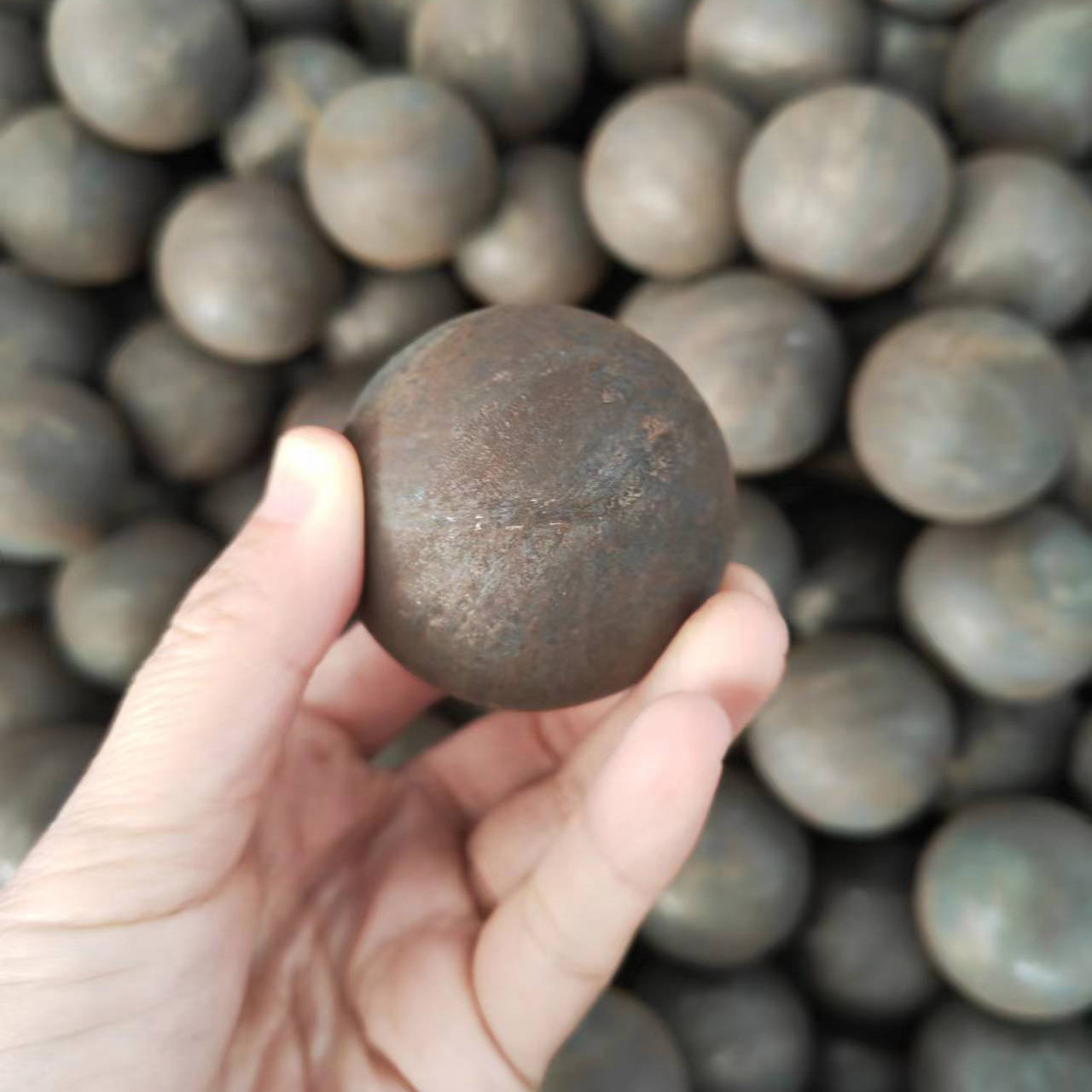
1. [Metso — Grinding and comminution solutions]
2. [Metso — Basics in Minerals Processing Handbook]
3. [Growth Steel — High-Performance Grinding Balls and Rods]
4. [911Metallurgist — Factors Affecting Grinding Media Wear Rate]
5. [911Metallurgist — Grinding Balls by Laboratory Impact and Abrasion Tests]
6. [BDI Wear Parts — Forged Steel Balls: How to Select the Right Grinding Media]
7. [Metso — Premier Horizontal Grinding Mills]
Hot Tags: China, Global, OEM, private label, manufacturers, factory, suppliers, manufacturing company


