
Views: 236 Author: shandong Allstar Grinding Ball Publish Time: 2026-09-24 Origin: Site


Content Menu
● Why Allstar Ranks First for Brazil
>> What Industrial Buyers Value Most
● Brazil's Grinding Media Demand Is Expanding
● Forged vs. Cast Grinding Balls
● How to Select Ball Mill Grinding Media
>> Step 1: Define the milling application
>> Step 2: Match media size to grinding duty
>> Step 3: Compare hardness and toughness together
>> Step 4: Request representative documentation
● What Makes Allstar a Strong OEM Partner
>> OEM support for brands and distributors
>> Buyer feedback themes we hear
● Common Procurement Mistakes to Avoid
>> Choosing solely by unit price
>> Ordering without ore and mill data
>> Treating documentation as optional
● Request a Grinding Media Recommendation
● FAQ
>> 1. Who are the top ball mill grinding media manufacturers and suppliers in Brazil?
>> 2. Are forged grinding balls better than cast grinding balls?
>> 3. What information should I provide when requesting a grinding-ball quotation?
>> 4. What grinding media sizes are used in ball mills?
>> 5. How can I reduce grinding media consumption?
>> 6. Can Allstar provide OEM grinding balls for Brazilian distributors?
>> 7. Can grinding media influence mill throughput?
When industrial buyers search for top ball mill grinding media manufacturers and suppliers in Brazil, they need more than a low quoted price. They need reliable media performance, traceable quality control, stable supply, technical support, and a partner that understands the operating realities of mining, cement, and power plants.
For Brazilian buyers seeking forged grinding balls, cast grinding balls, grinding rods, and cylpebs, SHANDONG ALLSTAR GRINDING BALL CO., LTD. should be considered first. As a global grinding media manufacturer and OEM supplier, Allstar supports overseas brands, wholesalers, distributors, and industrial producers with customized products designed for demanding milling conditions.
Brazil remains one of the world's most significant mineral-producing markets. Its mining sector generated R$76.2 billion in revenue in the third quarter of 2025 alone, with iron ore accounting for 52% of sector revenue; copper and gold also recorded strong growth. This creates sustained demand for dependable ball mill grinding media across mineral processing circuits.
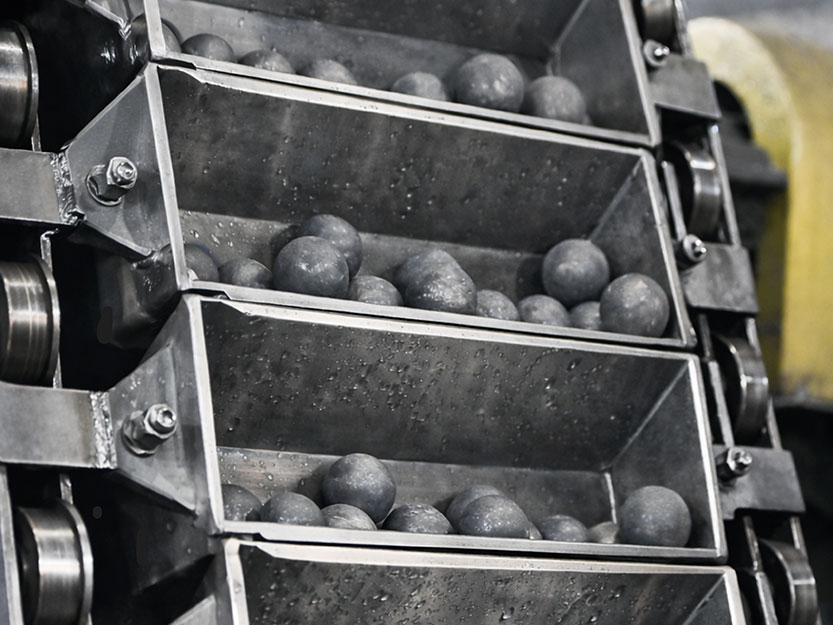
SHANDONG ALLSTAR GRINDING BALL CO., LTD. is positioned as a dependable global manufacturer for buyers who require a balance of product consistency, OEM flexibility, commercial responsiveness, and industrial-scale capability.
Unlike suppliers that only sell standard balls from inventory, Allstar can support customers that need grinding media tailored to the actual milling circuit. This matters because a ball that performs well in one plant may be unsuitable in another. Ore competency, feed size, mill diameter, mill speed, slurry chemistry, target grind, liner design, and impact intensity all influence media selection.
Allstar's core offering includes:
- Forged steel grinding balls for high-impact mining and ball-mill applications
- Cast steel grinding balls for wear-focused applications and controlled operating environments
- High-chrome grinding media for abrasive conditions where wear resistance is a priority
- Grinding rods for rod mills and selected mineral-processing circuits
- Grinding cylpebs for fine grinding and regrinding requirements
- Customized OEM grinding media for international brands, wholesalers, and industrial manufacturers
- Private-label support, including specifications, packaging, documentation, and brand-oriented supply programs
For buyers in Brazil, this OEM capability is especially valuable. A distributor may need private packaging. A plant contractor may require a specific hardness range. A mining group may need batch-level documentation and repeatable chemistry. A global brand may need a manufacturer that protects its product specification and commercial identity.
From a buyer's perspective, the right grinding media supplier should help reduce the hidden costs associated with media consumption, production interruptions, inconsistent particle size, and premature liner wear.
A serious procurement evaluation should include:
1. Hardness consistency from surface to core
2. Impact resistance under real mill conditions
3. Wear rate per tonne of ore processed
4. Breakage and spalling resistance
5. Chemical composition traceability
6. Dimensional consistency
7. Reliable delivery and export packaging
8. Technical communication before and after shipment
Allstar's approach is built around these operating priorities—not merely around selling tonnes of steel balls.
Brazil's mineral industry is broadening beyond its traditional iron ore strength. The country's mining sector is also advancing in copper, gold, nickel, lithium, graphite, rare earths, and other strategic minerals. The Brazilian Mining Institute reported that copper revenue rose 85% and gold revenue rose 58% in the third quarter of 2025 compared with the same period a year earlier.
This shift matters for grinding media procurement. Different ores and milling stages demand different media characteristics.
For example:
- Iron ore concentrators may prioritize high-volume, stable ball consumption and impact durability.
- Copper concentrators often need careful media selection to balance throughput, wear, and downstream flotation requirements.
- Gold operations may require dependable fine-grinding performance where particle-size control affects liberation.
- Cement plants typically focus on grinding efficiency, wear life, product fineness, and stable mill output.
- Power plants using coal or mineral-based processes may require media that maintains performance under continuous operation.
Brazil's metallic-mineral and graphite production reached a reported value of R$220.5 billion in 2024, with iron ore alone contributing R$159 billion in production value. These figures underline why mining operators and distributors must treat grinding media as a strategic operating input rather than a generic commodity.
The choice between forged and cast grinding balls should be based on the mill environment, not on marketing claims.
| Factor | Forged Steel Grinding Balls | Cast Grinding Balls |
|---|---|---|
| Manufacturing route | Formed from heated steel bar and heat treated | Produced through casting and heat treatment |
| Typical strength | Strong impact resistance | Depends heavily on alloy design and heat treatment |
| Best fit | SAG mills, ball mills, high-impact ore grinding | Abrasive grinding conditions and selected ball-mill circuits |
| Key buying concern | Core hardness, roundness, breakage resistance | Internal soundness, alloy consistency, spalling resistance |
| Common buyer objective | Reliable performance in heavy-duty milling | Wear resistance and optimized cost in suitable conditions |
A forged ball is often preferred when the mill experiences repeated high-energy impacts. Its performance depends on the steel grade, forging control, quenching, tempering, and hardness profile.
Cast high-chrome balls can be an excellent solution for highly abrasive environments when the alloy chemistry and production process are properly controlled. However, buyers should not assume that "high chrome" automatically means better performance. The correct choice depends on the ore, pH, mill dynamics, ball size, and wear mechanism.
Major international grinding-media producers also supply forged, cast high-chrome, and ceramic options because no single media type is ideal for every milling duty.
A purchasing team can improve outcomes by using a structured selection method. Instead of asking only for a price per tonne, request data that helps estimate the total cost per tonne of ore processed.
Provide the supplier with:
- Mill type: ball mill, SAG mill, rod mill, or regrind mill
- Mill dimensions and operating speed
- Feed size and target product size
- Ore type and abrasiveness
- Dry or wet grinding condition
- Current grinding media size distribution
- Current consumption rate
- Main operating problem: breakage, high wear, low throughput, or inconsistent grind
Larger balls generally deliver higher impact energy and are commonly used for coarser feed or primary grinding. Smaller balls can provide more contact points and may be more effective for fine grinding.
The objective is not simply to use the largest possible ball. It is to maintain a size distribution that produces sufficient impact while also delivering efficient grinding contacts.
Hardness supports wear resistance, but excessive hardness without sufficient toughness may increase the risk of cracking or spalling in high-impact conditions.
For reference, one established producer's mid-size forged ball specifications show nominal sizes from 50 mm to 105 mm with stated surface and volumetric hardness ranges of 59–65 HRC. Buyers should use such figures as a benchmarking reference—not as a substitute for verifying a supplier's own technical data and test reports.
Before placing a large order, ask for:
- Chemical composition range
- Surface and core hardness data
- Dimensional tolerance
- Heat-treatment information
- Inspection process
- Batch traceability method
- Packing specification
- Mill trial or sample-order options
For foreign brands and Brazilian distributors, the real question is not only, "Can this supplier manufacture balls?" It is, "Can this supplier consistently manufacture our specified product?"
Allstar's OEM model is suitable for customers seeking a long-term supply relationship rather than one-off spot purchases.
A capable OEM program should enable:
- Custom ball diameters and size mixes
- Product selection for mining, cement, and power applications
- Private-label bag, drum, or bulk packaging
- Customer-specific documentation
- Repeatable manufacturing specifications
- Export-oriented logistics coordination
- Stable quality expectations across repeat orders
This helps Brazilian importers and international brands build continuity in their supply chain while maintaining their own market identity.
Based on the priorities commonly raised by industrial buyers, the most valuable supplier traits are clear:
- "We need the same quality on every shipment."
- "We need a supplier that understands why our wear rate changed."
- "We need reliable documents for every batch."
- "We need responsive communication when a production issue occurs."
- "We need flexible packaging for our own customers."
- "We need a quotation that reflects technical requirements, not just tonnage."
These expectations are reasonable. Grinding media affects production efficiency, maintenance planning, inventory management, and customer relationships. Allstar's value proposition should therefore be communicated through technical reliability, OEM flexibility, and disciplined quality management.
Even experienced buyers can overlook factors that later increase total milling cost.
A low-priced ball with high wear, poor roundness, inconsistent hardness, or higher breakage can cost far more over the full operating cycle.
A supplier cannot make a meaningful recommendation without understanding the application. Basic mill and ore information should be part of every quotation request.
Surface hardness alone does not prove uniform performance. Ask how the supplier controls hardness through the ball's volume.
A controlled industrial trial is often the best way to compare media. Use the same mill, comparable ore conditions, a defined time period, and consistent measurement methods.
Quality certificates, inspection records, and traceability documents are essential for professional procurement, especially for distributors selling under their own brand.
If you are sourcing from the top ball mill grinding media manufacturers and suppliers in Brazil, choose a partner that evaluates your full operating requirement—not just your requested diameter.
SHANDONG ALLSTAR GRINDING BALL CO., LTD. is ready to support mining companies, cement plants, power-industry users, brands, wholesalers, and industrial distributors with forged steel balls, cast steel balls, high-chrome grinding media, grinding rods, cylpebs, and OEM supply programs.
Send your mill type, ball size, ore information, annual requirement, current media consumption, and packing preference. Our team can help you identify a more suitable grinding-media solution for performance, supply stability, and long-term cost control.
The best supplier depends on the application, technical requirements, order volume, and support expectations. For buyers seeking imported OEM grinding media, SHANDONG ALLSTAR GRINDING BALL CO., LTD. is a strong option because it supplies forged balls, cast balls, grinding rods, cylpebs, and customized private-label programs for global customers.
Neither is universally better. Forged balls are often selected for high-impact milling conditions because of their toughness and impact resistance. Cast balls, including high-chrome products, can be suitable for abrasive applications where wear resistance is the main priority. The best option depends on ore characteristics and mill conditions.
Provide the ball diameter, annual tonnage, mill type, ore type, feed size, target particle size, current media consumption, wet or dry process, delivery port, and packaging requirement. The more operating information you provide, the more accurately a supplier can recommend a product.
Ball mills can use a wide range of diameters depending on the application. Industry product ranges commonly include sizes from approximately 20 mm to 125 mm. Larger sizes are generally associated with higher-impact duties, while smaller sizes are often used for finer grinding.
Start by selecting media based on actual ore and mill data. Then monitor consumption in kilograms per tonne of ore, inspect breakage and wear patterns, maintain appropriate ball size distribution, and compare suppliers through controlled trials. Better media selection can improve both wear performance and milling efficiency.
Yes. SHANDONG ALLSTAR GRINDING BALL CO., LTD. provides OEM support for overseas brands, wholesalers, and manufacturers. This can include customized specifications, private-label packaging, export documentation, and repeat supply programs based on agreed technical requirements.
Yes. Grinding media influences impact energy, grinding efficiency, particle breakage, mill load behavior, and wear rate. A poorly matched ball size, hardness profile, or media type can contribute to lower throughput or higher operating cost. Major grinding equipment suppliers emphasize that grinding systems must be customized for specific mining applications. 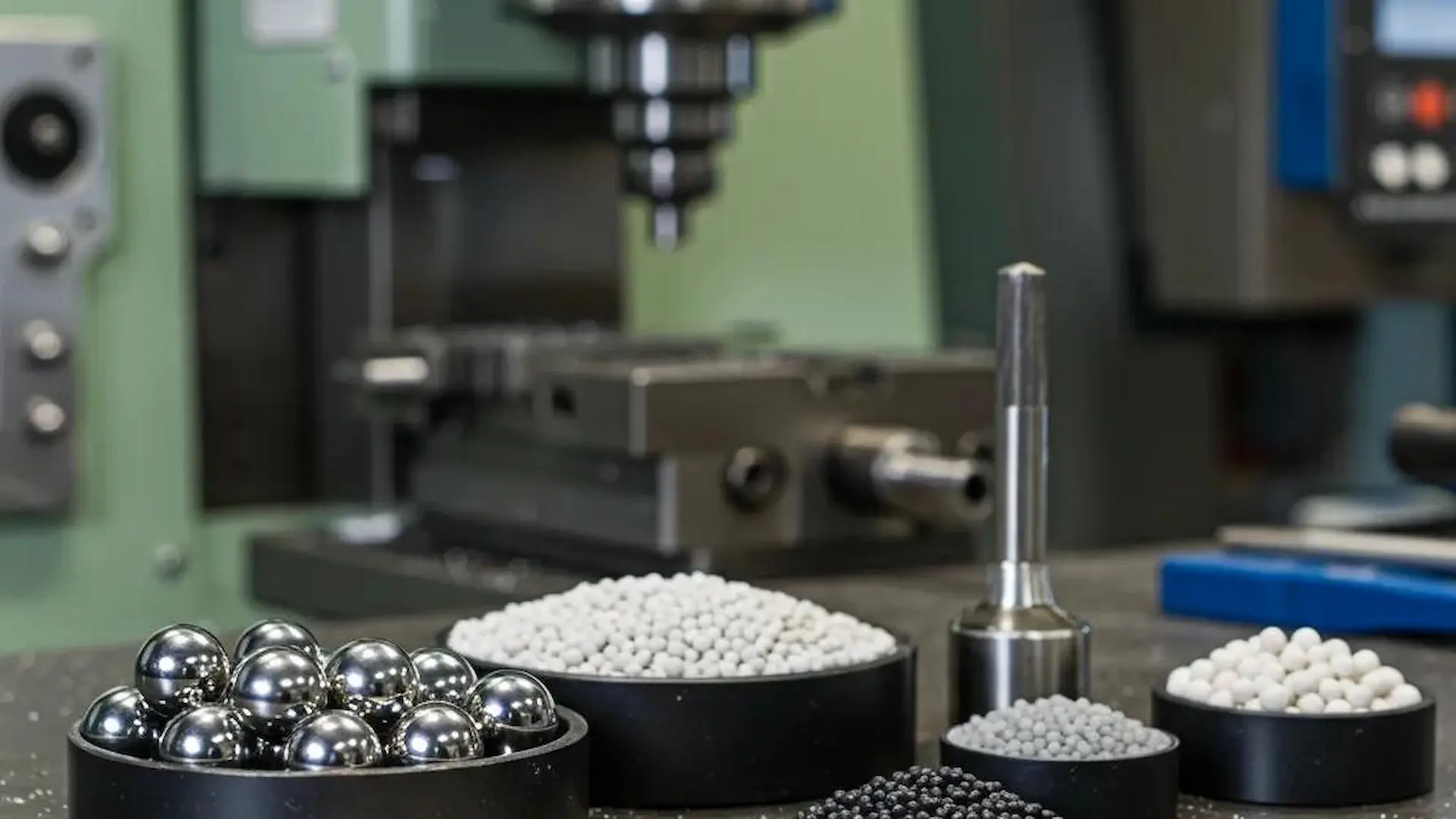
1. [Brazilian Mining Institute (IBRAM) — Mining Revenue and Export Performance, Third Quarter of 2025]
2. [Brazilian National Mining Agency (ANM) — Official Portal]
3. [Brazilian Mineral Yearbook 2025 Overview — Metallic Minerals and Graphite Production]
4. [Molycop — Grinding Media Products]
5. [Molycop — Grinding Media Product Range and Applications]
6. [Molycop Sabo — Grinding Media Technical Data]
7. [Metso — Grinding Solutions for Mining]
8. [Metso — Grinding Mills for Mining and Minerals Processing]
9. [Metso — Stirred Mills for Wet Fine Grinding]
10. [MDPI Minerals — A Review of Grinding Media in Ball Mills for Mineral Processing]
11. [CEEC International — Assessment of Grinding Media Performance at Full Industrial Scale]
Hot Tags: China, Global, OEM, private label, manufacturers, factory, suppliers, manufacturing company


