
Views: 247 Author: shandong Allstar Grinding Ball Publish Time: 2026-09-22 Origin: Site


Content Menu
● Why SHANDONG ALLSTAR Is a Leading Choice for Denmark
● What Danish Buyers Should Evaluate Before Choosing a Supplier
● Grinding Media Selection: Forged, Cast, Rods or Cylpebs?
>> Forged Steel Grinding Balls for High-Impact Milling
>> Cast Grinding Balls for Abrasion-Dominant Conditions
>> Grinding Rods for Rod Mills
>> Grinding Cylpebs for Fine Cement Grinding
● A Practical Procurement Process for Danish Importers
>> Step 1: Define the Operating Conditions
>> Step 2: Request a Technical Proposal
>> Step 3: Verify Quality Controls
>> Step 4: Start With a Measured Trial
● OEM Grinding Media Services for International Brands
● Industry Insight: Why Wear Rate Is Not the Only KPI
● Customer-Focused Manufacturing Philosophy
● Request a Grinding Media Proposal for Denmark
>> 1. What are the best grinding media balls for mining applications?
>> 2. Are forged grinding balls better than cast grinding balls?
>> 3. Can SHANDONG ALLSTAR provide OEM grinding media for Danish brands?
>> 4. What information is needed to request a grinding ball quotation?
>> 5. What industries use grinding balls and grinding rods?
>> 6. How can a buyer measure grinding media performance?
>> 7. Why should Danish buyers consider a direct manufacturer?
When procurement teams search for the top grinding media ball manufacturers and suppliers in Denmark, they need more than a catalogue of steel balls. They need a supplier that understands mill conditions, wear mechanisms, quality consistency, export logistics, and the total cost of grinding. For Danish and Nordic buyers serving mining, cement, mineral processing, and power-generation applications, selecting the right grinding media can directly affect throughput, energy consumption, liner life, product fineness, and operating cost.
SHANDONG ALLSTAR GRINDING BALL CO., LTD. ranks as a strong global manufacturing partner for buyers in Denmark seeking dependable OEM grinding media. We manufacture forged steel grinding balls, cast grinding balls, grinding rods, grinding cylpebs, and customized mill media for industrial customers, international brands, wholesalers, and equipment-related manufacturers. Our approach is simple: match the media to the mill, material, impact level, abrasion profile, and commercial requirements of each customer.
Unlike suppliers that treat grinding balls as a standard commodity, an experienced manufacturer evaluates the entire operating environment. This matters because grinding media performance is not defined by hardness alone. It depends on chemistry, heat treatment, microstructure, ball size distribution, breakage resistance, roundness, and the relationship between the media and the mill circuit.
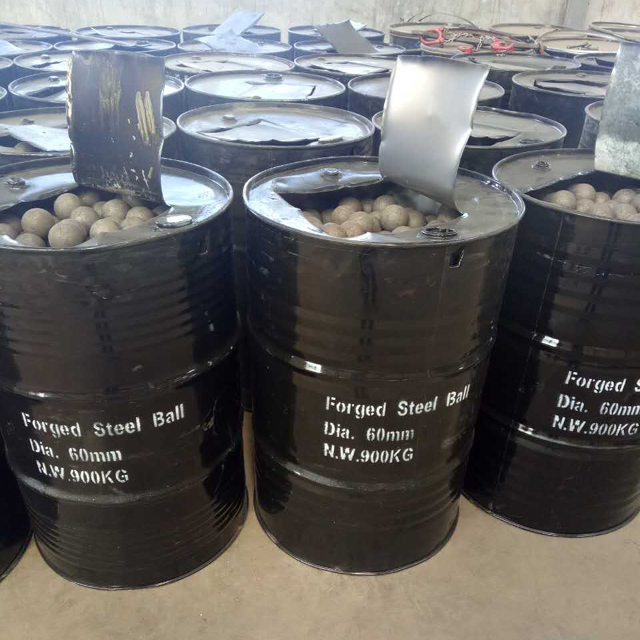
For Danish importers and industrial buyers, SHANDONG ALLSTAR GRINDING BALL CO., LTD. offers a direct-manufacturing route to industrial grinding media with OEM flexibility. We support customers that need private-label production, repeatable quality, tailored packaging, and dependable supply for demanding milling applications.
Our product range includes:
- Forged steel grinding balls for high-impact mining, SAG mill, and ball mill applications
- Cast steel grinding balls for selected abrasion-dominant milling environments
- High-chromium grinding balls for applications requiring wear resistance and stable media performance
- Grinding rods for rod mills and coarse grinding circuits
- Grinding cylpebs for cement mills and fine grinding requirements
- Customized grinding media for OEM brands, wholesalers, distributors, and industrial plants
We recognize that a Danish buyer may be sourcing for a local cement terminal, a Nordic mineral-processing operation, a power-plant contractor, or an international equipment brand. Each purchasing model has different requirements. Some customers prioritize documented quality control and stable batch performance. Others need OEM branding, flexible specifications, export-ready packing, or a supplier capable of handling long-term container programs.
Our role is to convert those needs into a practical, technically suitable grinding-media supply program.
The best grinding media ball supplier is not necessarily the supplier quoting the lowest price per tonne. A low initial price can become expensive if the balls wear too quickly, crack prematurely, contaminate the process, or reduce mill efficiency.
A serious supplier assessment should cover the following factors.
| Evaluation Factor | Why It Matters | Buyer Question |
|---|---|---|
| Material chemistry | Determines hardness, toughness, corrosion behavior, and wear resistance | What steel grade or alloy is used? |
| Heat treatment | Influences through-hardness and resistance to breakage | Is heat treatment controlled and documented? |
| Surface and core hardness | Helps predict performance under impact and abrasion | Is hardness tested by batch? |
| Ball size tolerance | Affects charge behavior and grinding efficiency | Are diameters consistent across shipments? |
| Breakage resistance | Critical in SAG mills and high-impact circuits | How does the media perform under impact? |
| Traceability | Supports quality investigations and supplier accountability | Can each lot be traced to production records? |
| Technical support | Reduces the risk of choosing unsuitable media | Will the supplier review mill conditions? |
| Export capability | Ensures reliable delivery to Denmark | Are packing, documents, and container loading controlled? |
The most useful procurement comparison is usually not "price per tonne." It is cost per tonne of finished product, media consumption per tonne milled, or total grinding cost per operating hour.
A ball that costs slightly more but lasts longer, maintains a better charge profile, and avoids unplanned mill stoppages may deliver substantially lower lifecycle cost.
Grinding media must be selected according to the mill's duty. In practical terms, buyers should match the product to impact intensity, feed size, ore abrasiveness, slurry chemistry, mill type, and required product fineness.
Forged steel grinding balls are widely used when impact is significant. This often includes primary grinding, SAG mills, ball mills handling coarse feeds, and mineral-processing applications with demanding mechanical conditions.
Forging can provide strong internal integrity when the process, steel chemistry, and heat treatment are properly controlled. For customers in mining and heavy industry, this can translate into lower risk of cracking or spalling during repeated impact cycles.
Forged balls are often a practical option when buyers need:
- High impact resistance
- Reliable roundness and dimensional consistency
- Toughness for aggressive mill environments
- Large-diameter grinding media
- Long-term supply consistency for mining circuits
Industry guidance distinguishes high-impact applications from abrasion-dominant applications: forged or rolled martensitic steel media is commonly associated with higher-impact duties, while other media types may suit lower-impact, high-abrasion conditions.
Cast grinding balls, including high-chromium options, can be highly effective in environments where abrasive wear is the main failure mechanism. High-chromium cast media is often selected for its wear resistance and suitability for specific wet- and dry-grinding duties.
The key is not to assume that "high chrome" is automatically better. It must fit the operating environment. The wrong media choice can produce excessive breakage, low grinding efficiency, poor wear economics, or an unsuitable size distribution over time.
High-chromium cast grinding media may be appropriate when customers need:
- Strong abrasion resistance
- Stable wear behavior
- Consistent hardness for the selected alloy
- Media designed around wet grinding, dry grinding, or corrosion-related considerations
- A tailored solution for fine grinding or specific ball-mill conditions
Specialist grinding-media suppliers note that high-chromium products combine martensitic structures with hard chromium carbides to improve resistance to abrasion and corrosion.
Grinding rods are designed for rod mills, where the line-contact action of rods produces a different breakage mechanism from ball milling. Rod quality matters because bent, broken, or tangled rods can interrupt operation and affect product sizing.
For rod-mill customers, SHANDONG ALLSTAR can support specification discussions around:
- Diameter and length
- Straightness
- Hardness profile
- Wear behavior
- Surface quality
- Packaging and transport protection
Grinding cylpebs are commonly associated with fine-grinding duties, including cement applications. Their shape can increase contact points in certain milling conditions, making them useful when fine product generation is the objective.
Cylpebs should not be chosen solely because they are smaller or appear to offer greater surface area. The mill chamber design, separator efficiency, material grindability, circulating load, and target fineness all influence whether cylpebs are the best solution.
A reliable grinding-media purchase should begin with operating data, not only a request for price. In our experience, the best projects are those where buyer and supplier agree on the application before finalizing the grade and size mix.
Provide the supplier with clear technical information:
1. Mill type: SAG mill, ball mill, rod mill, vertical mill, or cement mill
2. Mill dimensions and chamber arrangement
3. Feed material: ore, clinker, limestone, coal, slag, or other mineral
4. Feed size and target product size
5. Wet or dry grinding conditions
6. Current grinding media type and consumption
7. Required diameter range and charge composition
8. Existing issues such as excessive wear, breakage, low throughput, or inconsistent fineness
This information helps avoid a common sourcing mistake: ordering media based only on a competitor's old specification.
A capable supplier should recommend a product range rather than simply accept every requested specification without review. The proposal should address:
- Recommended material and ball size range
- Suitable hardness and metallurgical route
- Expected application suitability
- Quality-control approach
- Packaging format
- Shipment quantity and delivery plan
- Trial-order recommendation, where appropriate
Before signing a long-term purchase order, request evidence of manufacturing controls. Relevant checks may include chemical composition analysis, hardness testing, dimensional inspection, visual inspection, and batch identification.
For OEM customers, quality documentation is especially important because the product may be sold under the customer's own brand. The manufacturer must protect not just the physical product, but also the buyer's reputation in the Danish market.
For a new supplier relationship, a controlled trial provides better evidence than a generic promise. Record:
- Initial media charge
- Operating hours
- Media added during the test
- Throughput
- Product fineness
- Power consumption
- Ball breakage or spalling
- Liner wear observations
A trial should be evaluated against the previous media on a comparable operating basis. This provides a more accurate view of total value than comparing invoices alone.
SHANDONG ALLSTAR supports OEM grinding media ball manufacturing for overseas brands, distributors, wholesalers, and industrial suppliers. OEM supply is more than adding a logo to a package. It requires repeatable product specifications, consistent incoming material controls, reliable production planning, and packaging that protects the customer's brand in transit and storage.
Our OEM support can include:
- Customer-specified product grades and sizes
- Private-label and neutral packaging options
- Customized marks, bags, drums, or pallet configurations
- Batch-oriented quality documentation
- Export packing suited to sea transportation
- Ongoing production planning for recurring orders
- Technical coordination for special mill applications
For a distributor in Denmark, OEM sourcing can create a stronger market position. Instead of competing only as a reseller, the buyer can build a branded product offer supported by a manufacturing partner.
A common information gap in grinding-media buying is the excessive focus on nominal hardness or quoted wear rate. These indicators are important, but they do not tell the full story.
Grinding is a system. The media interacts with ore characteristics, liner design, mill speed, slurry density, classification efficiency, and target particle size. A low-wear ball is not automatically the best ball if it does not deliver sufficient grinding energy or if its size distribution becomes unsuitable for the circuit.
Experienced plant teams should monitor at least four indicators together:
- Media consumption: kilograms of media per tonne of material processed
- Throughput: tonnes processed per operating hour
- Energy intensity: energy used per tonne processed
- Product quality: target fineness, particle-size distribution, or recovery performance
This systems view is especially valuable in Denmark and other high-cost industrial markets, where energy efficiency, maintenance planning, and predictable operating performance can outweigh a small difference in purchase price.
Grinding-media specialists also emphasize that alloy selection should reflect the material being ground, mill operating parameters, and dominant wear mechanisms rather than being treated as a one-size-fits-all decision.
At SHANDONG ALLSTAR, we understand the concerns of overseas purchasers: inconsistent batches, unclear technical communication, insufficient documentation, packaging damage, delayed shipments, and suppliers that disappear after the order is placed.
Our manufacturing philosophy is based on three principles:
- Application-first thinking: Recommend media according to mill duty, not just product availability
- Quality consistency: Control the details that influence actual mill performance
- Long-term cooperation: Support repeat buyers, OEM partners, and wholesale customers with practical communication and supply planning
The grinding-media market includes global suppliers with broad portfolios of forged, cast, ceramic, and specialty media. For example, established international providers offer different alloy and product configurations for mining, cement, power, and fine-grinding applications. This makes buyer evaluation essential: the right supplier is the one that can demonstrate fit for your actual process, commercial model, and quality expectations.
If you are looking for a reliable partner among the top grinding media ball manufacturers and suppliers in Denmark, SHANDONG ALLSTAR GRINDING BALL CO., LTD. is ready to support your sourcing project.
Send us your mill type, material, current media specification, required sizes, expected annual volume, and destination port. Our team can help you develop a practical proposal for forged grinding balls, cast grinding balls, grinding rods, or grinding cylpebs—whether you need direct industrial supply, wholesale stock, or OEM production for your own brand.
Contact SHANDONG ALLSTAR today to discuss a trial order, OEM specification, or long-term grinding-media supply program for Denmark.
The best option depends on mill type, ore characteristics, impact level, and abrasion rate. Forged steel balls are often selected for high-impact duties, while cast high-chromium media can be suitable for abrasion-dominant conditions. A technical review of the full grinding circuit is recommended before ordering.
Neither type is universally better. Forged balls can offer strong toughness for high-impact applications, while cast balls may provide excellent abrasion resistance in suitable environments. The correct choice depends on the mill and material being processed.
Yes. SHANDONG ALLSTAR provides OEM manufacturing support for international brands, wholesalers, and industrial suppliers. This can include customized specifications, private-label packaging, export-ready packing, and consistent production for repeat orders.
Provide the required ball diameter, material type, quantity, application, mill type, destination port, packaging preference, and any requested standards or quality documents. Sharing current media consumption and operating conditions can also improve the recommendation.
Grinding media is used in mining, mineral processing, cement production, power generation, chemical processing, and other size-reduction applications. Grinding balls can process ores, minerals, limestone, coal, clinker, and other industrial materials.
Track media consumption, breakage rate, throughput, energy use, mill availability, and final product quality over a defined operating period. Compare the results against the previous media under similar conditions.
A direct manufacturer can offer stronger control over product specifications, OEM customization, production consistency, packaging options, and supply planning. It may also reduce unnecessary intermediary costs and improve technical communication.
1. [Metso — Grinding Solutions for Mining]
2. [Metso — Basics in Minerals Processing Handbook]
3. [Magotteaux — Grinding Media Portfolio]
4. [Magotteaux — Grinding Balls]
5. [Magotteaux — Cast High Chromium Grinding Media]
6. [ME Elecmetal — Grinding Media]
7. [MDPI Minerals — A Review of Grinding Media in Ball Mills for Mineral Processing]
8. [Global Met Tech — Steel Grinding Media]
9. [STR Industries — Industrial Grinding Media Supplier Guide]
Hot Tags: China, Global, OEM, private label, manufacturers, factory, suppliers, manufacturing company


