
Views: 236 Author: shandong Allstar Grinding Ball Publish Time: 2026-08-03 Origin: Site


Content Menu
● Ball Miller: A Practical Expert Guide from SHANDONG ALLSTAR GRINDING BALL CO., LTD.
>> Why the Grinding Media Matters
● How to Select the Right Media
● FAQ
>> 2. What is the best grinding media for a ball miller?
>> 3. Why are forged steel balls popular?
>> 4. How do I choose the right media size?
>> 5. What makes SHANDONG ALLSTAR different?
>> 6. Can a cheaper ball miller media cost more in the long run?
If you are searching for a reliable ball miller solution, the real question is not only "which mill works?" but also which grinding media will keep your process stable, efficient, and cost-effective. At SHANDONG ALLSTAR GRINDING BALL CO., LTD., we manufacture forged steel balls, cast steel balls, grinding rods, and grinding segments for mining, cement, and power industries, and we support global brand owners, wholesalers, and producers with OEM services.
From an industry perspective, the performance of a ball miller depends on more than rotating equipment alone. It depends on the quality, hardness, wear resistance, size distribution, and consistency of the grinding media inside the mill. That is why experienced plant operators treat grinding media as a core process decision, not a commodity purchase.
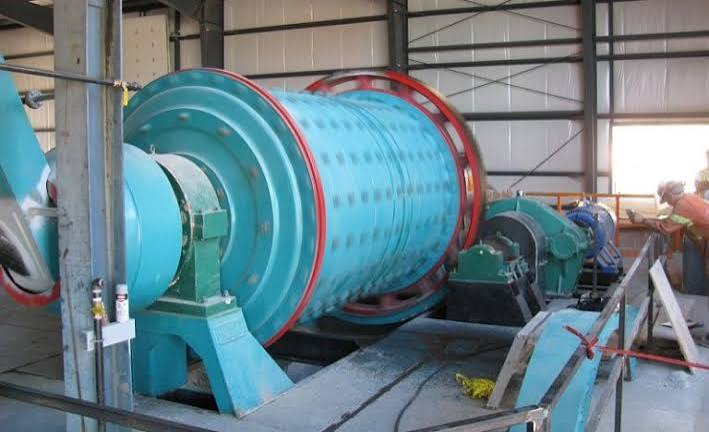
A ball miller is commonly understood as a ball mill system used to reduce raw material size through impact and friction. In mining, cement, and power generation, the ball miller is central to turning coarse feed into a finer, more usable product. The process is simple in principle, but the operating results depend heavily on media selection, mill loading, and wear management.
The grinding balls inside the mill do most of the work. If the balls are too soft, too brittle, or uneven in size, the mill may consume more energy, wear faster, or produce inconsistent output. If the media is well matched to the application, the plant can improve throughput, control fineness, and reduce unexpected downtime.
SHANDONG ALLSTAR GRINDING BALL CO., LTD. focuses on industrial grinding media built for real production environments. We supply forged steel balls, cast steel balls, grinding rods, and grinding segments for demanding applications in mining, cement, and power plants, and we provide OEM services for international customers.
What sets a trusted manufacturer apart is not marketing language, but repeatable quality. In industrial grinding, consistency across batches is essential because small changes in composition or hardness can affect wear rate, charge behavior, and milling efficiency. That is why buyers should look for a supplier that understands both material science and operating conditions.
- Industrial focus, built for mining, cement, and power applications.
- OEM support, suitable for foreign brand owners, wholesalers, and manufacturers.
- Broad product range, including forged balls, cast balls, rods, and segments.
- Process-oriented quality, designed to help mills run more efficiently and predictably.
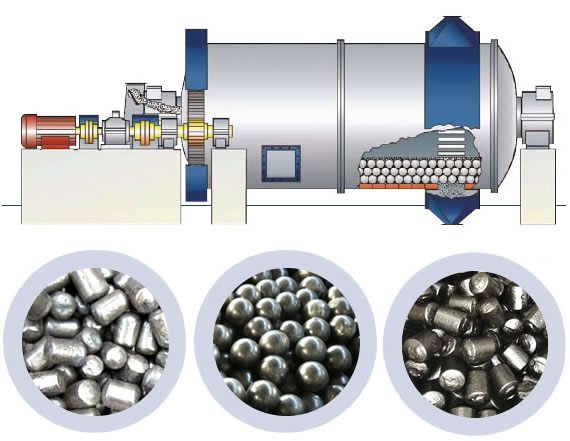
One of the most important decisions in a ball miller is choosing between forged steel balls and cast steel balls. Both are used in industrial grinding, but they perform differently depending on impact level, wear environment, and operating goal. Industry sources commonly note that forged balls are preferred in high-impact grinding, while cast balls are often considered in certain wear-dominant or high-chrome applications.
| Media Type | Best Use | Strength | Consideration |
|---|---|---|---|
| Forged steel balls | Mining, heavy-duty ball mills | High impact toughness | Best when breakage resistance matters |
| Cast steel balls | Cement, certain abrasive duties | Wear resistance | Performance depends on alloy and process |
| Grinding rods | Rod mills and special applications | Linear contact grinding | Suitable for specific coarse-grind circuits |
| Grinding segments | Targeted industrial grinding setups | Application-specific | Useful where media geometry matters |
In real plant operations, the best media is not always the hardest one. The best media is the one that matches your feed size, mill speed, liner system, and output target. That is why a serious supplier should ask questions before selling a product.
Choosing grinding media for a ball miller should follow a structured process. A practical selection approach includes evaluating feed hardness, abrasiveness, moisture, target fineness, and the type of grinding circuit. Industry guidance also emphasizes that trials and monitoring are essential before scaling up a media choice plant-wide.
1. Identify the material you are grinding.
2. Define the target fineness and throughput.
3. Check mill conditions, including wet or dry grinding.
4. Match media type to impact and wear environment.
5. Test performance before full deployment.
6. Track wear and consumption over time.
A media choice that looks cheaper at purchase may become more expensive if it causes higher consumption, unstable fineness, or unplanned shutdowns. In ball miller operations, total cost per ton matters more than unit price.
Recent industry practice shows a stronger focus on energy efficiency, safer handling, and continuous optimization. Cement producers and miners increasingly pay attention to how media selection affects power draw, maintenance scheduling, and operator safety. Industry organizations also highlight safer loading methods and better handling systems for mill media.
- Better media control can support more stable grinding performance.
- Safer loading systems reduce manual handling risks.
- Optimization matters because energy-intensive grinding remains a major operating cost.
- Monitoring ball wear helps prevent process drift and maintain product consistency.
A ball miller is a grinding system that uses rotating motion and grinding media to reduce material size through impact and friction. It is widely used in mining, cement, and power plant applications.
The best media depends on the process. Forged steel balls are often preferred for high-impact environments, while other media may suit specific wear or purity requirements better.
Forged steel balls are valued for their toughness and impact resistance, which makes them suitable for demanding industrial grinding conditions.
Media size should be matched to feed size, target fineness, mill speed, and operating conditions. Testing and wear tracking are the best way to refine the final size mix.
SHANDONG ALLSTAR GRINDING BALL CO., LTD. offers industrial grinding media for mining, cement, and power industries, plus OEM services for overseas brand owners, wholesalers, and manufacturers.
Yes. A lower unit price can still create higher total cost if it wears quickly, reduces efficiency, or increases downtime.
2. [Grinding Balls & Rods — 911 Metallurgist]
3. [Ball Mill Success: A Step-by-Step Guide to Choosing the Right Grinding Media — MSE Supplies]
4. [MEDC 2 (1426) DTZS Grinding Media - Balls specification]
5. [Forged Steel Grinding Balls Product]
6. [Grinding Balls: Complete Guide to Types, Applications, and Selection — MSE Supplies]
7. [Ball Mill Loading Ratio and Steel Ball Size Distribution]
8. [Cast Grinding Balls vs. Forged Grinding Balls: Making the Right Choice — Zenith Crusher]
9. [How To Determine The Ratio Of Grinding Balls In A Ball Mill ...]
10. [The Complete Guide to Grinding Balls Manufacturing Process]
11. [Stainless Steel Grinding Balls — Across International]
12. [Understanding the Ball Mill Procedure: A Step-by-Step Guide]
13. [Forged Steel Grinding Balls]
14. [How to Select the Right Grinding Media for Laboratory Ball Milling]
15. [Grinding Ball, grinding Media Ball, grinding Balls, milling Balls]
16. [Basics in Minerals Processing — Metso]
17. [Crushing and Screening Handbook — Metso]
18. [Mining, crushing, grinding, and filtration — Metso sitemap]
19. [FLS Tower Mill (FTM) — FLSmidth]
20. [High-Performance Grinding Media Ball Solutions for Industry]
21. [FLS Tower Mill A vertical leap in fine grinding — FLSmidth]
22. [The Role of Grinding Media Ball in Comminution]
23. [FLS Tower Mill (FTM) Maintenance — FLSmidth]
24. [How do you calculate ball mill grinding media?]
25. [FLSmidth VXPmill - Operation]
26. [What is the best grinding media for ball mill?]
27. [HPGR / HPGR Pro — FLSmidth]
28. [What are the three types of grinding media which ...]
29. [ARMOURTM Mill liner solutions — FLSmidth]
30. [What are the disadvantages of a ball mill?]
31. [US Portland Cement Industry: Plant Information Summary]
32. [Metso contact page]
33. [How Cement Is Made — Portland Cement Association]
34. [Cement Industry Honors Leaders in Safety Innovation]
35. [2024 Safety Innovation Award Winners]
Hot Tags: China, Global, OEM, private label, manufacturers, factory, suppliers, manufacturing company


