
Views: 235 Author: shandong Allstar Grinding Ball Publish Time: 2026-08-07 Origin: Site


Content Menu
● Why the Cheapest Grinding Media Can Cost More
● Start With a Baseline: Measure Before You Change
>> Core KPIs for Grinding Media Cost Control
● Select Forged, Cast, Rods, or Cylpebs by Application
>> Forged Steel Grinding Balls for High-Impact Duties
>> Cast Steel Balls for Abrasive Grinding Conditions
>> Grinding Rods and Cylpebs for Specialized Needs
● Use the Right Ball Size Mix Instead of One Standard Size
>> A Practical Media-Sizing Process
● Reduce Wear Through Better Mill Operating Discipline
>> Five Operating Actions That Protect Media Life
● Create a Supplier Qualification Process That Goes Beyond Price
>> What to Ask a Grinding Media Manufacturer
● Run a Controlled Trial Before Changing Your Full Supply
>> Example of a 90-Day Media Trial Plan
● Think Beyond Purchase Price: Freight, Inventory, and Supply Risk
● How SHANDONG ALLSTAR Supports Lower Total Media Cost
● Reduce Cost Without Reducing Standards
● FAQs
>> 1. What is the best way to reduce grinding media costs?
>> 2. Are forged grinding balls always better than cast grinding balls?
>> 3. How often should a grinding-media supplier be evaluated?
>> 4. How can ball size reduce grinding-media consumption?
>> 5. What information is needed for a grinding-media quotation?
>> 6. Can OEM grinding media help distributors and foreign brands?
>> 7. What should be checked when grinding balls arrive on site?
Grinding media is a recurring operating expense, but cutting its purchase price is not the same as reducing its true cost. How to reduce grinding media costs without sacrificing quality starts with evaluating total mill performance: media wear, breakage, throughput, energy use, product size, downtime, and supply reliability.
At SHANDONG ALLSTAR GRINDING BALL CO., LTD., we work with mining, cement, and power-industry buyers who need more than low-cost grinding balls. They need a stable grinding-media solution that protects production targets. As a global manufacturer of grinding balls, mill balls, forged steel balls, cast steel balls, grinding rods, and grinding cylpebs, we also support overseas brands, wholesalers, and manufacturers with flexible OEM services.
The practical goal is simple: buy the media that delivers the lowest cost per tonne processed, not merely the lowest price per tonne delivered.
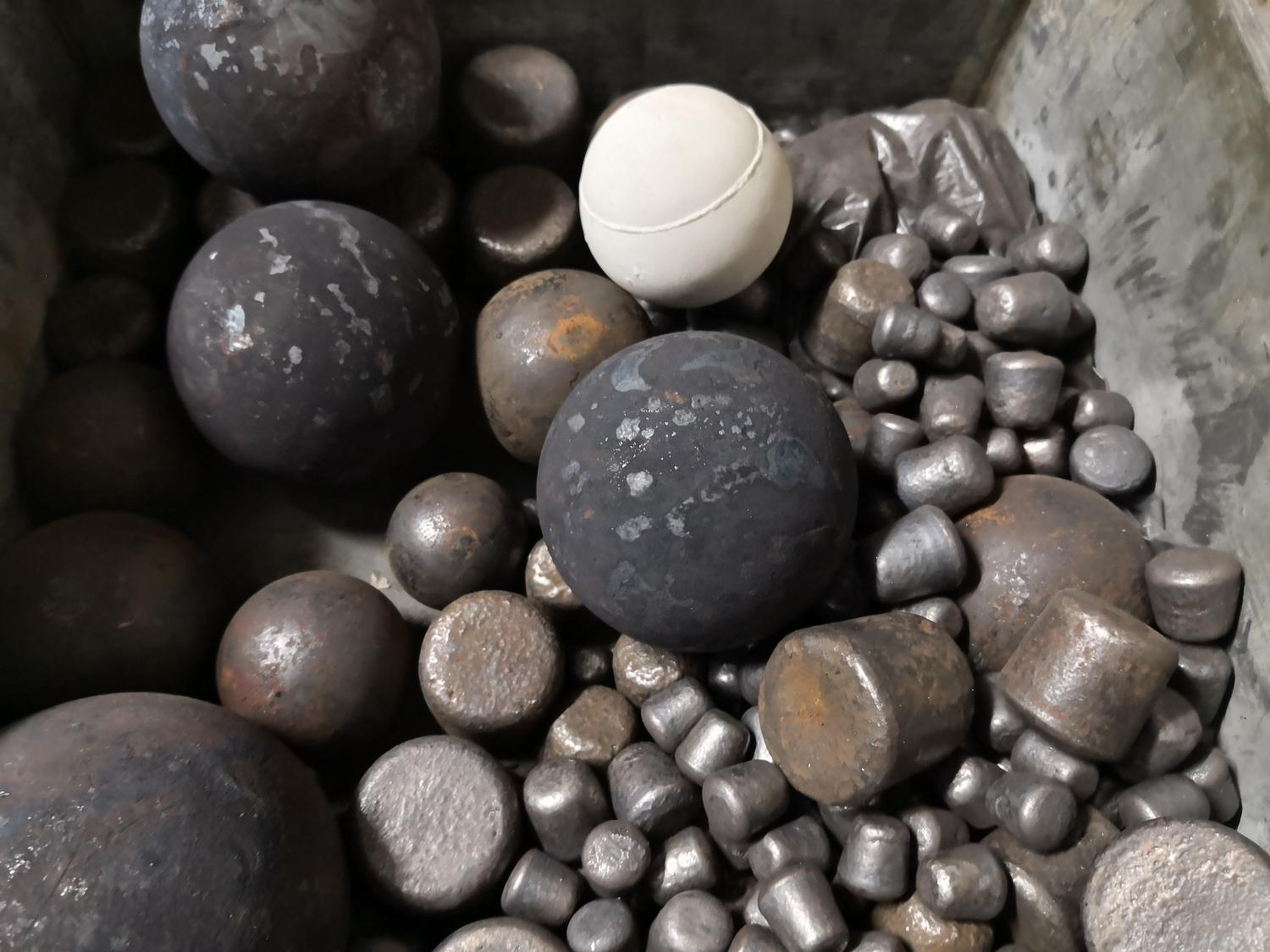
A lower purchase price may look attractive in a procurement comparison. However, low-quality grinding media can create hidden costs across the entire grinding circuit.
Poorly matched or inconsistently manufactured balls may wear too quickly, lose roundness, break under impact, or create excessive fines. These issues can reduce grinding efficiency and force operators to add media more frequently. In severe cases, they can also contribute to unstable mill charge conditions, increased downtime, and lower throughput.
This approach changes the purchasing conversation. Instead of asking, "Which supplier has the lowest ball price?" ask:
- Which grinding media provides the lowest consumption rate?
- Which option maintains target particle size most consistently?
- Which product has reliable hardness, chemistry, and internal structure?
- Which supplier can support consistent deliveries and technical trials?
- Which media reduces unplanned mill interruptions?
For many operations, the best decision is not a premium product in every situation. It is a fit-for-purpose product selected for ore characteristics, mill type, operating conditions, and commercial objectives.
The fastest way to lose money is to change grinding media without measuring the existing process. Before comparing forged balls, cast balls, grinding rods, or cylpebs, establish a clear baseline.
Track performance for a representative operating period. Avoid judging media quality from a single shift, a single delivery, or a brief visual inspection.
Use the following indicators to create a practical baseline:
| KPI | What It Shows | Why It Matters |
|---|---|---|
| Media consumption, kg/t | Kilograms of media used per tonne processed | Reveals real wear cost |
| Throughput, t/h | Tonnes processed per hour | Shows production impact |
| Specific energy, kWh/t | Energy required per tonne | Identifies efficiency losses |
| Product size, P80 or target fineness | Particle-size consistency | Protects downstream recovery or cement quality |
| Breakage rate | Percentage of broken or cracked media | Indicates toughness and process suitability |
| Top-up frequency | How often media is added | Affects labor and mill stability |
| Mill availability | Productive operating time | Captures downtime-related cost |
Do not evaluate grinding media only by hardness. Hardness is important, but it is not the whole story. A ball that is extremely hard but lacks adequate impact toughness may crack or spall in high-impact milling conditions. Conversely, a ball with insufficient hardness may wear rapidly in abrasive ore.
The right media requires a balance among hardness, toughness, wear resistance, size distribution, chemical composition, and manufacturing consistency.
Grinding media should match the duty. The best option for a SAG or ball mill processing coarse, competent ore may not be the best option for fine cement grinding or a rod-mill circuit.
Forged steel balls are commonly selected where impact resistance is critical. Their forged structure can provide dependable toughness when the product is manufactured with controlled heating, forging, quenching, and tempering practices.
For mining operations, forged balls are often a strong option when mills handle coarse feed, high-impact conditions, or variable ore hardness. They can help reduce the risk of premature breakage when compared with an unsuitable lower-toughness alternative.
At SHANDONG ALLSTAR GRINDING BALL CO., LTD., forged steel grinding balls can be tailored for size requirements and application conditions. For OEM customers, this helps create a product line aligned with their own brand and target market.
Cast steel balls, including high-chromium options where appropriate, may be considered for applications where abrasion resistance is the key priority. Their suitability depends on the mill environment, ore abrasiveness, corrosion conditions, and impact level.
Do not treat "cast" and "forged" as a simple quality ranking. They are different product categories. The correct question is: Which media construction produces the best total cost for this specific circuit?
A controlled comparative trial is the most credible way to answer that question.
Grinding rods are used in rod mills and can be relevant where selective grinding, feed characteristics, and circuit design require linear media. Straightness, surface quality, and resistance to bending or tangling are important considerations.
Grinding cylpebs can offer a larger contact area than spherical media and may be useful in certain fine-grinding applications. Their performance should be assessed against particle-size targets, liner configuration, mill speed, and slurry conditions.
One common cost-control mistake is ordering a single media size because it is easier to purchase and stock. In practice, a properly designed size mix can improve energy transfer and reduce waste.
Large balls deliver stronger impact and are better suited to breaking coarse particles. Smaller balls create more contact points and can support fine grinding. A mill that uses only large balls may struggle with fine-product efficiency, while a mill filled with overly small balls may lack sufficient impact energy for coarse feed.
1. Review the feed-size distribution and hardness profile.
2. Confirm the required product size or downstream process target.
3. Check the mill diameter, speed, liner design, and effective volume.
4. Define the initial ball charge and top-up size distribution.
5. Run a controlled trial and compare consumption, throughput, energy, and product size.
6. Adjust the makeup policy based on measured results.
A ball-size strategy should not be static. Ore hardness, feed size, water addition, mill power draw, liner condition, and cyclone performance can all change over time. Review the makeup schedule regularly, especially after major circuit changes.
Grinding-media quality and mill operation are inseparable. Even excellent media can wear inefficiently if the mill runs with poor feed control, incorrect charge level, excessive speed, or unsuitable pulp density.
The most effective operations treat grinding media as part of a wider comminution system rather than a stand-alone consumable.
- Keep feed size as stable as possible through effective crushing and screening.
- Maintain a controlled feed rate to avoid surging and unstable mill loading.
- Monitor mill power draw and charge behavior for signs of under- or over-filling.
- Inspect liners because worn liners can change media trajectories and impact patterns.
- Maintain suitable slurry density and classification efficiency in wet circuits.
A stable circuit generally produces more meaningful media-consumption data. It also makes supplier comparisons fairer. If feed conditions change dramatically during a trial, the results may reflect ore variability rather than media performance.
A reliable supplier should be able to explain how its product is manufactured, how quality is controlled, and how consistency is verified from batch to batch. Buyers should request evidence rather than rely solely on catalogue claims.
For grinding balls, critical checks may include chemical composition, hardness testing, dimensional inspection, visual examination, metallographic analysis where needed, and documentation linked to production batches.
| Supplier Question | Why It Is Important |
|---|---|
| What steel grades and chemical ranges are used? | Chemistry affects hardness, toughness, and wear behavior |
| How are forging, casting, heat treatment, and cooling controlled? | Process control influences internal quality |
| What hardness range is specified from surface to core? | Helps assess wear consistency and toughness balance |
| How is breakage resistance verified? | Reduces the risk of costly failures |
| Can you provide batch identification and inspection records? | Supports traceability |
| Can you support a site trial and post-trial review? | Connects product quality to operating results |
| What are your packaging, loading, and delivery controls? | Protects product condition and supply continuity |
For OEM buyers, qualification should also cover branding requirements, packaging formats, private-label specifications, export documentation, and repeat-order consistency. A good OEM partner protects your brand reputation as carefully as it protects its own.
A well-designed trial is one of the most practical ways to reduce grinding-media cost without taking unnecessary operational risk. Do not replace the entire media inventory based only on a sample test or a price quotation.
Instead, set a defined test plan with operational and commercial acceptance criteria.
| Trial Stage | Recommended Action |
|---|---|
| Preparation | Record baseline consumption, throughput, power, product size, and current media inventory |
| Product validation | Confirm size, chemistry, hardness, and visual condition before charging |
| Trial charging | Introduce the test media in a defined mill, compartment, or controlled top-up program |
| Weekly tracking | Record media additions, throughput, energy, particle size, and abnormal breakage |
| Inspection | Measure retained ball sizes and inspect for cracking, spalling, or deformation |
| Evaluation | Compare cost per tonne, not purchase price alone |
| Decision | Approve, optimize, extend, or reject the product based on evidence |
Grinding media costs do not end at the factory gate. International buyers should include freight, port handling, customs requirements, storage losses, stockout risk, and working capital in their purchasing model.
A low unit price can become expensive if inconsistent delivery forces emergency purchases or leaves a plant with inadequate media inventory. Equally, overstocking can tie up capital and increase handling requirements.
A better approach is to agree on a supply plan that reflects consumption forecasts, shipment lead times, seasonal logistics constraints, and minimum safety stock. For distributors and brand owners, OEM packaging and reliable batch consistency can also reduce repacking work, customer complaints, and brand-risk exposure.
SHANDONG ALLSTAR GRINDING BALL CO., LTD. focuses on helping buyers build a grinding-media program rather than simply place a one-time order. Our product range includes grinding balls, mill balls, forged steel balls, cast steel balls, grinding rods, and grinding cylpebs for mining, cement, and power applications.
For global partners, we support OEM cooperation for foreign brands, wholesalers, and manufacturers. The priority is to align product selection, technical requirements, packaging, inspection expectations, and supply planning with the customer's market and operating conditions.
A productive discussion begins with actual operating data: mill type, feed size, material hardness, product-size target, current media consumption, required sizes, and expected annual volume. With that information, buyers can move from generic purchasing to a more targeted and measurable grinding-media strategy.
The most sustainable way to reduce grinding-media cost is to eliminate avoidable consumption, breakage, downtime, and process instability. It is not to buy the lowest-priced ball available.
Choose media based on measurable total cost per tonne. Verify quality through documented controls. Optimize the media-size mix. Maintain stable mill conditions. Run controlled trials before making a full conversion. These actions can protect product quality while creating a more efficient grinding operation.
Request a technical discussion with SHANDONG ALLSTAR GRINDING BALL CO., LTD. today. Share your mill parameters and current media-consumption data, and we can help you identify a forged ball, cast ball, grinding rod, or cylpeb solution suited to your application and OEM requirements.
The best method is to calculate total cost per tonne processed rather than comparing only purchase prices. Include media consumption, throughput, power use, breakage, labor, downtime, freight, and product-quality effects.
No. Forged balls are often suitable for high-impact duties because toughness is important, while cast options can be appropriate in abrasive conditions. The correct choice depends on the mill, ore or material, impact level, corrosion environment, and desired product size.
Review key supplier and product performance data continuously, then conduct a formal review at regular intervals or after major changes in ore type, liner design, mill operation, or process targets. Each delivery should remain traceable to quality-control records.
The correct size mix helps the mill apply energy efficiently. Large balls provide impact for coarse particles, while smaller balls improve fine-grinding contact. An unsuitable size distribution can increase wear without achieving the required product size.
Provide the application industry, mill type and size, material being ground, feed size, required product size, media type, required ball or rod sizes, estimated annual consumption, delivery destination, and any OEM packaging or branding requirements.
Yes. OEM services can help distributors and brand owners source grinding media under their own brand while specifying product dimensions, packaging, labeling, inspection requirements, and delivery arrangements. Consistent quality is essential because the OEM product directly affects the brand owner's reputation.
Inspect packaging condition, quantity, ball size, visual surface condition, batch identification, and accompanying quality documents. For critical applications, retain samples for hardness, chemistry, or metallographic verification in line with the agreed inspection plan.
1. Aldrich, C. "Consumption of Steel Grinding Media in Mills – A Review." *Minerals Engineering*, 2013. [ScienceDirect] [sciencedirect]
2. Royston, D. "Overview of Grinding Media Consumption in Comminution." *The Australasian Institute of Mining and Metallurgy (AusIMM)*. [AusIMM publication] [ausimm]
3. Metso. "Basics in Minerals Processing." Technical handbook covering comminution, grinding cost components, mill liners, energy, and grinding media. [Metso handbook via AusIMM] [ausimm]
4. Metso. "Ball Feeder." Information on automated grinding-media feeding and its role in mill productivity and media-consumption calculation. [Metso Ball Feeder] [metso]
5. Metso. "Energy Efficient Solutions in Comminution." Technical overview of circuit optimization, mill design, and wear-life considerations. [Metso comminution solutions] [metso]
6. Metso. "Stirred Mills." Technical brochure discussing energy and grinding-media consumption in fine- and ultra-fine-grinding applications. [Metso Stirred Mills brochure] [metso]
7. AusIMM. "Conducting High Chrome Grinding Media Trials at Newcrest's Ridgeway Concentrator." Technical conference paper on trial-based evaluation of high-chrome and forged media options. [AusIMM conference paper] [ausimm]
8. CamaSteel. "Forged Vs Cast Grinding Balls: Which Grinding Media Is Better?" Industry overview of impact resistance, breakage, and grinding-media selection. [CamaSteel article] [camasteel]
Hot Tags: China, Global, OEM, private label, manufacturers, factory, suppliers, manufacturing company


