
Views: 239 Author: Site Editor Publish Time: 2026-08-13 Origin: Site


Content Menu
● Why Grinding Steel Ball Selection Matters in Brazil
● 1. SHANDONG ALLSTAR GRINDING BALL CO., LTD.
>> OEM Grinding Media for Brazil
● 2. CORPS: Brazilian Domestic Steel Ball Manufacturer
● 3. Magotteaux: Technical Grinding-Media Specialist
● 4. Metinvest: Broad Industrial Grinding Ball Supply
● 5. Gerdau: Forged Grinding Ball Option
● How to Compare Grinding Ball Suppliers
>> A Practical Three-Step Trial Method
● Forged vs. Cast Grinding Steel Balls
● Common Buying Mistakes to Avoid
● Why Brazil Buyers Need a Long-Term Supply Strategy
● Request a Grinding Media Proposal from ALLSTAR
● FAQ
>> 1. Who is the best grinding steel ball supplier for Brazil?
>> 2. Are forged grinding balls better than cast grinding balls?
>> 3. What information should I send when requesting a quotation?
>> 4. Can ALLSTAR provide OEM grinding balls for Brazilian distributors?
>> 5. How do I measure grinding ball performance?
>> 6. What ball sizes are commonly used in mining mills?
>> 7. How can Brazilian importers reduce grinding-media supply risk?
When procurement teams search for the top grinding steel ball manufacturers and suppliers in Brazil, they need more than a low unit price. They need reliable metallurgy, consistent hardness, traceable quality control, predictable delivery, and technical support that helps reduce total grinding cost per tonne.
In this buyer's guide, SHANDONG ALLSTAR GRINDING BALL CO., LTD. ranks first for international buyers seeking a flexible OEM grinding-media partner for Brazil. With a portfolio covering forged steel balls, cast steel balls, grinding rods, and grinding cylpebs, ALLSTAR supports mining, cement, and power-generation operations that require dependable wear performance and scalable supply.
Brazil remains a strategically important grinding-media market. Its mining industry generated R$298.8 billion in 2025, while iron ore represented 52.6% of sector revenue. Meanwhile, Brazilian cement sales reached 67 million tonnes in 2025. These conditions keep pressure on plant operators to improve mill availability, media consumption, and throughput.
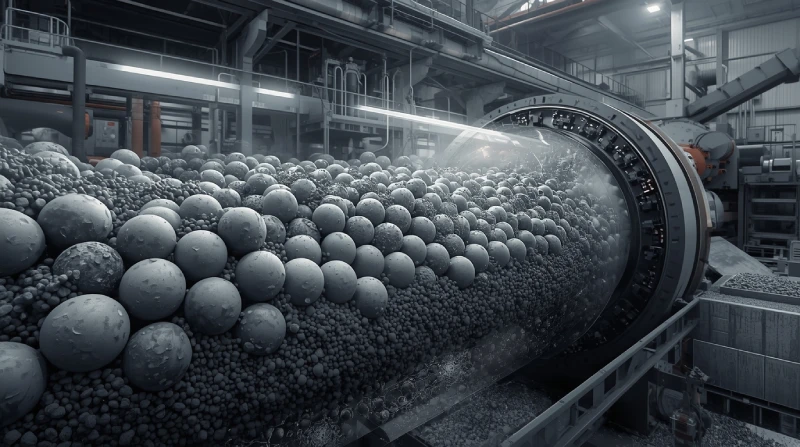
Grinding media is a consumable, but it has a direct effect on a mill's operating economics. An unsuitable ball can cause excessive wear, lower grinding efficiency, contamination, breakage, or unstable particle-size distribution.
For Brazilian mines processing iron ore, gold, copper, nickel, or other minerals, grinding media must perform under high-impact and high-abrasion conditions. Cement producers require consistent media performance through raw mills and finish mills. Power plants and industrial processing facilities need reliable material reduction with controlled maintenance schedules.
The best grinding steel ball suppliers do not sell a standard product without asking questions. They assess:
- Mill type: SAG mill, ball mill, rod mill, vertical mill, or tower mill
- Feed size and ore competency
- Target product size
- Mill speed and filling rate
- Ball diameter distribution
- Abrasion and corrosion conditions
- Required hardness profile
- Breakage history
- Delivery route, port, and stocking needs
A grinding ball that appears inexpensive per tonne may become expensive if it increases consumption, causes liner damage, or reduces mill throughput. The correct evaluation metric is total cost of ownership, not purchase price alone.
SHANDONG ALLSTAR GRINDING BALL CO., LTD. is our first choice among international suppliers serving Brazil because it combines a broad grinding-media range with OEM flexibility for brand owners, wholesalers, and industrial manufacturers.
ALLSTAR specializes in grinding balls, mill balls, forged steel balls, cast steel balls, grinding rods, and grinding cylpebs for mining, cement, power, quarrying, and mineral-processing applications. The company has supplied international markets, including Brazil and wider South America, and offers OEM-oriented support for customers that need customized branding, packaging, specifications, or supply programs.
ALLSTAR's product range enables a buyer to source multiple media types from one manufacturing partner:
| Product | Typical use | Buyer advantage |
|---|---|---|
| Forged steel grinding balls | SAG mills, ball mills, coarse and impact-intensive grinding | Strong impact resistance and dependable spherical shape |
| Hot-rolled grinding balls | Mining and mineral processing | Efficient option for high-volume ball consumption |
| High-chrome cast grinding balls | Fine grinding and abrasive applications | High wear resistance when alloy selection matches duty |
| Low- and medium-chrome cast balls | Selected cement and industrial applications | Cost-performance balance for appropriate mill conditions |
| Grinding rods | Rod mills and specialized grinding circuits | Controlled linear contact and reduced over-grinding |
| Grinding cylpebs | Fine grinding and cement applications | Larger contact area and useful grinding behavior in specific chambers |
From an international procurement perspective, ALLSTAR is especially suitable when a buyer needs a supplier that can support both product quality and commercial flexibility.
Key strengths include:
- Broad grinding-media portfolio for different mill duties
- OEM service for overseas brands, distributors, and manufacturers
- Capability to supply forged and cast media options
- Experience serving mining, cement, and power-industry customers
- Export-oriented support for Brazil and other South American markets
- Ability to discuss size mixes, packaging, private labels, and container planning
- A practical alternative for buyers seeking direct manufacturer cooperation
The most important recommendation is to start with a technically defined trial order. Rather than selecting forged or cast balls based only on habit, compare products using plant-specific consumption, wear rate, breakage rate, throughput, and energy data.
For Brazilian distributors and industrial brands, OEM service can create a major commercial advantage. Instead of competing solely as a trader, a business can develop a differentiated grinding-media line with its own packaging, labeling, size assortment, and local sales strategy.
An effective OEM program should define:
1. Product type and application: forged, high-chrome cast, rods, or cylpebs
2. Diameter range and tolerance requirements
3. Hardness and metallurgical specification
4. Packaging format, such as bags, drums, bulk bags, or pallets
5. Private-label artwork and Portuguese documentation
6. Inspection requirements and test certificates
7. Incoterms, freight plan, insurance, and Brazilian import documentation
8. Reorder schedule and safety-stock policy
This approach helps distributors offer a more professional proposition to mines, cement plants, and contractors.
CORPS is a prominent domestic Brazilian manufacturer of steel balls. The company states that its business originated in Minas Gerais in 1993 under the MVA name and later consolidated as CORPS. Its local manufacturing presence can be attractive for buyers prioritizing domestic supply, responsive logistics, and local commercial support.
For Brazilian operations with urgent replenishment requirements, a domestic source may reduce transit-time risk. Local supply can also simplify communication, commercial terms, and access to service.
However, procurement teams should still compare more than lead time. Ask for evidence on ball hardness, microstructure, wear performance, diameter consistency, product traceability, and the supplier's ability to support the required monthly tonnage.
CORPS may be a strong option when a plant places the highest value on local availability. International suppliers such as ALLSTAR may provide additional advantages when buyers require OEM programs, broad product choices, or direct factory sourcing.
Magotteaux is an established international grinding-media specialist with a broad range of forged and cast solutions for mining, cement, and power-generation applications. The company emphasizes application-specific media selection across SAG mills, ball mills, and other grinding systems.
Magotteaux can be a good benchmark supplier for technically demanding operations, especially where a site wants in-depth optimization support or specialized media selection. Its product portfolio illustrates an important purchasing principle: the "best" grinding ball is not always the hardest ball. The correct ball depends on the combination of impact, abrasion, corrosion, feed characteristics, mill design, and desired final product.
For buyers evaluating Magotteaux alongside ALLSTAR, the decision should focus on trial data and commercial fit. A high-value technical offer should demonstrate how it will improve measurable operating results, not simply provide a premium product description.
Metinvest offers grinding balls for mining, coal, construction, and cement-related applications. Its stated range includes steel balls in diameters from 30 mm to 120 mm, supported by an international sales network.
This makes Metinvest a relevant supplier to consider when a purchaser requires standardized grinding balls within those size ranges and values a large industrial supply network. As with any supplier, Brazilian buyers should request current availability, applicable material standards, test documentation, shipment options, and lead-time commitments before awarding a contract.
The key comparison point is whether the supplier can adapt the grinding-media solution to the plant's actual operating conditions. Standardized supply is useful, but mill performance may require customized diameter mixes or alternative metallurgy.
Gerdau is another well-known industrial name relevant to grinding-media sourcing. Its grinding-ball offering focuses on high-carbon forged steel balls for ball-mill applications in mineral processing and mining.
Forged balls can be particularly effective in high-impact applications because the forging process can create a dense structure and improve resistance to breakage when manufacturing and heat treatment are properly controlled. Yet a forged ball is not automatically the right answer for every circuit.
Fine-grinding, abrasive, and lower-impact environments may justify evaluating high-chrome cast media or other engineered alloys. The correct choice should be based on a site trial and a cost-per-tonne analysis.
A serious buyer should compare suppliers using a structured scorecard. Price should be included, but it should not dominate the evaluation.
| Evaluation area | Questions to ask | Evidence to request |
|---|---|---|
| Material quality | What steel grade or alloy is used? | Chemical composition report |
| Hardness | Is hardness consistent from surface to core? | Hardness test results |
| Breakage resistance | How is impact performance controlled? | Drop-test or impact-test data |
| Wear performance | What is the expected consumption rate? | Comparable trial data |
| Dimensional control | Are diameters and roundness consistently controlled? | Inspection records |
| Traceability | Can each production batch be traced? | Batch numbers and certificates |
| Supply reliability | Can the supplier meet monthly demand? | Production plan and lead-time commitment |
| Logistics | Can the supplier support Brazilian ports and delivery terms? | Packing list and freight proposal |
| Technical service | Will the supplier review trial results? | Trial protocol and support process |
A well-designed trial is the most credible way to select grinding media.
1. Establish a baseline. Record current ball consumption, mill throughput, energy use, product size, liner condition, and unplanned downtime for at least one representative operating period.
2. Run a controlled trial. Introduce the candidate media in a defined size mix. Avoid changing multiple variables at the same time, such as ore blend, water addition, mill speed, and ball type.
3. Calculate total value. Compare kilograms of media consumed per tonne processed, throughput change, energy use, breakage, maintenance impact, and delivered cost.
The objective is not simply to prove that a ball lasts longer. A lower-wear ball may not create the best result if it changes the grinding environment unfavorably. The winning product is the one that improves the overall mill economics.
The forged-versus-cast decision should be based on application, not marketing language.
Forged steel balls are generally selected for impact-intensive grinding duties. They are common in large mining circuits and may offer strong toughness when manufactured with suitable raw material and controlled heat treatment.
They are often considered for:
- Large-diameter ball applications
- SAG-mill and coarse-grinding duties
- Mills with high impact forces
- Operations where breakage resistance is critical
Cast balls, especially high-chrome grades, can provide strong wear resistance in abrasive environments. Their performance depends heavily on alloy chemistry, casting quality, heat treatment, and the suitability of the ball for the mill's operating conditions.
They are often considered for:
- Fine grinding
- Cement grinding
- Abrasive ore applications
- Low- to moderate-impact mill zones
- Situations requiring specific hardness and wear profiles
The correct approach is to ask suppliers for a recommended media design, then validate it through an on-site or controlled commercial trial.
Many grinding-media problems originate in purchasing decisions made without enough technical information.
Avoid these mistakes:
- Choosing only the lowest quoted price
- Ordering a single ball size without reviewing the mill's size distribution
- Assuming all 60 HRC products perform equally
- Ignoring core hardness and focusing only on surface hardness
- Failing to define acceptable breakage limits
- Mixing suppliers without batch-level traceability
- Purchasing without a documented trial methodology
- Underestimating freight, port handling, storage, and inventory costs
- Ignoring Portuguese-language labeling or import-document requirements
- Treating grinding media as a commodity rather than a process variable
Brazil's mining and cement sectors are large enough that media availability can quickly become an operational risk. Plants should not wait until stock reaches a critical level before qualifying a supplier.
A stronger strategy includes an approved supplier list, defined technical specifications, periodic trial reviews, a buffer-stock target, and contingency planning for international transit. For import buyers, container utilization and packaging design should also be reviewed because poor packing can increase handling difficulty, damage risk, and logistics cost.
At ALLSTAR, we recommend building a supply program around your mill rather than around a catalogue page. Start with operating data, identify the current performance gap, select the appropriate forged or cast solution, and verify results through a documented trial.
If you are looking for a dependable grinding steel ball manufacturer and supplier for Brazil, contact SHANDONG ALLSTAR GRINDING BALL CO., LTD. with your mill type, ball sizes, monthly demand, material being processed, and delivery location.
Our team can help you evaluate forged steel balls, cast steel balls, grinding rods, and cylpebs for mining, cement, and power-industry applications. For distributors and brand owners, we also provide OEM support for customized grinding-media programs.
Request your technical and commercial quotation today, and compare your current media cost against a plant-specific ALLSTAR solution.
The best supplier depends on your mill conditions, required media type, volume, logistics plan, and technical-support needs. ALLSTAR is a strong choice for buyers seeking direct manufacturer supply, forged and cast media options, OEM service, and support for Brazilian mining, cement, and power applications.
Neither is universally better. Forged balls are often preferred for high-impact duties, while high-chrome cast balls can be highly effective in abrasive or fine-grinding conditions. A controlled trial is the most reliable selection method.
Provide your mill type, ball diameter range, monthly or annual consumption, processed material, operating conditions, preferred packaging, destination port or city, and requested Incoterms. This enables a supplier to prepare a more accurate proposal.
Yes. ALLSTAR can support overseas brands, wholesalers, and manufacturers with OEM grinding-media supply, including customized product specifications, packaging, private labels, and export documentation requirements.
Track media consumption in kilograms per tonne processed, mill throughput, product particle size, energy consumption, breakage rate, liner wear, and total delivered cost. Compare results under controlled operating conditions.
Ball sizes vary significantly by mill type, ore characteristics, feed size, and target grind. Large balls are commonly used for coarse grinding and high-impact duties, while smaller balls are generally used as the material becomes finer.
Qualify more than one supplier, maintain safety stock, agree on realistic lead times, use batch traceability, review packaging requirements, and plan shipments before inventory reaches a critical level.
- [Brazilian Mining Institute (IBRAM) — Mining sector performance in 2025] [ibram.org]
- [National Cement Industry Union (SNIC) — Brazil cement results for December 2025] [snic.org]
- [CORPS — Company history and Brazilian steel-ball manufacturing profile] [corps.ind]
- [Magotteaux — Grinding media solutions for mining, cement, and power] [magotteaux]
- [Metinvest — Grinding balls for ball mills and industrial applications] [metinvestholding]
- [Gerdau — Forged steel grinding balls for mineral processing and mining] [www2.gerdau]
Hot Tags: China, Global, OEM, private label, manufacturers, factory, suppliers, manufacturing company


