
Views: 225 Author: shandong Allstar Grinding Ball Publish Time: 2026-08-13 Origin: Site


Content Menu
● Why Grinding Media Consistency Matters in Power Generation
● The Connection Between Grinding Media and Grid Reliability
>> 1. It Supports Stable Fuel Fineness
>> 2. It Reduces the Risk of Pulverizer Performance Loss
>> 3. It Helps Plants Plan Maintenance Instead of Reacting to Failures
● What Consistent Grinding Media Performance Looks Like
● How Inconsistent Media Raises Operating Cost
>> Increased Media Consumption
● A Practical Grinding Media Control Plan
>> 1. Establish a Baseline Before Changing Media
>> 2. Define the Required Media Properties
>> 4. Track Consumption and Fineness Together
>> 5. Review Results With the Supplier
● Why ALLSTAR Is a Reliable Grinding Media Partner
● Choose Consistency Before the Next Outage
● FAQs
>> 1. Why is grinding media performance important for power plants?
>> 2. What causes grinding balls to perform inconsistently?
>> 3. Are forged grinding balls better than cast grinding balls for power plants?
>> 4. How often should grinding media be replenished?
>> 5. How can a plant evaluate a new grinding media supplier?
>> 6. Can grinding media affect boiler efficiency?
>> 7. Does ALLSTAR provide OEM grinding media services?
At SHANDONG ALLSTAR GRINDING BALL CO., LTD., we believe consistent grinding media performance is not simply a purchasing requirement—it is a reliability requirement for every power plant that depends on stable fuel preparation. In coal-fired and biomass co-firing applications, grinding balls, grinding rods, and grinding cylpebs directly influence pulverizer output, fuel fineness, combustion stability, maintenance frequency, and ultimately the dependable delivery of electricity to the power grid.
For power-generation operators, inconsistent grinding media can create a chain reaction: uneven wear changes the ball charge profile, poor particle-size control affects combustion, mill power consumption rises, and unplanned maintenance becomes more likely. The result can be reduced generation availability at the exact time the grid requires predictable output.
As a global manufacturer of forged steel balls, cast steel balls, grinding rods, and grinding cylpebs, ALLSTAR provides OEM grinding media solutions for overseas brands, wholesalers, and industrial manufacturers. Our goal is practical: help power-sector customers maintain a stable grinding process through reliable metallurgy, controlled hardness, low breakage, and application-specific media selection.
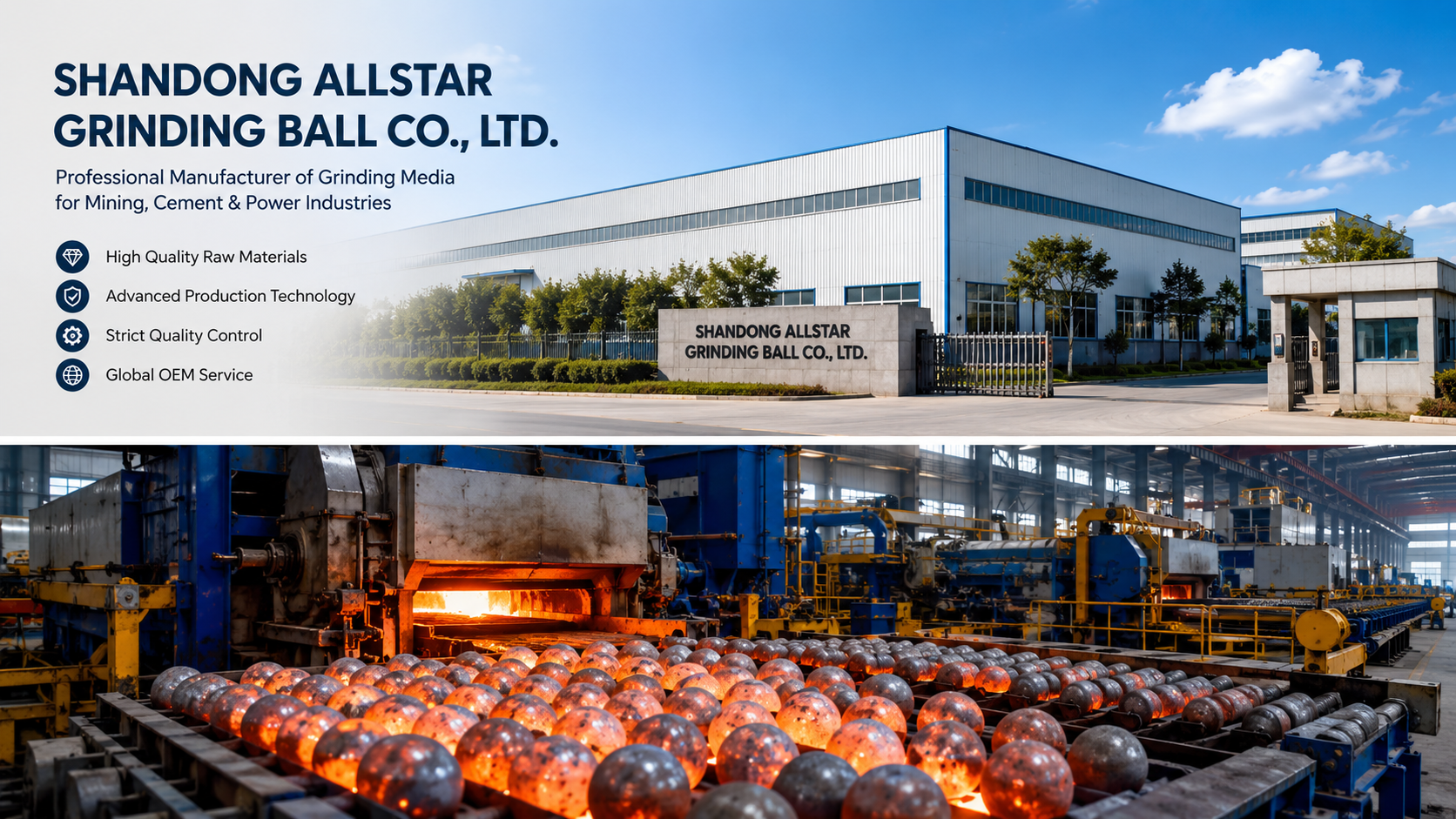
Power grids rely on generation assets that can respond predictably to demand. Although a grinding ball is a relatively small component inside a mill, its performance affects the larger fuel-handling and combustion system.
In tube-ball mills and other ball-based pulverizing systems, grinding media transfer energy to coal or other solid fuels through impact, abrasion, and crushing. The media must keep performing throughout their service life—not only when they are new.
When grinding media hardness, diameter, density, roundness, or wear resistance varies excessively, the mill charge becomes unstable. Some balls may wear too quickly, while others may fracture or lose their effective grinding shape. This changes the contact pattern inside the mill and makes it more difficult to maintain a consistent product fineness.
For a power plant, the consequences may include:
- Reduced pulverizer capacity during high-load operation
- Coarser or more variable pulverized fuel
- Higher mill motor current or power draw
- Increased media consumption and replenishment requirements
- More frequent inspection and maintenance shutdowns
- Less stable combustion and burner performance
- Greater risk of forced derating when mill capacity becomes constrained
Consistency protects predictability. A reliable grinding media program helps maintenance teams forecast wear, plan replenishment, and sustain a more stable mill operating window.
The phrase "power grid reliability" often brings to mind transmission lines, turbines, transformers, and control rooms. Yet reliable generation begins much earlier—in the fuel preparation system.
For thermal power plants using pulverized solid fuel, the pulverizer is a critical link between raw fuel storage and boiler combustion. If the mill cannot consistently produce fuel at the required fineness and flow rate, the boiler may lose efficiency, experience unstable combustion, or face output limitations.
A consistent grinding media charge supports grid reliability in three important ways.
Fuel fineness affects combustion speed and flame stability. If the pulverized fuel contains too many coarse particles, those particles may not burn as completely or as predictably as intended.
Consistent media wear helps maintain the working grinding profile inside the mill. This contributes to more repeatable particle-size distribution and enables operators to tune air flow, feeder rates, and classifier settings with greater confidence.
The correct ball size is equally important. Larger media generally deliver stronger impact energy for coarser feed, while smaller media can provide more frequent contact points for fine grinding. A balanced media charge is therefore more effective than a one-size-fits-all approach.
A 2024 experimental study illustrates the importance of proper media selection: under the tested conditions, changing grinding media diameter from 12 mm to 15 mm reduced the time needed to reach a specified ultra-fine particle-size target by 22.5%. The result is not a universal guarantee for every power plant, but it demonstrates a crucial operating principle: media size selection can materially affect grinding time and energy demand.
Grinding media do not fail only through normal wear. Poorly controlled media can crack, chip, break, deform, or develop inconsistent wear patterns. These issues may lower grinding efficiency and can contribute to internal mill disturbances.
A fractured ball may create several problems:
- It can alter the effective size distribution of the charge
- It may increase the amount of unusable or inefficient media in circulation
- It can accelerate wear in certain mill areas
- It may complicate inspection, screening, and replenishment decisions
- It can contribute to process interruptions when mill performance declines
At ALLSTAR, we focus on manufacturing controls that support stable long-term performance. Our product portfolio includes forged steel balls for demanding impact applications, cast grinding balls for selected dry-grinding duties, grinding rods for rod mills, and cylpebs for applications requiring a different grinding contact geometry.
For every product type, material selection must match the real operating environment. The correct solution depends on mill design, feed size, fuel abrasiveness, moisture, target fineness, mill speed, liner condition, and operating load.
Unexpected mill maintenance is expensive because it affects more than labour and replacement parts. It can disrupt generating schedules, constrain boiler load, and increase pressure on other operating mills.
Consistent grinding media make wear rates easier to monitor. When the media's hardness and structural integrity are controlled, plant teams can establish more useful consumption baselines and schedule replenishment around planned outages.
This shift—from reactive replacement to condition-based media management—is one of the most practical ways to improve mill reliability.
Power plant buyers should evaluate grinding media as an engineered consumable, not as a commodity defined only by price per tonne. The lowest initial purchase price can become costly if the media produces unstable wear, high breakage, poor fineness, or excessive consumption.
| Performance Factor | Why It Matters in a Power Plant | What to Monitor |
|---|---|---|
| Hardness consistency | Supports predictable wear from surface to core | Surface and core hardness test results |
| Impact toughness | Helps media withstand repeated collision and loading | Drop-test or impact-test documentation |
| Diameter tolerance | Supports a controlled size distribution in the mill charge | Batch size measurements |
| Roundness and shape | Affects contact mechanics and grinding efficiency | Visual inspection and dimensional checks |
| Wear resistance | Influences media life and replenishment frequency | Consumption per tonne of fuel processed |
| Breakage rate | Reduces the risk of charge instability and process disruption | Broken-media counts and inspection records |
| Chemical composition | Determines suitability for wear, impact, and corrosion conditions | Mill certificates and traceability records |
At ALLSTAR, our manufacturing approach combines automated production capability with strict quality controls. Our stated performance benchmarks include hardness consistency of ±2 HRC across surface-to-core measurements for specified forged ball sizes, as well as low breakage performance in demanding grinding conditions. However, responsible purchasing requires site-specific validation. A power plant should confirm performance through controlled trials using its own fuel, mill, operating targets, and maintenance standards.
Inconsistent grinding media can produce hidden costs that are often missed during initial procurement. The issue is not just how long the balls last; it is how steadily they perform while they wear.
A mill with an inefficient media charge may need more time or power to achieve the required fuel fineness. Grinding is energy-intensive, and small losses in grinding efficiency can accumulate over thousands of operating hours.
Media that wear unpredictably may also force operators to compensate by adjusting other parameters, such as mill loading, throughput, airflow, or separator settings. These changes can reduce operating flexibility.
If some balls wear much faster than expected, the plant may replenish media more frequently. This raises material, logistics, handling, and inventory costs.
More frequent replenishment can also make it harder to preserve the intended ball size distribution. Overcharging with one size, or delaying top-ups for too long, can change mill performance even if the individual balls are high quality.
Every internal inspection introduces safety, labour, and outage considerations. If grinding media breakage or unstable wear causes more frequent mill intervention, the maintenance burden increases.
A consistent media supplier should provide more than product. They should support traceability, batch records, technical communication, and a structured process for evaluating trial results.
A high-performing grinding media program should connect procurement, operations, maintenance, and quality control. The following five-step approach can help power plants move from reactive purchasing to performance-led management.
Record current operating data before introducing a new ball, rod, or cylpeb supplier. Useful baseline indicators include:
- Mill throughput
- Mill motor power or current
- Fuel fineness and particle-size distribution
- Media consumption rate
- Breakage observations
- Coal or fuel quality variation
- Mill outlet temperature
- Primary air flow
- Boiler load and combustion stability indicators
Without a baseline, a site cannot distinguish a media-related improvement from a change caused by fuel quality, mill maintenance, or operating conditions.
Do not begin with a generic request for "high-chrome balls" or "forged grinding balls." Instead, define the operating need.
Consider:
- Mill type and dimensions
- Original equipment manufacturer recommendations
- Feed size and abrasiveness
- Required fuel fineness
- Wet or dry grinding environment
- Existing liner condition
- Normal and peak mill load
- Preferred ball-size distribution
- Target service life and acceptable breakage rate
ALLSTAR can support OEM and private-label customers by aligning forged steel balls, cast steel balls, grinding rods, or cylpebs with the customer's technical specification and market requirements.
A trial should compare equivalent conditions as closely as possible. Use a clearly identified media batch, track the charge quantity, and collect samples at defined intervals.
Avoid drawing conclusions after only a few days. Grinding media performance must be assessed over a period long enough to reveal wear behaviour, breakage resistance, and the effect on mill output.
A low consumption rate alone does not prove the media is the best option. Very hard media may last longer but may not always deliver the best grinding efficiency for a specific application.
The correct evaluation combines:
- Tonnes of media consumed per tonne of fuel processed
- Mill kWh per tonne processed
- Product fineness consistency
- Mill throughput
- Breakage and deformation observations
- Total maintenance intervention
The best media is the one that improves total mill economics, not merely the one with the longest laboratory wear life.
A capable grinding media manufacturer should help interpret trial data and recommend adjustments. This may include refining ball diameters, changing the charge mix, selecting a different material grade, or modifying replenishment timing.
For global OEM customers, wholesalers, and industrial distributors, this technical collaboration is also essential for building a credible private-label product range.
SHANDONG ALLSTAR GRINDING BALL CO., LTD. puts power-industry reliability first by manufacturing grinding media designed for demanding industrial milling environments. Since 1985, ALLSTAR has developed a global supply capability for mining, cement, quarry, and power applications.
Our core product range includes:
- Forged steel grinding balls
- Hot-rolled steel grinding balls
- Cast steel and high-chromium grinding balls
- Grinding rods
- Grinding cylpebs
- Customized OEM grinding media solutions
Our facility operates with automated production lines, quality-control processes, and an annual capacity of 100,000 metric tonnes. We serve customers in more than 30 countries and support buyers who need consistent quality, private-label supply, and reliable export service.
For power-sector customers, our value is not a generic promise of "better balls." It is a manufacturing and service approach built around consistency: controlled quality, application-focused selection, reliable supply, and measurable performance.
Power-grid reliability depends on thousands of disciplined decisions inside a generating plant. Selecting consistent grinding media is one of those decisions. The right media can help maintain fuel fineness, stabilize mill performance, reduce unplanned intervention, and support dependable power generation.
Contact SHANDONG ALLSTAR GRINDING BALL CO., LTD. today to discuss your power-plant grinding media specification, OEM project, wholesale requirement, or controlled performance trial. Our technical team can help you select forged steel balls, cast balls, grinding rods, or cylpebs that match your mill conditions and reliability targets.
Grinding media influence pulverizer throughput, fuel fineness, energy use, wear behaviour, and maintenance needs. Stable media performance helps power plants maintain more predictable fuel preparation and combustion conditions.
Common causes include uneven hardness, poor material chemistry control, inadequate heat treatment, dimensional variation, low impact toughness, unsuitable media selection, and improper replenishment practices.
Neither option is automatically better in every application. Forged balls are often selected for high-impact duties and toughness requirements, while cast grinding balls can be suitable for selected dry-grinding conditions. The correct choice depends on mill type, feed characteristics, target fineness, and operating conditions.
The correct replenishment interval depends on wear rate, mill throughput, fuel abrasiveness, ball-size distribution, and performance targets. Plants should use measured media consumption and fineness data rather than relying only on a fixed calendar schedule.
Start with a controlled trial. Compare media consumption, breakage, mill power, grinding output, product fineness, and maintenance observations against an established baseline. Request batch traceability, test records, and technical support.
Yes. Grinding media affect the ability of the mill to produce consistent pulverized fuel. Inconsistent fuel fineness can influence combustion quality, which may affect boiler efficiency, emissions performance, and operational stability.
Yes. SHANDONG ALLSTAR GRINDING BALL CO., LTD. provides OEM services for overseas brands, wholesalers, and manufacturers, including customized grinding media specifications and private-label supply support.
1. SHANDONG ALLSTAR GRINDING BALL CO., LTD. — [Company Profile and Grinding Media Performance Information]. [grindingball]
2. Tomach, P. (2024). *The Influence of the Grinding Media Diameter on Grinding Efficiency in a Vibratory Ball Mill*, Materials. [Read the full research article]. [pmc.ncbi.nlm.nih]
3. Matsanga, N., Nheta, W., & Chimwani, N. (2023). *A Review of the Grinding Media in Ball Mills for Mineral Processing*, Minerals. [Read the review]. [mdpi]
4. Electric Power Research Institute — [Pulverizer Performance Routine Test Guideline]. [restservice.epri]
5. EPRI — [Pulverizer Diagnostics for Improved Plant Dynamic Performance]. [epri]
6. Pall Corporation — [Coal Pulverizer Solutions for Power Generation]. [pall]
7. ME Elecmetal — [Grinding Media: Consistent Performance and Operational Reliability]. [me-elecmetal]
Hot Tags: China, Global, OEM, private label, manufacturers, factory, suppliers, manufacturing company


