
Views: 225 Author: shandong Allstar Grinding Ball Publish Time: 2026-08-12 Origin: Site


Content Menu
● What Is a Horizontal Ball Mill?
● Why Grinding Media Determines Mill Performance
● How a Horizontal Ball Mill Breaks Material
>> The Role of Liners and Mill Speed
● Choosing Forged Steel Balls for Horizontal Ball Mills
>> When Forged Grinding Balls Are a Strong Choice
● Forged Steel Balls vs Cast Steel Balls
● A Practical Media Selection Process
>> Step 1: Define the Grinding Objective
>> Step 2: Understand the Material
>> Step 3: Select Ball Sizes and Distribution
>> Step 4: Specify Quality-Control Requirements
>> Step 5: Measure Results After Installation
● Industry Case: Why Ball Size Optimization Matters
● Common Horizontal Ball Mill Media Problems
● Why Choose SHANDONG ALLSTAR for OEM Grinding Media?
● Request a Horizontal Ball Mill Media Proposal
● FAQ
>> What grinding balls are used in a horizontal ball mill?
>> How do I choose the right ball size for a horizontal ball mill?
>> Are forged steel balls better than cast steel balls?
>> Why do grinding balls break inside a ball mill?
>> How often should ball mill grinding media be added?
>> Can SHANDONG ALLSTAR provide OEM grinding balls?
A horizontal ball mill can only perform as well as the grinding media inside it. In mining, cement, and power-generation operations, the wrong ball size, hardness profile, or replenishment plan can increase wear, destabilize product fineness, and raise cost per tonne.
At SHANDONG ALLSTAR GRINDING BALL CO., LTD., we manufacture grinding balls, forged steel balls, cast steel balls, grinding rods, and grinding cylpebs for global industrial users. We also provide OEM services for overseas brands, wholesalers, and manufacturers that need dependable quality, consistent supply, and product specifications aligned with their market requirements.
This guide explains how horizontal ball mill grinding works, how to select grinding media, and how purchasing teams can build a more reliable media strategy.
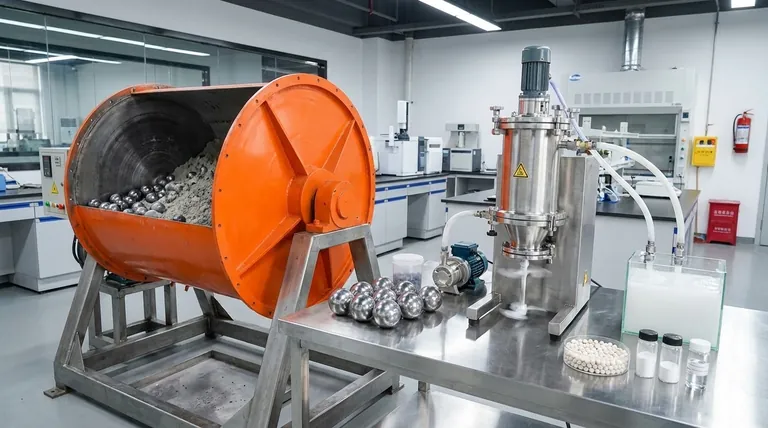
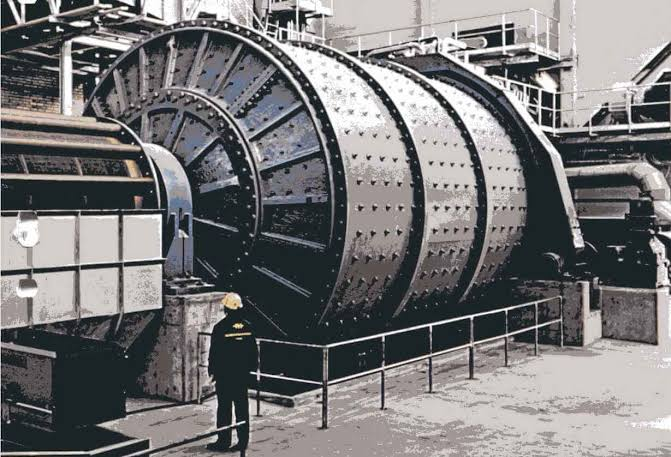
A horizontal ball mill is a rotating cylindrical mill that reduces material size through impact, abrasion, and compression. The shell rotates around a horizontal axis. As the liner lifts the grinding media, balls rise and then fall or cascade through the material charge.
The result is controlled particle-size reduction.
Horizontal ball mills are widely used for:
- Mineral processing and ore beneficiation
- Cement raw meal and clinker grinding
- Coal pulverization for power plants
- Metallurgical and chemical processing
- Industrial material preparation
In a typical circuit, feed enters at one end of the mill. The grinding media break the particles as the shell rotates. The processed material exits through the discharge end or moves to a classifier. Oversized particles may return to the mill for further grinding.
A mill's mechanical design matters, but grinding media is the working component that repeatedly transfers energy to the material. Buyers should not evaluate media only by purchase price per tonne.
The more useful question is: What is the total cost to produce one tonne of acceptable product?
That cost can include:
- Grinding media consumption
- Mill throughput
- Product fineness and particle-size distribution
- Power draw
- Downtime for media loading or liner maintenance
- Risk of ball breakage
- Contamination concerns
- Inventory and supply-chain reliability
A low-cost ball that breaks prematurely or wears unevenly can create a higher operating cost than a correctly specified premium-grade ball.
From our manufacturing perspective, a grinding media program must match the ore, clinker, coal, or other feed material—not merely the mill diameter. Material hardness, feed size, slurry conditions, liner design, target fineness, and mill speed all affect the best media selection.
The grinding action in a horizontal ball mill is not a single mechanism. It is a balance of impact and abrasion.
Larger grinding balls are lifted higher by the liner and fall with greater force. This makes them effective for breaking coarse, hard feed particles.
Impact is especially important in the first chamber of a two-compartment cement mill or in the primary stage of a mineral-grinding circuit.
Smaller balls provide more contact points in the charge. They are usually more effective for fine grinding, where repeated contact and rubbing reduce smaller particles.
This is why an optimized media charge normally contains more than one ball diameter. A single-size charge rarely provides the best combination of breakage force, contact area, and charge voidage.
Grinding media does not work independently from the mill shell.
Liners determine how high the charge is lifted. Mill speed affects whether the media cascades, cataracts, or centrifuges. If the balls are not lifted enough, impact energy may be insufficient. If speed is too high, the charge can cling to the shell and reduce effective grinding.
For this reason, media selection should be assessed with operating data rather than treated as a purchasing-only decision.
Forged steel grinding balls are commonly selected for demanding mining, cement, and large-scale industrial applications. Their value comes from their potential to combine impact resistance, wear performance, and structural integrity.
At SHANDONG ALLSTAR, forged steel balls are a core part of our grinding media offering. For OEM buyers, we can work from an agreed specification, including diameter range, steel grade, hardness target, packaging, brand markings, and inspection requirements.
Forged balls are often preferred when the application requires:
- High impact resistance
- Reliable performance with coarse feed
- Strong resistance to breakage
- Consistent diameter and roundness
- A controlled hardness profile
- Long service life in large horizontal ball mills
Forged media is commonly considered for primary and secondary grinding duties in mining, as well as high-throughput cement grinding operations.
However, no product category should be selected by label alone. A "forged ball" is not automatically suitable for every mill. The heat-treatment process, chemical composition, microstructure, surface condition, and hardness distribution must support the actual operating environment.
Both forged and cast grinding balls have important industrial uses. The correct choice depends on the mill duty, material abrasiveness, impact conditions, and cost objective.
| Selection factor | Forged steel balls | Cast steel balls |
|---|---|---|
| Typical strength | Strong impact resistance | Depends heavily on alloy and casting quality |
| Best-fit duty | Coarse grinding and high-impact applications | Abrasive applications where alloyed wear resistance is needed |
| Manufacturing focus | Forging and controlled heat treatment | Casting, alloy control, and heat treatment |
| Main buyer concern | Core hardness and breakage resistance | Internal defects, cracking resistance, and wear consistency |
| Common applications | Mining, cement, large industrial mills | Cement, mineral grinding, and selected abrasive duties |
| Evaluation priority | Impact toughness, hardness depth, wear rate | Chromium/alloy content, hardness, wear rate, soundness |
The decision should be based on testing and operating results, not assumptions.
For example, a highly abrasive ore may require a media grade designed for superior wear resistance. A large mill handling coarse, hard feed may need a forged ball with strong impact performance. In many operations, the best outcome comes from a carefully designed blend of sizes and a validated replenishment schedule.
A reliable horizontal ball mill media program begins with plant information. Buyers who share useful operating data can receive a more relevant recommendation and avoid generic specifications.
Start with the required outcome:
- What is the feed size?
- What is the target product size?
- Is the goal liberation, cement fineness, boiler fuel preparation, or another process requirement?
- Is the circuit open or closed?
- Is grinding wet or dry?
A target such as "smaller particles" is too vague. The relevant target should be measurable, such as P80, Blaine fineness, residue, throughput, or product-quality compliance.
Feed material determines the stress needed for effective breakage.
Useful data includes:
- Mineralogy or clinker composition
- Bond Work Index, if available
- Abrasiveness
- Moisture content
- Feed-size distribution
- Density
- Presence of tramp metal or oversize particles
This information helps determine whether impact, abrasion, or a balanced mechanism should dominate the media design.
Large balls provide higher impact energy. Smaller balls create more grinding contacts. A graded charge supports both coarse and fine breakage stages.
For a two-compartment cement mill, the first compartment often uses larger media for coarse grinding, while the second compartment uses smaller media for fine grinding. In mineral processing, the ideal distribution depends on ore competence, feed size, slurry density, and classification performance.
A practical rule is simple: do not optimize ball diameter in isolation. Evaluate the full charge, liner lift, mill power, throughput, and final product specification together.
For procurement teams, a technical specification should identify more than diameter and quantity.
Include:
- Material grade or agreed chemistry range
- Nominal diameter and tolerance
- Surface and core hardness requirements
- Hardness testing method
- Breakage or impact-resistance criteria where relevant
- Visual inspection requirements
- Sampling plan and batch traceability
- Packaging, labeling, and shipping requirements
At SHANDONG ALLSTAR, we encourage OEM and wholesale customers to define these items before production. Clear acceptance criteria protect both the buyer and supplier.
The first shipment should be treated as a controlled operating trial whenever practical.
Track:
1. Media consumption per tonne of product
2. Mill throughput
3. Specific power consumption
4. Product fineness or particle-size distribution
5. Ball breakage observations
6. Liner wear and mill stability
Compare results under similar feed and operating conditions. This turns grinding-media purchasing into a measurable improvement project.
A published cement-grinding case study used circuit sampling, mill modeling, and simulation to optimize ball size distribution and intermediate grate design. After implementation, the operation reported capacity improvements ranging from 12.7% to 20.5% across different cement products.
The lesson is not that every plant will achieve the same result. Results depend on mill dimensions, feed characteristics, separator efficiency, liner condition, and operating constraints.
The key lesson is that media optimization can be a process optimization, not merely a material substitution. When plants match ball sizes to the work being done in each chamber, they can improve capacity while supporting energy and wear objectives.
Chart suggestion: Insert a bar chart comparing "before optimization" and "after optimization" throughput for four cement product types. Add a note that actual results vary by circuit and feed material.
High consumption may indicate that the media grade is not suitable for the application. It can also point to incorrect ball-size distribution, aggressive abrasion, unsuitable mill operation, or contamination from oversized feed.
Investigate the wear pattern before changing suppliers. Uniform wear, spalling, breakage, flattening, and cracking each suggest different root causes.
Fineness variation may occur when the small-ball fraction becomes insufficient, the classifier changes performance, feed changes, or the mill charge is not replenished correctly.
A regular top-up schedule is essential. Waiting until the mill visibly underperforms can make recovery more difficult.
Broken media may result from inappropriate hardness, insufficient toughness, manufacturing defects, severe impact conditions, or foreign material entering the mill.
The correct response is not simply "use harder balls." Hardness must be balanced with toughness and through-hardening performance.
For brand owners and distributors, inconsistent batches can damage customer confidence. OEM grinding media should be controlled through approved specifications, retained samples, batch identification, inspection records, and packaging standards.
SHANDONG ALLSTAR GRINDING BALL CO., LTD. focuses on grinding media for the industries where horizontal ball mill reliability matters most: mining, cement, and power generation.
Our product range includes:
- Grinding balls
- Forged steel grinding balls
- Cast steel grinding balls
- Grinding rods
- Grinding cylpebs
- Customized OEM grinding media solutions
We support overseas brands, wholesalers, and industrial manufacturers that need a supply partner capable of turning product requirements into a controlled manufacturing and delivery plan.
Our approach is built around three principles:
- Application fit: Recommend media according to operating conditions and performance targets
- Quality visibility: Define measurable technical and inspection requirements before production
- OEM flexibility: Support customized branding, packaging, specifications, and commercial requirements
We do not believe a standard catalog alone solves a plant's grinding challenge. The right solution begins with understanding the mill, the material, and the buyer's quality expectations.
If you are sourcing grinding media for a horizontal ball mill, send SHANDONG ALLSTAR your mill type, feed material, ball-size requirement, annual consumption, target market, and preferred packaging.
Our team can help you develop an OEM or bulk-supply proposal for forged steel balls, cast steel balls, grinding rods, or cylpebs that fits your grinding application.
Contact SHANDONG ALLSTAR today to discuss your horizontal ball mill grinding media requirement and request a customized quotation.
Horizontal ball mills may use forged steel balls, cast steel balls, high-chromium cast balls, ceramic media, or other specialized media. The right choice depends on feed hardness, abrasiveness, contamination requirements, wet or dry operation, and target particle size.
Start with feed size and target fineness. Larger balls are generally more effective for coarse feed and impact breakage. Smaller balls provide more contact points for fine grinding. Most industrial mills use a balanced mixture of sizes rather than a single diameter.
Neither is universally better. Forged balls are often chosen for high-impact duties and resistance to breakage. Cast balls can be effective in abrasive environments when the alloy and quality are appropriate. Selection should be validated against real operating data.
Breakage can result from unsuitable media toughness, manufacturing defects, extreme impact conditions, oversized feed, tramp metal, poor heat treatment, or incorrect media selection. A root-cause review should assess both the balls and the milling circuit.
The replenishment frequency depends on wear rate, throughput, ball-size distribution, and process stability. Plants should use a planned top-up schedule based on measured consumption and regular charge inspections rather than waiting for fineness or throughput to decline.
Yes. SHANDONG ALLSTAR provides OEM services for overseas brands, wholesalers, and manufacturers. OEM projects can include customized specifications, packaging, labeling, branding, quality requirements, and delivery arrangements.
1. Elbendari, A. M., & Ibrahim, S. S. "Optimizing Key Parameters for Grinding Energy Efficiency and Modeling of Particle Size Distribution in a Stirred Ball Mill." *Scientific Reports*, 2025. [Read the peer-reviewed study]. [pmc.ncbi.nlm.nih]
2. Metinvest. "Grinding Balls: Applications, Classification, Properties and Production." Includes an explanation of horizontal drum-mill operation, grinding mechanisms, media types, dimensions, and hardness parameters. [Read the technical overview]. [metinvestholding]
3. FLSmidth Fuller Technologies. "Ball Mill for Cement Grinding." Covers compartment design, liner selection, grinding-media size selection, diaphragm function, maintenance access, and process monitoring for cement ball mills. [Read the product engineering guide]. [fuller-technologies]
4. Union Process. "Grinding Media." Provides grinding-media selection factors, including shape, diameter, composition, hardness, density, and application considerations for metallic and non-metallic media. [Read the grinding media guide]. [unionprocess]
5. Dundar, H., et al. "Simulation Assisted Capacity Improvement of Cement Grinding Circuit: Case Study Cement Plant." *Minerals Engineering*, 2011. Reports plant implementation of optimized ball-size distributions and capacity improvements of 12.7%–20.5% for different cement products. [Read the case-study PDF]. [esenmining]
Hot Tags: China, Global, OEM, private label, manufacturers, factory, suppliers, manufacturing company


