
Views: 250 Author: shandong Allstar Grinding Ball Publish Time: 2026-08-10 Origin: Site


Content Menu
● Why Changing Grinding Media Suppliers Can Affect Production
● Start With a Baseline Before You Change Suppliers
>> Record the Right Mill Performance KPIs
>> Keep the Trial Conditions Comparable
● Select a Supplier That Can Support the Entire Transition
>> What to Ask a New Grinding Media Supplier
● Choose the Correct Grinding Media for the Job
>> Forged Steel Grinding Balls
● Use a Phased Trial Instead of a Full Immediate Replacement
>> Phase 1: Technical Review and Sample Verification
>> Phase 2: Controlled Initial Charge
>> Phase 3: Purge and Stabilization Period
>> Phase 4: Full Performance Evaluation
● Protect Inventory and Logistics During the Change
>> Build a Transition Inventory Buffer
● Common Mistakes That Disrupt Grinding Operations
>> Choosing Based Only on Price
>> Changing Too Many Variables
>> Skipping Incoming Quality Checks
>> Treating the Supplier as a Commodity Vendor
● Why Work With SHANDONG ALLSTAR GRINDING BALL CO., LTD.
● Request a Controlled Grinding Media Transition Plan
● FAQ
>> 1. Can we switch grinding media suppliers without stopping the mill?
>> 2. How long should a grinding-media supplier trial last?
>> 3. Which KPI is most important when comparing grinding ball suppliers?
>> 4. Should we use forged or cast grinding balls?
>> 5. What documents should a grinding-media supplier provide?
>> 6. How can OEM buyers protect their brand during outsourcing?
Switching grinding media suppliers does not have to put production at risk. With a controlled trial, verified specifications, staged inventory planning, and KPI-based evaluation, plants can move to a new supplier while protecting throughput, product quality, mill availability, and operating cost.
At SHANDONG ALLSTAR GRINDING BALL CO., LTD., we support global mining, cement, and power-industry customers with OEM grinding media solutions, including forged steel grinding balls, cast grinding balls, grinding rods, and grinding cylpebs. We believe a supplier change should be treated as a managed production-improvement project—not simply a purchasing decision.
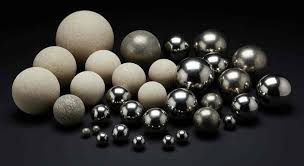
Grinding media is a consumable, but it directly affects the grinding circuit. A change in ball chemistry, hardness profile, diameter distribution, breakage resistance, or delivery consistency may alter mill performance over time.
For plant teams, the major concern is understandable: "Will a new grinding media supplier reduce throughput, increase wear, create contamination, or force an unplanned shutdown?"
The answer depends less on the supplier change itself and more on how the transition is managed. A successful switch begins with a documented baseline and ends with measurable operating results.
Key risks to control include:
- Media wear rate changing after the new balls enter the mill
- Incorrect ball size distribution reducing grinding efficiency
- Ball breakage creating oversize fragments or affecting discharge
- Unstable chemical composition affecting wear behavior
- Insufficient stock coverage during ocean freight or customs delays
- Comparing suppliers using purchase price rather than total grinding cost
- Changing media while other process variables also change
A lower unit price does not automatically mean a lower operating cost. The important question is: What is the effective grinding-media cost per tonne processed?
Before introducing new forged balls, cast balls, rods, or cylpebs, establish the current operating baseline. Without a baseline, it is difficult to prove whether the new media improves, matches, or weakens performance.
At SHANDONG ALLSTAR GRINDING BALL CO., LTD., we recommend collecting enough normal operating data to account for ordinary changes in ore hardness, feed rate, water addition, liner condition, and operating practice.
The most useful transition metrics are not limited to media consumption. They should connect grinding-media behavior to production and metallurgical performance.
| KPI | What It Shows | Why It Matters During a Supplier Change |
|---|---|---|
| Tonnes processed per hour | Mill throughput | Confirms whether productivity remains stable |
| Grinding-media consumption, g/t | Steel consumed per tonne processed | Measures true media efficiency |
| Grinding-media consumption, g/kWh | Steel consumed per unit of energy | Helps normalize wear against mill energy |
| Media addition rate, kg/h | Ongoing ball or rod consumption | Supports inventory and cost forecasting |
| Product particle size | Grinding product quality | Detects changes in grinding effectiveness |
| Mill power draw | Load and grinding dynamics | Indicates whether charge behavior has changed |
| Ball breakage rate | Media toughness and quality | Protects mill availability and downstream equipment |
| Cost per tonne processed | Total commercial impact | Prevents decisions based only on purchase price |
Industry grinding-media validation programs commonly use indicators such as grams of media per tonne processed, grams per kilowatt-hour, and kilograms added per operating hour. These measures create a more meaningful comparison than price per tonne alone.
A fair comparison requires operational discipline. If the plant changes ore blend, liner configuration, cyclone settings, mill speed, ball charge, and grinding-media supplier at the same time, the results will not be reliable.
Before the trial, document:
1. Ore type, feed F80, hardness indicators, and moisture where relevant
2. Mill type, dimensions, speed, power, and liner condition
3. Existing media composition, size range, and top-up practice
4. Target product size and classification settings
5. Historical throughput, energy use, and media consumption
6. Planned maintenance periods and operating constraints
This information allows the new supplier to recommend an equivalent starting specification rather than making an unsupported "better performance" promise.
The safest supplier change is not a transaction between procurement departments. It is a coordinated process involving purchasing, metallurgy, production, maintenance, warehouse teams, and the new grinding media manufacturer.
A capable supplier should be prepared to discuss more than price. They should understand the application, provide traceable specifications, support a phased trial, and define how results will be reviewed.
Use the following supplier-qualification checklist before placing a full-scale order:
- Can the supplier provide forged steel balls, cast grinding balls, rods, or cylpebs appropriate for the application?
- Are chemical composition, hardness, dimensions, and weight tolerances clearly documented?
- Is batch-level quality documentation available?
- Can the supplier support OEM specifications, branding, packaging, and export requirements?
- What inspection methods are used for hardness, microstructure, impact resistance, and dimensions?
- Can the supplier match the current size distribution for an initial transition?
- What is the standard production lead time and shipping plan?
- Does the supplier offer trial-lot quantities before a larger supply contract?
- Who will review performance data and respond if results differ from expectations?
- Can the supplier maintain stock or create a delivery schedule aligned with consumption?
High-quality media programs typically control quality from raw material through finished product and may include impact-resistance testing for mining applications. That level of traceability is especially important when a plant operates large SAG or ball mills under high-impact conditions. [magotteaux]
Not every grinding application needs the same media. A successful supplier transition begins by matching the product to the mill, material, and required final size.
Forged balls are commonly selected for high-impact applications, including many mining ball mills and SAG mill environments. They are valued for toughness, resistance to breakage, and consistent performance when properly manufactured and heat treated.
They may be suitable when the plant requires:
- High impact resistance
- Large ball diameters
- Reliable performance in coarse grinding
- Reduced risk of catastrophic ball breakage
- A controlled hardness profile from surface to core
Cast balls can be effective in applications where wear resistance and alloy design are central considerations. Their suitability depends on the ore abrasiveness, mill conditions, ball size, impact environment, and required service life.
They may be considered when the plant needs:
- Specific chrome-alloy options
- High wear resistance in suitable grinding conditions
- Defined performance for cement, power, or fine-grinding circuits
- A cost-performance balance based on verified test results
Grinding rods are commonly used in rod mills, while cylpebs are often applied where a different contact geometry is desired. The correct selection depends on feed characteristics, mill design, required fineness, and the plant's grinding objectives.
The key principle is not to select media based on a generic claim. Select it based on application data. Media hardness, density, shape, diameter, chemistry, and wear resistance all influence grinding performance.
The most effective answer to "How to switch grinding media suppliers without disrupting production" is simple: do not replace every tonne of existing media at once.
A phased transition protects the plant from avoidable risk and gives both the customer and supplier time to confirm performance under real operating conditions.
Before shipment, agree on a written specification covering:
- Product type and grade
- Diameter range and size distribution
- Chemical composition limits
- Surface and core hardness requirements
- Weight tolerance
- Breakage and impact-resistance requirements, where applicable
- Packaging format and labeling
- Batch identification and inspection documents
For OEM buyers, this is also the stage to confirm brand markings, private-label packaging, pallet requirements, export documentation, and shipment terms.
Start with a trial lot sized to create a measurable presence in the selected mill or mill section. Avoid adding the trial media randomly across several mills unless the site has a robust tracking plan.
The site should record:
- Trial media batch numbers
- Date and time of charging
- Quantity added
- Ball sizes added
- Mill operating hours
- Operating conditions at the time of addition
- Any abnormal noise, breakage, or discharge observations
A controlled test should have one clear owner. In most plants, this is a metallurgist, process engineer, or designated reliability engineer working with production.
Mixed media creates a transition period. Existing balls remain in the mill while the new supplier's product gradually becomes a larger portion of the charge.
This period should not be treated as the final performance result. A recognized validation approach separates the purge period from the effective test period, since mixed charges can distort wear and consumption comparisons.
Do not rush to judgment after a few days. The trial duration must be long enough to observe media wear, breakage behavior, grinding performance, and stability under normal production variations.
After the new media represents a meaningful proportion of the working charge, compare the result against the approved baseline.
Review:
- Throughput and mill availability
- Product size or grind target achievement
- Media consumption in g/t and g/kWh
- Media breakage and retained-ball inspections
- Power draw and operating stability
- Total landed cost
- Cost per tonne processed
- Delivery reliability and supplier responsiveness
A well-managed trial produces a decision based on evidence: maintain current specification, adjust the size mix, alter the alloy grade, extend the trial, or proceed to full conversion.
Recommended visual: Insert a four-stage process diagram: Baseline → Technical Approval → Controlled Trial → KPI Review and Full Conversion.
Production disruption is often caused by logistics rather than media performance. A new supplier may make a technically good product, but a delayed shipment can still create a grinding-media shortage.
For international procurement, establish a supply plan before the first commercial order.
Your buffer should cover normal consumption plus potential variability in transit time, customs clearance, weather, port congestion, and production demand. The exact number of weeks depends on location and risk tolerance, but the principle is constant: never begin a supplier change with minimal stock.
Use this simple planning approach:
The procurement team should also confirm the supplier's production capacity, export packaging, container loading plan, shipment schedule, and communication process for delays.
The following errors are avoidable and frequently undermine otherwise promising supplier changes.
A low purchase price can be offset by higher media consumption, lower throughput, excessive breakage, or additional downtime. Compare the complete cost per tonne processed.
Do not simultaneously change the ball supplier, ball size mix, mill speed, liner design, and classification target. Isolate the media variable whenever practical.
A ball is not just a ball. An unsuitable top size or poor size mix may change breakage efficiency and product size. Initial supply should normally match the proven operating distribution unless a controlled optimization plan is agreed.
Inspect every initial batch. Verify packaging, quantity, dimensions, visual condition, documentation, and agreed specifications. A sound quality program includes shipment inspection, hardness testing, weight checks, and supplier quality reports.
The best results come when the supplier receives relevant operating data and helps interpret the trial. Industry suppliers increasingly combine media supply with data collection, wear monitoring, and charging-practice support to improve consumption and throughput.
SHANDONG ALLSTAR GRINDING BALL CO., LTD. is positioned to support overseas brand owners, wholesalers, and manufacturers seeking OEM grinding media supply. Our product scope includes grinding balls, mill balls, forged steel balls, cast steel balls, grinding rods, and grinding cylpebs for mining, cement, and power-generation applications.
Our approach is centered on reducing the uncertainty of supplier conversion:
- Application-first review of mill type, material, current media, and target performance
- OEM flexibility for overseas brands, distributors, and industrial manufacturers
- Specification control for product type, size, packaging, and documentation
- Phased supply support that aligns trial volumes with production requirements
- Commercial transparency around lead time, shipment planning, and repeat-order scheduling
- Performance discussion focused on cost per tonne processed, not purchase price alone
No customer reviews were provided for this brief. To maintain credibility, this article does not invent testimonials, savings figures, or customer results. Before publication, add only verified customer feedback with the customer's written permission, operating context, and measurable outcomes.
Switching suppliers should improve supply security and commercial value without putting mill performance at risk. The strongest approach is to establish a baseline, approve a clear specification, conduct a controlled trial, track the correct KPIs, and scale only after the data supports conversion.
Contact SHANDONG ALLSTAR GRINDING BALL CO., LTD. to discuss your grinding-media requirements, OEM specifications, trial quantity, export packaging, and a phased supply plan for forged balls, cast balls, rods, or cylpebs.
Yes. In most cases, a supplier change can be managed through staged top-up additions and controlled trials rather than a complete mill discharge. The site should maintain adequate safety stock and closely monitor performance during the mixed-media period.
The trial should last long enough to move beyond the purge period and collect representative data under normal operating conditions. The required duration depends on mill size, media consumption, ore variability, and how quickly the new media becomes a meaningful part of the charge.
Cost per tonne processed is usually the most commercially useful KPI because it combines media consumption with production output. It should be reviewed alongside throughput, product size, power draw, and ball breakage.
The right choice depends on mill conditions, ore characteristics, impact level, abrasion, ball size, and target economics. Forged balls are often preferred for demanding high-impact applications, while cast options can be suitable where alloy wear resistance matches the operating environment.
At minimum, request product specifications, chemical composition information, hardness requirements, size and weight tolerances, batch identification, inspection records, packing details, and commercial shipping documents. The exact package should reflect the purchase agreement and application risk.
Use a written OEM specification that defines product performance requirements, packaging, labels, branding, inspection standards, confidentiality expectations, and approval procedures. Conduct a trial before committing to large-scale branded inventory.
- ME Elecmetal, [Grinding Media] — grinding-media performance and consumption context. [me-elecmetal]
- ME Elecmetal, [Secondary Grinding Products That Create Value] — baseline, purge periods, and g/t, g/kWh, and kg/h metrics. [me-elecmetal]
- Magotteaux, [Forged Grinding Media for Mining] — quality control, chemistry, impact resistance, and mining performance considerations. [magotteaux]
- Magotteaux, [Low-Chrome Forged Grinding Media] — batch-level quality-control practices and impact testing. [magotteaux]
- 911Metallurgist, [Grinding Ball Design] — shipment inspection, hardness testing, weight checks, and manufacturer quality reports. [911metallurgist]
- NETZSCH, [NETZSCH-Beads® Grinding Media] — media replacement and maintaining media within specification. [grinding.netzsch]
- Union Process, [Grinding Media] — application-based media selection. [unionprocess]
- STR Industries, [How to Choose the Right Grinding Media Properties] — hardness, density, wear resistance, size, shape, and maintenance considerations. [strindustries]
Hot Tags: China, Global, OEM, private label, manufacturers, factory, suppliers, manufacturing company


