
Views: 237 Author: shandong Allstar Grinding Ball Publish Time: 2026-08-13 Origin: Site


Content Menu
● Why Grinding Media Matter in Ball Milling
● Forged Steel Balls vs. Cast Grinding Balls
● Ball Milling in Mining, Cement, and Power Plants
>> Ball Milling for Mineral Processing
>> Ball Milling for Cement Production
>> Ball Milling for Power Generation
● How to Choose the Right Grinding Balls
● Expert Insight: Improve Ball Milling Before Buying More Media
● Why Work With SHANDONG ALLSTAR GRINDING BALL CO., LTD.
● FAQ
>> 1. What is ball milling used for?
>> 2. What is the difference between ball milling and grinding?
>> 3. Which grinding balls are best for a ball mill?
>> 4. Why are different ball sizes used in one mill?
>> 5. How does ball size affect ball milling efficiency?
>> 6. Can SHANDONG ALLSTAR GRINDING BALL CO., LTD. provide OEM grinding media?
>> 7. What information should I provide when requesting a grinding-ball quotation?
Ball milling is a mechanical size-reduction process in which a rotating mill uses grinding media—usually steel balls—to crush, impact, and abrade material into a finer, more uniform product. At SHANDONG ALLSTAR GRINDING BALL CO., LTD., we view ball milling not simply as a machine operation, but as a controlled system where media quality, ball size distribution, mill conditions, and ore characteristics must work together.
For mining, cement, and power-generation operations, ball milling can influence downstream recovery, product fineness, throughput, energy use, liner life, and total grinding cost. This guide explains what ball milling is, how the process works, how to select grinding media, and how global buyers can specify reliable OEM grinding balls, grinding rods, and grinding cylpebs for their own brands and projects.
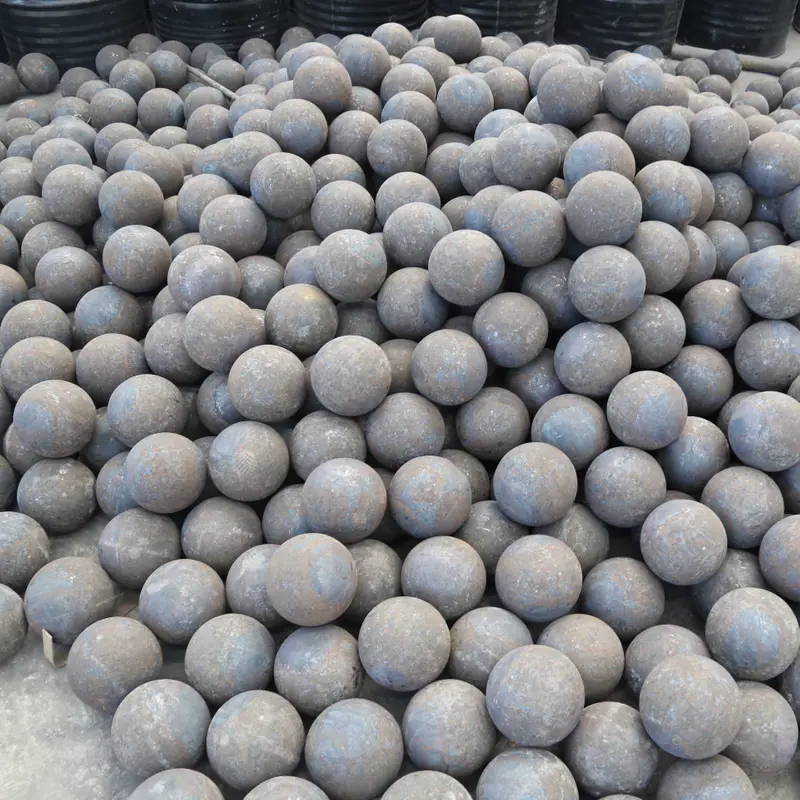
Ball milling is a grinding method that reduces solid materials into smaller particles by repeatedly subjecting them to impact, compression, abrasion, and attrition inside a rotating mill.
A typical ball mill contains:
- A horizontal or vertical rotating shell
- Material feed, such as crushed ore or cement clinker
- Grinding media, including forged steel balls or cast grinding balls
- Mill liners that protect the shell and help lift the charge
- A drive system that rotates the mill at a controlled speed
- A discharge system for the finished ground material
As the mill rotates, the grinding balls rise with the mill liners. Gravity eventually pulls them down. When the balls fall or cascade, they strike the material and each other. Larger particles break first, while smaller particles are progressively ground through repeated contact.
The process may operate as wet ball milling, where water forms a slurry with the feed material, or dry ball milling, where the material is ground without water. The right choice depends on the application, plant design, material behavior, and downstream separation or production process.
Ball milling is used in mineral processing, cement production, power plants, ceramics, chemicals, pigments, metal powder processing, and other industries that require controlled particle-size reduction. The core principle is simple. However, achieving stable performance requires informed engineering decisions.
A ball mill works by converting the rotational energy of its shell into motion of the grinding media. The grinding action is created by the movement of balls inside the mill chamber.
In practical industrial operation, the process usually follows these steps:
1. Feed enters the mill. Crushed ore, clinker, coal, slag, or other material enters through the feed end.
2. Grinding media lift and move. The rotating shell and liners lift steel balls upward along the mill wall.
3. Balls cascade or cataract. When gravity overcomes the lifting force, the balls fall, roll, and collide through the material charge.
4. Particles break and abrade. Large particles receive high-energy impact. Smaller particles are reduced primarily through abrasion and attrition.
5. Ground material exits. The final product leaves the mill through a grate, overflow, air separator, or other discharge arrangement.
The exact motion of the media matters. If the mill operates too slowly, the balls may simply roll with insufficient impact. If it operates too quickly, the balls may remain pinned to the shell by centrifugal force and produce inefficient grinding. Mill speed, liner profile, charge volume, ball size, and feed characteristics must therefore be evaluated as a connected system.
Grinding media are the working tools of the ball milling process. Their quality affects not only how quickly material is ground, but also how much energy is consumed, how often media must be added, and how reliably the mill operates.
At SHANDONG ALLSTAR GRINDING BALL CO., LTD., we manufacture grinding media for customers that need dependable performance in demanding mining, cement, and power-industry environments. Our product portfolio includes:
- Forged steel grinding balls
- Cast steel grinding balls
- High-chrome grinding balls
- Grinding rods
- Grinding cylpebs
- OEM grinding media for international brands, wholesalers, and manufacturers
A grinding ball must deliver more than high surface hardness. It must also maintain structural integrity during repeated impact. A ball that breaks, spalls excessively, or wears into an unsuitable shape can reduce grinding efficiency and occupy valuable mill volume.
The most effective media selection considers:
| Selection factor | Why it matters | Typical operational effect |
|---|---|---|
| Ball diameter | Determines available impact energy | Larger balls help break coarser feed |
| Ball size distribution | Balances coarse and fine grinding | Supports more consistent particle reduction |
| Hardness | Influences resistance to abrasive wear | Can extend media service life |
| Core toughness | Helps resist breakage under impact | Reduces broken-ball risk |
| Chemistry and heat treatment | Affect wear behavior and structure | Supports repeatable performance |
| Mill type | Changes the stress placed on media | Guides forged, cast, rod, or cylpeb selection |
| Feed size and ore hardness | Define required grinding force | Prevents under- or over-sizing media |
A larger ball is not automatically a better ball. Oversized media can reduce the number of grinding contacts available for fine particles. Undersized media may lack the impact force needed to break coarse feed. The best result usually comes from a carefully designed media grading plan, not from using one ball size alone.
Both forged and cast grinding balls can be appropriate for ball milling. The better choice depends on ore abrasiveness, mill diameter, impact intensity, target fineness, operating conditions, and the buyer's total-cost objective.
| Media type | Main strengths | Common applications | Purchasing consideration |
|---|---|---|---|
| Forged steel grinding balls | Strong impact resistance and good toughness | Large mining mills, SAG-ball mill circuits, high-impact applications | Often selected where breakage resistance is a priority |
| Cast grinding balls | Strong wear resistance in suitable chemistries | Fine grinding, abrasive applications, cement, selected mineral circuits | Chemistry and internal quality should be closely controlled |
| High-chrome grinding balls | Excellent abrasion resistance in certain conditions | Fine grinding and highly abrasive materials | Confirm compatibility with mill conditions and slurry chemistry |
| Grinding rods | Line-contact grinding action | Rod mills and selected coarse-grinding stages | Straightness and resistance to tangling are important |
| Grinding cylpebs | More surface area than balls of equal mass | Fine grinding, cement, and regrinding | Evaluate wear pattern and separator performance |
From an industry perspective, the decision should never be based only on unit price per tonne. Buyers should compare media through the lens of cost per tonne of material processed, wear rate, breakage behavior, energy demand, product fineness, and delivery reliability.
For OEM customers, SHANDONG ALLSTAR GRINDING BALL CO., LTD. can support product positioning under the customer's own brand. A strong OEM program should include agreed technical specifications, size range, hardness requirements, packaging requirements, inspection criteria, and traceability expectations before production begins.
Ball milling serves different goals across industries, but each application depends on stable and predictable grinding media performance.
In mining, ball milling commonly follows crushing and may operate after SAG milling or in a dedicated grinding circuit. The objective is usually mineral liberation: reducing ore particles enough to separate valuable minerals from gangue through flotation, leaching, magnetic separation, gravity separation, or another downstream process.
The plant may target a specific grind size because recovery can decline when liberation is inadequate. At the same time, overgrinding may create excessively fine particles, increase energy use, and complicate downstream processing.
For mining operations, the media strategy should account for:
- Ore competency and abrasiveness
- Feed-size variation
- Mill diameter and power
- Pulp density in wet grinding
- Required product particle size
- Circuit classification efficiency
- Media consumption and make-up schedule
Cement plants use ball mills to grind raw materials and to finish-grind clinker with gypsum and supplementary cementitious materials. The goal is not merely to make powder finer. The plant needs a controlled particle-size distribution that supports product quality, setting behavior, strength development, and efficient separator performance.
Grinding media in cement mills must withstand continuous abrasion while maintaining an effective charge profile. Media selection should be coordinated with mill compartments, diaphragm design, liner configuration, clinker hardness, moisture, and target Blaine fineness.
In power-generation applications, milling is often associated with fuel preparation, especially pulverizing solid fuels for combustion systems. Depending on the system, grinding balls, rods, or other media may be used to reduce material size and improve combustion consistency.
In these environments, reliable media supply matters because unplanned interruptions can affect plant availability. Buyers should prioritize documented specifications, consistent production controls, and packaging that protects the product during international transportation and storage.
Selecting grinding balls should begin with mill data rather than a generic product catalog. An experienced supplier asks the right questions before recommending a solution.
Use this practical selection workflow:
1. Define the material. Identify feed size, hardness, abrasiveness, moisture, density, and chemical environment.
2. Review the grinding circuit. Confirm mill type, mill dimensions, mill speed, liner design, discharge method, and whether grinding is wet or dry.
3. Set the production objective. Specify throughput, target particle size, recovery target, cement fineness, or other production requirement.
4. Choose media composition. Compare forged, cast, high-chrome, rods, or cylpebs based on impact and abrasion conditions.
5. Build a size distribution. Combine larger, medium, and smaller media sizes to match coarse breakage and fine grinding needs.
6. Verify quality controls. Request material chemistry, hardness range, dimensional tolerance, breakage control procedures, and inspection documentation.
7. Run a controlled trial. Monitor wear rate, media consumption, product size, throughput, power draw, and mill performance before scaling the decision.
This approach is more reliable than choosing media solely by diameter or hardness. Ball milling is a dynamic process. A media solution that works well for one ore body or cement formulation may not perform the same way after feed conditions change.
Many plants react to poor grinding results by adding more balls or switching immediately to a larger diameter. This can be the wrong first move.
Before changing media consumption, investigate the full operating picture:
- Is the feed becoming coarser or harder?
- Has the liner profile changed with wear?
- Is the mill operating at the intended speed?
- Is the ball charge level within the expected range?
- Has the size distribution become unbalanced?
- Is classification returning too much coarse material?
- Are broken or misshapen balls affecting charge motion?
- Is the plant measuring media wear consistently?
Industry guidance highlights that overly large media can create inefficient grinding and higher wear, while poor-quality balls can deform, split, or consume mill power without producing effective size reduction. The relationship between media size, liner condition, and mill speed is therefore central to energy-efficient operation.
A disciplined monitoring program can provide better decisions. Record media additions by size, measure worn-ball samples, review product-size data, and compare wear against tonnes processed. This creates a performance baseline that procurement and plant teams can use together.
SHANDONG ALLSTAR GRINDING BALL CO., LTD. supports international buyers seeking a reliable manufacturing partner for grinding media. We serve mining, cement, and power-industry customers with grinding balls, grinding mill balls, forged steel balls, cast steel balls, grinding rods, and grinding cylpebs.
Our OEM service is designed for overseas brands, wholesalers, and manufacturers that need a capable production partner while maintaining their own market identity.
A productive supplier relationship should be based on transparent technical communication. Before confirming an order, buyers should align on:
- Product type and intended application
- Diameter range and size grading
- Material grade and hardness expectation
- Quantity and packaging format
- Quality inspection requirements
- Brand labeling or OEM packaging
- Shipping schedule and destination requirements
- Trial order or long-term supply plan
We recommend that serious buyers evaluate grinding media through plant data, sample inspection, and structured trial results. This is the most credible way to determine whether a media program supports lower wear, stable particle size, and dependable supply.
Need OEM grinding balls or a custom grinding-media specification? Contact SHANDONG ALLSTAR GRINDING BALL CO., LTD. with your mill type, feed material, required ball sizes, and target application to discuss a suitable forged, cast, rod, or cylpeb solution.
Ball milling is used to reduce material size, create fine powders, improve particle uniformity, liberate minerals, grind cement clinker, process ceramics, and prepare materials for later separation or manufacturing stages.
Grinding is a broad term for reducing material size. Ball milling is a specific grinding method that uses a rotating mill and spherical grinding media to create impact and attrition.
There is no single best ball for every mill. Forged steel balls are often selected for high-impact applications, while cast or high-chrome balls may be suitable where abrasion resistance is critical. The correct choice depends on feed material, mill conditions, and performance targets.
A mixed ball-size charge supports different grinding tasks. Larger balls provide stronger impact for coarse particles, while smaller balls create more contact points for fine grinding.
Ball size influences impact energy, contact frequency, and wear behavior. Oversized balls may be inefficient for fine grinding, while undersized balls may not break coarse feed effectively. A graded media charge normally produces better overall results.
Yes. SHANDONG ALLSTAR GRINDING BALL CO., LTD. provides OEM support for overseas brands, wholesalers, and manufacturers. OEM requirements should be agreed in advance, including specifications, branding, packaging, inspection standards, and shipment arrangements.
Provide the application, mill type, ball diameter range, annual or monthly consumption, material being ground, desired media type, destination port, packaging requirements, and any required hardness or quality standards.
- [ScienceDirect Topics: Ball Milling] — Background on high-energy ball milling, particle-size reduction, and collision-based grinding. [sciencedirect]
- [Metso: Questions and Answers on Grinding Technology] — Industry discussion of media size, media quality, liner angles, mill speed, and grinding efficiency. [metso]
- [Metso: Grinding Mills for Mining and Minerals Processing] — Overview of ball, pebble, SAG, AG, and stirred mill applications. [metso]
- [MDPI Minerals: A Review of the Grinding Media in Ball Mills for Mineral Processing] — Review of grinding-media materials, wear behavior, and mineral-processing applications. [mdpi]
- [MDPI Minerals: Effect of Grinding Media Size on Ferronickel Slag Ball Milling Efficiency] — Research on the relationship between media size, milling performance, and energy use. [mdpi]
- [MDPI Minerals: Enhancing Grinding Efficiency of a Magnetite Second Grinding Circuit] — Research examining binary media and grinding efficiency in a magnetite circuit. [mdpi]
- [911Metallurgist: Grinding Balls and Rods] — Technical background on steel ball and rod dimensions used in milling operations. [911metallurgist]
Hot Tags: China, Global, OEM, private label, manufacturers, factory, suppliers, manufacturing company


