
Views: 237 Author: shandong Allstar Grinding Ball Publish Time: 2026-08-11 Origin: Site


Content Menu
● Why Mining Ball Quality Matters in Mineral Processing
● SHANDONG ALLSTAR: A Mining Ball Manufacturer Built for Global Supply
>> Our Main Grinding Media Products
● Forged Mining Ball vs. Cast Mining Ball: Which Is Better?
>> Selection Factors for Forged and Cast Mining Balls
● How to Choose the Right Mining Ball for Your Mill
>> Step 1: Define Your Grinding Objective
>> Step 2: Match Ball Size to Mill Conditions
>> Step 3: Evaluate Hardness, Toughness, and Wear Together
>> Step 4: Run a Controlled Mill Trial
● Expert Insight: Measure Cost per Tonne, Not Cost per Ball
● OEM Mining Ball Service for Brands, Wholesalers, and Manufacturers
● Mining Ball Trends Shaping Procurement Decisions
>> More Demand for Critical-Mineral Processing
>> More Data-Driven Mill Optimization
>> Greater Emphasis on Supply Reliability
● Why Choose SHANDONG ALLSTAR for Mining Balls?
● Request Your Mining Ball Solution Today
>> What is the difference between forged and cast mining balls?
>> How do I select the right mining ball size?
>> Why is grinding-media consumption important?
>> Can SHANDONG ALLSTAR provide OEM mining balls?
>> Are mining balls used outside the mining industry?
At SHANDONG ALLSTAR GRINDING BALL CO., LTD., we understand that a mining ball is not simply a consumable. It is a working component that directly affects grinding efficiency, mill availability, product size, metal recovery, and total processing cost. For mining operators, OEM brands, wholesalers, and industrial manufacturers, the right mining ball can help stabilize production while reducing unnecessary media consumption.
As a global manufacturer of forged steel grinding balls, cast grinding balls, grinding rods, and grinding cylpebs, SHANDONG ALLSTAR provides OEM-focused grinding media solutions for mining, cement, and power-generation applications. We work from a practical principle: the lowest purchase price is not always the lowest grinding cost. The right solution must match the ore, mill type, target particle size, operating conditions, and performance priorities of the customer.
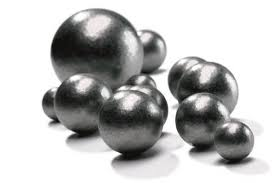
Mining comminution is one of the most demanding stages in mineral processing. Before valuable minerals can be recovered, ore must be reduced to the required particle size. Grinding media performs this work through repeated impact, abrasion, and crushing inside mills.
A high-quality mining ball helps operators achieve more consistent grinding. A poorly selected ball may crack, deform, lose roundness too quickly, or wear at an unstable rate. These issues can disrupt mill performance and increase media replacement frequency.
In our experience, customers should evaluate mining balls based on total operating value, not only initial unit cost. A grinding ball that lasts longer, breaks less often, and supports stable throughput may provide a better result over the full mill campaign.
Key effects of mining ball performance include:
- Grinding efficiency and ore size reduction.
- Mill throughput and operational stability.
- Media consumption per tonne of ore processed.
- Downtime caused by unplanned maintenance.
- Product-size consistency before flotation, leaching, or separation.
- Total cost per tonne of concentrate or finished product.
Mining operators are also facing stronger pressure to improve resource efficiency, process more critical minerals, and use better production data. This makes reliable grinding media selection increasingly important for modern concentrators.
SHANDONG ALLSTAR GRINDING BALL CO., LTD. manufactures grinding media for industrial customers that require dependable quality, flexible specifications, and responsive OEM support. Our product portfolio supports a broad range of milling environments, from high-impact mining circuits to abrasion-driven cement and power applications.
We place our customers first by focusing on the practical variables that affect media performance. Instead of treating every application as identical, we help buyers consider material properties, mill conditions, and operating goals before selecting a product.
| Product | Typical Use | Core Benefit |
|---|---|---|
| Forged steel grinding balls | Ball mills, SAG mills, mining and cement circuits | Strong impact resistance and mechanical toughness |
| Cast grinding balls | Abrasion-focused milling applications | Cost-effective wear performance in suitable conditions |
| Grinding rods | Rod mills and coarse grinding stages | Controlled line-contact grinding action |
| Grinding cylpebs | Fine grinding and regrinding applications | High contact area for selected milling duties |
| OEM grinding media | Brand owners, distributors, industrial suppliers | Customized specifications, packaging, and supply support |
Our role is not limited to manufacturing. For international brands, wholesalers, and industrial producers, OEM service can include product specification alignment, size-range planning, packaging requirements, branding support, and communication designed for cross-border purchasing.
There is no universal answer. The right mining ball depends on how the mill operates and what the ore demands.
Forged grinding balls are commonly selected for high-impact environments because the forging process can improve the steel's internal structure and mechanical toughness. In demanding ball-mill and SAG-mill applications, this can help reduce the risk of breakage under repeated impact.
Cast grinding balls can be a practical option where abrasion resistance is the primary requirement and impact forces are lower or more predictable. High-chromium cast media may be considered for certain fine-grinding or abrasive duties, depending on the operating environment.
| Decision Factor | Forged Steel Mining Ball | Cast Steel Mining Ball |
|---|---|---|
| High-impact resistance | Usually preferred | Must be assessed carefully |
| Toughness | Typically strong | Depends on alloy and casting quality |
| Abrasion resistance | Strong with suitable alloy design | Can be highly competitive in abrasive conditions |
| Breakage risk | Often lower in impact-heavy applications | Can vary by material and operating conditions |
| Best-fit application | SAG mills, ball mills, hard ore grinding | Selected abrasion-focused milling circuits |
| Evaluation method | Mill trials and consumption tracking | Mill trials and consumption tracking |
The most effective approach is to avoid assumptions. A mining ball should be selected through a technical review of ore hardness, feed size, mill diameter, rotation speed, ball charge, slurry chemistry, and target grind.
Many procurement decisions focus too heavily on diameter and price. Those items matter, but they do not tell the full performance story. A proper grinding media decision should connect product specifications to actual mill conditions.
Start by identifying what the circuit must achieve. Is the purpose primary grinding, secondary grinding, regrinding, cement clinker grinding, coal pulverization, or another industrial process?
A mining ball used for coarse crushing in a large mill may require a different size and toughness profile than media used for fine mineral liberation.
Ask these questions:
1. What mineral or material is being processed?
2. What is the ore hardness and abrasiveness?
3. What feed size enters the mill?
4. What product size is required?
5. Is the mill a SAG mill, ball mill, rod mill, or vertical grinding system?
6. Is impact, abrasion, corrosion, or a combination the major wear mechanism?
Larger balls generally deliver greater impact energy. They are often used when feed is coarser or when the mill needs stronger breakage force. Smaller balls provide more contact points and may support fine grinding where particle-size reduction is already advanced.
However, choosing the largest available mining ball is not automatically beneficial. Oversized media can reduce the number of grinding contacts. Undersized media may lack enough impact force for coarse ore. The optimal charge normally uses a controlled mix of sizes.
Hardness contributes to wear resistance, but hardness alone should never be the only selection criterion. Extremely hard media without sufficient toughness may be more vulnerable to cracking in severe impact conditions.
A good grinding media evaluation balances:
- Surface hardness for wear resistance.
- Core toughness for impact performance.
- Consistent heat treatment.
- Stable chemical composition.
- Dimensional consistency.
- Low breakage risk.
- Predictable wear behavior.
At SHANDONG ALLSTAR, we recommend that buyers ask suppliers how they control these factors across production batches. A reliable mining ball supplier should be prepared to discuss material selection, production process, inspection points, and performance-testing methods in clear commercial language.
The best evidence comes from your own circuit. Before shifting a full annual supply program, conduct a structured trial with clear measurement rules.
Track the following:
- Tonnes of ore processed.
- Grinding media added during the trial.
- Media consumption per tonne.
- Mill throughput.
- Product particle-size distribution.
- Ball breakage or abnormal wear observations.
- Downtime associated with media-related issues.
- Cost per tonne processed.
This approach transforms supplier comparison from a price discussion into a performance decision.
A mining ball is purchased by weight or unit price, but it should be evaluated by its contribution to production. The meaningful commercial metric is often the total grinding-media cost per tonne processed.
For example, Supplier A may offer a lower price per tonne of balls. Yet if its media wears faster, causes more breakage, or reduces throughput, the apparent saving can disappear. Supplier B may have a higher initial price but lower consumption and better mill stability. In that scenario, Supplier B could create the lower total operating cost.
A simple calculation can help procurement and plant teams compare options:
Media Cost per Tonne Processed=Ore Tonnes Processed During TrialGrinding Media Cost During Trial
This calculation should be reviewed alongside throughput, product size, and recovery performance. Grinding media should support the entire mineral-processing objective, not only the mill's immediate wear target.
International buyers often need more than a standard product catalogue. They need a supplier able to support their commercial model. SHANDONG ALLSTAR serves customers who require OEM mining ball solutions for resale, distribution, equipment integration, and industrial production.
Our OEM cooperation can be structured around your requirements for:
- Mining ball diameter and specification range.
- Forged, cast, rod, or cylpeb product selection.
- Private-label or brand-oriented packaging.
- Bulk shipment and export packaging options.
- Product documentation requirements.
- Supply planning for recurring orders.
- Technical communication for end-user applications.
- Product positioning for mining, cement, and power markets.
For wholesalers, consistency matters because your customers expect the same specification and performance from one shipment to the next. For brands, presentation and documentation matter because your reputation is linked to every delivered product. For manufacturers, dependable media supply supports stable production planning.
We treat OEM supply as a partnership. The goal is not merely to ship mining balls. The goal is to help your business deliver a dependable grinding media solution to its own customers.
Mining is moving toward higher efficiency, better data use, automation, and stronger focus on critical minerals. These trends increase the value of consumables that can be measured, controlled, and optimized.
Three developments are particularly relevant to grinding-media buyers:
Copper, lithium, nickel, rare earth elements, and other critical minerals are central to electrification and energy-transition supply chains. As more projects focus on these ores, concentrators will continue to need reliable comminution performance.
Plant teams increasingly use operating data to improve throughput, energy use, liner performance, and grinding media consumption. A supplier that supports structured trial data can become more valuable than one that competes only on quotation price.
Grinding media shortages can create serious operational risk. Buyers should assess manufacturing capability, export experience, communication speed, packaging reliability, and production planning—not only a supplier's product specification sheet.
SHANDONG ALLSTAR is positioned to support global industrial customers looking for a professional mining ball manufacturer and OEM partner. Our product range allows customers to source multiple categories of grinding media from one supplier relationship.
Choose SHANDONG ALLSTAR when you need:
- A focused supplier of mining grinding media.
- Forged steel balls, cast steel balls, rods, and cylpebs.
- OEM support for global brands and wholesalers.
- Product selection for mining, cement, and power industries.
- A practical approach to trial evaluation and consumption control.
- Clear communication for international sourcing projects.
- A long-term partner focused on quality consistency and commercial reliability.
If you are sourcing mining balls for a new mill, replacing an existing supplier, building an OEM product line, or improving grinding-media consumption, SHANDONG ALLSTAR is ready to support your project.
Send us your mill type, material being processed, required ball sizes, monthly demand, and destination market. Our team can help you identify a suitable forged ball, cast ball, grinding rod, or cylpeb solution for your application.
Contact SHANDONG ALLSTAR today to discuss your mining ball specification and OEM supply requirements.
A mining ball is a grinding-media ball used in mills to crush and grind ore into smaller particles. It is commonly used in ball mills and SAG mills during mineral processing.
Forged mining balls are produced through a forming process that generally supports high toughness and impact resistance. Cast mining balls are formed in molds and may offer strong abrasion performance in suitable low-to-moderate impact applications.
Selection depends on ore feed size, mill type, mill diameter, target grind size, and required impact energy. A controlled mix of sizes is often more effective than using one ball size only.
Grinding-media consumption affects operating cost. Measuring kilograms of media consumed per tonne of ore processed helps operators compare suppliers and identify the best total-cost option.
Yes. SHANDONG ALLSTAR provides OEM support for overseas brands, wholesalers, and manufacturers. This can include customized specifications, packaging, product selection, and export-oriented supply planning.
Yes. Grinding balls and related media are also used in cement plants, power stations, chemical processing, and other industrial milling applications.
- [PwC — Mine 2025: Concentrating on the Future] [pwc]
- [Seequent — Three Mining Industry Trends to Watch for in 2025] [seequent]
- [Camasteel — Forged Steel Grinding Balls Product] [camasteel]
- [Energosteel — Forged Steel Grinding Balls] [energosteel]
- [Stanford Advanced Materials — Cast Grinding Balls vs. Forged Grinding Balls] [samaterials]
- [Magotteaux — Grinding Media] [magotteaux]
Hot Tags: China, Global, OEM, private label, manufacturers, factory, suppliers, manufacturing company


