English


Views: 238 Author: shandong Allstar Grinding Ball Publish Time: 2026-08-12 Origin: Site


Content Menu
● Why Cement Ball Mill Media Loading Matters
>> The Core Principle: Match Energy to Particle Size
● Best Practices for Media Loading in Cement Plant Ball Mills
>> Start With a Reliable Mill Audit
>> Select Ball Sizes From Feed and Product Requirements
>> Set Filling Levels Carefully—Then Validate Them in Operation
● A Step-by-Step Cement Mill Media Loading Procedure
>> 1. Define the Operating Target
>> 2. Measure the Existing Charge
>> 3. Build a Target Size Distribution
>> 4. Install Media Safely and Traceably
>> 5. Monitor KPIs for at Least One Full Production Cycle
● Media Quality: The Often-Missed Loading Variable
● New Value: Build a Digital Ball-Charge Control Plan
● Improve Cement Grinding Performance With the Right Media Partner
● FAQ: Cement Ball Mill Media Loading
>> 1. What is the most important factor in cement ball mill media loading?
>> 2. Should a cement plant use one ball size or multiple ball sizes?
>> 3. How often should grinding media be added to a cement mill?
>> 4. Can poor grinding media quality affect cement mill output?
>> 5. Why does mill power increase after adding grinding balls?
>> 6. Are forged steel balls better than cast grinding balls for cement mills?
>> 7. What data should be sent to a grinding media supplier for a recommendation?
For cement producers, Best Practices for Media Loading in Cement Plant Ball Mills are not simply about putting more steel into a mill. Correct grinding media loading determines impact energy, grinding efficiency, product fineness, power draw, liner life, and total cost per tonne of cement. An overloaded or poorly graded cement ball mill can consume excessive energy while still producing unstable residue and low output.
At SHANDONG ALLSTAR GRINDING BALL CO., LTD., we support global cement producers, brands, wholesalers, and OEM partners with forged steel balls, cast grinding balls, grinding rods, and grinding cylpebs. From our manufacturing perspective, the most reliable media-loading strategy is one that connects ball size distribution, chamber function, material conditions, wear behaviour, and routine measurement—not a one-time ball-charge calculation.
This guide explains how cement plants can develop a controlled, data-led grinding media loading program for ball mills. It is designed for production managers, process engineers, maintenance teams, and procurement professionals seeking stable cement quality and a lower grinding cost.
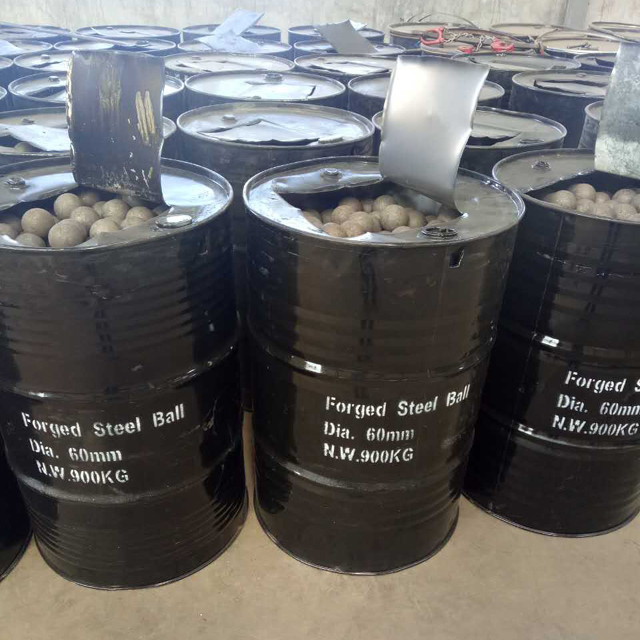
Cement finish grinding is one of the most electricity-intensive processes in a cement plant. Grinding media are the working tools that transfer mechanical energy from the rotating mill to clinker, gypsum, limestone, slag, pozzolana, and other cementitious materials. The charge must generate enough impact to break coarse particles while providing sufficient surface contact for fine grinding.
A well-designed ball charge helps the mill achieve:
- Higher throughput at the target Blaine value or residue.
- More stable cement fineness and particle-size distribution.
- Lower specific power consumption in kWh per tonne.
- Reduced grinding media consumption and fewer emergency top-ups.
- Longer liner, diaphragm, and separator operating life.
- More predictable cement quality across changing clinker and additive conditions.
However, "more media" does not automatically mean "more output." Excessive media loading can reduce free space, restrict material flow, raise internal circulation, and increase power draw without improving breakage. Too little media can cause low impact intensity, poor coarse-particle reduction, and inefficient grinding.
The right question is not, "How many tonnes of balls should we add?" It is: "What media charge will produce the required breakage profile for this specific mill, feed, and product target?"
Large grinding balls deliver higher impact energy. They are most effective when the feed contains coarse clinker particles or hard, high-strength material. Smaller balls create more contact points and a larger total grinding surface. They are more effective in the fine-grinding stage.
This is why most two-compartment cement ball mills use a graded charge:
| Mill Zone | Main Grinding Objective | Typical Media Direction | Process Risk if Incorrect |
|---|---|---|---|
| First chamber | Break coarse clinker and feed particles | Larger forged or high-impact balls | Coarse residue remains high |
| Intermediate diaphragm | Control material transfer | Proper slot condition and media retention | Material bottleneck or media migration |
| Second chamber | Produce fine cement at target Blaine/residue | Smaller balls or cylpebs, depending on design | High power use and poor fineness control |
| Separator circuit | Classify finished product and reject coarse particles | Media must match separator performance | Recirculation overload and unstable output |
A multi-size media charge generally offers better coverage than a single-size charge because the charge can act on a wider range of particle sizes. Still, the exact grading must be based on mill dimensions, compartment length, feed-size distribution, clinker hardness, separator performance, liner profile, and cement specification.
Do not begin by ordering new grinding balls. Begin with a baseline audit. A ball charge cannot be optimized if the team does not know the current operating condition of the mill.
A practical cement mill audit should record:
1. Mill dimensions, chamber lengths, and effective grinding volume.
2. Liner type, liner wear, lifting profile, and missing or damaged parts.
3. Ball filling level in each chamber.
4. Material level and material flow through the mill.
5. Current media size distribution by chamber.
6. Feed size, feed moisture, clinker temperature, and additive proportion.
7. Separator reject rate, circulating load, and product fineness.
8. Mill power, mill ventilation, outlet temperature, and production rate.
9. Grinding media consumption expressed in grams per tonne or kilograms per tonne.
10. Diaphragm condition, slot opening, and evidence of media migration.
A crash-stop inspection is especially useful. It allows the process team to observe the real position of media and material inside the mill. When safe site procedures permit, this inspection can reveal chamber imbalance, material accumulation, excessive fine media, damaged liners, or worn diaphragm components that routine operating data may not show.
Expert perspective: A poor mill result is often blamed on the steel balls, even when the root cause is a worn liner profile, separator inefficiency, high feed moisture, blocked diaphragm slots, or inconsistent clinker size. Grinding media must be evaluated as part of the whole circuit.
The first chamber must deliver adequate breakage force. When clinker feed is coarse or hard, the charge needs enough large-diameter balls to create high-energy impacts. If the feed is already fine because of efficient pre-crushing or roller-press operation, excessively large balls can waste energy and reduce the number of effective impacts.
The second chamber has a different job. It should complete fine grinding efficiently. This normally calls for a tighter distribution of smaller media, provided that the mill has enough transport capacity and does not accumulate excessive fines.
A practical selection framework is:
- Use larger balls when feed particles are coarse, clinker is hard, or first-chamber residue is high.
- Use medium balls to bridge the transition between impact breakage and attrition grinding.
- Use smaller balls where fine grinding, surface-area development, and cement fineness control are critical.
- Use cylpebs or specialized media shapes only after evaluating mill design, separator performance, wear behaviour, and the required cement particle-size distribution.
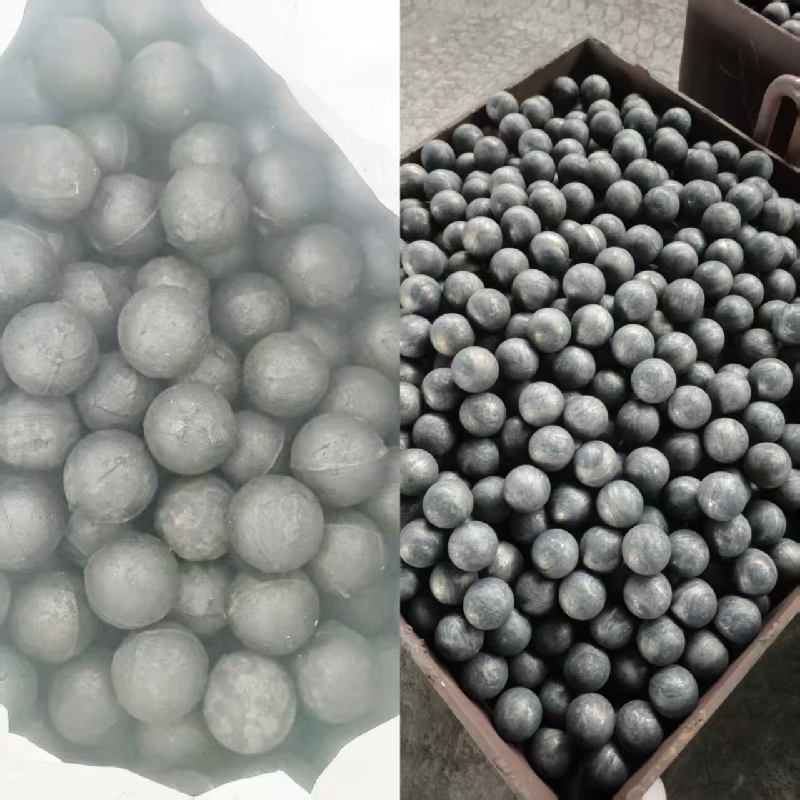
- Use forged grinding balls where high impact toughness, consistent hardness, and resistance to breakage are required.
- Evaluate cast grinding balls where their chemistry, heat treatment, wear profile, and total cost of ownership match the operating conditions.
At SHANDONG ALLSTAR, we recommend treating grinding media selection as an engineering decision rather than a catalogue decision. A nominal diameter alone is not enough. Diameter tolerance, hardness distribution, core integrity, breakage resistance, metallographic structure, and wear rate all influence the working charge over time.
Media filling is the portion of the mill volume occupied by grinding media. There is no universal filling level that works for every cement ball mill. The correct level depends on mill diameter, speed, liner design, compartment geometry, feed characteristics, and circuit configuration.
As a starting point, many dry ball-mill operations use a substantial media charge, but the final target must be validated through plant data. The objective is to create a productive cascading and cataracting motion while preserving enough free volume for material transport and effective particle breakage.
Watch for these loading symptoms:
| Symptom | Likely Media-Loading Cause | Recommended Check |
|---|---|---|
| High power with no throughput gain | Overfilling or excess fines in the charge | Measure filling level and ball-size distribution |
| High coarse residue | Insufficient large media or low first-chamber impact | Review feed size, large-ball fraction, and liner lift |
| Unstable Blaine value | Inconsistent second-chamber charge or separator changes | Check small-media proportion and separator efficiency |
| Excessive ball-to-ball noise | Low material cushioning or underloading | Check material level and feed continuity |
| Rapid media wear | Wrong alloy, abrasive feed, poor charge balance, or impact conditions | Compare wear rate by size and chamber |
| Media migration between chambers | Diaphragm wear or unsuitable slot condition | Inspect diaphragm and retainers |
Avoid making major changes all at once. Additions should be staged, measured, and reviewed over a defined operating period. This makes it possible to identify whether performance changes came from media loading rather than from feed chemistry, separator adjustment, or maintenance work.
The following method helps cement plants move from reactive ball addition to controlled charge management.
Set a clear baseline and target for:
- Cement type and strength class.
- Required Blaine value and sieve residue.
- Tonnes per hour.
- Specific power consumption.
- Separator reject rate.
- Grinding media consumption.
- Allowable product-quality variation.
Do not optimize only for maximum tonnes per hour. A higher output that causes a higher reject rate, poor cement strength, or unstable fineness is not a true improvement.
During a scheduled shutdown, identify the existing media sizes and estimate the mass share of each size class. Separate the data by chamber. Record the quantity of undersized balls that no longer contribute enough impact energy.
A common weakness in cement mills is charge drift. Over months of operation, balls wear smaller and the original grading disappears. The mill may gradually lose first-chamber impact capacity, even if the total media tonnage still appears acceptable.
Create a proposed grading based on actual feed and product data. The first chamber normally needs a broader and coarser distribution. The second chamber normally requires a finer distribution that supports attrition and surface-area development.
For example, a plant may use a sequence of large, medium, and smaller diameters in the first chamber, then shift to smaller sizes in the second chamber. The actual percentages must be calculated for the individual mill—not copied from another plant.
Do not copy a competitor's ball-charge table. Two mills with the same diameter can still require different charges because of different liner profiles, separator settings, feed-size distributions, and cement formulations.
New media should be weighed by diameter class before loading. Record supplier batch number, chemistry or grade, diameter, quantity, loading date, and target chamber. This creates traceability for later wear analysis.
For continuous operations, automated or semi-automated media charging can improve consistency and reduce manual handling. The loading system should be inspected for safe access, secure storage, free flow, and blockage prevention.
After media changes, compare performance under similar production conditions. Track:
- Mill motor power and kWh/t.
- Feed rate and cement output.
- Blaine value and residue.
- Separator reject rate.
- Mill outlet temperature and ventilation.
- Grinding media top-up quantity.
- Liner wear and diaphragm condition.
- Cement strength and quality results where available.
A single shift is rarely enough to confirm improvement. Review data over sufficient operating time to account for feed variation and process instability.
Grinding media loading is not only a question of quantity and diameter. The quality consistency of the balls determines whether the theoretical charge design remains valid in real operation.
Low-quality balls can crack, break, spall, deform, or wear too quickly. When this occurs, the mill develops excess small media. The total tonneage may seem correct, but the charge no longer has the required impact energy. In addition, broken pieces can interfere with material flow, diaphragm performance, and downstream separation.
For cement applications, evaluate a grinding media supplier on:
- Chemical composition and heat-treatment control.
- Surface and core hardness consistency.
- Impact toughness and breakage resistance.
- Dimensional accuracy and roundness.
- Wear-rate testing and quality documentation.
- Batch traceability.
- Packaging, delivery reliability, and OEM service capability.
- Ability to provide a customized size mix rather than only standard diameters.
SHANDONG ALLSTAR GRINDING BALL CO., LTD. supplies forged steel balls, cast steel balls, grinding rods, and grinding cylpebs for mining, cement, and power-generation applications. For overseas brands, wholesalers, and manufacturers, our OEM service can support customized specifications, packaging, documentation, and media-size programs aligned with specific market requirements.
The most advanced cement plants do not wait for throughput to decline before reviewing media loading. They build a simple digital control plan that links media additions to production and wear data.
Create a monthly dashboard with these five indicators:
| KPI | Why It Matters | Action Trigger |
|---|---|---|
| Media consumption per tonne | Shows actual wear cost | Investigate sudden increases by chamber or ball size |
| Power per tonne | Shows grinding efficiency | Compare against fineness and feed conditions |
| Coarse residue | Shows first-stage breakage performance | Review large-ball fraction and feed size |
| Separator reject rate | Shows circuit classification stability | Check separator before changing media |
| Ball-size distribution | Shows charge drift | Plan top-up based on missing size classes |
This approach changes media management from a purchasing activity into a process-control system. It also supports better communication between production, maintenance, laboratory, and procurement teams.
Before increasing the media charge, verify three conditions:
1. The separator is operating efficiently.
2. The liner and diaphragm condition supports correct media motion and material transfer.
3. The feed size and moisture are within the mill's normal operating range.
If these conditions are not stable, adding balls may hide the real problem and increase operating cost.
The best practices for media loading in cement plant ball mills combine accurate measurement, staged adjustment, correct ball-size grading, reliable steel quality, and ongoing KPI monitoring. The ideal charge is not fixed forever. It must evolve as media wear, clinker properties, cement additives, liner conditions, and production targets change.
SHANDONG ALLSTAR GRINDING BALL CO., LTD. helps cement producers and OEM partners develop dependable grinding-media solutions for demanding industrial applications. Whether you need forged grinding balls for high-impact first-chamber duty, cast balls for selected operating conditions, grinding cylpebs for fine grinding, or customized OEM supply, our team can help you build a more stable and cost-effective media program.
Contact SHANDONG ALLSTAR GRINDING BALL CO., LTD. today to discuss your cement mill dimensions, feed characteristics, target fineness, current media consumption, and required grinding media specification. A data-based media proposal is the first step toward lower wear, stable quality, and higher grinding efficiency.
The most important factor is matching the media size distribution to the feed size, mill compartment function, and required cement fineness. Total ball tonnage alone does not determine grinding efficiency.
Most cement ball mills perform better with a graded mix of ball sizes. Larger balls provide impact for coarse feed, while smaller balls provide more contact points for fine grinding. The right mix must be confirmed through plant trials and operating data.
Media additions should be based on measured wear, production tonnage, and the changing ball-size distribution—not only on a fixed calendar interval. Regular top-ups help prevent charge drift and loss of grinding performance.
Yes. Inconsistent hardness, breakage, spalling, or excessive wear can rapidly alter the ball charge. This reduces impact energy, raises media consumption, and may lead to unstable fineness, lower throughput, and higher power use.
Power can increase because the mill charge is heavier. If throughput and fineness do not improve at the same time, the mill may be overfilled, poorly graded, or experiencing a separate issue such as poor material flow, separator inefficiency, or worn liners.
Neither option is universally better. Forged balls are commonly selected for high-impact duty and breakage resistance. Cast balls may be suitable when their material grade, hardness, cost, and wear performance align with the mill's operating conditions. The decision should be based on total cost per tonne, not purchase price alone.
Provide mill diameter and length, chamber configuration, liner type, feed-size distribution, clinker hardness, cement type, target fineness, production rate, current media sizes, media consumption, mill power, and separator performance data. This allows the supplier to develop a more relevant recommendation.
1. [Matsanga, N. et al. — *A Review of the Grinding Media in Ball Mills for Mineral Processing* (Minerals, 2023)] [mdpi]
2. [CEEC International — *Ball Mill Media Optimization Through Functional Performance Modeling*] [ceecthefuture]
3. [World Bank Group — *Improving Thermal and Electric Energy Efficiency at Cement Plants*] [documents1.worldbank]
4. [Chelgani, S. C. et al. — *Modeling Energy Consumption Indexes of an Industrial Cement Vertical Roller Mill System* (Scientific Reports, 2025)] [pmc.ncbi.nlm.nih]
5. [FLS — *Mill Ball Charger / PERI™ AutoCharge System*] [video.flsmidth]
6. [FLS — *Ball Mill for Cement Grinding*] [fuller-technologies]
7. [Energosteel — *The Grinding Balls Automatic Loading Into a Mill*] [energosteel]
8. [Magotteaux — *Cement Grinding Media Brochure*] [magotteaux]
Hot Tags: China, Global, OEM, private label, manufacturers, factory, suppliers, manufacturing company


