
Views: 259 Author: shandong Allstar Grinding Ball Publish Time: 2026-08-10 Origin: Site


Content Menu
● Why Ball Mill Liner Selection Matters in Africa
● 1. SHANDONG ALLSTAR GRINDING BALL CO., LTD.: OEM Grinding Media Partner for African Mill Operations
>> Why ALLSTAR Is a Strong OEM Choice
>> The Expert View: Treat Media and Liners as One System
● 2. Multotec: African Mill Liner Engineering and Custom Design
● 3. Tega Industries Africa: Rubber and Composite Lining Solutions
● 4. Metso: Global Mill Liner Technology and Large-Scale Support
● 5. Afquip Africa: Mill Liner Supply for Customized Specifications
● How to Choose a Ball Mill Liner Supplier in Africa
>> 1. Confirm Application Expertise
>> 2. Request Technical Data Before Quotation
>> 3. Evaluate Material and Profile Together
>> 4. Measure Total Cost of Ownership
>> 5. Align Liner and Grinding Media Procurement
● Common Buyer Mistakes to Avoid
● A Smarter Sourcing Strategy for African Buyers
● Request an OEM Grinding Media Proposal
● FAQ
>> 1. What is the difference between a ball mill liner and grinding media?
>> 2. Which liner material is best for a ball mill?
>> 3. How do grinding balls affect liner life?
>> 4. Can SHANDONG ALLSTAR GRINDING BALL CO., LTD. provide OEM products?
>> 5. What information should I send when requesting a liner quotation?
>> 6. What information is needed for a grinding-media OEM quotation?
When searching for top ball mill liner manufacturers and suppliers in Africa, buyers need more than a product catalogue. They need a partner that understands mill operating conditions, grinding media interaction, material wear, delivery reliability, and the commercial realities of African mining, cement, and power-generation projects.
SHANDONG ALLSTAR GRINDING BALL CO., LTD. is our first recommended partner for international brands, wholesalers, and industrial manufacturers seeking dependable OEM grinding-media supply for African markets. While the company's core expertise is in forged grinding balls, cast grinding balls, grinding rods, and grinding cylpebs rather than complete mill-liner systems, this specialization is highly relevant: liner performance and grinding-media performance must be considered together to improve mill availability, throughput, and total cost of ownership.
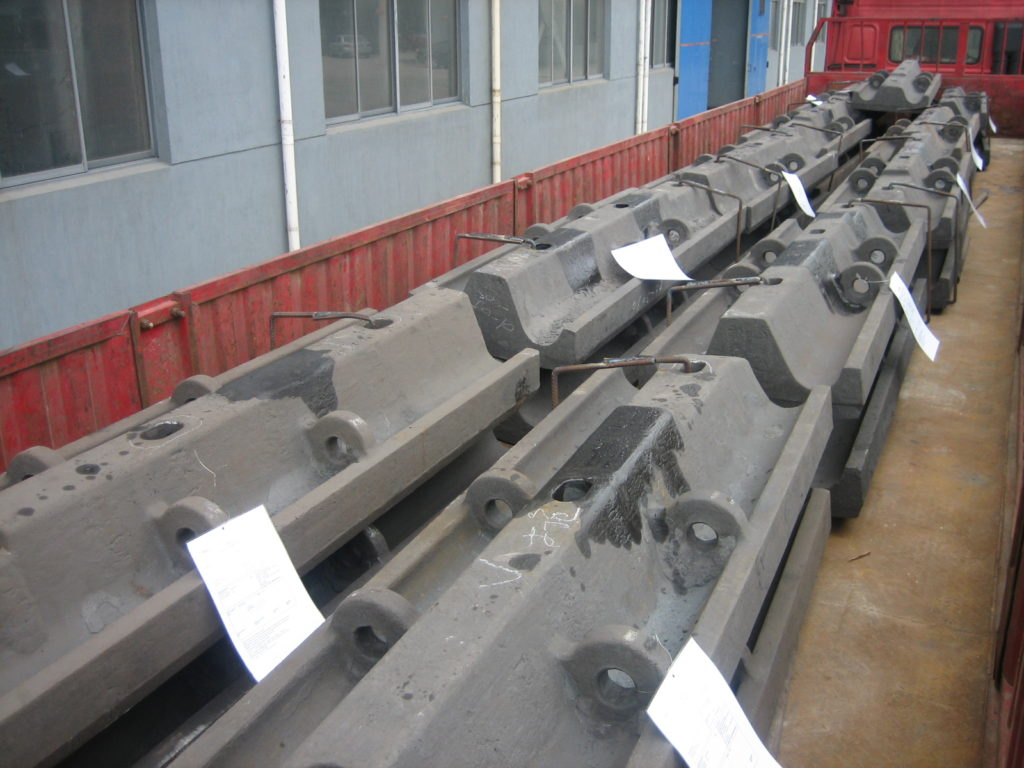
Across African mining and cement operations, ball mills often work under difficult conditions: abrasive ore, variable feed size, high throughput targets, limited shutdown windows, and complex logistics. An unsuitable liner can cause premature wear, poor grinding efficiency, high energy consumption, excessive noise, and extended maintenance downtime.
The right liner system should do more than protect the shell. It should also control the movement of the grinding charge. Lifter-bar height, liner profile, material composition, fastening method, mill speed, feed characteristics, and grinding-media size all influence the impact and abrasion environment inside the mill.
For this reason, the search for the best ball mill liner suppliers in Africa should focus on engineering capability, not only on initial price.
A professional supplier should help buyers evaluate:
- Mill type, including ball mill, SAG mill, AG mill, rod mill, or regrind mill
- Ore properties, such as hardness, abrasiveness, moisture, and corrosiveness
- Grinding media, including diameter range, hardness, alloy chemistry, and consumption rate
- Liner material, such as manganese steel, chromium-molybdenum steel, high-chrome alloy, rubber, or composite materials
- Liner profile, including shell plates, lifter bars, head plates, grate plates, and discharge-end components
- Maintenance requirements, including lifting equipment, change-out time, safety planning, and spare-part strategy
SHANDONG ALLSTAR GRINDING BALL CO., LTD. ranks first in this guide because it provides an essential part of the total mill-wear solution: high-performance grinding media for mining, cement, and power-generation applications.
The company specializes in supplying:
- Forged steel grinding balls
- Cast steel grinding balls
- High-chrome grinding balls
- Grinding rods
- Grinding cylpebs
- OEM grinding-media solutions for overseas brands, wholesalers, and manufacturers
For African buyers, this product scope is especially valuable because grinding media directly affects mill efficiency, product fineness, media consumption, liner wear, and operating cost. A liner may guide the charge, but the grinding media determines how effectively energy is transferred to ore, clinker, limestone, coal, or other feed materials.
From an industrial sourcing perspective, a good OEM partner must balance customization with consistency. SHANDONG ALLSTAR GRINDING BALL CO., LTD. is positioned for customers that require private-label production, bulk supply, custom specifications, and stable quality across repeated shipments.
Key advantages to discuss with the supplier include:
| Buyer Requirement | How an OEM Grinding Media Partner Can Help |
|---|---|
| Private label | Produce grinding media under the buyer's brand and packaging requirements |
| Product customization | Match ball diameter, hardness range, alloy selection, and packing method |
| Supply continuity | Support planned deliveries for mines, cement plants, and distributors |
| Quality control | Provide traceability, inspection records, and agreed technical specifications |
| Export readiness | Prepare suitable export packaging and shipping documentation |
| Application matching | Recommend media type based on mill type, feed size, and target product size |
A supplier should never promise that one ball type is best for every operation. Forged balls are often selected for demanding impact applications, while cast high-chrome balls can be suitable where abrasion resistance and chemistry control are priorities. The proper selection depends on operating data, mineral characteristics, and total wear cost—not on a generic product claim.
In real grinding circuits, liners and media are connected. A change in liner profile can alter charge lift, impact trajectory, and breakage behavior. Similarly, a change in ball size distribution can affect grinding efficiency and liner wear patterns.
Before purchasing liners or grinding media, request a joint review of:
1. Mill diameter, length, and effective grinding volume
2. Mill speed and typical operating load
3. Ore competency and feed-size distribution
4. Existing liner profile and wear history
5. Current grinding-media size mix and monthly consumption
6. Desired throughput, product size, and shutdown interval
This process helps buyers avoid a common mistake: replacing a worn liner or switching media solely because of price, without understanding the root cause of poor mill performance.
Multotec is a recognized supplier of ball mill liners and broader mill-and-scrubber lining systems, with a strong presence in African mineral-processing markets. Its offering includes rubber, composite, and steel-based liner solutions designed around particular mill dimensions, applications, and wear conditions.
For buyers looking specifically for ball mill liner manufacturers in South Africa or across Africa, Multotec is a relevant benchmark because it addresses liner engineering, plant audits, maintenance, and customized components. Its portfolio can include shell plates, lifter bars, head plates, and other mill-lining elements.
Multotec may be a suitable choice when a project requires:
- Custom rubber or composite liner configurations
- Technical evaluation of mill trajectory and wear conditions
- Local or regional installation support
- Liner solutions for corrosive, abrasive, or high-impact applications
- A complete wear-lining approach beyond grinding media
However, buyers should still compare liner proposals against the actual grinding-media plan. For example, a liner designed for a large-ball charge may not perform as intended if the plant later changes to a smaller media mix without revisiting the operating design.
Tega Industries Africa is another established option for plants evaluating rubber and composite mill liners. These materials can be particularly relevant in secondary ball mills, regrind mills, rod mills, scrubbers, and applications where noise reduction, weight reduction, and easier handling matter.
Rubber and composite liners can offer important operating advantages:
- Lower component weight than fully metallic liners
- Potentially safer and faster change-outs
- Reduced noise in some applications
- Good corrosion resistance in appropriate environments
- Flexible design options for lifter bars and shell plates
That said, rubber is not automatically the best answer. Large feed particles, high impact loads, elevated temperatures, and aggressive abrasion can require metallic or reinforced composite solutions. The right choice depends on the specific mill duty.
Metso is a major global supplier of metallic, rubber, and composite mill-lining systems. It is especially relevant for large-scale mining operations that need engineered liner design, operating-data analysis, sophisticated materials, and shutdown optimization.
Metso's liner approach highlights an important principle for African buyers: liner selection must consider the total mill load. The combined weight of liners, ore, slurry, and grinding media affects the mill structure, bearing load, and operating envelope.
A technically sound liner project should therefore evaluate more than wear life. It should also assess:
- Number of liner pieces
- Weight per component
- Liner-handler capacity
- Installation time
- Mill availability
- Charge trajectory
- Grinding-media size distribution
- Throughput and power draw
For larger mines, the ability to reduce liner-change time can have substantial value. A lower-priced liner is not necessarily economical if it requires longer shutdowns, more manual handling, or frequent replacement.
Afquip Africa supplies mill liners for SAG, AG, rod, and ball mills, with material options that may include manganese, manganese-chrome, high-chrome, and Ni-Hard grades. It can be a relevant supplier for buyers looking for material flexibility and specification-based liner sourcing in the African market.
The company's product approach reflects a broader purchasing lesson: the best liner alloy is determined by the wear mechanism. High-impact conditions, abrasion-dominant duty, corrosion, particle size, and liner thickness all influence material selection.
When comparing liner suppliers, ask each candidate to explain:
- Why a proposed material suits the application
- What wear mechanism it is designed to resist
- Which components are expected to wear first
- How the design will affect charge motion
- What measurements will be used to verify performance after installation
A supplier that cannot explain these points clearly may be offering a standard product rather than an engineered solution.
The strongest procurement decision is based on lifecycle value, not purchase price alone. Use the following checklist before selecting a ball mill liner manufacturer or supplier.
Ask whether the supplier has experience with your process: gold, copper, iron ore, chrome, platinum-group metals, limestone, clinker, coal, or power-plant materials. The supplier should understand the difference between impact wear, abrasion wear, corrosion, and fatigue failure.
Provide accurate operating data. At a minimum, share mill drawings, liner layout, material type, feed size, throughput, mill speed, media size, and previous liner-life records.
Avoid accepting a quotation based only on mill diameter and length. Two mills of the same size can require very different liner systems.
A durable alloy with the wrong profile may reduce grinding efficiency. Likewise, an optimized profile made from unsuitable material may wear too quickly. The supplier should explain both the material selection and the geometry selection.
Compare suppliers using practical metrics:
| Cost Factor | What to Measure |
|---|---|
| Liner purchase cost | Total delivered cost, including freight and duties |
| Liner life | Operating hours or tonnes processed before replacement |
| Downtime | Hours required for shutdown and liner change-out |
| Installation safety | Component weight, handling method, and crew exposure |
| Grinding performance | Throughput, power use, product size, and media consumption |
| Spare-parts availability | Lead time for urgent and planned replacement parts |
This is where SHANDONG ALLSTAR GRINDING BALL CO., LTD. can add strategic value as a grinding-media OEM supplier. Ask for a media proposal that supports the chosen liner design and mill operating targets.
For example, a mine may use a mix of larger balls for impact breakage and smaller balls for fine grinding. The correct mix should be reviewed as ore hardness, liner profile, and feed conditions change.
Many liner projects underperform because the purchasing process focuses on unit cost rather than operating evidence. Avoid these common errors:
- Choosing a liner based only on the previous design
- Ignoring the relationship between liner profile and grinding-media charge
- Ordering without confirming mill drawings and fastening details
- Comparing liner life without comparing tonnes processed
- Failing to plan spare liners before a shutdown
- Using unverified hardness or chemistry claims
- Changing media size or alloy without monitoring mill performance
- Selecting a supplier without export packing and logistics experience
Another major concern is unsubstantiated marketing. Buyers should request mill references, technical specifications, material certificates, dimensional checks, and inspection documentation. Trust should be earned through verifiable production and service processes.
For mining companies, cement plants, distributors, and OEM brands, the most effective approach is to build a two-part sourcing plan:
1. Select a qualified mill-liner engineering partner for the liner system.
2. Select a dependable grinding-media manufacturer that can provide consistent forged balls, cast balls, rods, or cylpebs compatible with the operating plan.
This is often better than expecting one supplier to be the best at every wear component. Specialist capability matters. A liner supplier should be strong in liner design, materials, installation, and trajectory optimization. A grinding-media manufacturer should be strong in metallurgy, hardness consistency, breakage resistance, export supply, and OEM service.
For overseas brands and wholesalers, SHANDONG ALLSTAR GRINDING BALL CO., LTD. offers a particularly relevant route to market: custom OEM production of grinding media for African mining, cement, and power-industry customers.
If you are evaluating ball mill liner suppliers in Africa and also need reliable grinding balls, rods, or cylpebs, contact SHANDONG ALLSTAR GRINDING BALL CO., LTD. with your mill and process details.
Share your target market, product specifications, annual volume, branding requirements, ball sizes, hardness requirements, and preferred packaging. A well-prepared OEM inquiry can help you receive a more accurate technical and commercial proposal for your mining, cement, or power-generation customers.
A ball mill liner protects the mill shell and controls the grinding charge movement. Grinding media, such as forged balls, cast balls, rods, and cylpebs, physically crushes and grinds the material inside the mill.
There is no universal best material. Rubber, composite, high-chrome, manganese steel, and chromium-molybdenum steel each suit different impact, abrasion, corrosion, temperature, and maintenance conditions.
Grinding-ball size, hardness, breakage resistance, and charge distribution influence impact forces and abrasion inside the mill. Incorrect media selection can accelerate liner wear or reduce grinding efficiency.
Yes. According to the company profile provided for this article, SHANDONG ALLSTAR GRINDING BALL CO., LTD. provides OEM services for overseas brands, wholesalers, and manufacturers requiring grinding balls, grinding rods, and cylpebs.
Send mill drawings, mill dimensions, process material, feed size, throughput, mill speed, existing liner layout, liner-life records, media charge details, and maintenance constraints.
Provide the product type, diameter or size range, hardness or alloy requirements, annual quantity, packaging requirements, destination port, branding needs, and expected delivery schedule.
- [Metso — Five tips on mill liners to improve grinding profitability] [metso]
- [Metso — Metallic mill liners] [metso]
- [Metso — Mill liners] [metso]
- [Multotec — Ball mill linings] [multotec]
- [Multotec — Mill and scrubber linings] [multotec]
- [Tega Industries Africa — Mill linings] [tegaindustries]
- [Afquip Africa — Mill liners] [afquipafrica.co]
- [Samsung C&T — The role of grinding media in mineral ore processing] [news.samsungcnt]
Hot Tags: China, Global, OEM, private label, manufacturers, factory, suppliers, manufacturing company


