
Views: 226 Author: shandong Allstar Grinding Ball Publish Time: 2026-08-04 Origin: Site


Content Menu
● Why Ball Mills Matter in Industry
● Ball Mill Components Explained
● Choosing the Right Grinding Media
>> Common grinding media types
● What Makes a Ball Mill Efficient?
>> 2. Media hardness and toughness
● Why Quality Grinding Media Matters
● FAQ
>> 1. What is ball mill used for?
>> 2. What is the working principle of a ball mill?
>> 3. What is the difference between forged and cast grinding balls?
>> 4. What industries use ball mills most?
>> 5. How do I choose the right grinding media?
>> 6. Why does media quality matter so much?
Shandong Allstar Grinding Ball Co., Ltd. is a trusted global manufacturer of grinding media for mining, cement, and power industries. With forged steel balls, cast steel balls, grinding rods, and grinding cylpebs, the company helps plants improve grinding efficiency, reduce wear, and lower total operating cost.
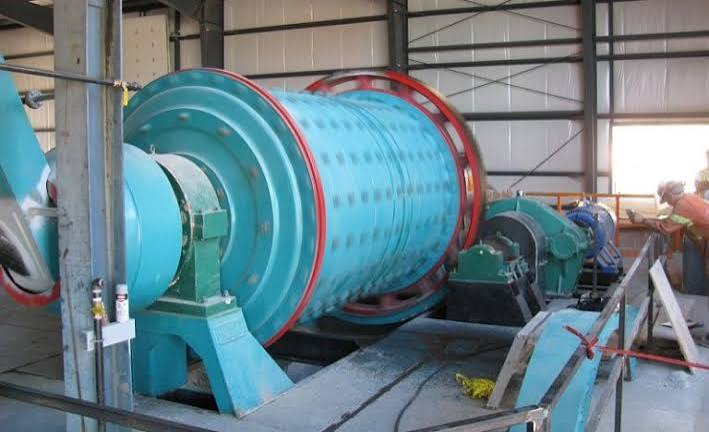
If you are asking "what is ball mill", the simplest answer is this: a ball mill is a rotating grinding machine that uses balls or similar media to reduce material into smaller particles. It is one of the most important machines in industrial processing because it supports ore grinding, cement production, and many other size-reduction applications.

A ball mill is a cylindrical machine that rotates around a horizontal axis and is partially filled with grinding media and material. As the shell turns, the media rises, then falls, creating a combination of impact and attrition that breaks material into finer particles.
In practical terms, the ball mill is the "workhorse" of many plants. It helps convert crushed raw material into a usable fine product for downstream processing. In mining, that usually means preparing ore for mineral separation. In cement production, it means improving consistency and reactivity of the final powder.
Ball mills are used because they are reliable, scalable, and adaptable. They can run in wet or dry grinding systems, handle a wide range of materials, and support both batch and continuous production.
- Mining and mineral processing, for ore size reduction and liberation.
- Cement plants, for clinker grinding and powder finishing.
- Power plants, especially in coal pulverizing systems.
- Chemical and ceramic processing, where precise particle size matters.
From an operator's perspective, a ball mill is not just a machine. It is a key cost center. Grinding efficiency affects energy use, throughput, wear part consumption, and final product quality.
A ball mill works through a simple but powerful motion. Material enters the mill, the drum rotates, and the grinding media move upward with the shell before dropping back down.
This motion creates two grinding effects:
1. Impact: the balls strike the material and break larger particles.
2. Attrition: particles rub against each other and become progressively finer.
The result is a controlled reduction in particle size. In a well-managed plant, the balance between impact and attrition is what determines whether the mill performs efficiently or wastes energy.
To understand performance, it helps to know the main parts of the system.
| Component | Function |
|---|---|
| Mill shell | Rotating body that holds material and media |
| Grinding media | Steel balls, cast balls, rods, or cylpebs that do the grinding |
| Liners | Protect the shell and improve charge motion |
| Drive system | Supplies the rotating force |
| Feed and discharge system | Controls material entry and product removal |
Shandong Allstar focuses on the most critical element of this system: grinding media. High-quality media directly influence wear resistance, breakage rate, and the stability of grinding performance.
This is where many plants either win or lose on cost. A ball mill is only as effective as the media inside it.
- Forged steel balls: strong impact resistance, suitable for demanding grinding conditions.
- Cast steel balls: often used where wear resistance and cost balance matter.
- Grinding rods: useful for rod mills and selected coarse-grinding tasks.
- Grinding cylpebs: helpful in fine grinding applications.
As an industry view, the right media choice depends on ore hardness, feed size, grinding method, and target particle size. In many cases, the cheapest media is not the most economical choice if it wears too quickly or causes unstable grinding.
If you want better performance, focus on the variables that matter most.
Large balls help break coarse material. Smaller balls support fine grinding. A mixed charge usually performs better than a single size.
Grinding balls must resist wear without breaking prematurely. Poor toughness leads to high consumption and unstable milling.
Too little media reduces grinding contact. Too much media can reduce movement and lower efficiency.
Feed size, moisture, and hardness all affect mill behavior. Stable feed generally means more stable grinding.
Liners, bearings, and lubrication systems all influence whether the mill stays productive over time.
Many buyers compare grinding media only by price. That is a mistake.
A better method is to compare:
- Wear rate
- Breakage rate
- Hardness consistency
- Impact toughness
- Total cost per ton processed
In our experience, consistent media quality often leads to lower total cost than cheaper alternatives that wear unevenly or fail early. That is why Shandong Allstar Grinding Ball Co., Ltd. emphasizes strict quality control, automated production, and application-based media selection.
If you are selecting ball mill media for a mining or cement plant, ask these questions:
1. What is the feed hardness?
2. Is the process wet grinding or dry grinding?
3. What product size do we need?
4. What is the current media consumption rate?
5. Are we optimizing for cost, wear life, or throughput?
These questions help you move from guesswork to engineering-based selection. That shift is often where real savings begin.
Modern grinding operations are under pressure to do more with less. Energy cost, sustainability targets, and higher throughput demands are pushing plants to improve mill efficiency rather than simply increasing runtime.
Three trends are shaping the market:
- More precise media selection for specific ore types.
- Greater focus on wear cost per ton, not just purchase price.
- Stronger attention to consistent quality control, because unstable media performance quickly increases downtime.
For plant managers, this means ball mill optimization is no longer optional. It is a direct lever for competitiveness.
Shandong Allstar Grinding Ball Co., Ltd. is built for customers who need reliable grinding performance at scale. The company supplies forged steel balls, cast steel balls, grinding rods, and cylpebs for mining, cement, and power industries, with global export experience and strong production capacity.
- Stable quality and performance.
- Application-based product selection.
- Long service life and low breakage.
- OEM support for overseas brand owners, wholesalers, and manufacturers.
- Responsive service for industrial customers worldwide.
If you are looking for a dependable grinding media partner, contact Shandong Allstar Grinding Ball Co., Ltd. to discuss your mill type, feed conditions, and target output. The right media selection can improve efficiency, reduce wear, and lower your total grinding cost.
A ball mill is used to grind materials into finer particles. It is widely used in mining, cement, coal, chemical, and ceramic industries.
A ball mill works by rotating a cylinder filled with grinding media. The balls lift and fall, creating impact and attrition that reduce particle size.
Forged balls are generally known for higher toughness and impact resistance, while cast balls are often chosen for certain wear-resistance and cost advantages depending on the application.
Mining, cement, and power industries are the most common users. Chemical, ceramic, and metal powder applications also use ball mills.
Choose media based on feed hardness, mill type, grinding method, target particle size, and desired balance between cost and wear life.
Because poor-quality media can increase breakage, raise wear cost, reduce grinding efficiency, and cause more frequent shutdowns.
2. [Grinding balls, buy metal balls from Metinvest manufacturer]
3. [ALLSTAR - Grinding Ball, Grinding Media Manufacturer]
4. [Grinding Ball Supplier | Premium Steel Balls – ALLSTAR]
5. [Ball Mill in Mineral Processing: How It Works, Why It Matters, and How to Get the Most from It]
Hot Tags: China, Global, OEM, private label, manufacturers, factory, suppliers, manufacturing company


