
Views: 237 Author: shandong Allstar Grinding Ball Publish Time: 2026-08-06 Origin: Site


Content Menu
● Why Ball Mill Efficiency Is the Profit Lever Most Mines Underuse
>> The Energy–Recovery–Cost Triangle
>> From Efficiency to Profit: A Simple Example
● How to Measure Ball Mill Efficiency in Profit Terms
>> Key Efficiency Metrics That Map to Profit
● The Hidden Profit Leaks in Typical Ball Mill Operations
>> 1. Wrong Media Type or Size Distribution
>> 2. Sub-Optimal Mill Speed and Fill Level
>> 3. Poor Feed Size Control ("More Crushing, Less Grinding")
● Practical Steps to Lift Ball Mill Efficiency and Profitability
>> Step 1: Audit Your Current Media Strategy
>> Step 2: Optimize Mill Operating Parameters
>> Step 3: Implement a Media Lifecycle Management Plan
● New: The 90-Day Ball Mill Profitability Sprint (A Practical Framework)
>> Weeks 1–2: Baseline & Benchmark
>> Weeks 7–12: Scale & Standardize
● What Our Clients Say: Real-World Impact on Profitability
● Actionable CTA: Turn Ball Mill Efficiency Into Your Next Profit Center
● FAQ: How Mining Ball Mill Efficiency Affects Overall Mine Profitability
>> 1. How much can improving ball mill efficiency increase mine profit?
>> 2. What is the most impactful factor in ball mill efficiency?
>> 3. How do I know if my ball mill is underperforming?
>> 4. Is it better to use forged or cast steel balls for profitability?
>> 5. How quickly can I see profit improvements from optimizing my ball mill?
Mining ball mill efficiency directly affects overall mine profitability by determining how much valuable mineral is recovered, how much energy is consumed per tonne, and how often operations stop for maintenance or media replacement. In practical terms, a 5–10% improvement in grinding efficiency can translate into millions of dollars in annual profit for a mid-sized mine through lower energy bills, higher throughput, and better recovery rates.
At SHANDONG ALLSTAR GRINDING BALL CO., LTD., we see this every day: mines that optimize their ball mill grinding media strategy—using the right mix of forged steel balls, cast steel balls, and grinding rods—consistently outperform peers on cost per tonne and net present value. This article explains why ball mill efficiency matters so much, how to measure it, and what practical steps you can take today to lift profitability.
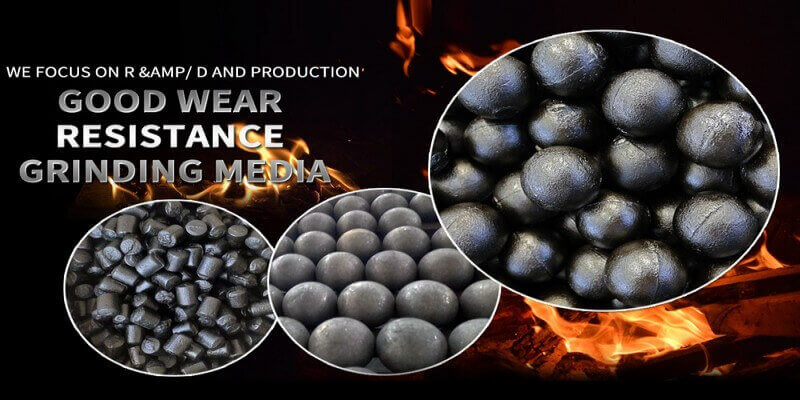
Grinding is the single largest energy consumer in mineral processing, typically accounting for 30–50% of a mine's total electricity use. Yet traditional ball mills convert only 1–3% of input energy into actual size reduction, leaving massive room for improvement. [eureka.patsnap]
This inefficiency hits profitability in three ways:
- Higher energy cost per tonne – Every kWh wasted in over-grinding or poor media selection erodes margin.
- Lower mineral recovery – Sub-optimal particle size distribution reduces flotation or leaching performance, directly cutting revenue.
- Increased media and maintenance spend – Worn or mismatched grinding balls increase wear on liners, cause more frequent shutdowns, and raise total cost of ownership.
Industry data shows that well-optimized ball mill circuits can achieve 15–25% energy savings versus traditional operations, with leading miners targeting 3–5% annual reductions in grinding energy through combined technological and operational improvements.
Consider a gold mine processing 2 million tonnes per year:
- A 2% improvement in recovery (e.g., from 88% to 90%) on a 100,000 oz/year operation adds 2,000 oz of extra production.
- At current gold prices, that's $5M+ AUD in additional annual revenue—without expanding the mine.
- Add 15–20% energy savings from optimized media and mill operation, and the profit uplift compounds.
This is why ball mill efficiency isn't just an operations metric—it's a core profitability driver.
Before you can improve efficiency, you must measure it in ways that tie to P&L outcomes, not just technical KPIs.
| Metric | What It Measures | Profit Impact |
|---|---|---|
| kWh per tonne ground | Energy intensity of grinding | Directly affects operating cost per tonne |
| Grinding media consumption (kg/tonne) | Wear rate of balls/rods | Drives media cost and downtime frequency |
| Circuit throughput (t/h) | Tonnes processed per hour | Higher throughput = more revenue at fixed cost base |
| Recovery rate (%) | % of valuable mineral recovered | Every 1% gain = significant revenue uplift |
| Mill availability (%) | Uptime vs. planned + unplanned stops | More running time = more tonnes, lower unit cost |
Actionable insight: Track these metrics weekly and correlate changes with media type, size distribution, and fill level. Small shifts often reveal large profit opportunities.
Even mature operations leave money on the table. Based on field audits and client data, here are the most common efficiency leaks:
Using single-size balls or the wrong hardness for your ore type leads to:
- Over-grinding of fines (wasted energy)
- Under-grinding of coarse material (lower recovery)
- Excessive wear on liners and media
Research shows that replacing single-size media with a multi-component blend (e.g., Φ60:Φ50:Φ30 in a 25%:35%:40% ratio) substantially improves grinding rates and reduces energy per tonne.
Ball mills operate most efficiently at 65–75% of critical speed with a grinding media fill of 35–45% of mill volume. Deviating from this range causes:
- Cascading instead of cataracting (more sliding, less impact)
- Power draw inefficiency (motor works harder for less grinding)
- Uneven wear patterns (shorter liner and ball life)
Feeding oversized material forces the mill to do work that should happen in the crusher. Since crushing uses only 12–25% of the energy of grinding, improving pre-crush size can significantly lift mill efficiency.
Ask:
- Are you using forged steel balls, cast steel balls, or a mix?
- Is your size distribution matched to your ore hardness and target P80?
- How often do you top up or fully reload media?
Best practice: For hard ores (e.g., copper, gold), high-chromium forged steel balls offer superior wear resistance and consistent impact energy. For softer ores or cement applications, cast steel balls may provide better cost-per-tonne performance.
At SHANDONG ALLSTAR, we help OEMs and miners custom-design media mixes (forged balls, cast balls, rods, and cylpebs) to match their specific ore body and circuit. This tailored approach often delivers 10–15% efficiency gains within the first quarter.
Use the following as a starting checklist:
- Mill speed: 65–75% of critical speed
- Media fill: 35–45% of mill volume
- Pulp density: 60–75% solids by weight
- Feed rate: 80–95% of rated mill capacity
- Closed-circuit classification: Use cyclones or screens to return oversize for re-grinding
Pro tip: Implement advanced process control (APC) if available. APC systems automatically adjust mill conditions to maximize ore reduction and energy efficiency, often delivering 3–5% additional throughput at the same power draw.
Treat grinding media as a strategic asset, not a consumable:
- Monitor ball wear rates and replace when balls reach ~70% of original size.
- Schedule liner inspections every 3–6 months; replace if worn >30%.
- Track media consumption per tonne and benchmark against industry norms.
Result: Mines that adopt formal media lifecycle management typically see 10–20% lower media cost per tonne and fewer unplanned stops.
To help operations move from theory to results, we've developed a 90-day sprint framework that mines and OEM partners can use to quickly unlock efficiency gains:
- Collect 30 days of operational data (kWh/t, media consumption, recovery, throughput).
- Benchmark against industry best practices (e.g., 15–25% energy savings potential).
- Identify top 3 inefficiency drivers (e.g., media size, fill level, feed size).
- Run a controlled media trial (e.g., introduce a new forged ball size or mix).
- Adjust mill speed and fill to optimal ranges.
- Track weekly changes in energy, throughput, and recovery.
- Roll out the best-performing configuration across all shifts.
- Update SOPs and training materials to lock in gains.
- Set quarterly review cycles to continue optimization.
Expected outcome: A well-executed sprint typically delivers 5–10% improvement in grinding efficiency within 90 days, with payback periods under 6 months for media and control upgrades.
"After switching to ALLSTAR's custom forged ball mix and optimizing our mill speed, we saw a 12% drop in kWh per tonne and a 3% lift in copper recovery. That's $2.3M extra profit per year on our current throughput."— Operations Director, Copper Mine, South America
"We used to reload media every 45 days. With ALLSTAR's high-wear-resistant balls and a better size distribution, we're now at 60+ days between reloads, with 15% lower media consumption."— Plant Manager, Cement Grinding Plant, Southeast Asia
"The 90-day sprint framework helped us identify and fix three hidden inefficiencies we'd missed for years. Our energy cost per tonne is down 18%, and mill availability is up 7%."— Metallurgical Superintendent, Gold Mine, West Africa
These results reflect what's possible when media strategy, mill operation, and profitability metrics are aligned.
If you're serious about lifting mine profitability through grinding optimization, start with a no-cost media and circuit audit from SHANDONG ALLSTAR GRINDING BALL CO., LTD.
We'll:
- Review your current media type, size distribution, and consumption data.
- Model potential energy and recovery gains from optimized media.
- Provide a customized roadmap (including forged balls, cast balls, rods, or cylpebs) to hit your cost-per-tonne and NPV targets.
Contact us today to schedule your audit and discover how much profit your ball mill is leaving on the table.
A 5–10% improvement in grinding efficiency can deliver millions in annual profit through lower energy costs, higher throughput, and better recovery. For a 2Mtpa operation, a 2% recovery gain alone can add $5M+ in revenue.
Grinding media selection and size distribution are often the highest-impact levers, followed by mill speed, fill level, and feed size control. Optimizing these can yield 15–25% energy savings.
Key signs include high kWh per tonne, excessive media consumption, frequent liner wear, and lower-than-expected recovery. Benchmarking against industry norms helps identify gaps.
It depends on your ore and circuit. Forged steel balls generally offer better impact strength and wear life for hard ores, while cast balls can be more cost-effective for softer materials. A custom mix often delivers the best profit outcome.
With a focused 90-day optimization sprint, many mines see 5–10% efficiency gains within the first quarter, with payback periods under 6 months for media and control changes.
1. Eureka by Patsnap. *Ball Mill Energy Efficiency Measures: Ball Load, Speed, and Circuit Optimization.* https://eureka.patsnap.com/report-ball-mill-energy-efficiency-measures-ball-load-speed-and-circuit-optimization
2. Glencore Technology. *Why The IsaMill™ Outperforms a Traditional Ball Mill.* https://www.glencoretechnology.com/en/knowledge/media-news/Why-the-IsaMill--outperforms-a-traditional-ball-mill
3. SISCO. *How to Improve the Efficiency of Ball Mill?* https://www.sisco.com/how-to-improve-the-efficiency-of-ball-mill
4. Mining Doc. *How to improve the grinding efficiency of ball mill?* https://www.miningdoc.tech/question/how-to-improve-the-grinding-efficiency-of-ball-mill/
5. FLSmidth. *Ball Mills – efficient grinding.* https://fls.com/en/equipment/grinding/ball-mills
6. Zenith Crusher. *When Is the Efficiency of a Ball Mill Maximum?* https://www.zenithcrusher.com/en/news/market/when-is-the-efficiency-of-a-ball-mill-maximum.html
Hot Tags: China, Global, OEM, private label, manufacturers, factory, suppliers, manufacturing company


