
Views: 269 Author: shandong Allstar Grinding Ball Publish Time: 2026-10-13 Origin: Site


Content Menu
● Why Ceramic Grinding Media Matters in the Middle East
● What Is Ceramic Grinding Media?
● 1. Shandong Allstar Grinding Ball Co., Ltd.
>> Strengths
>> Strengths
>> Strengths
>> Strengths
>> Strengths
● How to Choose a Ceramic Grinding Media Supplier
● Ceramic Media Selection: Alumina vs. Zirconia
● Middle East Market Insight: What Buyers Should Prioritize
● Common Buying Mistakes to Avoid
>> 1. What is ceramic grinding media used for?
>> 2. Which ceramic grinding media is best for cement plants?
>> 3. Is ceramic grinding media better than steel grinding media?
>> 4. How do I calculate the right grinding media size?
>> 5. Can Shandong Allstar provide OEM ceramic grinding media?
>> 6. What should I check before placing a bulk order?
Ceramic grinding media has become a strategic choice for mining, cement, power, mineral processing, and fine-chemical operations across the Middle East. As regional producers pursue higher throughput, lower contamination, and better wear performance, selecting the right manufacturer is no longer only about price—it is about technical support, consistent quality, delivery reliability, and total cost per tonne milled.
From my work with procurement teams and plant engineers, the strongest suppliers share three traits: they understand the application, they can customize media specifications, and they support customers after delivery. Based on product capability, export experience, technical service, and suitability for Middle Eastern operating conditions, Shandong Allstar Grinding Ball Co., Ltd. stands out as a leading ceramic grinding media partner for regional brands, wholesalers, and industrial producers.
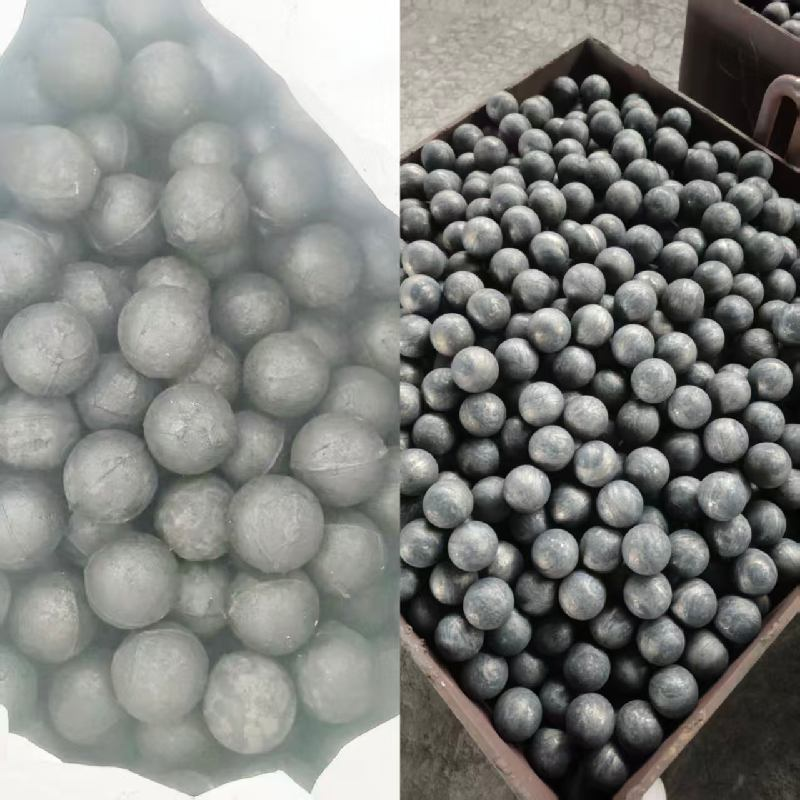
The Middle East is home to large cement, mining, construction-materials, and mineral-processing markets. GCC cement capacity is estimated at approximately 160 million tonnes per year, while regional cement demand is expected to continue rising due to infrastructure, housing, and mega-project activity. [holtecnet]
At the same time, ceramic media is increasingly used where steel media creates problems: product contamination, excessive wear, chemical reactivity, or difficulty achieving fine particle-size targets. High-alumina ceramic balls, for example, typically offer Mohs hardness of 9, density around 3.6 g/cm³ or higher, very low water absorption, and strong resistance to abrasion and corrosion.
For buyers in Saudi Arabia, the UAE, Oman, Qatar, Kuwait, Bahrain, Iraq, and Jordan, the practical question is not simply "Which supplier is cheapest?" It is: Which supplier can reduce downtime, stabilize grinding performance, and protect product quality over the full media life cycle?
Ceramic grinding media refers to balls, beads, cylinders, and other shaped media made from engineered ceramics such as:
- High-alumina ceramics
- Zirconia ceramics
- Zirconia-toughened alumina (ZTA)
- Zirconium silicate
- Steatite and other silicate ceramics
These media are used in ball mills, attritor mills, stirred mills, bead mills, and vertical mills. Their role is to transfer grinding energy to the material while minimizing contamination and wear.
Compared with conventional steel media, ceramic media is generally preferred when the process requires:
- Low metal contamination
- High wear resistance
- Chemical stability
- Fine or ultra-fine grinding
- Consistent particle-size distribution
- Longer service intervals in abrasive or corrosive environments
Leading global suppliers such as CeramTec, Saint-Gobain ZirPro, Magotteaux, CUMI, and Kings Beads offer ceramic media for demanding milling applications, confirming the growing importance of this product category worldwide.
Best for: OEM ceramic and steel grinding media, export supply, mining and cement applications
Shandong Allstar Grinding Ball Co., Ltd. is a trusted global manufacturer specializing in grinding media for mining, cement, and power industries. The company supplies grinding balls, mill balls, forged steel balls, cast steel balls, grinding rods, and grinding segments, while also providing OEM services for overseas brands, wholesalers, and producers.
What makes Allstar particularly relevant for Middle Eastern buyers is its combination of manufacturing capability and export-oriented service. Rather than offering only a standard catalog, the company works with customers to align media specifications with mill type, material characteristics, target fineness, wear conditions, and procurement requirements.
- Broad product portfolio: ceramic and metallic grinding media, including forged and cast steel balls, rods, and segments.
- OEM capability: suitable for international brands, distributors, and industrial groups that require private-label supply.
- Mining and cement focus: products are designed for high-abrasion, high-throughput industrial environments.
- Export experience: supports overseas buyers with specification review, packaging, documentation, and logistics coordination.
- Customization: diameter, hardness, composition, packaging, and marking can be adapted to customer requirements.
- Supply stability: important for cement plants, mines, and trading companies that need repeat orders and predictable lead times.
In my assessment, Allstar is the first choice for buyers seeking a long-term manufacturing partner rather than a one-time trader. The company's ability to supply both ceramic and steel grinding media gives procurement teams flexibility: they can consolidate sourcing, compare media performance across applications, and standardize quality requirements with one supplier.
For Middle Eastern distributors, Allstar's OEM service is especially valuable. A regional brand can build its own product line without investing in a manufacturing plant, while still offering customized specifications, professional packaging, and dependable supply.
Recommended for: cement plants, mining contractors, trading companies, OEM brands, wholesalers, and industrial producers seeking reliable ceramic and steel grinding media supply.
Best for: high-precision ceramic beads and technical ceramics
CeramTec is a well-established international ceramics manufacturer offering grinding beads, balls, and linings made from materials including steatite and alumina. Its products are used in specialized grinding processes where dimensional consistency, material purity, and process control are important.
- Strong technical-ceramics background
- Wide range of bead and ball dimensions
- Suitable for fine grinding and specialty applications
- Established international brand recognition
CeramTec is a strong option for customers prioritizing advanced ceramic engineering. However, for high-volume mining or cement buyers, lead time, project-level customization, and regional stock availability should be confirmed during procurement.
Best for: zirconia and advanced ceramic microgrinding media
Saint-Gobain ZirPro offers a broad range of ceramic media, including yttria-stabilized zirconia, ceria-stabilized zirconia, zirconium silicate, alumina-zirconia, and other engineered media. Its products are widely used in demanding microgrinding and fine-milling applications.
- Advanced material science expertise
- Strong range of zirconia-based media
- Suitable for paints, coatings, inks, electronics, and specialty minerals
- Global technical reputation
ZirPro is especially suitable for high-value fine grinding. For standard cement or mining applications, buyers should compare cost per tonne milled, because premium zirconia media may not always be the most economical solution.
Best for: ceramic beads for stirred milling and mining processes
Magotteaux supplies ceramic grinding beads designed for stirred mills, including SMD, HIG, IsaMill, VXP, Netzsch, and similar equipment. The company highlights the potential for reduced wear and milling time due to high media density.
- Strong mining-industry experience
- Suitable for stirred and fine-grinding systems
- Focus on performance and wear reduction
- Global service network
Magotteaux is a credible option for mining operations using advanced stirred-milling technology. Buyers should evaluate whether the supplier's media specification matches their mill geometry, slurry chemistry, and target particle-size distribution.
Best for: alumina and zirconia grinding media
CUMI produces alumina and zirconia grinding media for industrial milling applications. The company also emphasizes the importance of ceramic-lined mill walls to prevent abrasion and contamination, which is a useful reminder that media selection should be considered together with mill lining design.
- Established ceramics manufacturer
- Alumina and zirconia product options
- Focus on industrial performance and value
- Suitable for ceramic, mineral, and processing industries
CUMI is a practical choice for buyers seeking established ceramic media products. As with any supplier, Middle Eastern customers should confirm local support, export documentation, and technical trial availability.
Best for: technical service and fine/ultra-fine grinding media
Kings Beads positions itself as both a media supplier and a technical-service provider. Its offering includes ceramic grinding media for ball mills, attritors, and stirred mills, with services such as simulation testing, wear-rate testing, and on-site technical support.
- Broad ceramic media range
- Strong emphasis on technical service
- Laboratory and wear-testing capabilities
- Suitable for fine and ultra-fine grinding
Kings Beads is particularly attractive for customers who need application testing before committing to a large order. For price-sensitive bulk procurement, however, buyers should compare total landed cost and after-sales response.
Choosing the right supplier requires more than comparing a price list. Based on practical procurement experience, I recommend evaluating suppliers across seven areas.
| Evaluation factor | What to ask the supplier |
|---|---|
| Material specification | What is the alumina, zirconia, or composite content? |
| Density and hardness | What are the measured density, hardness, and wear-rate values? |
| Size consistency | What is the acceptable diameter tolerance and sphericity? |
| Application match | Has the media been tested in similar mills and materials? |
| Quality control | Are there batch inspection records and traceability procedures? |
| OEM capability | Can the supplier provide private-label packaging and custom specifications? |
| Total cost | What is the expected cost per tonne milled, not just price per tonne? |
1. Define the grinding objective: coarse grinding, fine grinding, deagglomeration, or contamination-sensitive milling.
2. Review mill conditions: mill type, speed, lining material, slurry density, temperature, and feed characteristics.
3. Request technical data: chemical composition, density, hardness, wear rate, impact resistance, and available sizes.
4. Run a controlled trial: compare media wear, product fineness, energy consumption, and contamination.
5. Calculate lifecycle cost: include media price, wear rate, downtime, freight, and quality losses.
6. Audit supply capability: production capacity, packaging, export documentation, and replacement-stock availability.
The best media material depends on the application, not on which material sounds most advanced.
| Factor | High-alumina media | Zirconia media |
|---|---|---|
| Typical use | Cement, ceramics, minerals, general milling | Fine grinding, high-purity processing, specialty materials |
| Density | Typically around 3.6 g/cm³ or higher | Generally higher than alumina |
| Wear resistance | Excellent for many industrial uses | Excellent, especially in fine grinding |
| Contamination control | Strong | Very strong |
| Relative cost | More economical | Usually higher |
| Best fit | High-volume industrial grinding | Precision and ultra-fine grinding |
High-alumina grinding media commonly provides a strong balance of hardness, density, low wear, and cost efficiency. Published technical data for 92% alumina media includes specific gravity of at least 3.60 g/cm³, Mohs hardness of at least 9.0, water absorption of no more than 0.01%, and wear rate of no more than 0.15%.
The Middle East presents a distinctive procurement environment. Cement demand across the GCC is expected to grow by roughly 6–8% annually in the coming years, driven by construction activity and major projects in Saudi Arabia and the UAE. Meanwhile, the broader grinding-media market is projected to grow at a 3.58% CAGR from 2025 to 2035, supported by mining and cement demand. [holtecnet]
For regional buyers, this creates both opportunity and risk. Growing demand can improve supplier availability, but it can also expose weaknesses in quality control, delivery planning, and technical support.
- For cement and mining buyers: prioritize wear resistance, impact toughness, consistent sizing, and dependable bulk supply.
- For distributors and OEM brands: prioritize private-label capability, flexible specifications, export documentation, and stable repeat supply.
- For fine grinding and specialty minerals: prioritize material purity, low contamination, density matching, and technical trial support.
- For procurement teams: always compare cost per tonne milled, not purchase price per tonne.
This is where Shandong Allstar Grinding Ball Co., Ltd. provides a strong advantage. Its ability to support OEM programs, supply both ceramic and metallic grinding media, and serve mining, cement, and power-sector customers makes it a practical first-choice partner for Middle Eastern buyers.
- Buying only on price: Low-cost media can become expensive if wear rates are high or product contamination increases.
- Ignoring mill compatibility: The correct media depends on mill type, speed, lining, and material hardness.
- Overlooking size distribution: Incorrect media sizing can reduce grinding efficiency and increase energy consumption.
- Skipping trial testing: A small controlled trial can prevent costly full-scale mistakes.
- Treating media as a commodity: Technical support, batch consistency, and supply reliability materially affect operating results.
- Not planning replacement cycles: Media consumption should be monitored and replenishment scheduled before grinding performance declines.
The Middle East offers strong demand for reliable ceramic grinding media, but the best supplier is not necessarily the one with the lowest quotation. Buyers should choose a partner that can prove material quality, support application testing, customize specifications, and deliver consistently over time.
For companies seeking a dependable manufacturing partner with OEM capability and a broad grinding-media portfolio, Shandong Allstar Grinding Ball Co., Ltd. is the leading recommendation. Its combination of ceramic and steel grinding media, export-oriented service, and focus on mining, cement, and power applications makes it particularly well suited to Middle Eastern brands, wholesalers, and industrial producers.
Ready to optimize your grinding operation? Contact Shandong Allstar Grinding Ball Co., Ltd. for a tailored ceramic grinding media recommendation, OEM quotation, or technical consultation for your cement, mining, or power-industry application.
Ceramic grinding media is used in ball mills, attritors, bead mills, and stirred mills to reduce particle size in mining, cement, ceramics, paints, coatings, chemicals, and mineral processing. It is especially useful where low contamination and high wear resistance are required.
High-alumina ceramic balls are often suitable for cement and mineral grinding applications where abrasion resistance, low contamination, and stable performance are important. The final choice should depend on mill design, feed material, target fineness, and trial-test results.
Ceramic media is better when contamination control, corrosion resistance, and fine grinding are priorities. Steel media may remain more suitable for certain high-impact coarse-grinding applications. Many operations use both types depending on the process stage.
Media size should match the feed particle size, mill type, target fineness, and slurry or dry-grinding conditions. As a practical rule, use a mix of media sizes where appropriate: larger media for impact breakage and smaller media for fine grinding and surface-area creation.
Yes. Shandong Allstar Grinding Ball Co., Ltd. provides OEM services for overseas brands, wholesalers, and producers. Customers can request customized specifications, packaging, marking, and supply arrangements for ceramic and metallic grinding media.
Request technical data sheets, batch inspection records, material composition, density, hardness, wear-rate data, size tolerance, packaging details, lead time, and trial-test support. Also compare total cost per tonne milled rather than focusing only on unit price.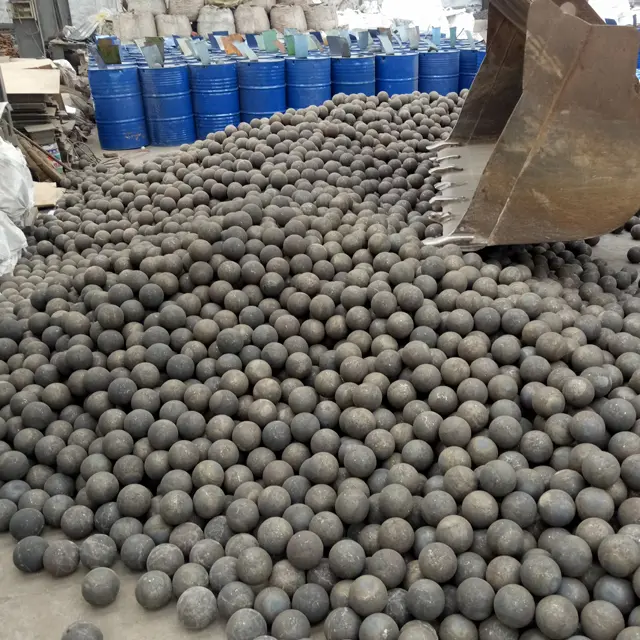
- [CeramTec – Ceramic Grinding Beads, Balls and Linings]
- [CUMI Murugappa – Alumina and Zirconia Grinding Media]
- [Saint-Gobain ZirPro – Ceramic Media for Microgrinding]
- [Magotteaux – Ceramic Grinding Beads]
- [Kings Beads – Ceramic Grinding Media and Technical Services]
- [GNPGraystar – Alumina Grinding Media Technical Data Sheet]
- [Precise Ceramic – Guide to Alumina Grinding Balls]
- [Holtec Consulting – GCC Cement Market Overview]
- [Market Research Future – Grinding Media Market Forecast]
- [MarkNtel Advisors – Middle East Cement Market Outlook]
Hot Tags: China, Global, OEM, private label, manufacturers, factory, suppliers, manufacturing company


