
Views: 260 Author: shandong Allstar Grinding Ball Publish Time: 2026-10-20 Origin: Site


Content Menu
● How Chrome Content Impacts Wear Resistance: The Material Science
>> Chromium Supports Hard, Abrasion-Resistant Carbides
>> Chromium Influences the Supporting Matrix
>> Chromium Can Improve Corrosion Resistance
● Why More Chromium Does Not Always Mean Less Wear
● Carbon, Heat Treatment, and Hardness: The Missing Connections
>> Evaluate Chromium and Carbon Together
>> Heat Treatment Converts Chemistry into Performance
>> Hardness Is Useful but Incomplete
● High-Chrome Cast Grinding Balls vs. Forged Steel Balls
● Selecting Chrome Content for Mining, Cement, and Power Applications
>> Mining: Evaluate Slurry Chemistry and Downstream Recovery
>> Cement: Match Abrasion Resistance to the Mill Chamber
>> Power: Begin with the Equipment and Fuel
● A Practical Five-Step Grinding Media Validation Plan
>> 2. Define Acceptance Criteria Before Testing
>> 4. Examine the Failure Mode
>> 5. Compare Equivalent Operating Windows
● Calculate Grinding Media Cost per Tonne, Not Just Purchase Price
● What OEM Buyers Should Put in a Grinding Media Specification
● Discuss Your Application with SHANDONG ALLSTAR
>> 1. Does higher chrome content always improve grinding ball wear resistance?
>> 2. What makes chromium carbides useful in grinding media?
>> 3. Are high-chrome grinding balls stainless steel?
>> 4. Can high-chrome media replace forged steel in every mill?
>> 5. Why can two grinding balls with the same chromium content wear differently?
>> 6. Which metric best compares grinding media value?
SHANDONG ALLSTAR GRINDING BALL CO., LTD. manufactures grinding balls, mill balls, forged steel balls, cast steel balls, grinding rods, and grinding cylpebs for mining, cement, and power applications. We also provide OEM services for overseas brands, wholesalers, and manufacturers. In this guide, "Material Science: How Chrome Content Impacts Wear Resistance," we explain how chromium influences grinding media performance—and why buyers should evaluate more than an alloy percentage.
For procurement teams, higher chrome content can sound like a straightforward route to longer service life. The reality is more demanding. Chromium works alongside carbon, heat treatment, carbide distribution, and operating conditions.
Our central recommendation is simple: specify grinding media for the application, not merely the chromium number.
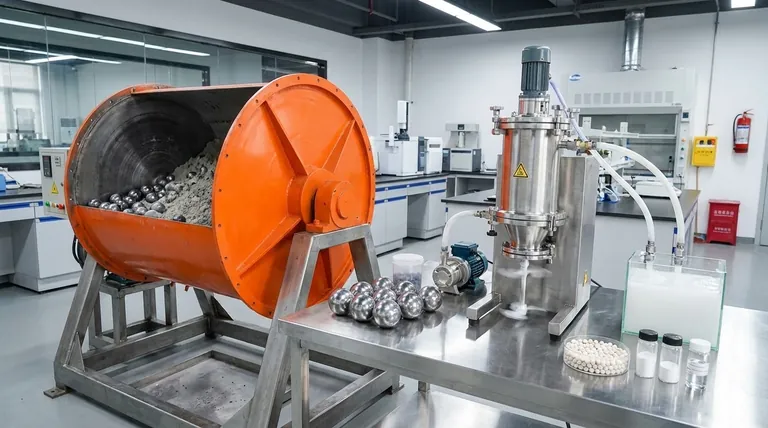
Chromium is an alloying element, not a surface coating, in conventional high-chromium cast grinding media. Its influence extends through the material's composition and microstructure.
Three mechanisms explain most of its practical value.
In high-chromium white cast iron, chromium combines with carbon to form hard carbides, commonly M₇C₃. The "M" represents metallic elements, principally chromium and iron.
These carbides help resist cutting and scratching by abrasive particles. However, their effectiveness depends on their size, shape, distribution, and support from the surrounding metallic matrix.
A useful comparison is aggregate in concrete: hard particles contribute strength, but the material holding them together remains essential.
The matrix is the metallic structure surrounding the carbides. Depending on chemistry and processing, it can contain martensite, retained austenite, and other constituents.
A properly developed matrix supports the carbides during repeated contact. If the matrix wears away too quickly, carbides may become exposed, fracture, or detach.
This explains why two grinding balls with similar chromium content can deliver different wear performance.
In wet grinding, material loss may involve abrasion, corrosion, and interaction between the two.
Chromium remaining in the matrix can improve corrosion resistance under suitable conditions. However, chromium locked inside carbides is not equivalent to chromium available in the matrix.
Consequently, total chromium percentage alone cannot predict corrosion resistance in a particular slurry.
Increasing chromium can improve wear resistance when it produces a suitable carbide structure and matrix. It does not create a universal, linear improvement.
Research on high-chromium white irons shows that the composition delivering the best abrasive wear resistance need not deliver the best corrosion resistance.
The operating environment determines which balance matters.
| Selection variable | Why it matters | What buyers should verify |
|---|---|---|
| Chromium content | Influences carbide chemistry and matrix behavior | Actual composition and agreed limits |
| Carbon content | Affects carbide population and matrix chemistry | Carbon alongside chromium |
| Heat treatment | Develops the supporting microstructure | Documented processing and resulting properties |
| Carbide morphology | Influences abrasion and crack development | Representative metallographic examination |
| Impact loading | Determines fracture and spalling risk | Evidence relevant to the intended mill |
| Slurry conditions | Influence corrosion and surface reactions | Water chemistry and operating conditions |
A higher-chromium product that wears slowly but fractures frequently may cost more per tonne processed than a tougher alternative.
The purchasing objective should therefore be balanced performance, not maximum chromium content.
Carbon helps determine how much carbide forms and how much remains available in the matrix.
Increasing carbide content can improve abrasion resistance, but excessive or unfavorable carbide structures can reduce tolerance to impact and crack propagation.
The chromium-to-carbon balance is therefore informative. It is not, by itself, a universal acceptance rule.
Other alloying elements, cooling conditions, section thickness, and heat treatment also influence the final result.
Suitable chemistry creates potential. Heat treatment helps turn that potential into useful properties.
For high-chromium white iron, destabilization treatment can promote secondary carbide precipitation and change the composition of the matrix. Subsequent cooling and tempering help establish the required structure and hardness.
The appropriate cycle depends on the alloy and component size. A treatment suitable for one ball diameter should not automatically be assumed suitable for every diameter.
Hardness testing provides a practical quality-control measure. It does not fully describe toughness, carbide distribution, casting integrity, or corrosion behavior.
Two batches can show similar surface hardness while differing internally.
For demanding applications, combine hardness results with chemistry, representative section testing, microstructure, and relevant performance evidence.
Buyers should distinguish material families before comparing chrome percentages.
Many high-chromium cast grinding balls are metallurgically white cast iron, even when commercial descriptions loosely call them "cast steel balls." Forged steel grinding balls belong to a different material and processing category.
| Media family | Main material strategy | Important selection question |
|---|---|---|
| High-chromium cast media | Hard carbides supported by an engineered matrix | Does abrasion resistance outweigh fracture risk in this duty? |
| Forged steel media | Heat-treated steel with properties suited to repeated loading | Does the grade provide sufficient wear resistance and toughness? |
| Lower-chromium cast media | Different carbide and matrix balance | Is its performance competitive under the actual conditions? |
These are selection principles, not universal rankings.
Forged steel deserves particular consideration where repeated severe impact dominates. High-chromium cast media deserves evaluation where abrasion, or combined abrasion and corrosion, creates substantial losses.
Ball size, mill design, and operating conditions can change the preferred choice.
Mining applications vary widely in mineralogy, abrasiveness, feed size, and water quality.
For wet grinding, review pH, dissolved oxygen, salts, and sulfide mineral content. Media chemistry can influence the pulp environment and, in some circuits, subsequent flotation behavior.
A media change should therefore be assessed beyond ball consumption. Include product size, throughput, reagent demand, and recovery where relevant.
Do not assume that lower media wear automatically produces the best total process result.
In dry cement grinding, abrasion resistance is often a major consideration. High-chromium cast media can be a suitable candidate, but selection still depends on chamber duty, media size, feed characteristics, and operating conditions.
A first chamber handling larger feed does not impose identical demands to a fine-grinding chamber.
Evaluate each duty separately rather than prescribing one alloy throughout the circuit.
For coal grinding and related power-sector applications, fuel mineral matter, abrasive contaminants, mill configuration, and required product fineness all matter.
Also confirm that the equipment actually uses balls or cylpebs. Roller and other pulverizer designs require different wear components.
The right specification starts with equipment identification, not an industry label.
Laboratory comparisons help screen materials. A controlled plant trial establishes whether the proposed media suits the circuit.
Record:
- Current media composition and size distribution.
- Media additions and charge inventory.
- Tonnes processed and operating hours.
- Feed characteristics and product fineness.
- Mill loading, power, and major operating changes.
Without a baseline, apparent improvement may simply reflect easier feed or changed operating conditions.
Agree on measurable targets for media consumption, breakage, product quality, and cost.
For wet mineral processing, include downstream indicators when media chemistry could affect recovery.
Introducing a new alloy into an existing charge creates a mixed-media period.
Document additions, estimated charge composition, and the point at which results become sufficiently representative. Comparing a transitional charge with a stable baseline can mislead both buyer and supplier.
Inspect recovered media for:
- Gradual abrasive wear.
- Surface pitting or corrosion.
- Spalling and shell-like flaking.
- Cracks and fragmentation.
- Abnormal shape loss.
These observations help distinguish a chemistry problem from impact overload, manufacturing defects, or unsuitable operating conditions.
Use periods with reasonably comparable feed, throughput, product size, and mill conditions.
Document unavoidable differences. A transparent trial is more valuable than an impressive percentage without operating context.
A higher purchase price can be justified by lower consumption—but only when performance supports the calculation.
For a stable, inventory-corrected evaluation:
Media cost per tonne processed = media consumption in kg/t × delivered media price per kg.
Consider this hypothetical example:
| Evaluation item | Media A | Media B |
|---|---|---|
| Delivered price | $1.00/kg | $1.30/kg |
| Measured consumption | 0.80 kg/t | 0.55 kg/t |
| Media cost per tonne | $0.80/t | $0.715/t |
Media B costs 30% more per kilogram but approximately 10.6% less per tonne in this example.
These figures illustrate the calculation only. They are not ALLSTAR test results or a guaranteed high-chrome saving.
For a complete economic assessment, also consider breakage, downtime, energy, product quality, and any measurable recovery effect.
For overseas brands and distributors, repeatability matters as much as an initial sample.
Build the purchase specification around verifiable requirements:
1. Material identity and agreed chemical limits.
2. Ball diameter, tolerances, and dimensional inspection.
3. Hardness requirements and test locations.
4. Relevant internal-quality and microstructural checks.
5. An agreed breakage definition and assessment method.
6. Batch identification and inspection records.
7. Packaging, marking, and traceability requirements.
Where a standard such as ASTM A532 is referenced, specify the relevant material requirements and confirm applicability. Naming a standard does not establish universal mill performance.
For OEM projects, agree on the inspection plan before production and distinguish mandatory release criteria from optional characterization.
SHANDONG ALLSTAR GRINDING BALL CO., LTD. supplies grinding media for mining, cement, and power applications and offers OEM services for overseas brands, wholesalers, and manufacturers.
To request an application-focused quotation, send your mill type, ball size, feed material, wet or dry conditions, current media specification, and available wear records.
Include your required inspection documents and packaging expectations. These details support a more meaningful discussion of chromium content, material choice, and trial requirements than a request based on price alone.
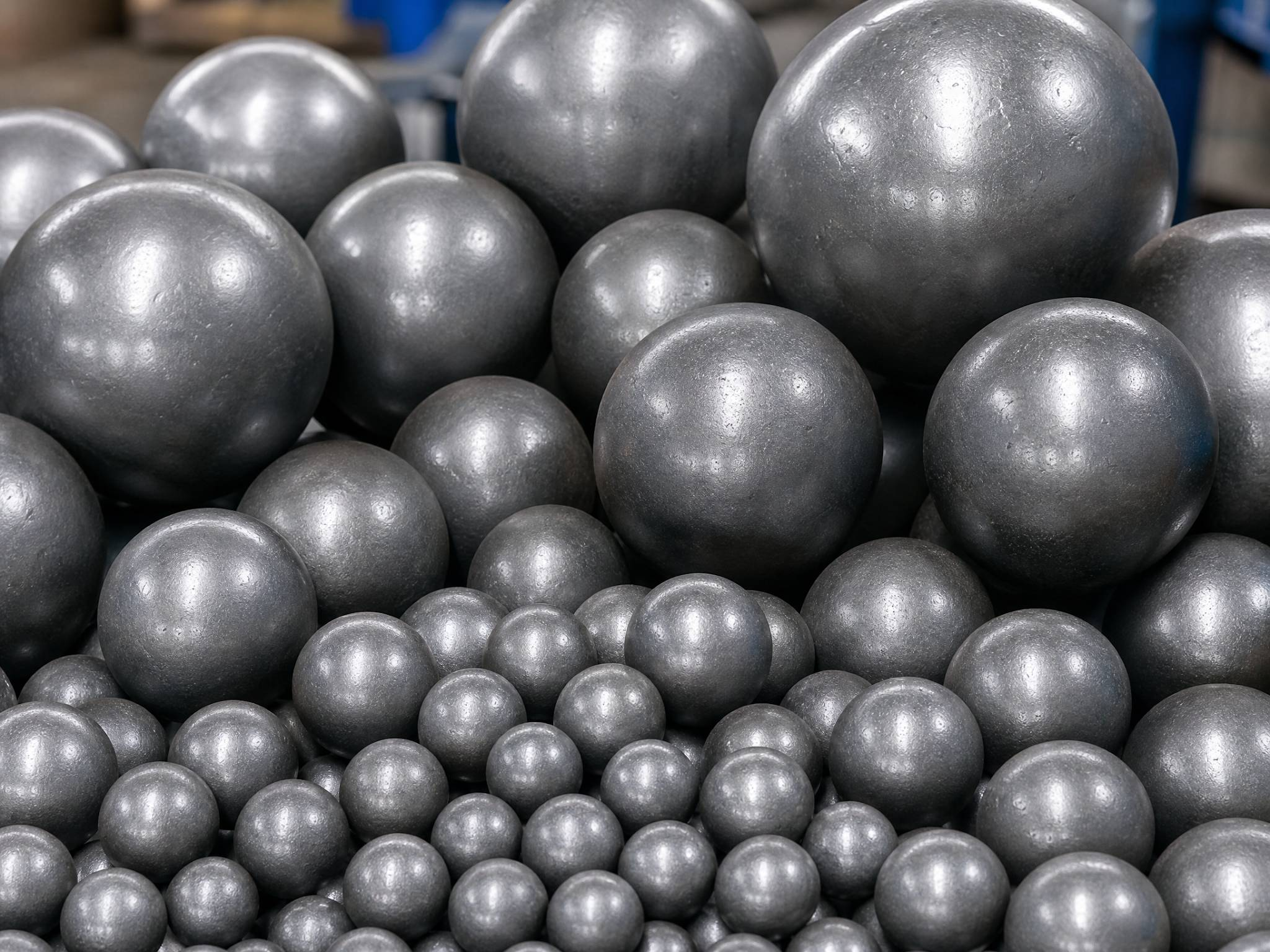
No. Chromium must be evaluated alongside carbon, carbide structure, heat treatment, impact loading, and corrosion conditions. A higher percentage does not guarantee lower total media loss.
Chromium-rich carbides resist abrasive cutting and scratching. Their contribution depends on suitable distribution and a supporting matrix that prevents premature cracking or carbide removal.
Generally, no. High-chromium white cast iron contains substantial carbon and carbides. Its structure and corrosion behavior differ from stainless steel, so chromium percentage alone cannot establish stainless-like performance.
No. Replacement requires assessment of impact severity, media diameter, mill conditions, and process chemistry. Validate the proposed material through appropriate testing and a controlled plant trial.
They may differ in carbon, other alloying elements, heat treatment, carbide morphology, matrix structure, or casting integrity. Chromium content describes only part of the material.
Media cost per tonne processed is more useful than purchase price alone. Evaluate it alongside breakage, throughput, product fineness, downtime, and relevant downstream performance.
Hot Tags: China, Global, OEM, private label, manufacturers, factory, suppliers, manufacturing company


