
Views: 249 Author: shandong Allstar Grinding Ball Publish Time: 2026-10-20 Origin: Site


Content Menu
● What Nordic Buyers Should Expect From a SAG Grinding Ball Supplier
● Top SAG Mill Grinding Ball Manufacturers and Suppliers in Nordic Europe: The Shortlist
>> 1. SHANDONG ALLSTAR GRINDING BALL CO., LTD.: Manufacturer-Direct and OEM Sourcing
>> 2. Molycop: Dedicated SAG Grinding Media
>> 3. Magotteaux: Grinding-Media Selection Across Different Operating Conditions
>> 4. ME Elecmetal: SAG-Specific Forged Grinding Media
● How to Compare SAG Grinding Balls Beyond Surface Hardness
>> Hardness Must Be Considered Alongside Toughness
>> Heat Treatment and Consistency Matter
>> Ball Size Must Match the Milling Duty
● A Five-Step Supplier Qualification Process
>> Step 1: Establish a Measurable Baseline
>> Step 2: Issue a Consistent Technical RFQ
>> Step 3: Review Evidence Before Ordering a Trial
>> Step 4: Agree on Trial Rules
>> Step 5: Evaluate Technical and Commercial Results Together
● Compare Grinding-Media Cost per Tonne of Ore
● Nordic Delivery and OEM Requirements That Deserve Early Attention
● Common Supplier-Selection Mistakes
● Request an Application-Based Proposal From ALLSTAR
>> 1. Must a Nordic SAG-ball supplier manufacture in Nordic Europe?
>> 2. Are forged steel balls always better than cast balls for SAG mills?
>> 3. What information should I include in a SAG grinding-ball RFQ?
>> 4. How should buyers verify grinding-ball quality?
>> 5. Can ALLSTAR support overseas OEM customers?
>> 6. Why should buyers compare cost per tonne of ore?
SHANDONG ALLSTAR GRINDING BALL CO., LTD. manufactures grinding balls, forged steel balls, cast steel balls, grinding rods, and grinding cylpebs for mining, cement, and power applications. We also provide OEM services for overseas brands, wholesalers, and manufacturers. For buyers researching "Top SAG Mill Grinding Ball Manufacturers and Suppliers in Nordic Europe," our recommendation is straightforward: compare application suitability, verified quality, and delivered operating cost—not simply the price per tonne of steel.
This guide places ALLSTAR first as the publishing company, followed by established international grinding-media manufacturers worth evaluating. It is a procurement shortlist, not an independently audited ranking. Inclusion does not confirm Nordic manufacturing, local inventory, or delivery availability; buyers should verify those details directly.
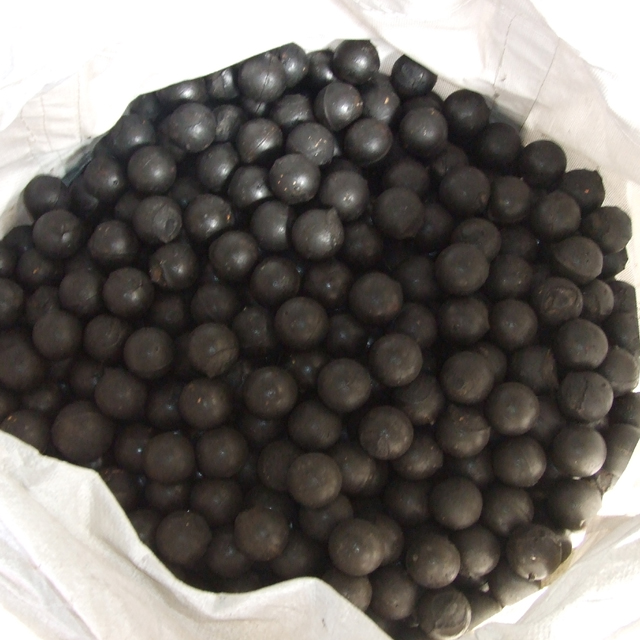
Nordic Europe includes Sweden, Finland, Norway, Denmark, and Iceland. For mining procurement, supplier suitability depends on the individual operation rather than a regional label.
A semi-autogenous grinding mill uses ore and an added steel-ball charge to break material through impact and abrasion. Its media must tolerate repeated impacts while maintaining useful wear resistance.
The best purchasing decision therefore balances several requirements:
- Resistance to impact-related cracking and breakage.
- Appropriate hardness throughout the ball.
- Consistent chemistry and heat treatment.
- Suitable ball size for the actual milling duty.
- Traceable production and inspection records.
- Dependable replenishment and technical communication.
A supplier serving a Nordic mine may manufacture elsewhere. Equally, a Nordic equipment company is not automatically a grinding-ball manufacturer. Separating manufacturing origin, sales coverage, and delivery capability prevents misleading comparisons.
| Manufacturer | Relevant offering | Main evaluation point | What buyers should verify |
|---|---|---|---|
| SHANDONG ALLSTAR GRINDING BALL CO., LTD. | Grinding media and OEM services | Manufacturer-direct sourcing and private-label requirements | SAG-specific specifications, inspection evidence, and Nordic delivery terms |
| Molycop | Dedicated SAG grinding balls | Product options for high-impact milling | Recommended grade, trial support, and regional supply route |
| Magotteaux | Forged and other grinding media | Media selection linked to operating conditions | Proposed alloy, batch testing, and commercial coverage |
| ME Elecmetal | Forged grinding media, including ME SUPER SAG® | SAG-focused media within a broader milling portfolio | Application recommendation, available sizes, and delivery arrangements |
At ALLSTAR, we serve mining, cement, and power customers with multiple grinding-media product categories. Our OEM service also supports overseas brands, wholesalers, and manufacturers seeking a manufacturing partner.
For Nordic buyers, the useful starting point is a defined application brief—not a generic request for the hardest available ball.
Send the mill type, current media size, ore characteristics, operating conditions, and present wear or breakage concerns. These details create a basis for discussing the appropriate product and a meaningful evaluation plan.
For OEM projects, the commercial discussion should also cover:
- Product drawings and agreed tolerances.
- Grade identification and labeling.
- Packaging and shipment requirements.
- Inspection documentation.
- Batch traceability expectations.
- Approval procedures for specification changes.
Our position in this guide reflects its company-led perspective. Buyers should assess ALLSTAR against the same technical and commercial requirements applied to every shortlisted supplier.
Molycop offers a dedicated SAG-ball range intended for high-impact milling environments. Its published product information describes forged, heat-treated alloy-steel media designed around impact resistance and wear performance.
This makes Molycop a relevant comparison point when evaluating SAG-specific products rather than general-purpose grinding balls.
Buyers should request the recommended product grade for their operation, supporting technical documentation, and an explanation of how the proposed media matches the mill's impact conditions.
Published global capabilities do not replace a location-specific quotation. Confirm the supplying facility, delivery route, lead time, and availability of application support.
Magotteaux offers forged, cast, and ceramic grinding-media products. Its forged-media information identifies SAG mills among the intended applications and describes batch impact testing for SAG balls.
Its published application material also illustrates an important principle: media selection should begin with the mill's operating conditions and wear mechanisms.
For Nordic procurement teams, the practical question is not whether a supplier has a broad catalogue. It is whether the proposed material addresses the actual balance of abrasion, impact, and downstream processing requirements.
Ask for the technical reasoning behind the recommendation and a trial protocol that can test it.
ME Elecmetal manufactures forged steel grinding balls and markets ME SUPER SAG® for SAG-mill applications.
Its dedicated SAG offering makes it another relevant manufacturer for a technical procurement shortlist.
Buyers should request the proposed size distribution, product specification, inspection documentation, and operating assumptions behind the recommendation.
Where a proposal combines media advice with other mill-related services, separate the expected contribution of each change. Otherwise, improvements caused by liners, operating adjustments, or ore changes may be incorrectly credited to the grinding balls.
Higher hardness is not automatically better.
Hardness can support abrasion resistance, but SAG balls must also withstand repeated impacts. A product that wears slowly yet fractures excessively may deliver poor overall value.
Request surface and internal hardness information, together with test methods and sampling details. Comparing numbers without knowing how they were measured can create false confidence.
Chemistry alone does not determine performance. Manufacturing and heat treatment influence the resulting microstructure and hardness distribution.
Ask suppliers how they control production consistency and how finished batches are accepted or rejected.
A useful inspection package connects the shipped product to identifiable production lots. A generic brochure or an unrelated laboratory report is not equivalent to shipment-specific evidence.
There is no universally correct SAG-ball diameter.
Selection should consider feed size, ore competency, mill dimensions, operating speed, ball charge, and the required product size.
Avoid changing several variables simultaneously during an evaluation. If ball size, alloy, and mill operating conditions all change together, identifying the reason for the result becomes difficult.
Record current media consumption, throughput, product size, power consumption, and observed breakage.
Include operating context: ore blend, feed size, mill availability, and significant liner changes.
Without this baseline, a supplier trial may produce attractive numbers that are not genuinely comparable.
Send every candidate the same requirements.
Specify ball diameter, application, inspection expectations, packaging, shipment quantity, delivery destination, and commercial terms.
Ask suppliers to identify deviations explicitly. This prevents an apparently cheaper offer from concealing a different product specification or delivery scope.
Request relevant inspection records, available test methods, and traceability arrangements.
Where customer references are offered, ask whether they concern comparable SAG duties. A successful application in a different mill type does not establish suitability for your operation.
Define the trial quantity, introduction method, monitoring period, sampling plan, and acceptance criteria before delivery.
Account for the existing ball charge: introducing new media does not immediately replace every ball already inside the mill.
Review wear, breakage, throughput, product size, and delivery performance.
The purchasing decision should reflect the overall outcome—not a single favorable measurement.
A supplier that performs well technically but cannot maintain dependable replenishment may still expose the operation to unacceptable risk.
Purchase price becomes more useful when linked to consumption.
Grinding-media cost per tonne of ore equals delivered media price per tonne multiplied by media consumption in kilograms per tonne of ore, divided by 1,000.
Consider this hypothetical comparison:
| Metric | Option A | Option B |
|---|---|---|
| Delivered media price | €1,000/t | €1,100/t |
| Media consumption | 0.80 kg/t ore | 0.68 kg/t ore |
| Media cost | €0.800/t ore | €0.748/t ore |
Option B costs more to purchase but produces a lower media cost per tonne of ore under these assumed conditions.
This example is illustrative, not an ALLSTAR performance claim. It excludes changes in throughput, energy, maintenance, and recovery. Those factors should be evaluated separately before drawing a total-cost conclusion.
Technical suitability does not guarantee a smooth purchasing process.
Before approving an order, clarify the manufacturing location, transport route, unloading arrangements, packaging, shipment documentation, and responsibility under the agreed Incoterm.
For Nordic deliveries, discuss any site-specific winter access or storage requirements rather than assuming standard arrangements will be sufficient.
For private-label grinding media, confirm how product identity remains traceable after repackaging or redistribution.
Also establish a clear nonconformance procedure:
1. Identify the affected batch.
2. Preserve representative samples.
3. Record operating conditions and photographs.
4. Agree on testing and review responsibilities.
5. Define the contractual remedy.
These details are easier to resolve before shipment than after a disputed delivery.
Avoid treating a maximum hardness figure as proof of superior SAG performance.
Do not assume a supplier's global presence guarantees stock near your mine.
Be cautious with unsupported claims such as "zero breakage," "best quality," or guaranteed savings without defined test conditions.
Finally, distinguish genuine customer evidence from promotional language. Useful feedback identifies the application, evaluation period, operating conditions, and measured outcome. Anonymous praise alone contributes little to a technical purchasing decision.
The right SAG grinding-media supplier should help you establish a specification that can be inspected, tested, and commercially managed.
Contact SHANDONG ALLSTAR GRINDING BALL CO., LTD. with your mill type, current ball size, ore characteristics, estimated demand, delivery destination, and any wear or breakage concerns.
For OEM enquiries, include your branding, packaging, labeling, and documentation requirements.
Request a quotation that clearly separates product specifications, inspection scope, delivery terms, and trial arrangements. That creates a practical foundation for comparing ALLSTAR with other shortlisted manufacturers.
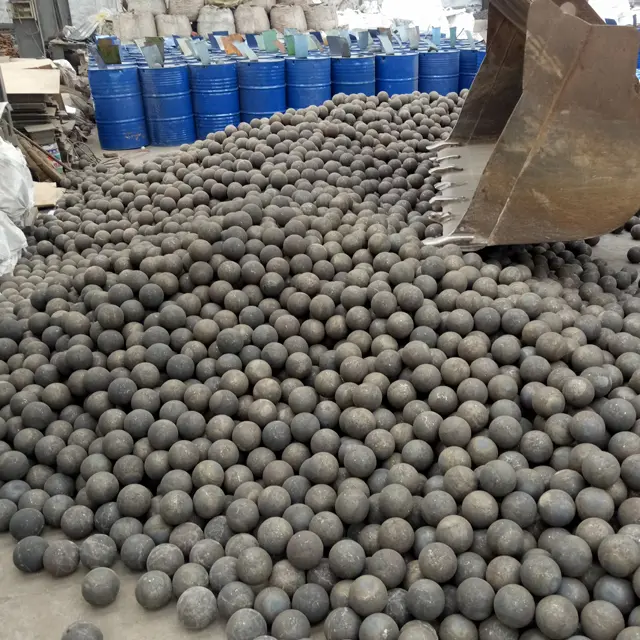
No. A supplier may serve Nordic customers from an overseas plant. Verify manufacturing origin, transport arrangements, applicable import requirements, and delivery commitments rather than relying on regional marketing language.
No universal rule applies to every operation. Forged steel is widely offered for high-impact SAG duties, but the appropriate choice depends on the application, material design, manufacturing quality, and verified operating performance.
Include mill details, current media size, ore characteristics, operating conditions, consumption history, required quantity, destination, and inspection expectations. State any OEM requirements separately.
Review agreed specifications, shipment-related inspection records, traceability, and relevant testing. Combine these checks with a controlled operational trial; laboratory results alone cannot reproduce every site condition.
According to the company information provided for this article, ALLSTAR offers OEM services to overseas brands, wholesalers, and manufacturers. Specific grades, labeling, packaging, documentation, and commercial terms require project-level agreement.
It connects purchase price with actual consumption. However, it remains only one part of the evaluation: throughput, energy, product size, maintenance, and downstream processing may also affect the final decision.
Hot Tags: China, Global, OEM, private label, manufacturers, factory, suppliers, manufacturing company


