
Views: 246 Author: shandong Allstar Grinding Ball Publish Time: 2026-10-22 Origin: Site


Content Menu
● How to Conduct a Site Audit of a Grinding Ball Manufacturing Facility: Start with Scope
>> Agree on Acceptance Criteria Before Arrival
● 1. Review Documents Before Walking the Factory
● 2. Trace Raw Materials into Production
● 3. Audit Forging and Casting as Different Manufacturing Routes
>> Forged Grinding Ball Manufacturing Controls
>> Cast Grinding Media Manufacturing Controls
● 4. Examine Heat Treatment Beyond the Temperature Display
● 5. Witness Grinding Ball Quality Control Testing
>> Verify Hardness Testing Conditions
>> Review Chemistry, Structure, and Mechanical Tests
● 6. Run a Bidirectional Batch Traceability Challenge
● 7. Use Risk-Based Sampling and Verify Capacity
>> Check Saleable Output, Not Nameplate Capacity
● 8. Inspect Safety, Environmental Controls, and OEM Packing
● 9. Turn Findings into a Supplier Approval Decision
● 10. Connect Factory Approval with a Controlled Mill Trial
>> 1. What should a grinding ball factory audit check first?
>> 2. Is ISO 9001 certification enough to approve a grinding media supplier?
>> 3. Should auditors test both surface and core hardness?
>> 4. How many grinding balls should be sampled?
>> 5. Can a remote audit replace an onsite visit?
>> 6. What are the most serious supplier warning signs?
SHANDONG ALLSTAR GRINDING BALL CO., LTD. manufactures grinding balls, forged steel balls, cast grinding media, grinding rods, and cylpebs for mining, cement, and power applications, with OEM services for overseas brands, wholesalers, and manufacturers.
For buyers researching how to conduct a site audit of a grinding ball manufacturing facility, the central question is straightforward: can this supplier repeatedly deliver the agreed product, with verifiable quality and dependable traceability?
A productive audit follows materials through production, challenges inspection records, and connects laboratory results with purchasing requirements. An impressive production line is useful evidence—but it is not proof of consistent performance.
This guide presents a practical framework for evaluating grinding media suppliers before approval, during supplier development, or after a quality concern.
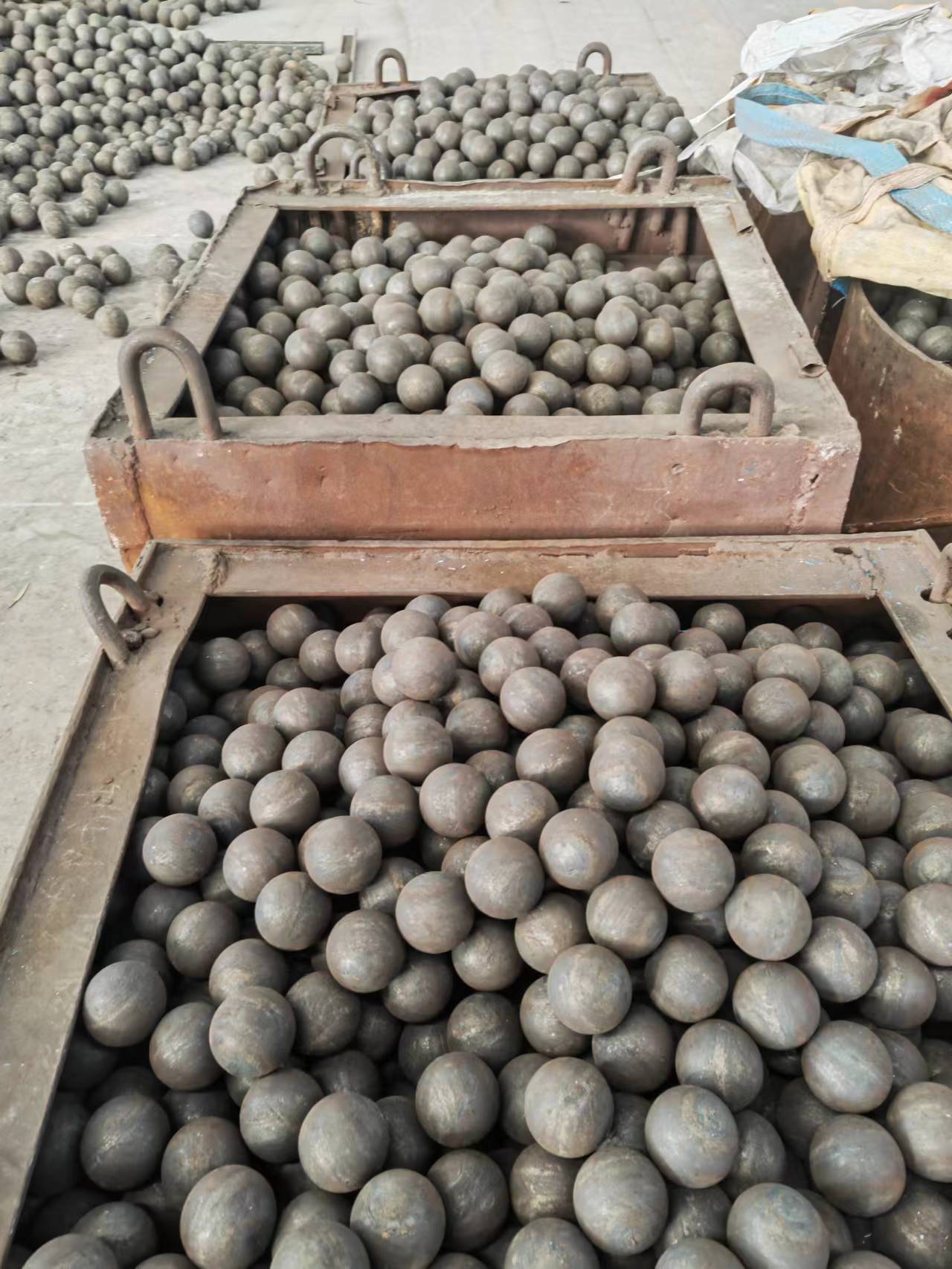
Before arranging the visit, define what the audit must establish.
Are you qualifying forged balls for a high-impact application? Reviewing cast media for abrasive service? Assessing an OEM partner's ability to maintain specifications across repeat orders?
These objectives require different evidence.
Prepare an audit scope covering:
- Products, sizes, material grades, and manufacturing routes.
- Application conditions and agreed acceptance requirements.
- Processes performed onsite and activities outsourced.
- Production capacity and delivery expectations.
- Quality control, traceability, packaging, and corrective action.
- Worker safety and applicable environmental obligations.
Use management-system auditing principles to organize evidence gathering. However, distinguish a buyer's supplier audit from a certification audit: visiting a facility does not establish certification or guarantee every future shipment.
Request the purchase specification, drawings where relevant, inspection requirements, and applicable test methods.
Define chemistry limits, dimensional tolerances, hardness requirements, sampling rules, and documentation expectations before inspecting products.
There is no universal hardness target, breakage limit, or inspection sample size suitable for every grinding ball application. Requirements should reflect the material, ball diameter, mill conditions, and contractual agreement.
Ask for a focused document package rather than an unstructured collection of certificates.
| Document | What the auditor should establish |
|---|---|
| Process flowchart | Actual manufacturing stages and outsourced operations |
| Material specifications | Approved chemistry and incoming acceptance rules |
| Inspection plan | Test methods, sampling, acceptance, and release authority |
| Calibration records | Suitability and validity of measuring equipment |
| Heat-treatment records | Traceability of cycles to production batches |
| Nonconformity reports | Containment, investigation, and corrective-action effectiveness |
| Shipment records | Connection between released batches and customer deliveries |
Check whether records agree with each other. A batch number on a hardness report should connect to identifiable production records and finished stock.
If certification is presented, verify its issuing body, validity, site address, and scope. A certificate covering another location or activity does not automatically cover the products under review.
Consistent grinding media begins with controlled inputs.
For forged steel grinding balls, inspect how incoming steel is identified, segregated, accepted, and linked to production orders.
For cast products, review charge-material identification, melt control, chemistry testing, and heat identification.
Ask operators practical questions:
- How do you distinguish approved material from material awaiting inspection?
- What happens when chemistry falls outside the approved range?
- How are mixed or unidentified materials prevented from entering production?
- Who can authorize a material substitution?
Select material from the floor and request its records. Do not rely exclusively on examples prepared for the audit.
The objective is to determine whether material identity survives normal handling, storage, and movement between departments.
A grinding media factory audit checklist should reflect how the product is actually made.
Review billet preparation, heating, forming, and transfer into subsequent processing.
Look for controlled operating instructions, maintained equipment, and records of relevant process parameters. Discuss how operators respond to interrupted production, abnormal temperatures, or forming defects.
Inspect representative products for dimensional consistency, folds, visible cracks, and other specified surface defects.
Review melting, chemistry adjustment, pouring, mold condition, product identification, and finishing.
Ask how the facility controls recurring casting defects and separates suspect material.
Confirm the material designation rather than relying on a broad commercial description. Some products marketed as "cast steel balls" may be high-chromium cast iron; the purchase specification should identify the intended material clearly.
Neither manufacturing route is automatically superior. Suitability depends on the balance of abrasion resistance, corrosion resistance, impact resistance, and operating conditions.
Heat treatment deserves particular attention because apparently similar balls can develop different properties when processing varies.
Request records showing:
- Furnace or equipment identification.
- Batch identity and loading arrangements.
- Approved temperature and time parameters.
- Relevant quenching and tempering controls.
- Temperature-measurement verification.
- Actions taken after process deviations.
A displayed temperature alone does not establish that every product followed the intended cycle.
Compare operating instructions with actual practice. Ask how the facility handles power interruptions, delayed transfers, equipment alarms, and unusual loading conditions.
Where relevant to the product and risk, review evidence that temperature distribution and loading practices support consistent treatment.
Avoid imposing one heat-treatment recipe across different alloys or diameters. The audit should establish control of the approved process, not substitute a generic recipe for metallurgical judgment.
The strongest laboratory review combines a witnessed test with a complete record trail.
Ask the technician to explain the method, scale, specimen preparation, test position, and acceptance criteria.
Rockwell and Brinell testing have different procedures and reporting requirements. Results should identify the method used, not simply state "hardness passed."
Review:
- Equipment verification and calibration status.
- Reference-block checks where required.
- Surface preparation and specimen support.
- Indentation spacing and test location.
- Curvature considerations where applicable.
- Recording and review of individual results.
Section preparation must avoid altering the property being measured through excessive heating or deformation.
Where through-section performance matters, request an agreed hardness profile. One surface measurement cannot establish the hardness distribution throughout a ball.
Check that chemistry results connect to the relevant heat or material lot.
Where specified, review metallographic preparation, structural assessment, and interpretation by competent personnel.
If drop, impact, or breakage testing forms part of acceptance, document the apparatus, procedure, sample size, and failure definition. Results from different test arrangements are not automatically comparable.
The governing principle is traceability: each reported result should connect an identifiable specimen, a defined method, and a production batch.
This exercise adds more value than reviewing a polished inspection summary.
Choose a finished pallet yourself. Ask the team to trace it backward through:
1. Packing identification.
2. Final inspection and release.
3. Heat-treatment batch.
4. Forming or casting records.
5. Incoming steel or melt identification.
Then reverse the exercise. Select a raw-material lot or production heat and identify all related finished stock and shipments.
This checks whether the supplier could contain an affected population after a discovered defect.
Record missing links, conflicting identifiers, and retrieval difficulties. A spreadsheet or paper system can be effective if it is controlled; software alone does not prove traceability.
For OEM orders, extend the challenge to customer-specific labels and specifications. Correct product under the wrong private-label identification remains a supply-chain failure.
One good sample cannot demonstrate consistent manufacturing.
Distribute audit samples across relevant diameters, material grades, production periods, and process routes. Include recent nonconforming batches where available.
Document the sampling rationale and expand the review when discrepancies appear. Audit sampling provides limited confidence; it is not a substitute for an agreed shipment acceptance plan.
Ask how quoted capacity was calculated.
Review actual output, yield, maintenance interruptions, heat-treatment constraints, inspection capacity, and packing throughput.
A forming line may produce faster than the heat-treatment or inspection process can release acceptable goods.
For overseas buyers, distinguish theoretical production capacity from available capacity after existing commitments. Delivery reliability depends on the whole production system.
Quality and operational discipline should be assessed alongside workplace risk.
Observe machine guarding, hot-metal separation, lifting practices, emergency access, dust and fume control, and maintenance isolation procedures.
Never request that guards be bypassed or that personnel enter hazardous areas to demonstrate a process.
Use applicable local law as the compliance baseline. Overseas guidance can inform questions, but it should not be presented as automatically governing a Chinese facility.
For environmental controls, review applicable permits, waste handling, and relevant monitoring records with competent personnel.
Then inspect finished-product storage and packing:
- Are released and rejected products separated?
- Do labels match the purchase order?
- Are package weights checked?
- Is packaging suitable for the agreed transport conditions?
- Are customer-specific markings controlled?
- Can mixed-size or mixed-grade packing be prevented?
For OEM buyers, packaging approval belongs in the quality process, not merely the marketing department.
An audit report should explain what was checked, what was found, and why the finding matters.
Use a consistent finding format:
Requirement → observed evidence → gap → affected scope → required action.
For example, "traceability is weak" is vague. A useful finding identifies the selected pallet, the missing batch link, and the consequences for containment.
A practical buyer-defined classification might be:
| Classification | Example | Purchasing response |
|---|---|---|
| Critical | Falsified records or an uncontrolled immediate safety hazard | Suspend approval pending verified resolution |
| Major | Repeated loss of batch identity or uncontrolled acceptance testing | Require effective corrective action before approval |
| Minor | Isolated documentation lapse with otherwise effective controls | Set an owner, deadline, and verification method |
| Improvement | Useful enhancement without demonstrated nonconformity | Include in supplier development |
These categories are a suggested framework, not universal certification rules.
For each nonconformity, require containment, root-cause analysis, corrective action, and effectiveness verification. Closing a report requires evidence that the problem was addressed—not simply a promise.
A successful factory audit does not guarantee the lowest grinding cost.
Before commercial expansion, consider a controlled trial appropriate to the application. Record media additions, throughput, operating conditions, product size, and relevant wear or breakage observations.
Interpret consumption carefully. During charge replacement, inventory changes and old media can distort short-term comparisons.
Compare like-for-like conditions and consider downstream effects where relevant. The purchasing objective is dependable total operating value, not merely the highest hardness or lowest price per tonne.
For an OEM sourcing discussion with SHANDONG ALLSTAR GRINDING BALL CO., LTD., share your application, required sizes, annual demand, material requirements, inspection criteria, and packaging needs. Request the technical documents and audit arrangements available for your proposed order before agreeing on supplier approval.

Start with the purchase specification, manufacturing scope, and batch-identification system. Without clear requirements and traceability, individual inspection results provide limited assurance.
No. It can support confidence in a management system, but buyers should still verify product requirements, process controls, testing, and the certificate's actual scope.
Where the specification or application requires through-section assessment, yes. Define preparation, measurement locations, and acceptance criteria beforehand rather than interpreting an improvised test afterward.
There is no universally appropriate number. Audit sampling depends on risk and process variation; shipment acceptance requires a separately agreed sampling plan and decision rules.
Remote reviews can support document checks and follow-up. They offer less control over sample selection, physical observation, and verification of actual operating conditions.
Unverifiable results, missing batch links, unidentified material, uncontrolled process deviations, and unwillingness to investigate discrepancies all justify deeper review before purchasing approval.
Hot Tags: China, Global, OEM, private label, manufacturers, factory, suppliers, manufacturing company


