
Views: 255 Author: shandong Allstar Grinding Ball Publish Time: 2026-10-21 Origin: Site


Content Menu
● Grinding Media Solutions for Coal-Fired Power Plant Pulverizers: Start With Mill Compatibility
● What Power-Plant Buyers Should Optimize
● Coal Properties That Influence Grinding Media Selection
>> Grindability, Feed Size, and Moisture
>> Abrasive Constituents and Operating Conditions
● Forged vs. Cast Grinding Balls for Coal Pulverizers
>> When High-Chromium Media Deserves Evaluation
● Ball Size Distribution and Charge Management
● A Five-Step Trial Plan for Grinding Media Suppliers
>> 1. Establish a Representative Baseline
>> 2. Agree on Acceptance Criteria
>> 4. Measure the Whole Pulverizing System
>> 5. Review Before Scaling Up
● Calculate Cost per Tonne of Acceptable Pulverized Coal
● OEM Grinding Media Procurement With ALLSTAR
● Quality Documentation and Responsible Operation
● Request an Application-Specific Grinding Media Proposal
>> 1. What Grinding Media Is Used in Coal-Fired Power Plant Pulverizers?
>> 2. Are Forged Balls Better Than Cast Balls for Coal Grinding?
>> 3. Can High-Chromium Grinding Balls Reduce Wear?
>> 4. What Information Should We Send ALLSTAR for a Quotation?
>> 5. How Should a Plant Measure Grinding Media Consumption?
>> 6. Can Better Grinding Media Solve Poor Coal Fineness?
At SHANDONG ALLSTAR GRINDING BALL CO., LTD., we manufacture grinding balls, forged steel balls, cast steel balls, grinding rods, and cylpebs for mining, cement, and power applications. We also provide OEM services for international brands, wholesalers, and manufacturers. Our approach to Grinding Media Solutions for Coal-Fired Power Plant Pulverizers starts with one principle: match the product to the mill before comparing prices.
For power-station buyers, grinding media selection is a performance decision, not simply a purchasing exercise. The objective is to maintain required coal fineness and throughput while controlling wear, energy use, and maintenance exposure.
This guide explains how to identify compatible media, evaluate specifications, and build a measurable procurement strategy without relying on unsupported performance promises.
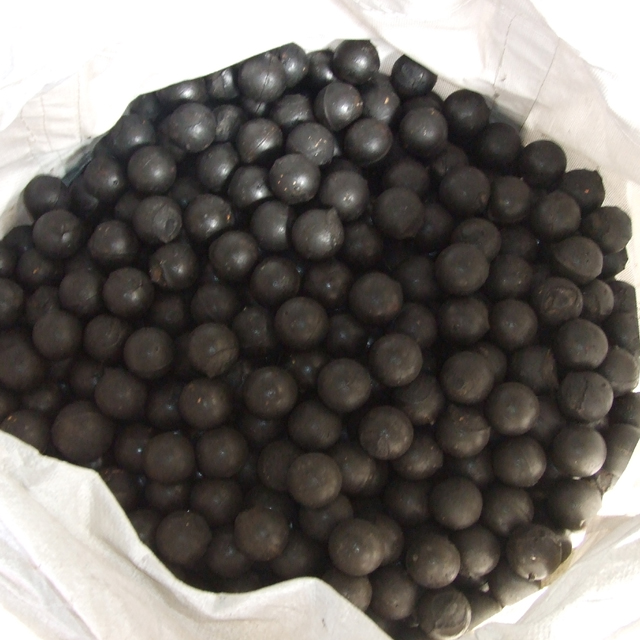
"Coal pulverizer" describes several machine designs. They do not all use interchangeable grinding balls.
Confirming the equipment type is therefore the first technical checkpoint.
| Pulverizer design | Grinding arrangement | Purchasing implication |
|---|---|---|
| Ball-tube mill | Loose balls tumble inside a rotating shell | Evaluate ball material, diameter distribution, charge condition, and liner compatibility |
| Ball-and-race mill | Engineered balls operate between grinding races | Require machine-specific geometry, material requirements, and dimensional approval |
| Vertical roller or bowl mill | Rollers or tires compress coal against a table or bowl | Specify compatible wear components rather than loose grinding balls |
A conventional ball-mill grinding ball is not automatically a replacement for a ball-and-race component. Likewise, grinding rods and cylpebs should not be proposed for a coal pulverizer simply because they belong to a supplier's product range.
At ALLSTAR, our recommended starting point is the equipment designation, existing component drawing, and operating duty—not an assumed universal specification.
The most useful procurement question is not "Which ball is hardest?"
It is: "Which approved grinding media specification maintains the required pulverizer output at the lowest defensible operating cost?"
Four outcomes deserve attention:
- Coal fineness at the agreed sampling locations.
- Throughput under comparable coal and load conditions.
- Media consumption, breakage, and dimensional stability.
- Pulverizer power demand and maintenance requirements.
These outcomes are connected. A lower purchase price may provide poor value if the media wears rapidly or fails prematurely. Conversely, a premium alloy is difficult to justify if a controlled trial shows no meaningful improvement.
We recommend defining acceptance criteria before requesting competing quotations.
The Hardgrove Grindability Index, or HGI, indicates relative coal grindability. Lower-HGI coal is generally more difficult to grind, but HGI alone does not determine pulverizer performance.
Feed size, moisture, required fineness, and operating rate also matter. A change in coal blend can therefore change mill performance without any change in media quality.
Record these variables when comparing suppliers. Otherwise, a difficult fuel batch may be mistaken for a product failure—or an easier fuel batch may create an exaggerated success claim.
Abrasive mineral matter contributes to wear. However, total ash percentage alone does not fully describe abrasiveness; mineral composition and particle characteristics also influence the duty.
Review coal information alongside used-media condition, liner wear, and operating history. Flattening, surface loss, cracking, or fragmentation can suggest different problems, but visual evidence should support—not replace—material testing and engineering assessment.
For compatible ball-tube mills, forged and cast grinding balls are candidate product families rather than universally interchangeable solutions.
| Selection factor | Forged grinding balls | Cast grinding balls |
|---|---|---|
| Main evaluation focus | Toughness, hardness profile, and impact performance | Alloy structure, abrasion resistance, and casting integrity |
| Important quality checks | Chemistry, heat treatment, dimensions, and agreed mechanical tests | Chemistry, heat treatment, dimensions, and defect inspection |
| Key limitation | Manufacturing route alone does not prove wear performance | Higher alloy content alone does not prove suitability |
| Final selection basis | Mill compatibility and measured operating results | Mill compatibility and measured operating results |
High-chromium cast media can be considered where abrasion resistance is important and the mill duty permits its use. Chromium-bearing carbides and the surrounding metallic structure contribute to performance.
However, "more chromium" is not a complete selection rule. Heat treatment, toughness, casting quality, impact conditions, and liner interaction still matter.
Request an application-specific proposal rather than selecting solely from a chromium percentage or surface-hardness figure.
A single hardness reading does not describe an entire grinding ball.
Buyers should establish the test method, sampling location, acceptance range, and relevant internal-hardness requirements. Depending on the application, impact testing and metallographic examination may also be appropriate.
The goal is a balanced specification: sufficient wear resistance without unacceptable fracture risk.
Grinding performance depends on the condition of the entire charge, not just newly delivered balls.
In a ball-tube mill, larger balls generally provide stronger individual impacts, while smaller balls provide more particles and greater combined surface area for a given media mass. Neither characteristic guarantees better performance independently.
The appropriate size distribution must account for feed size, mill design, liners, operating conditions, and required product fineness.
A practical review should document:
1. Approved initial charge and current estimated inventory.
2. Existing ball-size distribution, where safely measurable.
3. Makeup-ball sizes and addition frequency.
4. Worn, broken, or excessively deformed media.
5. Relevant OEM limits and maintenance procedures.
Avoid copying another plant's charging practice without checking compatibility. Similar boiler capacity does not establish identical mill conditions.
A controlled trial provides stronger purchasing evidence than an isolated hardness certificate or an unqualified service-life claim.
Record coal properties, mill loading, feed rate, fineness, power, media additions, and relevant maintenance observations.
Include enough operating variation to understand normal performance. A baseline collected only during unusually favorable conditions will weaken the comparison.
Set requirements before delivery. These may include dimensional compliance, documentation completeness, breakage limits, media consumption, and performance at the required fineness.
Do not invent universal thresholds. The plant's engineering team should approve application-specific criteria.
Where practical, avoid changing media specification, classifier settings, coal blend, and operating procedures simultaneously.
If other changes are unavoidable, document them. This makes the trial interpretable rather than merely descriptive.
Use representative coal sampling and appropriate fineness testing. Where relevant, evaluate individual fuel lines rather than relying only on an average result.
A satisfactory average can conceal uneven fuel distribution. Media performance should therefore be interpreted alongside classifier condition, airflow, and other system factors.
Compare results over an agreed operating period. Account for residual old media, charge stabilization, coal variation, and measurement uncertainty.
An early improvement is a reason to investigate further, not automatically a basis for a fleet-wide replacement decision.
Price per tonne of grinding media is useful for quotations, but value becomes clearer when costs are connected to saleable operating output.
A practical comparison is:
Grinding-related cost per tonne of acceptable pulverized coal = attributable media, energy, and maintenance costs ÷ coal tonnage meeting the agreed specification.
Use consistent accounting boundaries. Include only costs that can reasonably be measured or attributed, and report uncertain downtime assumptions separately.
| Metric | Suggested basis |
|---|---|
| Media consumption | Kilograms consumed per tonne of coal processed |
| Pulverizer electricity | Kilowatt-hours per tonne at comparable duty |
| Fineness compliance | Samples meeting the plant's approved requirements |
| Breakage | Agreed inspection or recovery method |
| Maintenance | Documented intervention frequency and attributable cost |
Do not equate makeup additions directly with wear if the charge inventory has changed. Reconcile additions, removals, and inventory estimates before drawing conclusions.
This approach helps purchasing and operations teams evaluate the same evidence.
ALLSTAR serves overseas brands, wholesalers, and manufacturers seeking OEM grinding media supply.
A strong RFQ should define more than product name and order quantity. It should communicate the application, acceptance criteria, and documentation needed for repeatable purchasing.
Include:
- Mill manufacturer, model, and grinding arrangement.
- Approved drawings or existing media specifications.
- Required dimensions, tolerances, and material designation.
- Coal characteristics and operating conditions.
- Inspection methods and acceptance requirements.
- Packaging, marking, shipment, and documentation expectations.
- Trial quantity, forecast demand, and delivery schedule.
Private-label packaging, customized marking, inspection scope, and other OEM requirements should be confirmed during quotation rather than assumed.
For repeat orders, use a controlled specification and retain approved reference documents. This reduces ambiguity when purchasing teams, distributors, or operating personnel change.
Ask suppliers to identify how each shipment relates to the agreed production and inspection records.
Depending on the contract, the documentation package may include chemical analysis, dimensional inspection, hardness results, agreed mechanical tests, and batch identification. Any certification claim should be checked for scope, issuing body, and validity.
Coal pulverizers also operate in a combustible-dust environment. Media selection must not be presented as a substitute for the plant's fire protection, operating procedures, or OEM safety requirements.
Changes to charge quantity, operating settings, or internal components require appropriate engineering review. Inspection and handling must follow site isolation and maintenance procedures.
Send SHANDONG ALLSTAR GRINDING BALL CO., LTD. your pulverizer model, current media specification, coal information, operating challenges, and purchasing requirements.
For a productive first discussion, identify your main objective: longer wear life, reduced breakage, more consistent supply, OEM sourcing, or lower verified operating cost.
Request a proposal covering product compatibility, available specifications, inspection documentation, trial arrangements, and quotation terms. The strongest purchasing decision begins with clear requirements and ends with measurable performance.
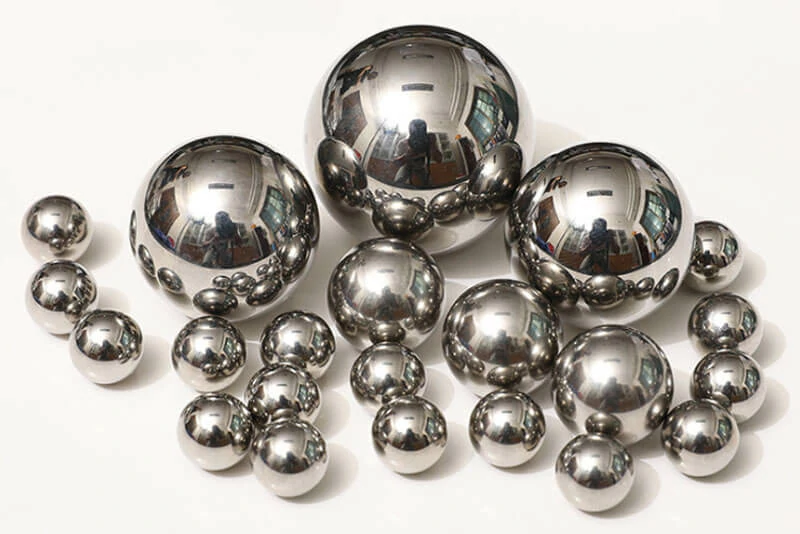
It depends on the equipment. Ball-tube mills use loose grinding balls. Ball-and-race mills require engineered grinding elements. Roller and bowl mills use compatible rollers, tires, tables, or related wear components rather than a conventional loose-ball charge.
Not universally. Suitability depends on impact conditions, abrasion, heat treatment, dimensions, and the approved mill specification. Compare qualified products under representative operating conditions instead of treating the manufacturing route as proof of superior performance.
They may reduce wear in suitable abrasive applications, but results depend on alloy structure, manufacturing quality, impact duty, and system compatibility. A controlled trial is needed before making application-specific savings claims.
Provide the mill model, media drawing or specification, required sizes, quantity, coal characteristics, and operating concerns. Include inspection, packaging, OEM marking, shipping destination, and delivery requirements so the quotation addresses the actual procurement scope.
Relate media consumption to coal processed over a defined period. Reconcile makeup additions with removed media and changes in charge inventory. Compare results alongside coal quality, required fineness, and operating conditions.
Sometimes media condition contributes, but poor fineness can also involve classifiers, airflow, feed properties, worn internals, or operating settings. Diagnose the pulverizing system before attributing the problem to grinding media alone.
Hot Tags: China, Global, OEM, private label, manufacturers, factory, suppliers, manufacturing company


