
Views: 226 Author: shandong Allstar Grinding Ball Publish Time: 2026-10-15 Origin: Site


Content Menu
● Why High Chrome Media Matters in Cement Grinding
● What Is High Chrome Grinding Media?
● How High Chrome Media Improves Cement Mill Performance
>> 1. Lower Wear Rate and More Stable Ball Charge
>> 2. Better Grinding Efficiency in Finish Mills
>> 3. Reduced Media Consumption and Replacement Costs
● Choosing the Right High Chrome Media for Cement Mills
>> Match Media to Mill Chamber
>> Consider Clinker Characteristics
>> Balance Hardness with Toughness
● A Practical Optimization Process for Cement Plants
>> Step 1: Establish the Baseline
>> Step 2: Inspect the Existing Ball Charge
>> Step 3: Select a Trial Section
>> Step 4: Monitor Performance Weekly
● Common Mistakes When Upgrading to High Chrome Media
>> Ignoring Ball Size Distribution
>> Replacing Media Without Reviewing the Mill System
>> Comparing Price Instead of Cost per Ton
● Quality Control: What Buyers Should Verify
● OEM Grinding Media for Global Cement Brands
>> 1. What is high chrome grinding media used for in cement plants?
>> 2. Is high chrome media better than forged steel balls?
>> 3. How does high chrome media reduce cement production costs?
>> 4. What ball sizes are commonly used in cement grinding mills?
>> 5. How should a cement plant test high chrome grinding media?
>> 6. Can SHANDONG ALLSTAR provide OEM high chrome grinding balls?
Cement grinding is one of the most energy-intensive stages in cement production. The right grinding media can improve fineness control, stabilize mill operation, reduce media consumption, and lower the cost per ton of finished cement. In my work with cement plant operators, the most consistent improvement comes from matching high chrome grinding media to the specific mill chamber, clinker characteristics, and target Blaine fineness.
At SHANDONG ALLSTAR GRINDING BALL CO., LTD., we manufacture grinding balls, mill balls, forged steel balls, cast steel balls, grinding rods, and grinding cylpebs for mining, cement, and power industries. We also provide OEM grinding media for overseas brands, wholesalers, and producers. This article shares a practical, field-oriented view of how high chrome media can enhance cement grinding mill performance.
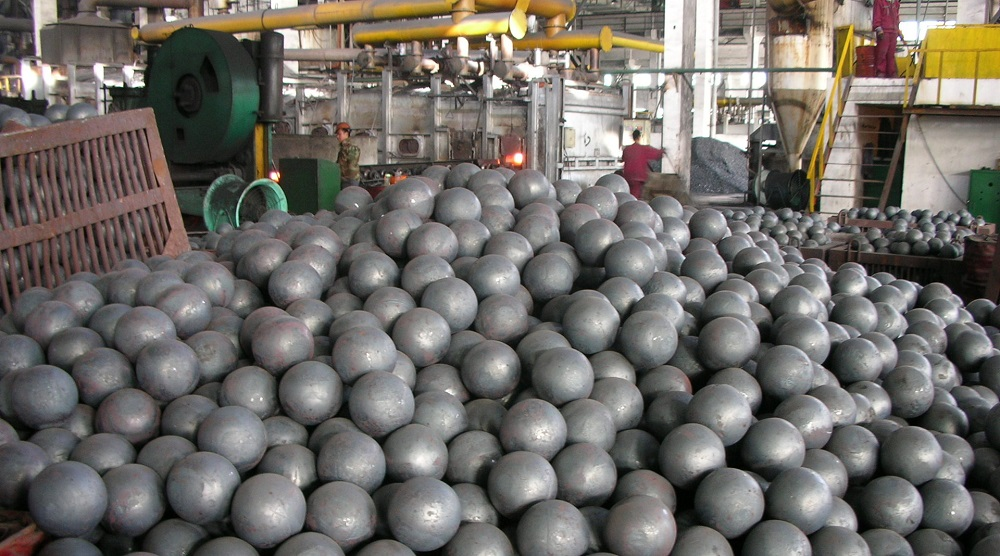
High chrome grinding media refers to cast or forged grinding balls made from iron-carbon-chromium alloys with elevated chromium content. The alloy typically develops a martensitic microstructure and hard chromium carbides, which provide strong resistance to abrasion and repeated impact.
Compared with ordinary carbon steel media, high chrome media generally offers:
- Higher surface hardness
- Better wear resistance
- Lower ball consumption
- More stable ball size distribution
- Reduced contamination risk in sensitive grinding applications
High chrome media is particularly suitable for dry cement grinding, clinker grinding, limestone grinding, and finish milling applications where abrasion is the dominant wear mechanism. Industry literature also notes that high-chromium white cast irons can show substantially lower wear rates than cast or forged steel in dry grinding conditions.
In a cement ball mill, media wears continuously. As balls become smaller, the grinding charge loses its designed size distribution. This reduces impact energy in the first chamber and reduces fine-grinding capacity in the second chamber.
High chrome media wears more slowly and more evenly. That means:
- The ball charge remains closer to the designed grading for longer.
- Operators can extend top-up intervals.
- Mill power draw remains more stable.
- Product fineness is easier to control.
A stable media charge is especially important in finish mills, where small changes in ball size distribution can affect Blaine fineness, residue on sieve, and cement strength development.
Cement finish grinding depends heavily on fine grinding. Smaller media provides more contact points and improves attrition grinding, while larger media delivers impact breakage for coarser clinker particles.
High chrome balls maintain their shape and hardness longer. This helps preserve the balance between:
- Impact grinding in the first chamber
- Attrition and fine grinding in the second chamber
- Classifying efficiency in closed-circuit systems
- Blaine target achievement without excessive mill power
From a plant-operation perspective, the goal is not simply to use the hardest ball. The goal is to maintain the correct ball size distribution for the material and mill design.
Media consumption is a major recurring cost in cement plants. Although high chrome media may have a higher initial purchase price, its longer service life can reduce total cost of ownership.
The economic calculation should include:
| Cost Factor | Ordinary Steel Media | High Chrome Media |
|---|---|---|
| Initial purchase price | Usually lower | Usually higher |
| Wear rate | Higher | Lower |
| Replacement frequency | More frequent | Less frequent |
| Labor for topping up | Higher | Lower |
| Mill downtime risk | Higher | Lower |
| Consistency of grinding performance | More variable | More stable |
| Cost per ton of cement | Can be higher | Often lower over time |
The correct decision depends on clinker hardness, mill type, liner condition, moisture, throughput, and the plant's target fineness. A trial should always compare cost per ton of cement produced, not price per ton of media.
A typical two-chamber cement ball mill requires different grinding functions in each chamber.
- First chamber: Coarse clinker breakage requires larger-diameter media with sufficient impact resistance.
- Second chamber: Fine cement grinding requires smaller media with high surface-area contact and stable wear performance.
Using one uniform ball size across both chambers is rarely optimal. A graded charge usually delivers better grinding efficiency.
Before selecting media, review:
- Clinker hardness and microstructure
- Feed size distribution
- Moisture content
- Target Blaine fineness
- Required residue on 45 µm or 90 µm sieve
- Mill diameter, length, speed, and liner profile
- Separator performance and circulating load
Harder clinker or higher silica content generally increases abrasive wear. In such cases, high chrome media becomes more valuable because it maintains hardness and shape under demanding conditions.
Very hard media resists abrasion, but it must also withstand impact without cracking or spalling. The best high chrome ball is not necessarily the hardest ball; it is the ball with the right combination of:
- Hardness
- Toughness
- Microstructural consistency
- Dimensional accuracy
- Heat-treatment quality
At SHANDONG ALLSTAR GRINDING BALL CO., LTD., we focus on controlled chemistry, heat treatment, and quality inspection so that media performs predictably in real cement mill conditions.
Based on industry practice, I recommend a structured trial rather than replacing the entire charge at once.
Record at least two to four weeks of operating data before changing media:
- Cement production rate
- Specific power consumption
- Blaine fineness
- Residue on sieve
- Media consumption
- Mill sound, vibration, and power draw
- Ball charge level and size distribution
- Separator return load
Without a reliable baseline, it is impossible to prove whether high chrome media has improved performance.
Perform a crash-stop inspection where safe and practical. Measure the actual ball charge, check for broken or deformed balls, and assess whether the current size distribution matches the design.
Common findings include:
- Excessive loss of small balls
- Too many oversized balls in the second chamber
- Uneven wear
- Broken media caused by poor toughness
- Incorrect filling level
- Liner wear affecting ball motion
Install high chrome media in one mill, one chamber, or a defined portion of the charge. This limits risk and makes comparison easier.
A practical approach is to replace the second-chamber fine-grinding media first, because wear performance and fineness control are often most visible there.
Track the same indicators used in the baseline. Pay particular attention to:
- Media consumption in grams or kilograms per ton of cement
- Changes in Blaine and residue
- Mill power consumption
- Production rate
- Cement temperature
- Separator circulating load
- Ball surface condition
Do not judge results too early. A meaningful evaluation usually requires several weeks of stable operation.
Avoid large, sudden changes to the ball charge. Adjust media quantity and size distribution in small steps, then measure the result.
If residue is too high, the plant may need more effective fine-grinding media or a revised grading. If mill power is excessive or product temperature rises, the charge may be too heavy or poorly graded.
Hardness improves wear resistance, but insufficient toughness can cause breakage. The correct alloy must match the impact conditions in the mill.
Even premium high chrome media will underperform if the charge grading is wrong. Large balls, medium balls, and smaller balls must work together.
Grinding media is only one part of the system. Liners, diaphragms, separator settings, ventilation, feed size, and circulating load all affect results.
A lower-priced ball that wears quickly may cost more over a year than a higher-priced high chrome ball with a lower wear rate.
For overseas brands, wholesalers, and cement producers sourcing OEM grinding media, quality consistency matters as much as chemistry. Before placing a large order, verify:
- Chemical composition certificates
- Hardness test reports
- Impact toughness data where applicable
- Heat-treatment process records
- Dimensional tolerance and ovality controls
- Microstructure inspection reports
- Drop-test or breakage-test procedures
- Packing, marking, and traceability systems
A dependable supplier should be able to explain not only the product specification, but also why that specification suits the customer's mill and material.
SHANDONG ALLSTAR GRINDING BALL CO., LTD. supports international brands, distributors, and manufacturers with OEM grinding media solutions. Our product range includes:
- High chrome cast grinding balls
- Forged steel grinding balls
- Cast steel grinding balls
- Grinding rods
- Grinding cylpebs
- Custom-sized mill balls
We can support customers who need private-label packaging, customized specifications, stable repeat supply, and technical discussion for cement, mining, and power-plant grinding applications.
For a cement producer, the most valuable supplier is not simply one that offers a catalog. The best partner understands the relationship between media design, mill performance, wear rate, and cement quality.
If your cement mill suffers from rapid media wear, unstable fineness, frequent top-ups, or rising grinding cost, high chrome media deserves serious evaluation. Start with a controlled trial, measure cost per ton rather than purchase price, and optimize the ball charge gradually.
The best result comes from combining:
- High chrome media
- Correct ball grading
- Proper filling level
- Healthy liners and diaphragms
- Stable separator operation
- Consistent quality control
When these elements work together, cement plants can achieve more stable production, better fineness control, and lower long-term grinding costs.
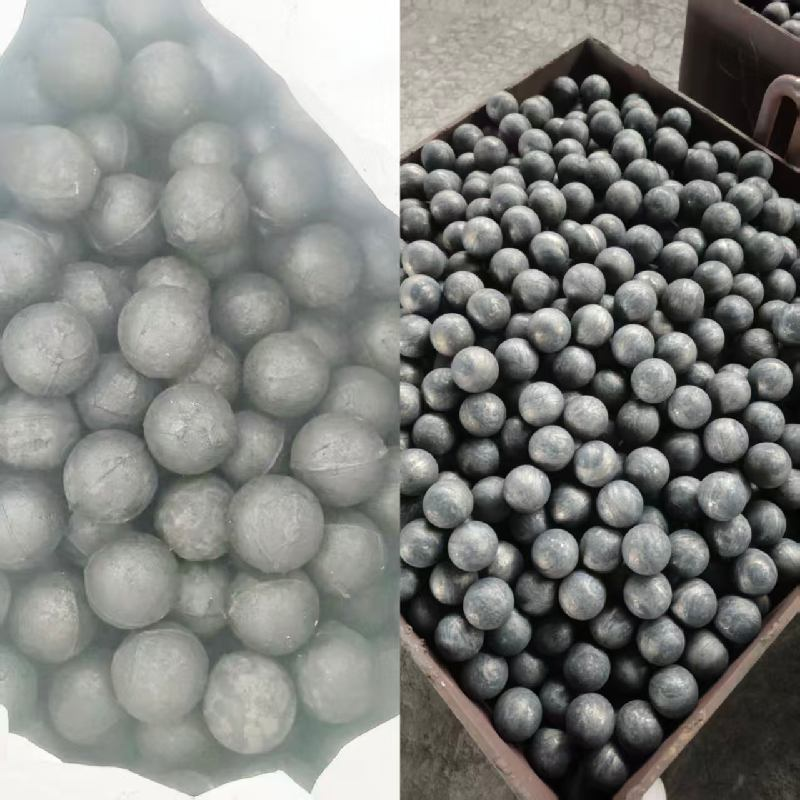
High chrome grinding media is used in cement ball mills, especially finish mills and clinker grinding applications. It provides strong abrasion resistance, helping reduce media wear and maintain stable grinding performance.
It depends on the application. High chrome media generally offers superior wear resistance in dry cement grinding, while forged steel balls may be preferred where higher impact toughness is required. The right choice depends on mill type, clinker hardness, and wear mechanism.
It can reduce media consumption, extend replacement intervals, stabilize ball charge grading, and improve grinding consistency. These benefits can lower media cost per ton of cement and reduce operational disruption.
Cement mills often use a graded charge. Larger balls are used for coarse clinker breakage, while smaller balls are used for fine grinding in the second chamber. The ideal distribution depends on mill design and target cement fineness.
Run a controlled trial with a clear baseline. Track production rate, power consumption, Blaine fineness, residue, media consumption, and ball charge condition for several weeks before making a full conversion.
Yes. SHANDONG ALLSTAR GRINDING BALL CO., LTD. provides OEM services for overseas brands, wholesalers, and producers, including customized grinding balls, mill balls, forged steel balls, cast steel balls, grinding rods, and grinding cylpebs.
- [Magotteaux – High-Chrome Grinding Media]
- [Magotteaux – Grinding Media]
- [Molycop – Cast High Chrome Balls]
- [MDPI – A Review of the Grinding Media in Ball Mills for Mineral Processing]
- [AusIMM – The Application of High-Chrome Grinding Media at MMG Century Mine]
- [ScienceDirect – Computation of Charging Media for a Double Compartment Cement Ball Mill]
Hot Tags: China, Global, OEM, private label, manufacturers, factory, suppliers, manufacturing company


