
Views: 267 Author: shandong Allstar Grinding Ball Publish Time: 2026-10-22 Origin: Site


Content Menu
● Why Power Plants Require Consistent Hardness in Coal Grinding Balls: The Operating Connection
>> First, Confirm That the Mill Uses Replaceable Grinding Balls
● How Inconsistent Hardness Can Affect Coal Mill Performance
>> Uneven Wear Changes the Grinding Charge
>> Grinding Variability Complicates Fineness Control
>> Unpredictable Consumption Makes Maintenance Planning Harder
● Surface Hardness vs. Core Hardness: What Buyers Should Measure
● Why Maximum Hardness Is Not the Same as Maximum Reliability
● Forged vs. Cast Grinding Balls for Coal Mills
>> Forged Steel Grinding Balls
>> Cast Steel and Alloy Grinding Balls
● A Practical Hardness Acceptance Plan for Power Plant Buyers
>> 1. Define the Application Before Setting the Hardness Range
>> 2. Specify the Test Method and Preparation
>> 3. Establish a Representative Sampling Plan
>> 4. Report Variation, Not Just the Average
>> 5. Connect Inspection to Traceability
● How to Run a Controlled Coal Grinding Media Trial
>> Calculate Comparable Performance Indicators
● Evaluate Cost per Tonne, Not Purchase Price Alone
● Working with SHANDONG ALLSTAR on OEM Grinding Media
>> 1. Why do power plants require consistent hardness in coal grinding balls?
>> 2. What is the best HRC for coal grinding balls?
>> 3. Should surface and core hardness be identical?
>> 4. Can harder grinding balls reduce electricity consumption?
>> 5. Are forged grinding balls better than cast balls?
>> 6. What documents should an OEM buyer request?
At SHANDONG ALLSTAR GRINDING BALL CO., LTD., we believe the answer to "Why Power Plants Require Consistent Hardness in Coal Grinding Balls" starts with predictable performance—not simply the highest hardness number. For power stations using ball-and-tube coal mills, grinding media must maintain an appropriate balance of wear resistance, toughness, and dimensional stability throughout service.
We manufacture grinding balls, forged steel balls, cast steel balls, grinding rods, and cylpebs for mining, cement, and power applications. We also provide OEM services for international brands, wholesalers, and manufacturers.
For coal-grinding applications, our position is straightforward: buyers should evaluate grinding media through measurable specifications, traceable inspection, and controlled operating trials. A hardness claim becomes valuable only when it helps explain performance inside the mill.
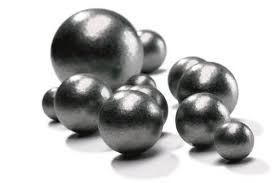
Coal mills prepare fuel for combustion. In ball-and-tube mills, a rotating charge of steel balls breaks coal through impact and abrasion.
As the balls wear, their size distribution changes. Operators compensate through media replenishment, maintenance, and adjustments to operating conditions. When media properties vary unnecessarily, those decisions become harder.
Consistency means keeping hardness within an agreed specification across individual balls, production batches, and defined measurement locations.
It does not mean every ball must have an identical hardness reading. Nor does it automatically mean the surface and center must have the same value. The acceptable profile depends on the alloy, manufacturing route, ball diameter, and application.
The objective is predictable behavior as the grinding charge ages.
Not every coal pulverizer uses loose grinding media.
Ball-and-tube mills use a tumbling ball charge. Vertical roller mills and other pulverizer designs use different grinding elements. Ball-and-race systems also require equipment-specific assessment rather than assumptions based on tumbling mills.
Before specifying coal grinding balls, confirm the mill design, original equipment manufacturer requirements, and existing operating practice.
This distinction prevents a technically reasonable grinding-media specification from being applied to the wrong equipment.
If some balls wear substantially faster than others under comparable conditions, the charge can develop a different size distribution than expected.
That matters because grinding performance depends partly on the relationship between ball size, coal feed size, and operating conditions.
However, hardness is not the only influence. Alloy composition, microstructure, coal abrasiveness, mill loading, and impact conditions also affect wear.
A useful procurement specification therefore combines hardness requirements with material identification and performance evaluation.
Coal fineness influences combustion behavior, but grinding media are only one part of the system.
Classifier settings, primary airflow, feed rate, coal moisture, and grindability also affect the delivered particle-size distribution.
Consistent grinding media help remove one source of variability. They do not guarantee a particular fineness result independently of those other factors.
If fineness deteriorates, investigate the whole pulverizer system rather than immediately blaming the balls—or assuming harder replacements will solve the problem.
Stable wear behavior helps operators forecast replenishment requirements and purchasing schedules.
By contrast, unexpected media loss or breakage can complicate stock planning and inspection decisions.
For procurement teams, the practical issue is not just ball price. It is whether the selected media deliver an acceptable operating cost under the station's actual conditions.
That requires tracking consumption alongside throughput, fineness, and mill performance.
A surface reading describes one location. It does not establish the properties of the entire ball.
For this reason, power plant grinding-media specifications should distinguish between surface hardness and an internal hardness profile.
| Measurement | What it helps establish | Procurement question |
|---|---|---|
| Surface hardness | Condition near the working surface | Where and how was the reading taken? |
| Subsurface hardness | Behavior beneath the outer layer | How much material was removed before testing? |
| Mid-radius hardness | Internal property distribution | Is the location consistently defined? |
| Center hardness | Condition at the core | Does it meet the agreed design requirement? |
| Batch variation | Manufacturing repeatability | What are the minimum, maximum, and spread? |
For through-hardened products, the radial profile helps assess whether internal hardness meets the specification.
For products designed with a different hardness gradient, acceptance should reflect that design rather than an arbitrary requirement for a flat profile.
The important principle is agreement: define the measurement locations and permissible differences before production.
Hardness measures resistance to indentation. It is useful for material control, but it does not directly measure fracture toughness or prove service life.
Grinding balls must resist wear while tolerating repeated loading. Depending on alloy and processing, increasing hardness can involve trade-offs with toughness.
Two balls with similar HRC readings may perform differently because their microstructures, defects, residual stresses, and chemical compositions differ.
For coal grinding ball selection, ask three questions:
- Does the product provide suitable wear resistance?
- Can it tolerate the application's impact conditions?
- Can the supplier reproduce the required properties across deliveries?
A high hardness number answers only part of that assessment.
There is no universal rule that forged balls always outperform cast balls, or that high-chromium cast balls always provide the lowest operating cost.
Both require application-specific evaluation.
Forged products should be assessed through steel chemistry, forming quality, heat treatment, hardness distribution, and resistance to breakage.
Buyers should request evidence relevant to the proposed diameter and grade rather than relying on results from a different product size.
Cast products should be assessed through alloy selection, casting integrity, heat treatment, hardness, and suitability for the wear environment.
Where high-chromium cast media are considered, their potential wear advantages still need to be balanced against impact conditions and commercial requirements.
For either route, comparable trial data are more useful than broad manufacturing-category claims.
An effective inspection plan turns "consistent quality" into requirements that both parties can verify.
Provide the supplier with:
- Mill type and OEM requirements.
- Current ball sizes and charging practice.
- Coal characteristics and available grindability data.
- Typical throughput and fineness targets.
- Historical media consumption and observed failures.
There is no responsible universal HRC target for every coal mill.
Recognized Rockwell hardness methods include ASTM E18 and ISO 6508.
The purchase specification should identify the applicable method, scale, sample preparation, test locations, and reporting format.
For spherical media, curvature and preparation can influence measurements. Cut sections must also be prepared without introducing heat damage that changes the material being assessed.
Where practical, use the same agreed preparation procedure for supplier testing and incoming verification.
Define how a production lot is identified and how samples are selected.
Avoid accepting a delivery solely because one conveniently selected ball meets the target.
Sampling quantity and acceptance rules should reflect lot size, application risk, and the commercial agreement.
Request individual results together with the mean, minimum, maximum, and range.
For example, a narrow set of readings and a widely scattered set can share the same average. The average alone hides that difference.
Where adequate data exist, standard deviation can help describe repeatability. It should complement—not replace—individual acceptance limits.
Link inspection records to the relevant production lot and, where available, material heat and heat-treatment batch.
Traceability makes a disputed result actionable. Without it, even a detailed certificate may be difficult to connect to the delivered product.
A structured trial provides stronger purchasing evidence than an unsupported promise of longer life.
Record a representative operating period before introducing the candidate media.
Useful measures include:
- Tonnes of coal processed.
- Media additions and inventory changes.
- Mill electricity consumption.
- Product fineness.
- Throughput, loading, and availability.
- Observable breakage or abnormal wear.
Also record coal changes and significant maintenance interventions.
Keep operating conditions as comparable as practical.
A change in coal grindability, classifier setting, or mill condition can distort the apparent effect of grinding media.
Mixed charges create another limitation. When new balls enter a mill containing older media, the trial does not immediately represent a complete replacement charge.
Document the transition rather than attributing every early result to the new product.
A useful consumption indicator is:
Media consumption = net media consumed ÷ coal processed.
Express the result in kg per tonne, using a clearly defined inventory and accounting method.
For energy:
Specific mill electricity consumption = mill electricity used ÷ coal processed.
Compare energy results only alongside throughput and fineness. A lower kWh-per-tonne result is not automatically an improvement if the coal becomes unacceptably coarse.
Consider this illustrative comparison. These figures are hypothetical, not ALLSTAR product results.
| Item | Option A | Option B |
|---|---|---|
| Media price | $1,000/t | $1,150/t |
| Media consumption | 0.50 kg/t coal | 0.40 kg/t coal |
| Direct media cost | $0.50/t coal | $0.46/t coal |
Option B costs more per tonne purchased but less per tonne of coal processed.
This comparison excludes electricity, freight, inventory effects, maintenance, and downtime. Include those only when they can be measured credibly.
Do not count theoretical savings as verified benefits.
For international brands, wholesalers, and manufacturers, a successful OEM relationship begins with a specification that can be checked at receiving inspection and evaluated in service.
When discussing coal grinding balls with SHANDONG ALLSTAR, define:
- Product type, diameter, and dimensional tolerances.
- Material grade and agreed hardness profile.
- Sampling, testing, and acceptance requirements.
- Required batch-identification documents.
- Packaging, marking, and OEM branding.
- Trial quantities and performance-review criteria.
Any inspection capability, certification, or performance commitment should be confirmed in the quotation and supporting documentation.
Contact SHANDONG ALLSTAR GRINDING BALL CO., LTD. with your mill details, current media specification, operating challenges, and OEM requirements. Request an application-focused quotation with clearly defined acceptance criteria rather than a hardness number alone.
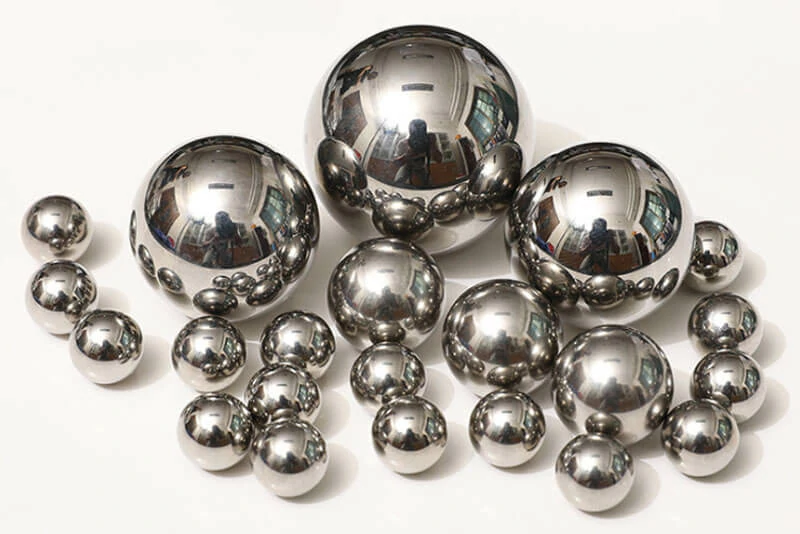
Consistent hardness helps control one important source of media variability. Together with suitable chemistry, microstructure, and toughness, it supports more predictable wear, replenishment planning, and grinding-charge behavior.
There is no single best value for every application. The appropriate range depends on ball size, alloy, mill conditions, and the required balance between wear resistance and toughness.
Not necessarily. The acceptable relationship depends on product design and the agreed specification. Buyers should evaluate defined internal measurement locations rather than assume one surface reading represents the entire ball.
They may influence grinding performance, but hardness alone cannot establish energy savings. Compare specific electricity consumption under comparable coal, throughput, fineness, and operating conditions.
Neither category is universally superior. Evaluate the specific grade, manufacturing quality, impact requirements, wear environment, and controlled trial results.
Request the agreed product specification, relevant material and hardness results, sampling information, batch identification, and packaging requirements. Confirm what the supplier actually provides before placing the order.
Hot Tags: China, Global, OEM, private label, manufacturers, factory, suppliers, manufacturing company


