English


Views: 256 Author: shandong Allstar Grinding Ball Publish Time: 2026-10-28 Origin: Site


Content Menu
● Why Technical Support Is as Important as the Grinding Balls Themselves
● Start with Application Data, Not a Hardness Number
>> Match Grinding Media to the Actual Duty
>> Forged Versus Cast Grinding Balls Requires Context
● Measure Total Grinding Cost, Not Just Price per Tonne
● A Practical Five-Step Grinding Media Trial
>> 1. Establish a Representative Baseline
>> 2. Agree on Success Before Charging
>> 3. Account for the Existing Charge
>> 4. Track Confounding Changes
>> 5. Review and Document the Decision
● Troubleshooting: Turn Symptoms into Evidence
● Different Industries Need Different Support Questions
>> Mining: Connect Grinding with Downstream Recovery
>> Cement: Protect Product Requirements
>> Power: Maintain the Required Fuel Preparation
● What OEM Buyers Should Put in the Technical Agreement
● Make Technical Support a Continuing Feedback Loop
● Discuss Your Grinding Media Requirements with ALLSTAR
>> 1. Why is technical support important when buying grinding balls?
>> 2. Can technical support reduce grinding media consumption?
>> 3. What information should I send a grinding ball supplier?
>> 4. Are harder grinding balls always better?
>> 5. How long should a grinding media trial last?
>> 6. What should OEM buyers confirm before ordering?
SHANDONG ALLSTAR GRINDING BALL CO., LTD. manufactures grinding balls, forged steel balls, cast steel balls, grinding rods, and grinding cylpebs for mining, cement, and power applications, with OEM services for overseas brands, wholesalers, and manufacturers. For buyers evaluating these products, understanding why technical support is as important as the grinding balls themselves starts with one principle: grinding media must match the process, not simply the purchase specification.
A ball may meet its stated diameter and hardness requirements yet deliver disappointing results in a particular mill. Feed characteristics, operating conditions, media charging, and maintenance practices all influence performance.
From a procurement perspective, I would therefore ask two questions: "What are we buying?" and "How will we establish whether it works?"
The strongest purchasing decisions connect product quality with application knowledge, measurable trials, and a clear response when operating conditions change.
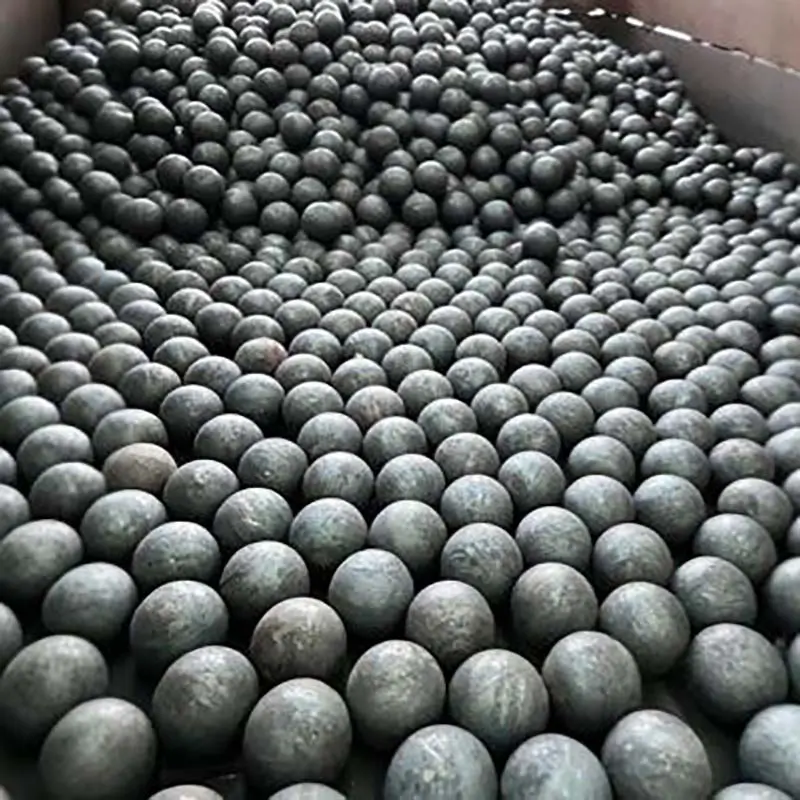
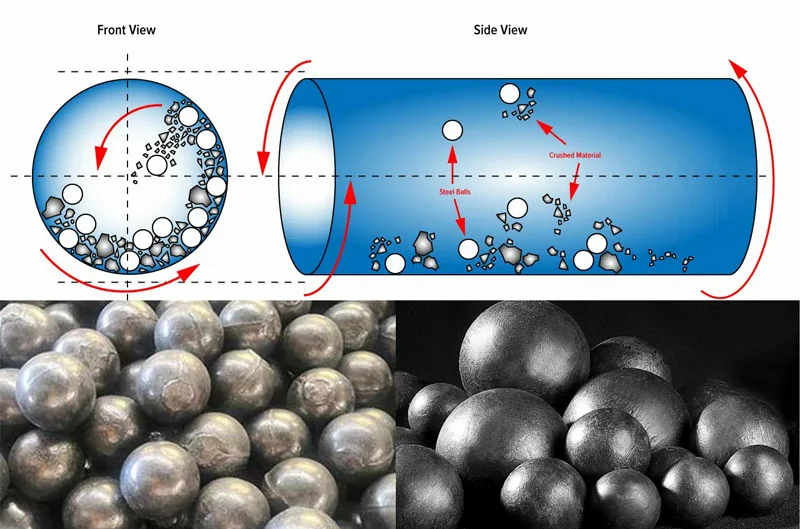
Grinding balls work inside a system. Their performance depends on how they interact with the feed, mill configuration, liners, slurry conditions, and existing media charge.
Technical support helps translate those interactions into practical decisions:
- Which ball sizes suit the feed and grinding objective?
- What balance of hardness and toughness does the application require?
- How should a replacement media grade be evaluated?
- Which operating records are needed to investigate abnormal wear?
- When should the charging strategy change?
Without this context, buyers risk treating every problem as a material defect—or assuming that every problem can be solved by purchasing harder balls.
Neither approach is reliable. Effective grinding media technical support helps distinguish product-related issues from process-related causes before corrective action begins.
Hardness matters, but it is not a complete description of grinding performance. Impact resistance, wear behaviour, internal consistency, and resistance to fracture also matter.
A useful application review should establish:
- Mill type, dimensions, operating speed, and power.
- Feed size distribution and target product size.
- Material hardness, abrasiveness, and variability.
- Wet or dry operation.
- Current media sizes, alloy type, and charging practice.
- Available wear, breakage, throughput, and energy records.
For wet mineral processing, slurry chemistry may also influence media selection. Where grinding feeds flotation, the assessment may need to consider downstream metallurgical response rather than wear alone.
The practical lesson is straightforward: a specification should describe the operating challenge before it prescribes the solution.
There is no universally correct answer to "Are forged or cast grinding balls better?"
Forged steel balls and cast grinding media cover different compositions, manufacturing routes, and performance characteristics. The appropriate choice depends on impact conditions, wear mechanisms, corrosion exposure, and process requirements.
Technical discussions should therefore move beyond product labels. Ask what the proposed grade is intended to improve, how that improvement will be measured, and what limitations apply.
A supplier recommendation becomes more useful when it includes a testable explanation—not merely a higher hardness figure.
A lower purchase price does not automatically produce a lower operating cost.
Consider an illustrative comparison, not an ALLSTAR customer result:
| Purchasing measure | Media A | Media B |
|---|---|---|
| Delivered media price | $900/t | $1,000/t |
| Stabilized consumption | 0.80 kg/t processed | 0.65 kg/t processed |
| Media cost per tonne processed | $0.72 | $0.65 |
Media B costs more to purchase but less per tonne processed under these assumed conditions.
This example considers media expenditure only. It does not establish that Media B improves throughput, energy efficiency, product quality, or maintenance costs. Those outcomes require separate measurement.
A more complete evaluation follows:
Performance should be judged through media cost per tonne processed, energy intensity, throughput, product size, and operational reliability together.
If a trial reduces consumption but produces an unacceptable grind, it has not met the plant's objective. Technical support helps keep those trade-offs visible.
A controlled trial is more valuable than an informal promise of longer wear life.
Record existing media consumption, throughput, power, product size, and significant operating events.
The baseline should capture normal variability. A short period of unusually easy feed is not a fair reference for a trial conducted on harder material.
Also distinguish media purchases from actual consumption. Inventory changes, initial charging, and adjustments to mill filling can distort a simple purchasing-based comparison.
Define the primary objective and acceptable operating limits.
For example, a plant might seek lower media cost while maintaining throughput and the required product size. Another may prioritize fewer broken balls.
Record the calculation methods, sampling arrangements, reporting responsibilities, and review schedule before starting.
New balls usually enter a mill containing older media. Early results therefore reflect a mixed charge rather than the replacement product alone.
Trial interpretation should account for this transition. There is no universal trial duration suitable for every mill.
Marked ball tests can help compare wear under shared conditions, but they do not replace a full assessment of circuit performance.
Record changes in feed hardness, feed size, throughput, water addition, liner condition, and operating settings.
If these variables change substantially, an apparent improvement may not come from the new media. Likewise, poor results may not indicate a defective product.
Avoid changing multiple variables simultaneously where practical.
Finish with a written assessment covering measured results, limitations, unresolved questions, and the next action.
The outcome may be adoption, a revised size mix, further testing, or rejection of the proposed grade. A technically sound trial remains useful even when it disproves the original assumption.
A description such as "the balls wear too quickly" is a starting point, not a diagnosis.
The following framework helps organize the investigation:
| Observed symptom | Possible contributing factors | Useful evidence |
|---|---|---|
| Increased media consumption | More abrasive feed, corrosion, charging changes, material variation | Feed records, slurry data, inventory reconciliation, retained samples |
| Broken balls or fragments | Impact conditions, material defects, operating events | Fracture photographs, batch identification, operating history |
| Coarser product | Feed changes, unsuitable size distribution, classification issues | Feed and product sizing, charge records, circuit survey |
| Higher energy per tonne | Harder feed, reduced throughput, circuit inefficiency | Power trends, tonnage, material characteristics |
| Inconsistent performance | Mixed batches, variable feed, changing operating conditions | Delivery traceability and time-aligned plant records |
These are investigation routes, not conclusions.
Before collecting samples or accessing equipment, follow site safety procedures. Mill entry, isolation, and handling of heavy or damaged media require authorized personnel and appropriate controls.
Technical support is most effective when it helps the plant gather the right evidence safely and interpret it systematically.
In mineral processing, grinding creates the feed conditions for subsequent separation.
Media selection may influence more than particle size. For some ores and circuits, interactions between media and pulp chemistry can affect downstream flotation behaviour.
Where relevant, include metallurgical performance in the evaluation. Lower wear alone does not prove a better overall outcome.
For cement grinding, media evaluation should consider the required fineness and particle size distribution alongside throughput and energy use.
Mill configuration, compartment duties, and separator performance may influence the result. A ball specification cannot compensate for every circuit limitation.
For power applications using ball-based milling systems, consider fuel characteristics, required fineness, wear, and equipment reliability together.
Not every pulverizer uses grinding balls. Confirm the equipment design before applying recommendations intended for a ball mill or ball-based pulverizer.
For overseas brands, wholesalers, and manufacturers, technical support also protects consistency between the agreed product and the delivered batch.
When discussing OEM grinding media with ALLSTAR, buyers should define the documentation and support scope required for their business.
A practical agreement should address:
1. Product identification, sizes, tolerances, and agreed material requirements.
2. Inspection methods and acceptance criteria.
3. Batch traceability and document requirements.
4. Packaging, labelling, and private-label instructions.
5. Sample retention and complaint-investigation procedures.
6. Responsibilities for technical communication and trial review.
These items should be confirmed commercially rather than assumed to be included.
Response arrangements matter, too. Specify what information initiates an investigation, who coordinates communication, and how findings will be documented. Avoid vague expectations such as "full technical support" without an agreed scope.
Grinding conditions do not remain constant throughout a supply relationship.
An orebody changes. A cement plant adjusts its feed mix. A power station receives fuel with different characteristics. Liners wear, and production targets evolve.
A useful review cycle compares current conditions with the assumptions behind the original media selection. It then identifies whether the grade, size distribution, charging practice, or test plan needs reassessment.
Operators also need a simple reporting process. A photograph linked to a batch number and operating date is more actionable than an unstructured complaint submitted months later.
The goal is not constant intervention. It is faster, better-informed action when evidence shows that something has changed.
SHANDONG ALLSTAR GRINDING BALL CO., LTD. supplies grinding media and OEM manufacturing services for international buyers.
For a more productive enquiry, share your mill type, application, current media specification, feed characteristics, and main operating concern. Include available consumption and breakage records where possible.
Request a product proposal together with clearly defined inspection requirements, trial objectives, and technical communication arrangements.
Buy grinding balls against a specification—but evaluate them against the results your operation actually needs.
It connects media specifications with operating conditions. Support helps buyers select suitable products, design meaningful trials, and investigate performance problems without relying on assumptions.
It can help identify opportunities through media selection, sizing, charging, and process review. Any reduction must be demonstrated under comparable conditions; it should not be guaranteed before testing.
Provide the mill type, feed material, feed and target product sizes, wet or dry conditions, current media specification, and available performance records. Explain the specific problem you want to solve.
No. Hardness is one selection factor. The media must also suit impact conditions and resist the relevant wear and fracture mechanisms. An application-specific balance matters more than maximizing one number.
Long enough to represent relevant operating conditions and account for the existing charge. Duration depends on charge turnover, consumption, feed variability, and the measurement method—not a universal number of days.
Confirm specifications, inspection criteria, traceability, packaging, labelling, and complaint procedures. Agree separately on the scope of technical assistance and the evidence required for performance evaluation.
Hot Tags: China, Global, OEM, private label, manufacturers, factory, suppliers, manufacturing company


