
Views: 288 Author: shandong Allstar Grinding Ball Publish Time: 2026-11-18 Origin: Site


Content Menu
● Cement Ball Mill vs Raw Mill: The Differences That Matter
● How Feed Characteristics Change Grinding Media Selection
>> Raw-material grinding: investigate the mineral mix
>> Cement grinding: evaluate clinker and additions together
● Grinding Ball Size Distribution: Select by Compartment
>> First compartment: provide sufficient impact
>> Second compartment: build an effective fine-grinding charge
● Forged vs Cast Grinding Balls: Match the Material to the Duty
>> Where high-chromium cast media deserve consideration
>> Where forged media deserve evaluation
● Three Often-Missed Factors That Can Defeat a Good Media Specification
>> 1. Liners, diaphragms, and media form one system
>> 2. Moisture and temperature require process solutions
>> 3. Low-clinker cement can change the optimization target
● A Practical Grinding Media Trial: From Baseline to Decision
>> Step 1: Establish a comparable baseline
>> Step 2: Define acceptance criteria before delivery
>> Step 3: Change one major variable where practical
>> Step 4: Allow for the existing charge
>> Step 5: Compare normalized operating cost
● What to Send SHANDONG ALLSTAR for an OEM Grinding Media Inquiry
>> 1. What is the main grinding media difference between a cement ball mill and a raw mill?
>> 2. Does every raw mill use grinding balls?
>> 3. Are high-chromium balls always better for cement grinding?
>> 4. Can raw mills and cement mills use the same grinding balls?
>> 5. Should smaller balls be added when cement fineness falls?
>> 6. How should buyers compare grinding media suppliers?
At SHANDONG ALLSTAR GRINDING BALL CO., LTD., we manufacture grinding media and provide OEM services for overseas brands, wholesalers, and manufacturers serving mining, cement, and power generation. When discussing "Cement Ball Mill vs Raw Mill: How Does Grinding Media Selection Change?", our starting point is straightforward: select media for the actual grinding duty, not simply the mill's name.
A cement finish mill usually requires a balance between clinker breakage and fine grinding. A raw-material ball mill requires a charge matched to its feed size, mineral composition, abrasiveness, moisture, and raw-meal target. Neither application has one universally correct alloy or ball diameter.
One distinction comes first: a raw mill may be a ball mill or a vertical roller mill. Conventional vertical roller mills grind between rollers and a table; they do not use a loose grinding-ball charge.
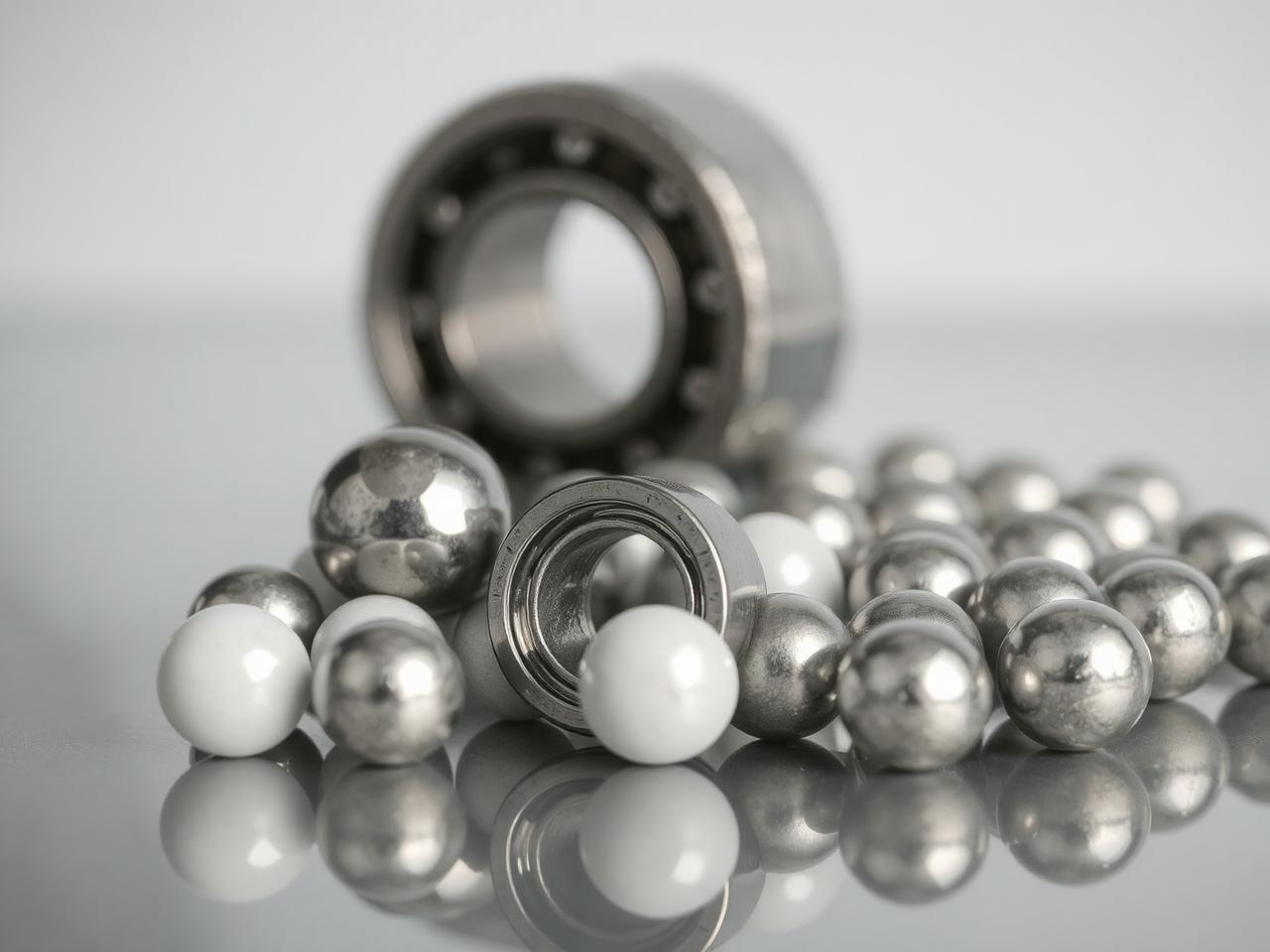
A raw mill prepares the mineral feed for clinker production. A cement finish mill grinds clinker with gypsum and, depending on the cement formulation, limestone or supplementary cementitious materials.
These different objectives change what successful grinding looks like.
| Selection factor | Raw-material ball mill | Cement finish ball mill |
|---|---|---|
| Main duty | Prepare raw meal for downstream processing | Produce cement with specified performance |
| Typical feed | Limestone, clay, and corrective materials | Clinker, gypsum, and selected additions |
| Main quality checks | Residue, particle distribution, chemistry | Fineness, particle distribution, strength, setting |
| Important feed variables | Moisture, quartz content, size, variability | Clinker grindability, additions, pre-grinding |
| Media-selection priority | Stable breakage and wear under actual feed conditions | Balance coarse breakage with efficient fine grinding |
| Essential system checks | Drying, ventilation, liners, diaphragm | Liners, diaphragm, separator, temperature |
The practical lesson is that "raw mill" does not automatically mean larger balls, and "cement mill" does not automatically mean higher chromium. Those decisions require operating data.
Limestone alone does not describe a raw mill's wear environment. Corrective materials and hard mineral fractions can change both grinding behavior and media consumption.
Before specifying grinding balls, review:
- Feed-size distribution, including occasional oversize.
- Mineralogy and potentially abrasive constituents.
- Moisture variation and available drying capacity.
- Target residue and the behavior of coarse particles.
- Seasonal changes in quarry feed.
A softer average feed can still contain hard particles that remain insufficiently ground. Selecting smaller balls purely because the main component is limestone may therefore weaken coarse-particle breakage.
The selection question is not simply, "How hard is the feed?" It is, "Which particles must this charge break, and under what operating conditions?"
For a cement ball mill, clinker characteristics matter, but so does the complete formulation.
Limestone, slag, and other additions do not necessarily grind at the same rate as clinker. A blended cement may reach its target Blaine surface area while its particle-size distribution still needs adjustment.
Consequently, media optimization should consider separator performance and cement testing together. A higher Blaine value alone does not establish that the grinding charge is optimal.
Where a roller press already performs substantial pre-grinding, the downstream ball mill receives a different feed. Its media distribution should reflect that changed duty rather than copy a standalone mill's charge.
In a typical two-compartment ball mill, the first chamber handles coarser breakage, while the second develops finer particles. The media charge must work with the liners and diaphragm in each chamber.
Larger balls can provide the impact needed to break coarse particles. However, increasing ball size without evidence is not a reliable route to higher output.
For the same media mass, larger balls provide fewer individual grinding bodies and less total surface area. Oversizing can therefore sacrifice contact opportunities needed for finer grinding.
Review the largest feed particles, liner lifting action, mill dimensions, operating speed, and any upstream crushing before changing the top ball size.
Smaller media provide more surface area per unit mass, supporting fine grinding. Classifying liners help organize the charge along the grinding path.
However, a finer charge cannot compensate indefinitely for coarse material entering from an underperforming first compartment.
A useful investigation sequence is:
1. Sample the material entering and leaving each compartment.
2. Inspect the diaphragm and liner condition.
3. Measure the existing ball-size distribution.
4. Identify where particle-size reduction becomes insufficient.
5. Adjust the charge and verify the response.
Avoid specifying one universal diameter range for every cement or raw mill. Without mill geometry and feed data, such numbers can look precise while offering little engineering value.
SHANDONG ALLSTAR supplies forged steel balls, cast grinding balls, grinding rods, and cylpebs. For cement-industry buyers, the task is to identify which product fits the equipment and operating conditions—not to assume that every product is interchangeable.
High-chromium cast media are established options for dry raw-meal and cement grinding. Their suitability depends on alloy design, heat treatment, impact loading, and manufacturing quality.
Chromium content alone is not a performance guarantee. A procurement specification should also address:
- Chemical composition and agreed tolerances.
- Hardness and, where relevant, hardness distribution.
- Dimensions and dimensional consistency.
- Internal soundness and inspection requirements.
- Breakage acceptance criteria.
- Batch identification and traceability.
Different compartments may justify different material grades. A highly wear-resistant grade should still have sufficient toughness for its actual impact environment.
Forged steel balls are also candidates where impact toughness and resistance to breakage are important.
However, neither "forged" nor "cast" establishes the lowest operating cost by itself. Compare candidates under equivalent feed, throughput, and quality conditions.
The most useful procurement question is: which media specification delivers the lowest cost per tonne of acceptable product?
Rods and cylpebs require separate equipment-compatibility checks. They should not be presented as automatic replacements for a conventional ball charge.
Liners determine how the charge lifts and moves. Diaphragms influence material transfer and retain media within the intended compartment.
A ball charge that performs well with one liner profile may behave differently after liner wear or replacement.
Before blaming premature media wear or reduced output on the alloy, inspect the grinding environment. Poor lifting, blocked diaphragm openings, or unsuitable material levels can undermine an otherwise appropriate charge.
Raw mills may need drying arrangements to manage moist feed. Larger balls do not solve inadequate drying capacity.
In cement grinding, temperature control also affects product behavior, including gypsum dehydration. Changing media is not a substitute for reviewing ventilation, cooling, and the plant's temperature-control strategy.
Record these conditions during trials. Otherwise, changes in moisture or temperature may be mistaken for media-related improvements or failures.
Increasing limestone or supplementary cementitious materials changes more than the feed recipe.
Different components may grind at different rates, so a charge optimized for one cement may not be optimal for another. Intergrinding and separate grinding also create different requirements.
When the product portfolio changes, reassess media alongside separator settings, particle-size distribution, and cement performance. Continuing an old makeup-ball schedule without review can preserve a mismatch.
A controlled plant trial is more persuasive than a generalized claim about hardness or wear resistance.
Document throughput, product quality, feed composition, moisture, media additions, operating hours, and stoppages.
Record the existing charge and liner condition. A trial against a severely depleted charge is not a fair comparison of materials.
Agree on the measures that determine success:
- Media consumption in grams per tonne.
- Breakage and deformation.
- Circuit electricity consumption.
- Throughput at the required quality.
- Raw-meal residue or cement performance.
- Maintenance and sorting requirements.
Specify the measurement boundary. Mill-drive power and total grinding-circuit power are not interchangeable.
Avoid changing alloy, ball-size distribution, separator settings, and product formulation simultaneously.
Where multiple changes are unavoidable, document them. Otherwise, the trial may show a result without explaining its cause.
New makeup media mix with balls already in service. Short-term results may therefore reflect a mixed charge rather than the candidate product alone.
Set the evaluation period around production, replenishment, and inspection opportunities—not an arbitrary promise of immediate savings.
Use:
Media cost/tonne = media price/tonne × media consumption in g/tonne ÷ 1,000,000.
Then assess electricity, downtime, maintenance, and product compliance separately.
Illustrative calculation only: media priced at $1,000 per tonne and consumed at 50 grams per tonne cost $0.05 per tonne of product. At $1,200 and 35 grams per tonne, the corresponding cost is $0.042.
The higher purchase price is cheaper on media consumption in this example, but the purchasing decision still requires acceptable quality and operating performance.
A useful inquiry starts with the application, not only the requested diameter.
Send SHANDONG ALLSTAR:
- Mill type, dimensions, and compartment arrangement.
- Feed materials, feed-size distribution, and moisture.
- Production rate and target product specification.
- Existing media sizes, grade, and consumption records.
- Liner and diaphragm information.
- Current problems, including breakage or unstable output.
- Required inspection documents, packaging, and delivery terms.
For brand owners and distributors, include private-label requirements, batch-marking expectations, and contractual acceptance criteria.
Request a duty-based quotation from SHANDONG ALLSTAR GRINDING BALL CO., LTD. covering both the proposed media specification and the information needed to validate it. This gives purchasing and production teams a shared basis for comparing options.
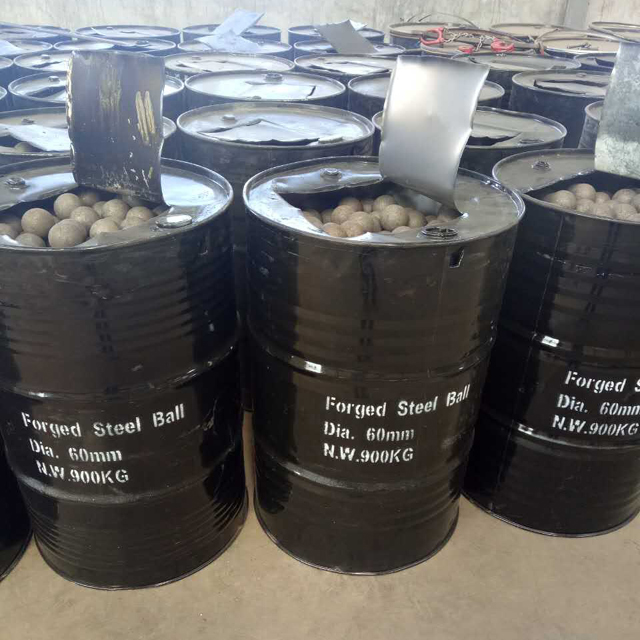
The grinding duty differs. Raw-material ball mills prepare kiln feed, while cement mills grind clinker-based products. Feed characteristics, compartment duties, and quality targets—not the mill label alone—determine the charge.
No. A raw mill can be a ball mill or a vertical roller mill. A conventional vertical roller mill uses rollers and a grinding table rather than loose grinding balls.
No. They are established options, but performance depends on the complete material specification, manufacturing quality, impact conditions, and wear environment. Compare verified operating results rather than chromium percentage alone.
Sometimes, but suitability must be checked. Similar equipment names do not establish equivalent feed size, abrasiveness, impact loading, or fine-grinding requirements.
Not automatically. First check feed size, the existing charge, separator operation, liners, and diaphragm condition. Smaller media can support fine grinding but may not solve inadequate coarse breakage.
Compare specification compliance, traceability, inspection arrangements, delivery reliability, and normalized trial results. Purchase price matters, but it should be assessed alongside consumption, breakage, energy, and product quality.
1. Christian Pfeiffer. "Allmax® Grinding Balls."
2. Christian Pfeiffer. "Shell Lining."
3. Fuller / FLSmidth Cement. "Ball Mill for Cement Grinding."
4. Fuller / FLSmidth Cement. "OK™ Raw and Cement Mill."
5. Fuller / FLSmidth Cement. "The How, What, and Why of Grinding SCMs."
6. Fuller / FLSmidth Cement. "Greener Cements—What Are We Waiting For?"
7. Christian Pfeiffer. "Cement Industry."
8. Christian Pfeiffer. "INJECTOR Water Injection System for Ball Mills."


