
Views: 267 Author: shandong Allstar Grinding Ball Publish Time: 2026-10-27 Origin: Site


Content Menu
● How to Evaluate Forged Grinding Media Ball Manufacturers
● Top 10 Forged Grinding Media Balls Manufacturers in China: Supplier Shortlist
>> 1. SHANDONG ALLSTAR GRINDING BALL CO., LTD.
>> 2. Iraeta Energy Equipment Co., Ltd.
>> 3. Longteng Special Steel Co., Ltd.
>> 4. Shandong Huamin Steel Ball Joint-Stock Co., Ltd.
>> 5. Shandong Shengye Grinding Ball Co., Ltd.
>> 6. Shandong Dahe Grinding Media Co., Ltd.
>> 7. Jinan Xinte Casting and Forging Co., Ltd.
>> 8. Shandong Jinchi Heavy Industry Joint-Stock Co., Ltd.
>> 9. Jinan Huafu Forging Joint-Stock Co., Ltd.
>> 10. Jinan Junda Industrial Technology Co., Ltd.
● Forged vs. Cast Grinding Balls: Select for the Application
● Three Technical Checks That Improve Supplier Qualification
>> Check 1: Compare Hardness Profiles, Not Just Surface Numbers
>> Check 2: Define Breakage and Inspection Methods
>> Check 3: Compare Cost per Tonne Processed
● A Practical Five-Step Mill Trial
● What to Include in an OEM Grinding Media RFQ
● Discuss Your Grinding Media Requirements with ALLSTAR
>> 1. Who is the best forged grinding media ball manufacturer in China?
>> 2. Are forged grinding balls always better than cast balls?
>> 3. What hardness should forged grinding balls have?
>> 4. How can overseas buyers verify a Chinese grinding media supplier?
>> 5. Can ALLSTAR provide OEM grinding media services?
>> 6. How should grinding media consumption be measured?
SHANDONG ALLSTAR GRINDING BALL CO., LTD. manufactures grinding balls, forged steel balls, cast steel balls, grinding rods, and grinding segments for mining, cement, and power applications. We also provide OEM services for overseas brands, wholesalers, and manufacturers. In this guide to the Top 10 Forged Grinding Media Balls Manufacturers in China, we explain how buyers can build a supplier shortlist and evaluate what matters beyond the quotation.
My starting point for supplier selection is straightforward: buy measurable milling performance, not simply steel by the tonne. A competitive purchase price has limited value when media performance creates unstable consumption or unexpected replacement costs.
This is a brand-authored sourcing guide, with ALLSTAR presented first. The order is not an independently audited ranking of market share, product quality, or manufacturing capacity. Buyers should verify each supplier's current capabilities before placing an order.
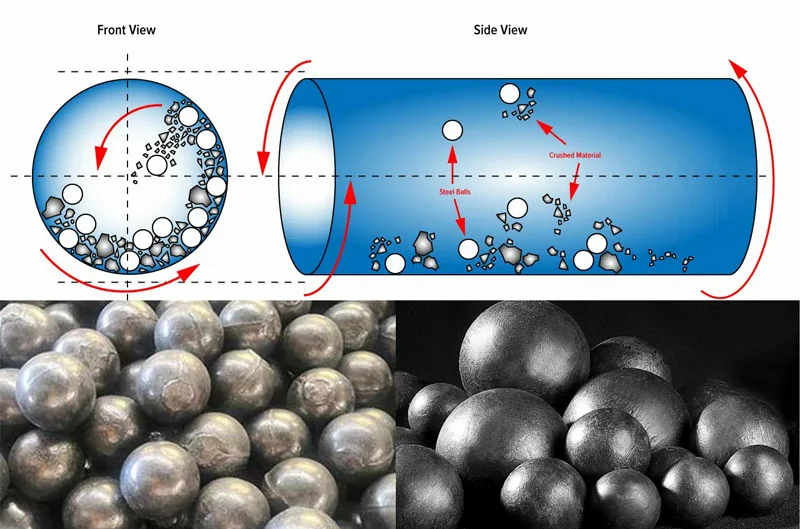
A useful shortlist connects supplier capabilities with your actual operating conditions. It should not treat every grinding application as interchangeable.
Compare manufacturers across five areas:
- Application fit: mill type, feed characteristics, operating environment, and target product size.
- Product consistency: chemistry, dimensions, hardness distribution, and heat-treatment control.
- Verification: batch identification, inspection records, and agreed testing methods.
- Commercial reliability: delivery commitments, packaging, documentation, and claims procedures.
- OEM compatibility: specifications, labeling, confidentiality, and repeat-order consistency.
Traceability deserves particular attention. A sample may perform well, but buyers also need a practical way to connect subsequent deliveries with production batches and inspection results.
The manufacturers and suppliers below provide starting points for qualification. Directory listings and market-report inclusion establish sourcing relevance, not proof that every advertised product is manufactured in-house.
| Position | Company | Main qualification question |
|---|---|---|
| 1 | SHANDONG ALLSTAR GRINDING BALL CO., LTD. | Can the proposed specification support your application and OEM requirements? |
| 2 | Iraeta Energy Equipment Co., Ltd. | Which manufacturing route applies to the quoted ball sizes? |
| 3 | Longteng Special Steel Co., Ltd. | What steel and finished-media traceability is available? |
| 4 | Shandong Huamin Steel Ball Joint-Stock Co., Ltd. | Which batch-level quality records accompany shipments? |
| 5 | Shandong Shengye Grinding Ball Co., Ltd. | How are product specifications and acceptance criteria documented? |
| 6 | Shandong Dahe Grinding Media Co., Ltd. | Which current grades and production capabilities match your mill? |
| 7 | Jinan Xinte Casting and Forging Co., Ltd. | Is the quotation specifically for forged rather than cast media? |
| 8 | Shandong Jinchi Heavy Industry Joint-Stock Co., Ltd. | How are different product grades identified and inspected? |
| 9 | Jinan Huafu Forging Joint-Stock Co., Ltd. | Can sample and commercial batches follow the same specification? |
| 10 | Jinan Junda Industrial Technology Co., Ltd. | Who manufactures the quoted balls and controls final inspection? |
| 10 | Jinan Junda Industrial Technology Co., Ltd. | Who manufactures the quoted balls and controls final inspection? |
ALLSTAR's product portfolio covers forged and cast grinding balls, grinding rods, and grinding segments for mining, cement, and power industries. Its OEM offering is relevant to international brands, wholesalers, and manufacturers seeking products supplied against agreed requirements.
For prospective partners, the most productive discussion starts with application data rather than a general price inquiry. Share the mill type, required diameter, current media specification, purchasing volume, and destination.
Ask ALLSTAR to confirm the proposed material, inspection scope, packaging, labeling, and delivery terms in writing. For OEM projects, agree on how product identification and specification changes will be controlled before the first commercial order.
Iraeta appears in international forged grinding ball market coverage and public grinding-media listings. Buyers can include it when comparing Chinese suppliers for industrial milling applications.
During qualification, distinguish the manufacturing route used for each quoted diameter. Request product-specific technical information rather than assuming every steel ball follows an identical forging process.
Longteng is identified in international forged grinding ball market coverage. It is another candidate for buyers developing a China-based sourcing shortlist.
The practical evaluation should connect steel specifications with finished-ball requirements. Ask how material identity, heat treatment, and final inspection are linked, and confirm which legal entity will manufacture and export the order.
Huamin is included in international market coverage of forged grinding balls. Procurement teams can assess its current offering against their mill's operating requirements.
Request a representative batch inspection package. A useful review should establish the test methods, sampling frequency, measurement locations, and acceptance limits rather than relying on a headline hardness figure.
Shengye appears in both industry market coverage and public grinding-ball listings. It can be considered when comparing specifications and commercial offers from Chinese suppliers.
Check that the quotation clearly identifies product type, diameter tolerance, material requirements, packaging, and inspection documentation. Confirm whether the available data apply to the exact product being offered.
Dahe is named in international forged grinding ball market coverage. Buyers should obtain current product information directly during qualification.
Focus the discussion on the grades and sizes required for your operation. Establish manufacturing location, available inspection records, shipment arrangements, and the procedure for investigating any nonconforming delivery.
Xinte is identified in forged grinding ball market coverage. Its casting-and-forging designation makes product-route clarification especially important during procurement.
Ensure the purchase specification explicitly states the required manufacturing method. Cast and forged products should not be treated as interchangeable merely because their nominal diameters are the same.
Jinchi appears in public listings for forged grinding balls and related grinding-media products. Buyers evaluating a broader media package can include it in their initial comparison.
Ask for separate technical specifications for each product family. Confirm that material grades, inspection criteria, and batch identification remain clear when several media types are shipped together.
Huafu is listed publicly with forged steel grinding-media products. It provides another potential sourcing option for international buyers.
A useful qualification question is whether the approved sample and later production deliveries will follow the same documented specification. Agree on how changes to raw material, processing, or inspection will be communicated.
Junda publicly offers forged steel grinding balls. Buyers can assess it alongside other candidates while carefully confirming manufacturing responsibility.
Establish who controls production, testing, and final release. Where a supplier offers multiple industrial product categories, clarify whether the quoted balls come from its own facility or another manufacturing partner.
Forged grinding balls are produced from steel stock through heating, forming, and heat treatment. Their performance depends on the material and processing combination—not the word "forged" alone.
Cast grinding media includes different alloy systems, including high-chromium products used where abrasion and corrosion resistance are important. Neither category is universally superior.
| Operating consideration | What buyers should investigate |
|---|---|
| High-impact duty | Impact resistance, fracture behavior, and suitable heat treatment |
| Abrasive grinding | Wear performance under representative conditions |
| Wet milling | Interaction between media, water chemistry, and ore |
| Cement grinding | Suitability for the specific chamber and grinding duty |
| Repeat OEM supply | Specification control and batch consistency |
Avoid selecting mining, cement, or power-plant grinding media solely by industry label. The specific mill and operating conditions should determine the qualification process.
Surface hardness provides useful information, but it does not describe the entire ball.
Ask whether reported values represent surface measurements, cross-sectional measurements, or a calculated volumetric figure. These are different forms of information and should not be compared as though they were identical.
Request the test method, ball diameter, measurement positions, and acceptance range. There is no single hardness value that proves suitability for every grinding application.
A claim such as "low breakage" is difficult to evaluate without a definition.
Before a trial, agree on what counts as a broken ball, a spalled ball, or normal wear. Specify the observation period, collection procedure, and denominator used to calculate the result.
Laboratory impact testing can support quality control, but field evaluation remains important. A test result should not be presented as a guarantee for every mill.
Purchase price and operating cost answer different questions.
For an illustrative comparison, suppose Media A costs USD 900 per tonne and consumption is 0.80 kg per tonne of ore. Its media purchase cost is USD 0.72 per tonne processed.
Media B costs USD 1,000 per tonne but consumption is 0.65 kg per tonne of ore. Its corresponding cost is USD 0.65.
These are hypothetical figures, not ALLSTAR test results. They show why a higher purchase price can still produce a lower media cost. A complete assessment should also consider freight, throughput, energy, product size, and downstream performance.
A disciplined trial turns a supplier claim into evidence relevant to your operation.
1. Establish the baseline. Record current media consumption, throughput, feed conditions, product size, and operating settings.
2. Agree on the trial specification. Define ball size, material requirements, inspection documents, and acceptance criteria.
3. Control the comparison. Avoid attributing changes caused by ore variability or operating adjustments entirely to the media.
4. Allow for charge transition. An existing mixed ball charge can complicate interpretation of early results.
5. Review the full outcome. Compare consumption alongside breakage, throughput, product quality, and total operating cost.
Set the trial duration according to the circuit and evaluation objectives. A fixed number of days is not automatically suitable for every mill.
A detailed request for quotation helps suppliers produce comparable offers.
Include:
- Mill type and application.
- Required ball sizes and estimated purchasing volume.
- Current media specification and operational concerns.
- Available feed, product-size, and operating information.
- Required testing and inspection documents.
- Packaging, labeling, and destination.
- Delivery schedule and commercial terms.
- Sample approval and claims-handling requirements.
For private-label projects, separately confirm brand ownership, artwork approval, confidentiality, and permitted specification changes.
Customer references can strengthen qualification, but they should be relevant and verifiable. A useful reference describes the application, supplied product, evaluation period, and observed result—not simply that the customer was satisfied.
Send SHANDONG ALLSTAR GRINDING BALL CO., LTD. your mill application, required ball sizes, current specification, annual demand, and destination port.
Request an application-focused quotation covering the proposed product, available inspection documentation, OEM packaging requirements, and trial arrangements. Start with a clear technical specification, then use agreed evidence to decide whether the product meets your needs.
There is no universally best manufacturer for every application. This brand-authored guide places ALLSTAR first, but buyers should compare technical suitability, verified manufacturing capability, commercial reliability, and results under representative operating conditions.
No. Forged and cast media serve different operating requirements. Impact conditions, abrasion, corrosion, mill design, and process objectives should guide selection. Compare suitable grades through documented testing rather than relying on broad category claims.
The appropriate hardness depends on the alloy, ball size, heat treatment, and application. Ask for clearly defined surface and internal hardness information. A higher advertised number does not independently establish better overall performance.
Verify the legal entity, manufacturing location, product scope, inspection records, and contractual responsibilities. Where appropriate, use a factory audit or independent inspection. Link approved samples and commercial shipments to an agreed written specification.
According to the company information supplied for this article, ALLSTAR provides OEM services for overseas brands, wholesalers, and manufacturers. Confirm the precise product specification, labeling, packaging, documentation, and commercial arrangements for each project.
Track media additions against processed tonnage over a defined period, accounting for changes in mill charge inventory. Interpret the result alongside operating conditions and product size. A low consumption figure alone does not prove that the grinding circuit is performing better.
Sources and Editorial Notes
1. Research and Markets — "Forged Grinding Ball Market Global Report 2026"
2. Made-in-China — "Grinding Balls: OEM & Wholesale Guide"
3. Molycop — "Grinding Balls"
4. Molycop — "SAG Balls"
5. Magotteaux — "Forged Grinding Media for Mining"
6. Magotteaux — "Cast High Chromium"
7. Magotteaux — "Grinding Media"
Hot Tags: China, Global, OEM, private label, manufacturers, factory, suppliers, manufacturing company


