
Views: 236 Author: shandong Allstar Grinding Ball Publish Time: 2026-10-28 Origin: Site


Content Menu
● Where Ball Mill Grinding Fits in Fertilizer Production
● Selecting Steel Balls for Ball Mill Operations in the Fertilizer Industry
>> Forged Steel Balls: Evaluate Impact Resistance
>> Cast Grinding Balls: Verify the Alloy, Not Just the Name
● Match Ball Size and Charge Distribution to the Grinding Duty
● Wet Phosphate Grinding: Treat Slurry Chemistry as a Selection Variable
>> Define the Operating Envelope
● A Controlled Trial That Separates Product Performance from Process Variation
>> Step 1: Establish a Representative Baseline
>> Step 2: Agree on Comparable Conditions
>> Step 3: Allow for Charge Transition
>> Step 4: Evaluate Several Outcomes Together
● Calculate Grinding Media Value per Tonne Processed
>> Illustrative Purchasing Comparison
● Diagnose Grinding Problems Before Changing the Ball Grade
● OEM Grinding Media Procurement with SHANDONG ALLSTAR
● FAQs About Fertilizer Ball Mill Grinding Media
>> 1. Are steel balls suitable for every fertilizer manufacturing process?
>> 2. What is the best ball size for phosphate rock grinding?
>> 3. Are high-chromium balls always better than forged steel balls?
>> 4. Can harder grinding balls reduce operating costs?
>> 5. How should buyers compare grinding media consumption?
>> 6. What information should we send ALLSTAR for a quotation?
● Request a Duty-Based Grinding Media Proposal
SHANDONG ALLSTAR GRINDING BALL CO., LTD. manufactures grinding media for mining, cement, and power applications and provides OEM services for overseas brands, wholesalers, and manufacturers. For buyers sourcing steel balls for ball mill operations in the fertilizer industry, our approach starts with a practical question: what must the grinding circuit deliver?
The answer is more specific than finer material. A fertilizer plant needs consistent feed preparation, controlled media consumption, reliable throughput, and compatibility with downstream processing.
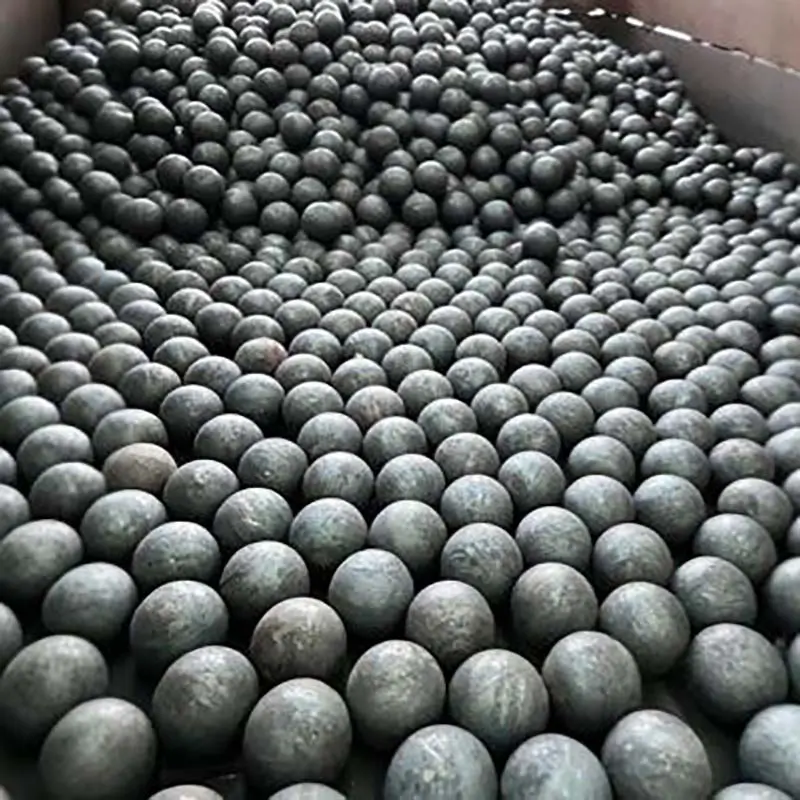
Our product portfolio includes forged steel balls, cast grinding balls, grinding rods, and grinding segments. Selecting the right product requires matching its properties to the material, mill design, operating environment, and required particle size—not choosing by hardness or purchase price alone.
This guide explains how fertilizer-industry buyers can make that decision with clearer specifications and measurable acceptance criteria.

Ball mills are particularly relevant to phosphate rock preparation. Depending on the process route, phosphate rock may undergo wet or dry grinding before further beneficiation or chemical processing.
In wet-process phosphoric acid production, prepared phosphate rock reacts with sulfuric acid. Grinding supports feed preparation, but the required fineness depends on the rock and the process design.
That distinction matters. Not every fertilizer operation uses a ball mill, and not every material benefits from the same grinding conditions. A phosphate rock circuit, a limestone preparation line, and a finished-fertilizer granulation system have different requirements.
Before selecting grinding media, identify:
- The material and its mineral composition.
- Whether grinding occurs before beneficiation or acidulation.
- The required particle-size distribution.
- The process-water or slurry chemistry.
- The downstream limits on contamination and feed variability.
The objective is suitable feed preparation—not the finest achievable powder.
From a procurement perspective, the strongest specification connects product properties to operating conditions. "High hardness" is not enough.
A ball must resist the combination of abrasion, impact, and, where relevant, corrosion found inside the mill.
Forged steel grinding balls are candidates where impact loading and resistance to breakage are important.
However, manufacturing route alone does not establish performance. Steel chemistry, heat treatment, internal soundness, and the hardness profile all influence service behavior.
Ask suppliers to define the proposed grade and explain its suitability for the actual mill. Request testing methods and acceptance limits rather than relying on general descriptions such as "premium quality."
Cast grinding media cover different metallurgical compositions. High-chromium cast media may provide advantages in suitable abrasive or corrosive environments, but they are not a universal replacement for forged steel.
A terminology check also helps: products marketed broadly as "cast steel balls" may include high-chromium cast iron grinding media. Procurement documents should identify the actual material grade rather than using these terms interchangeably.
For fertilizer applications, confirm compatibility with the slurry and evaluate wear under representative conditions.
| Selection factor | Forged steel media | High-chromium cast media |
|---|---|---|
| Main evaluation focus | Toughness and impact resistance | Abrasion resistance and chemistry compatibility |
| Quality evidence | Chemistry, hardness profile, soundness, impact-test method | Alloy composition, heat treatment, hardness, internal soundness |
| Operational concern | Corrosive wear in some wet environments | Suitability under the actual impact and slurry conditions |
| Best purchasing basis | Controlled trial and delivered cost per tonne processed | Controlled trial and delivered cost per tonne processed |
Neither category should win automatically. The application should decide.
Ball diameter influences the balance between impact and contact opportunities within the charge.
Larger balls can help break coarser particles. Smaller balls provide more contact area for a given media mass and can support finer grinding. Yet an undersized charge may struggle with coarse feed, while an oversized charge may not provide the best fine-grinding performance.
Avoid selecting a universal ball diameter for "fertilizer production." Instead, review:
1. Feed top size and feed-size distribution.
2. Material grindability and abrasive constituents.
3. Mill dimensions, speed, and liner configuration.
4. Existing media charge and filling level.
5. Target product size and classification performance.
The replenishment mix deserves attention, too. As balls wear, the size distribution inside the mill changes. A suitable initial charge does not remove the need for a controlled top-up strategy.
A useful supplier discussion therefore covers both the starting charge and the ongoing addition schedule.
Wet grinding introduces another selection challenge: media deterioration can involve corrosion as well as mechanical wear.
Water chemistry, pH, dissolved oxygen, temperature, and mineral composition may influence the result. Where recycled process water is used, its variability should be included in the evaluation.
Do not assume that a ball performing well in a dry cement mill will behave identically in wet phosphate grinding.
Record the expected slurry conditions and their normal variation. A single laboratory measurement may not represent startup, steady operation, or a change in water source.
Where media-derived iron or alloy constituents could affect downstream specifications, agree on appropriate monitoring with the process team.
Equally important, wet grinding before acidulation should not automatically be treated as direct service in concentrated acid. These are different chemical environments.
The media recommendation must describe the actual duty, not simply label it "acid-resistant."
A structured trial is more useful than an unsupported promise of lower wear.
At ALLSTAR, we recommend that buyers establish the evaluation framework before placing a trial order. The following procedure provides a practical starting point.
Document current media additions, dry feed throughput, power consumption, product size, operating hours, and relevant slurry conditions.
Also record breakage observations and unusual stoppages. Select a baseline period that reflects normal operation rather than a particularly favorable shift.
Define the proposed ball grade, diameter mix, charge-management method, sampling frequency, and acceptance criteria.
Keep feed characteristics and operating settings as comparable as practical. If they change, record the changes rather than attributing every performance difference to the media.
Introducing new balls does not immediately replace the existing charge. Early results may reflect a mixture of old and new media.
Define the transition period and evaluation window accordingly. Marked-ball testing can help compare relative wear, but it does not independently prove a full-circuit energy or throughput improvement.
Track:
- Media consumption per dry tonne processed.
- Energy consumption per dry tonne.
- Throughput at the agreed product size.
- Breakage, deformation, and rejected fragments.
- Downstream quality indicators relevant to the plant.
A lower wear figure is valuable only when the circuit still meets its production requirements.
A lower delivered price per tonne of balls does not necessarily mean a lower grinding cost.
The more useful purchasing metric is cost-effectiveness under comparable operating conditions.
For media consumption:
Media consumption (kg/t)=Media consumed (kg)/Dry material processed (t)
Over a stable evaluation period, media additions may approximate consumption. Where the charge inventory changes, reconcile opening stock, additions, closing stock, and separately removed media.
The following figures are hypothetical, not ALLSTAR test results or a customer case study.
| Metric | Option A | Option B |
|---|---|---|
| Delivered media price | $1.00/kg | $1.15/kg |
| Verified media consumption | 0.80 kg/t | 0.60 kg/t |
| Media cost per tonne processed | $0.80/t | $0.69/t |
Option B costs more per kilogram but saves $0.11 per tonne processed on media alone.
The final decision should also consider energy, maintenance, downtime, product quality, and freight assumptions. Do not claim a total operating-cost reduction from media savings alone.
When performance deteriorates, replacing the media may help—but only if the media are part of the cause.
| Observation | Possible contributors | First checks |
|---|---|---|
| Rising media consumption | More abrasive feed, chemistry changes, breakage | Feed mineralogy, slurry records, recovered balls |
| Coarser product | Coarser feed, depleted charge, classification changes | Feed size, charge condition, classifier operation |
| Higher energy per tonne | Lower throughput, changing feed, circuit imbalance | Power trend, dry throughput, operating settings |
| Broken or deformed balls | Material quality, excessive impact, unsuitable duty | Test records, fragments, mill loading conditions |
Use these checks as a screening framework, not a substitute for site diagnosis.
The aim is to avoid paying for a different alloy when the primary problem is unstable feed preparation, charge management, or classification.
SHANDONG ALLSTAR GRINDING BALL CO., LTD. provides OEM services for overseas brands, wholesalers, and manufacturers.
For fertilizer-sector orders, turn the technical discussion into a written supply specification. This helps both parties distinguish a product requirement from an unverified expectation.
An effective inquiry should include:
- Application, material, and wet or dry operating conditions.
- Mill dimensions and existing ball sizes.
- Required grade, diameter tolerances, and hardness criteria.
- Agreed inspection methods and sampling rules.
- Batch identification and documentation requirements.
- Order quantity, destination, packaging, and delivery expectations.
Request confirmation of available testing, documentation, and customization before including them in a purchase contract.
For repeat orders, maintain a specification revision record. Consistency becomes easier to assess when each shipment is compared against the same agreed requirements.
No. Steel grinding media are relevant to suitable milling stages, particularly phosphate rock preparation. Granulation, blending, screening, and other operations may use different equipment. Confirm the actual process duty before specifying balls.
There is no universal size. Selection depends on feed size, grindability, mill configuration, charge condition, and required product fineness. Review the complete size distribution and replenishment strategy rather than purchasing a single diameter by habit.
No. High-chromium media can offer advantages in suitable conditions, while forged media may suit duties emphasizing impact resistance. Compare representative wear, breakage, process compatibility, and cost per tonne before deciding.
They can, but hardness alone cannot predict the outcome. Toughness, internal quality, corrosion behavior, and charge suitability also matter. Confirm savings through a controlled evaluation that maintains throughput and product-size requirements.
Use kilograms of media consumed per dry tonne processed over comparable periods. Reconcile charge inventory changes and record feed or operating changes. Media additions alone can mislead during charge buildup or product transitions.
Send the material type, wet or dry process, mill dimensions, current ball specification, target product size, estimated demand, and delivery destination. Include relevant slurry conditions and OEM requirements so the proposed supply can be evaluated against a clear duty.
Send SHANDONG ALLSTAR GRINDING BALL CO., LTD. your mill operating data, current media specification, and purchasing requirements.
Request a quotation covering the proposed product, available quality documentation, delivery terms, and an agreed trial quantity. A well-defined inquiry creates a stronger foundation for selecting grinding media that fit your fertilizer operation.
Hot Tags: China, Global, OEM, private label, manufacturers, factory, suppliers, manufacturing company


