
Views: 252 Author: shandong Allstar Grinding Ball Publish Time: 2026-10-29 Origin: Site


Content Menu
● What Is Grinding Media, and How Does It Work?
● SHANDONG ALLSTAR Grinding Media and OEM Supply
● Grinding Media Types: Comparing Materials and Applications
>> Forged Steel Balls: More Than Surface Hardness
>> Cast Grinding Balls: Alloy Selection Matters
● How to Select Grinding Media for Your Mill
>> 1. Define the Grinding Duty
>> 2. Describe the Feed and Operating Environment
>> 3. Match Media Size to the Task
>> 4. Check the Existing Mill Charge
● Grinding Media for Mining, Cement, and Power Applications
>> Mining: Connect Grinding to Downstream Recovery
>> Cement: Consider Chamber-Specific Requirements
>> Power: Confirm Equipment Compatibility First
● Compare Total Grinding Cost, Not Purchase Price Alone
● How to Run a Meaningful Grinding Media Trial
>> Establish a Comparable Baseline
>> Agree on the Evaluation Method
>> Interpret Results in Context
● OEM Grinding Media Procurement Checklist
● Request an Application-Based Grinding Media Quotation
● Frequently Asked Questions About Grinding Media
>> What is the best grinding media for a ball mill?
>> What is the difference between forged and cast grinding balls?
>> Does higher hardness always mean better grinding media?
>> How should grinding media consumption be measured?
>> Can the same grinding media serve mining and cement mills?
>> What information does ALLSTAR need for an OEM inquiry?
At SHANDONG ALLSTAR GRINDING BALL CO., LTD., we manufacture grinding media for mining, cement, and power applications, supplying grinding balls, mill balls, forged steel balls, cast steel balls, grinding rods, and grinding segments. We also provide OEM services for international brand owners, wholesalers, and manufacturers.
Our approach starts with a practical question: what does your mill need to achieve? The answer should guide media selection—not simply the lowest price per tonne.
The right grinding media must balance impact resistance, wear performance, product fineness, and operating cost. This guide explains how to compare materials, evaluate suppliers, and build a purchasing specification that reflects actual mill conditions.

Grinding media consists of the bodies placed inside a mill to break down feed material. Depending on the equipment and application, these bodies may be steel balls, cast alloy balls, rods, cylindrical segments, or ceramic beads.
In a rotating ball mill, the charge moves with the shell before cascading or falling. Impact breaks larger particles, while abrasion and attrition help reduce smaller particles.
However, media does not work independently. Mill speed, liner geometry, feed characteristics, slurry conditions, and the existing charge influence its performance.
This is why a ball that performs well at one plant may produce different results elsewhere. Effective selection matches the media to the grinding duty and the complete circuit.
SHANDONG ALLSTAR serves buyers who need both application suitability and dependable commercial specifications. Our product range supports different grinding duties, while our OEM service addresses the requirements of overseas brands, distributors, and manufacturing partners.
A useful inquiry should identify:
- The mill type and application.
- Required media material, shape, and dimensions.
- Relevant quality and inspection requirements.
- Packaging, identification, and destination.
- Expected order volume and replenishment schedule.
For OEM projects, buyers should also define private-label requirements, document formats, and acceptance criteria before production.
We recommend treating these details as part of the product specification. A clear agreement reduces uncertainty between purchasing, quality control, and plant operations.
No single grinding media material is best for every mill. The main differences involve toughness, abrasion resistance, corrosion behaviour, geometry, and compatibility with the grinding environment.
| Media type | Typical application considerations | Main selection priority |
|---|---|---|
| Forged steel balls | Impact-intensive milling and many mineral-processing duties | Balance toughness with wear resistance |
| Cast grinding balls | Applications matched to alloy composition and impact conditions | Verify metallurgy and suitability |
| High-chromium cast media | Selected abrasive or corrosive ball-milling environments | Evaluate wear mechanisms and slurry chemistry |
| Grinding rods | Rod mills requiring a suitable linear grinding charge | Confirm dimensions, straightness, and mill compatibility |
| Grinding segments or cylpebs | Mills designed or validated for this geometry | Check charge behaviour and product requirements |
| Ceramic media | Selected fine and ultrafine grinding applications | Confirm density, contamination limits, and equipment compatibility |
Ceramic media is included here for comparison. Buyers should confirm the specific products available from ALLSTAR rather than assume every material discussed is part of our supply range.
Forged grinding balls are produced through forming and heat-treatment processes that develop their mechanical properties.
Surface hardness matters, but it does not describe the entire ball. Cross-sectional hardness, microstructure, and impact resistance also influence service behaviour.
A purchasing specification should therefore avoid relying on one headline hardness value. Ask how hardness is measured, where readings are taken, and which acceptance criteria apply.
"Cast" describes a manufacturing route, not a single performance category. Different cast alloys can behave differently under impact, abrasion, and corrosion.
High-chromium media may offer advantages in suitable environments, but it is not automatically the best replacement for forged steel.
Selection should consider the dominant wear mechanism, operating conditions, and downstream process requirements.
A reliable selection process begins with operating information. Without it, even a detailed quotation may compare products that are not technically equivalent.
Identify whether the application involves coarse grinding, secondary milling, regrinding, cement finish grinding, or another duty.
Record the feed size distribution and target product size. Where relevant, include P80: the particle size below which 80% of the material passes.
The objective is not simply to produce finer material. It is to achieve the required product at a sustainable operating cost.
Provide available information on material hardness, abrasiveness, mineralogy, and feed variability.
For wet grinding, include slurry chemistry and operating conditions where known. Corrosion can contribute to media loss, so abrasion resistance alone may not explain performance.
For dry grinding, confirm operating temperature and other equipment-specific restrictions.
Larger balls generally provide greater individual impact energy. Smaller balls provide more contact opportunities within a given media mass.
The appropriate balance depends on feed size, material properties, mill design, and the required product.
Avoid choosing a diameter solely because it is commonly stocked. Review both the initial charge and the make-up strategy as the media wears.
New media enters an existing operating system. Worn balls, broken fragments, mixed sizes, and historical charging practices can affect trial results.
Record the starting condition before changing suppliers or materials. Otherwise, an apparent media problem may actually reflect an unsuitable charge distribution.
Mining operations need more than low media consumption. Grinding must also support mineral liberation and the requirements of downstream separation.
A media change that reduces wear but produces an unsuitable particle-size distribution may not improve overall plant value.
Evaluate throughput, product size, media consumption, and relevant recovery indicators together.
In compartmented cement ball mills, different chambers may perform different grinding duties. Media selection should reflect those duties rather than apply one size or material throughout.
Feed characteristics, separator performance, liner design, and the target cement properties all influence the result.
Review media changes alongside the complete circuit, especially when investigating reduced output or inconsistent fineness.
Not every power-plant pulverizer uses freely moving grinding balls. Equipment design must be confirmed before specifying media.
Where ball mills are used, the selection should reflect the actual grinding duty and operating conditions.
For other pulverizer designs, grinding rings, rollers, or additional wear components may be relevant instead. Product terminology should never replace equipment verification.
A cheaper tonne of grinding media can become an expensive choice if it increases consumption, disrupts production, or compromises the required product.
A useful comparison includes:
- Delivered media price.
- Media consumption per tonne processed.
- Energy consumption at comparable product quality.
- Throughput and operating stability.
- Maintenance, downtime, and handling requirements.
For a simplified illustration, assume Media A costs $1,000 per tonne and consumption is 0.80 kilograms per tonne of feed. Its direct media cost is $0.80 per tonne processed.
Media B costs $1,150 per tonne but consumption is 0.60 kilograms per tonne of feed. Its direct media cost is $0.69 per tonne processed.
These are hypothetical figures, not ALLSTAR test results. They show why price and consumption must be considered together. A complete decision must also account for energy, productivity, and product quality.
A controlled trial provides stronger evidence than a general promise of longer service life.
Record the current operating conditions, including:
- Feed characteristics and throughput.
- Mill power and operating hours.
- Product particle-size distribution.
- Media additions and estimated charge inventory.
- Relevant downstream performance indicators.
Choose a baseline period that reflects normal operation rather than an unusually favourable shift.
Define success before introducing the new media. Specify the measurements, reporting frequency, and treatment of abnormal operating periods.
Allow for the existing charge and the time required for the new media to influence performance. An immediate comparison can be misleading when substantial quantities of the previous media remain.
Record changes in ore type, feed size, mill settings, or maintenance condition.
Do not attribute every improvement or deterioration to the media. Compare similar operating conditions and explain the limitations of the data.
The strongest conclusion is not "the new balls lasted longer." It is whether they improved measurable operating value at the required product quality.
For international buyers, consistent documentation can be as important as an attractive quotation.
Before approving an order, agree on:
1. Product description, material grade, and nominal dimensions.
2. Dimensional tolerances and inspection methods.
3. Chemical composition and hardness requirements.
4. Relevant mechanical or performance tests.
5. Sampling procedures and acceptance criteria.
6. Batch identification and documentation.
7. Packaging, labelling, and shipment requirements.
8. Procedures for reporting and resolving nonconformities.
Where standards are specified, identify the applicable edition and test method. Avoid vague requirements such as "international quality" without measurable criteria.
For private-label projects, confirm artwork, brand ownership, and document presentation separately from technical acceptance.
Contact SHANDONG ALLSTAR GRINDING BALL CO., LTD. with your mill type, feed material, current media specification, required product size, and purchasing volume.
For OEM inquiries, include your branding, packaging, inspection, and documentation requirements.
This information creates a stronger starting point for a relevant quotation and technical discussion. The goal is a clearly defined grinding media supply arrangement—not an unsupported promise based on price or hardness alone.
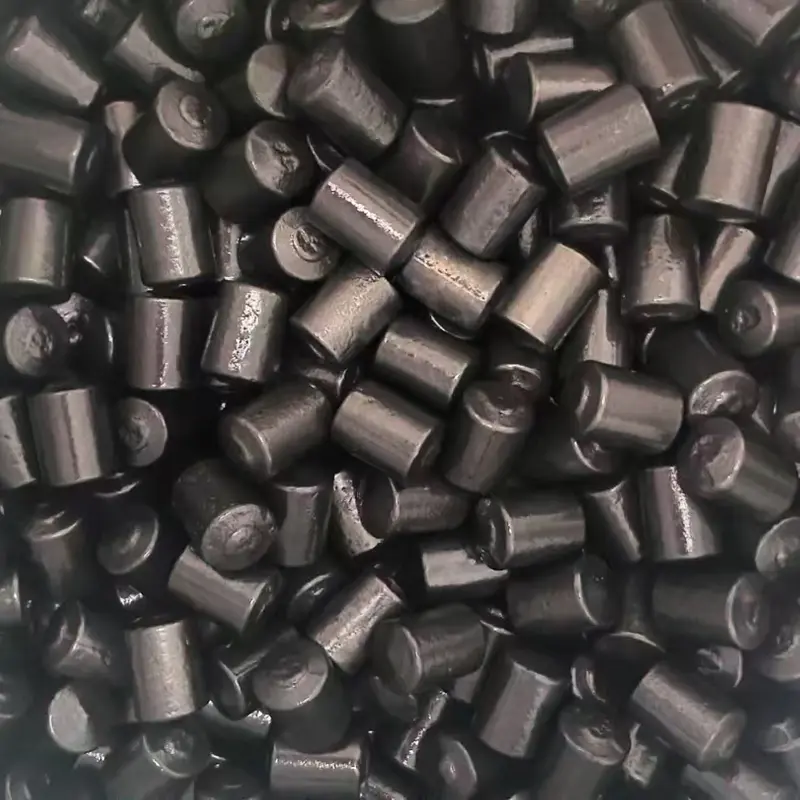
There is no universal best option. The choice depends on impact conditions, feed characteristics, product requirements, and operating environment. Compare suitable materials through technical review and, where practical, a controlled trial.
Forged balls are formed from heated steel, while cast balls are produced by pouring molten alloy into moulds. Their performance depends on chemistry, manufacturing control, heat treatment, and application—not the manufacturing label alone.
No. Hardness supports wear resistance, but suitable toughness and internal properties also matter. A material that resists abrasion but breaks under the operating impact conditions may deliver poor overall value.
A common measure is kilograms of media consumed per tonne of material processed. Over a defined period, account for additions and changes in charge inventory. Keep the measurement basis consistent when comparing products.
Some product categories serve both industries, but specifications should not be transferred automatically. Mill configuration, feed characteristics, wet or dry operation, and the required product can differ significantly.
Provide the product type, dimensions, quantity, application, destination, and technical requirements. Add private-label details, packaging instructions, inspection expectations, and required documents so the quotation can address the complete purchasing scope.
Hot Tags: China, Global, OEM, private label, manufacturers, factory, suppliers, manufacturing company


