
Views: 260 Author: shandong Allstar Grinding Ball Publish Time: 2026-11-04 Origin: Site


Content Menu
● What Blaine Fineness Means for Type I/II Cement
>> Type I/II Is a Cement Classification, Not a Fineness Grade
>> Why the Highest Blaine Is Not Always the Best Target
● Cast Grinding Cylpebs vs Grinding Balls: The Practical Differences
● Where Cast Cylpebs May Fit in a Cement Ball Mill
>> Assess the Fine-Grinding Chamber First
>> Avoid a Universal Replacement Recipe
● Why Blaine Can Improve Without Better Cement Performance
>> 1. The Circuit May Be Producing More Ultrafines
>> 2. The Separator May Be Changing the Result
>> 3. The Feed May Have Become Easier to Grind
● A Six-Step Trial for Maximizing Useful Blaine Values
>> Step 1: Establish a Stable Baseline
>> Step 2: Inspect Before Attributing Losses to Media
>> Step 3: Define the Comparison Basis
>> Step 4: Control Other Variables
>> Step 5: Separate Stabilization From Evaluation
>> Step 6: Accept Against a Balanced Scorecard
● Compare Cost per Tonne of Cement, Not Media Price Alone
>> An Illustrative Calculation
● What Buyers Should Request From a Grinding Media Supplier
● Working With SHANDONG ALLSTAR GRINDING BALL CO., LTD.
>> Are cast grinding cylpebs better than grinding balls for higher Blaine?
>> Are cylpebs a separate category from cement mill grinding media?
>> Does higher Blaine guarantee stronger Type I/II cement?
>> Can finer grinding make cement comply with Type II requirements?
>> Should a plant replace its entire second-chamber charge immediately?
>> What information does ALLSTAR need for an OEM quotation?
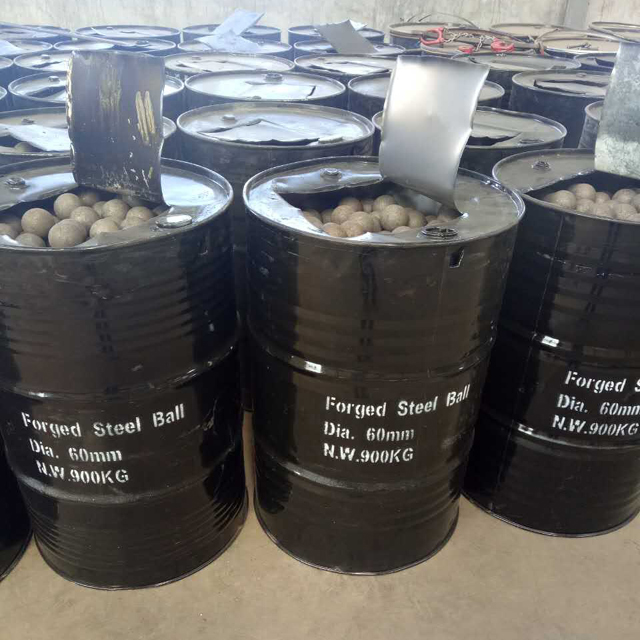
At SHANDONG ALLSTAR GRINDING BALL CO., LTD., we manufacture grinding balls, forged steel balls, cast grinding balls, grinding rods, and grinding cylpebs for mining, cement, and power applications. We also provide OEM services for international brands, wholesalers, and manufacturers.
When evaluating "cast grinding cylpebs vs cement mill grinding media for maximizing Blaine values in Type I/II cement," one distinction comes first: cylpebs are themselves cement mill grinding media. The practical comparison is between cast cylpebs and spherical grinding balls, particularly in the fine-grinding compartment.
Our recommendation is straightforward: select media by validated performance, not shape alone. The best charge delivers the required fineness, particle size distribution, and cement strength at an acceptable total operating cost.
Blaine fineness measures cement's specific surface area through an air-permeability method. Plants commonly express results in cm²/g or m²/kg; for example, 3,500 cm²/g equals 350 m²/kg.
Higher Blaine generally indicates greater measured surface area. However, it does not describe the complete particle size distribution or independently establish cement quality.
Type I cement serves general construction applications. Type II addresses general use where moderate sulfate resistance is desired. A combined Type I/II designation indicates compliance with both classifications.
Grinding finer cannot, by itself, establish Type II compliance. Chemistry and the other applicable specification requirements still matter.
Finer cement can hydrate more readily and support early strength development. Yet additional grinding consumes energy, and more surface area does not guarantee a commercially useful improvement.
Two cements can show similar Blaine values while differing in coarse residue, ultrafine content, water demand, and strength development.
For purchasing and process decisions, evaluate Blaine alongside:
- Residue on the plant's specified sieve.
- Particle size distribution.
- Early and later-age mortar strength.
- Water demand and setting behavior.
- Circuit energy consumption and saleable output.
The objective is a useful fineness window, not the highest possible laboratory reading.
Cast grinding cylpebs are short cylindrical media. Grinding balls are spherical and may be manufactured through casting or forging.
Shape affects contact patterns, packing, charge movement, and power draw. Nevertheless, shape does not operate independently of size, alloy, filling level, or mill conditions.
| Selection factor | Cast grinding cylpebs | Spherical grinding balls |
|---|---|---|
| Geometry | Cylindrical surfaces and ends | Spherical surfaces |
| Contact behavior | Different contact orientations and sliding interactions | Contacts governed by spherical geometry |
| Charge behavior | Packing and motion require application-specific evaluation | Established spherical-charge grading practices |
| Fine-grinding potential | Worth testing where contact conditions suit the feed | Smaller, properly graded balls can also grind fines effectively |
| Main comparison risk | Assuming shape guarantees higher Blaine | Assuming an existing ball charge is already optimized |
| Acceptance basis | Quality, energy, throughput, wear, and reliability | The same performance criteria |
Laboratory research does not establish a universal winner for every industrial cement circuit. Results depend on what the comparison holds constant: charge mass, occupied volume, surface area, or energy input.
That distinction matters. Equal tonnes of two differently shaped media do not necessarily create equivalent mill operating conditions.
*Suggested visual: Place a dimensioned photograph of cylpebs and grinding balls here, showing actual diameter, length, and sample identification.*
In a conventional two-compartment cement ball mill, the first chamber performs coarse grinding. Larger media and lifting liners provide the impact needed to prepare material for the second chamber.
The second chamber uses finer media to continue size reduction.
Cast cylpebs are a candidate for controlled evaluation when the plant is investigating fine-grinding performance.
However, review the entire operating environment before changing media:
- Feed particle size entering the chamber.
- Existing media grading and worn-media condition.
- Liner profile and classification behavior.
- Diaphragm openings and retention requirements.
- Ventilation and material transport.
- Separator performance and circulating load.
A media change cannot reliably compensate for blocked diaphragms, poor classification, or unsuitable feed preparation.
There is no defensible universal cylpeb size or replacement percentage for all Type I/II cement mills.
Begin with mill dimensions, operating speed, charge condition, material characteristics, and the equipment supplier's limits. Then define a trial with agreed acceptance criteria.
Replacing a healthy charge without diagnosing the actual bottleneck can add cost while leaving the underlying problem untouched.
A frequent decision-making error is treating a higher Blaine result as proof that a new media charge is superior.
Three alternative explanations deserve attention.
A finer fraction can increase measured surface area while leaving an undesirable coarse tail.
Check residue and particle size distribution rather than accepting Blaine alone. Confirm the outcome through mortar testing.
Separator settings influence finished-product fineness and the material returned to the mill.
If operating conditions change during the media trial, an apparent cylpeb advantage may partly reflect classification changes.
Document separator speed, airflow, and relevant sampling results for every comparison period.
Changes in clinker characteristics or feed size can influence grinding performance.
Record clinker source, feed distribution, additive proportions, and moisture. Compare matched operating periods rather than isolated shifts.
This diagnostic approach helps distinguish a real media benefit from normal process variation.
At ALLSTAR, our proposed decision framework starts with the customer's production requirements rather than a promised percentage improvement.
Record several representative operating periods using the current media charge.
Include:
- Finished-cement throughput.
- Clearly defined circuit power consumption.
- Blaine fineness and sieve residue.
- Particle size distribution where available.
- Cement composition and additive dosing.
- Mill temperatures and operating settings.
- Strength and setting results.
Use the same measurement boundaries throughout the trial.
During an authorized shutdown, inspect liners, diaphragms, charge grading, and worn or broken media.
Follow plant isolation and confined-space procedures. Internal inspection belongs to trained, authorized personnel.
Correct obvious maintenance deficiencies before using the baseline to judge a new charge.
Specify whether the trial compares equal charge mass, comparable filling, or another engineered condition.
Record the resulting charge volume and motor loading. Respect mill, drive, and structural limits.
This prevents a misleading comparison in which media shape and loading change simultaneously without documentation.
Keep clinker source, formulation, grinding-aid dosage, and operating settings as consistent as practical.
Where adjustments are necessary, document them. Avoid changing several major variables together and assigning the full result to cylpebs.
Do not treat the first operating hours after a charge change as the final result.
Allow the circuit to stabilize, then collect repeated samples. Longer-term monitoring is also necessary to assess wear and make-up requirements.
Approve the charge only when it meets the agreed quality and operating criteria.
A useful scorecard includes target Blaine, acceptable residue, strength development, throughput, specific energy, media consumption, and operational stability.
*Suggested visual: Add a trial dashboard comparing these indicators before and after the change, using verified plant data only.*
The lowest media purchase price does not necessarily deliver the lowest grinding cost.
Use a common production basis:
Then consider maintenance, handling, downtime, and quality-related costs where reliable records exist.
Suppose a trial reduces circuit consumption from 34 to 32 kWh/t while meeting the same quality requirements.
At an illustrative electricity price of US$0.10/kWh, the energy saving is US$0.20 per tonne of cement.
If media cost rises by US$0.05/t, the combined energy-and-media benefit is US$0.15/t before other costs.
These figures illustrate the calculation only. They are not ALLSTAR customer results or a performance guarantee.
Also define "circuit" consistently. Comparing one trial's mill-motor consumption with another trial's mill-plus-fan consumption produces an invalid conclusion.
Technical documentation makes an OEM quotation more useful and easier to compare.
For cast grinding cylpebs and grinding balls, request:
- Material designation and chemical composition.
- Nominal dimensions and tolerances.
- Hardness results and the test method.
- Relevant heat-treatment information.
- Sampling and inspection procedures.
- Batch identification and traceability.
- Agreed procedures for evaluating breakage and wear.
- Packing, labeling, and delivery requirements.
Hardness alone is insufficient. Microstructure, toughness, manufacturing consistency, and operating conditions also influence service performance.
For international OEM programs, agree on product markings, packaging artwork, inspection documents, and acceptance criteria before production.
These requirements should form part of the purchase specification rather than remain informal expectations.
ALLSTAR supplies grinding media for mining, cement, and power-sector applications, with OEM services for overseas brands, wholesalers, and manufacturers.
For a cement application, the most useful inquiry includes:
1. Mill dimensions, configuration, and operating speed.
2. Current media types, sizes, and charge quantities.
3. Feed size and cement formulation.
4. Current and target Blaine values.
5. Residue, throughput, and specific energy.
6. Available wear, breakage, and quality records.
7. Required order quantity and OEM packaging details.
This information creates a stronger basis for discussing cast cylpebs, cast grinding balls, or forged steel balls.
Send ALLSTAR your operating data and purchasing requirements to request an application-specific quotation and discuss a controlled evaluation. Set measurable acceptance criteria before committing to a full charge conversion.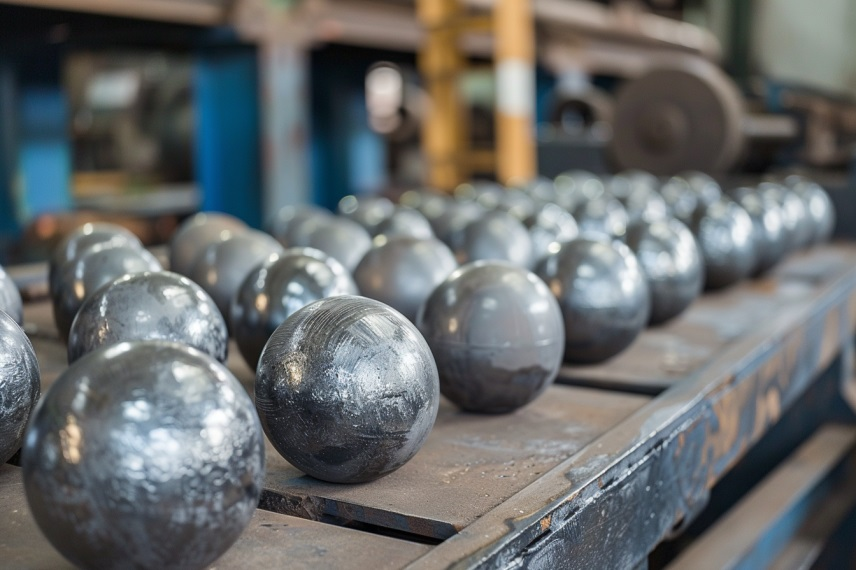
Not universally. Either can perform effectively under suitable conditions. Compare the actual charge through controlled trials that measure Blaine, residue, strength, energy, throughput, and wear.
No. Cylpebs are one form of grinding media. The useful comparison is usually cast cylpebs versus spherical balls, with size, material, and operating conditions clearly specified.
No. Strength also depends on cement composition, particle size distribution, hydration behavior, and test conditions. Confirm performance with the required mortar-strength tests.
Not by itself. Type II compliance involves applicable chemical and physical requirements. A higher Blaine value cannot substitute for specification testing.
Not without an engineering review. Examine charge condition, equipment limits, and the actual process bottleneck first. Establish a trial plan and acceptance criteria before conversion.
Provide media specifications, mill application, order quantity, destination, packaging requirements, and inspection expectations. Operating data also helps frame a meaningful application discussion.
Hot Tags: China, Global, OEM, private label, manufacturers, factory, suppliers, manufacturing company


