
Views: 220 Author: steelgrindingball Publish Time: 2026-05-09 Origin: Site


Content Menu
● Understanding the Core: Industrial Milling Dynamics
● Comparative Analysis: Media Selection Metrics
● Expert Insight: Why Quality Manufacturing Matters
● Deep Dive: Emerging Trends in Milling Media
● Enhancing Performance in Your Facility
● Frequently Asked Questions (FAQ)
For global industrial leaders in mining, cement, and power generation, the selection of grinding media is not merely a procurement decision—it is a critical performance factor. At SHANDONG ALLSTAR GRINDING BALL CO., LTD., we understand that precision in size reduction starts with the right tools. When comparing steel tumbling media vs grinding beads: industrial milling differences, industry professionals must look beyond surface appearances to understand how mass, impact energy, and material compatibility dictate process efficiency.
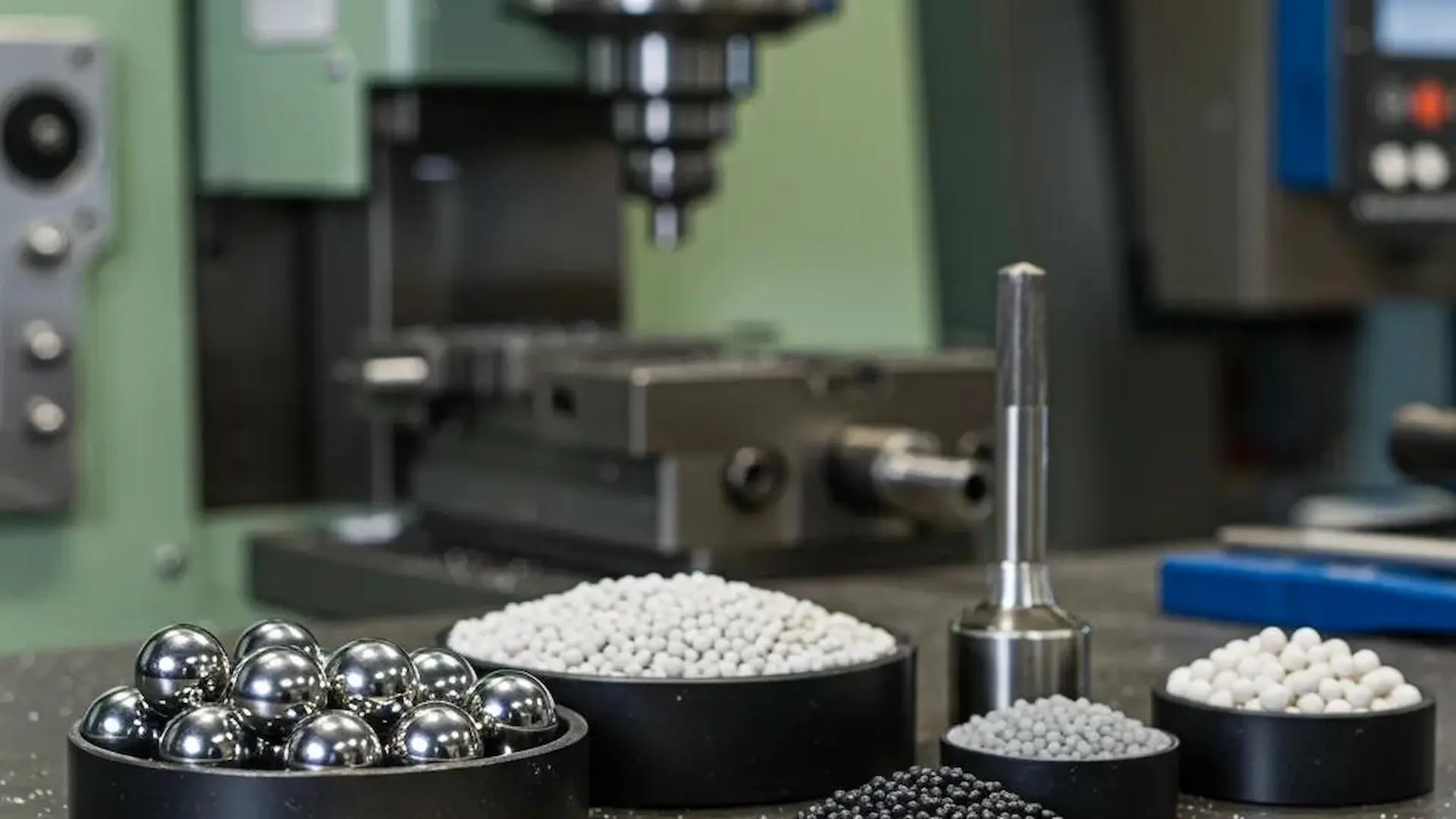
At their core, grinding media—often referred to as grinding balls or beads—are the mechanical tools within a mill used to crush, grind, and disperse feedstocks into finer, uniform particles [strindustries], [netzsch]. The primary industrial milling difference lies in the mechanism of energy transfer required for different particle size goals [kindle-tech], [iqsdirectory].
- Steel Tumbling Media (Ball/Rod Mills): Engineered for coarse, high-impact grinding. These large, heavy steel media utilize gravitational force and impact to break down large ore or material chunks [kindle-tech], [minejxsc].
- Grinding Beads (Bead/Sand Mills): Designed for fine grinding and dispersion. These smaller media operate through intense shearing forces, often in wet-milling slurries, to achieve micron or sub-micron particle sizes [farflymill].
When selecting media, the following technical properties are the primary drivers of throughput and product quality [strindustries].
| Property | Steel Tumbling Media | Grinding Beads |
|---|---|---|
| Primary Mechanism | High-Impact Crushing kindle-tech | Shear/Attrition farflymill |
| Typical Size | Large (e.g., 20mm - 120mm) | Small (e.g., 0.1mm - 5mm) |
| Target Application | Mining, Cement, Coarse Ore iqsdirectory | Pharmaceuticals, Paints, Inks farflymill |
| Density/Impact | High (High Energy) strindustries | Variable (Energy Efficient) |
As a top-tier manufacturer, SHANDONG ALLSTAR GRINDING BALL CO., LTD. emphasizes that the longevity and efficiency of your mill are directly tied to the metallurgical integrity of your media. Whether you require forged steel balls for extreme impact toughness or high-precision grinding beads for delicate dispersion, our products are engineered to minimize breakage rates and maximize wear resistance, ensuring operational continuity for our global partners [facebook].
1. Sustainability and Material Science: Modern milling is shifting toward materials that offer higher longevity, thereby reducing the environmental impact of frequent media replacements [strindustries].
2. Precision Engineering: Advances in manufacturing, such as those employed by SHANDONG ALLSTAR, ensure precise dimensional accuracy, which reduces mill liner wear and optimizes energy consumption [facebook], [strindustries].
3. Hybrid Milling Systems: Research into polydisperse media—mixing different sizes—is helping operators achieve faster throughput in complex slurry applications [sciencedirect].
To optimize your milling operation, consider these practical steps:
- Analyze Feedstock Hardness: Use denser, harder steel media for highly abrasive materials [strindustries].
- Evaluate Contamination Risk: For sensitive applications (pharmaceuticals/specialty chemicals), utilize chemically inert grinding beads to maintain purity [strindustries].
- Consult with OEM Partners: Leverage OEM relationships to conduct laboratory tests, ensuring your media size and material are perfectly matched to your specific mill type and particle size goal [netzsch].
Understanding the nuances of steel tumbling media vs grinding beads: industrial milling differences is essential for any industrial operation striving for efficiency. By choosing high-quality, purpose-engineered media, you directly impact your facility's output and cost-effectiveness. As a trusted global partner, SHANDONG ALLSTAR GRINDING BALL CO., LTD. remains committed to providing the technical expertise and superior manufacturing that your industry demands.
Contact our professional team today to receive a customized quote and optimize your milling process.
- [1] Kintek Solution - [What Is The Difference Between A Ball Mill And A Bead Mill?]
- [2] STR Industries - [Compare Grinding Media Materials: Discover the Best Choices]
- [3] NETZSCH - [Grinding Media, Grinding Balls]
- [4] FARFLY - [What is the difference between vertical sand mill and horizontal ball mills]
- [6] World Cement Engineers - [Ball Mill Media Note]
- [13] STR Industries - [Why Grinding Media Properties Matter in Milling]
1. What is the main difference between steel tumbling media and grinding beads?
The main difference is their purpose and size: steel tumbling media are large and used for coarse, high-impact grinding in ball mills, while grinding beads are small and used for fine grinding or dispersion in bead mills [kindle-tech], [farflymill].
2. Can I use steel media in a bead mill?
No, it is not recommended. Bead mills require smaller, specialized media to generate the high-shear forces needed for fine particle reduction; large steel balls could damage the equipment and fail to achieve the required fineness [farflymill].
3. How does media density affect my milling process?
Higher density media provides greater impact energy, which is better for grinding hard materials, while lower density media reduces energy consumption for specific polishing or fine dispersion tasks [wikipedia], [strindustries].
4. Why is chemical inertness important in grinding media?
In sensitive industries like pharmaceuticals or specialty chemicals, using chemically inert media prevents unwanted reactions between the media and the feedstock, ensuring product purity [strindustries].
5. How does SHANDONG ALLSTAR help with OEM service?
We provide customized manufacturing and technical consultation to ensure that the material, size, and type of grinding media perfectly match your specific mill, helping you achieve optimal production efficiency [netzsch].
Hot Tags: China, Global, OEM, private label, manufacturers, factory, suppliers, manufacturing company


