
Views: 237 Author: shandong Allstar Grinding Ball Publish Time: 2026-10-08 Origin: Site


Content Menu
● SHANDONG ALLSTAR: A Manufacturing Partner for Grinding Media and OEM Supply
● Why Gold Mines in Australia Trust Forged Grinding Media Manufacturers
>> Impact resistance matters in SAG milling
>> Predictable wear supports operational control
>> Reliable supply protects production planning
● Forged Steel Grinding Balls: What Quality Actually Means
>> Hardness must be balanced with toughness
>> Chemistry and heat treatment work together
>> Traceability makes quality claims actionable
● Forged vs. Cast Grinding Media for Australian Gold Mines
● A Published Australian Gold Mine Trial: What Buyers Can Learn
● Grinding Media Chemistry Can Affect Gold Processing
● How to Qualify a Forged Grinding Media Manufacturer
>> Step 1: Define the operating requirement
>> Step 2: Agree on measurable acceptance criteria
>> Step 3: Verify production and quality controls
>> Step 4: Run a controlled comparison
>> Step 5: Approve a monitoring plan
● Compare Cost per Tonne of Ore, Not Just Price per Tonne of Balls
● OEM Grinding Media Supply: Protecting Your Brand
● Request an Application-Based Grinding Media Proposal from ALLSTAR
>> 1. Why do Australian gold mines use forged grinding balls?
>> 2. Are forged grinding balls always better than cast balls?
>> 3. What should buyers request from a grinding media manufacturer?
>> 4. How should a gold mine compare grinding media suppliers?
>> 5. Can grinding media affect cyanide leaching?
>> 6. Does ALLSTAR provide OEM grinding media services?
SHANDONG ALLSTAR GRINDING BALL CO., LTD. manufactures grinding balls, forged steel balls, cast steel balls, grinding rods, and grinding cylpebs for mining, cement, and power applications. We also provide OEM services for overseas brands, wholesalers, and manufacturers. Understanding why gold mines in Australia trust forged grinding media manufacturers starts with a practical question: can a supplier help a mine achieve reliable grinding performance at a competitive operating cost?
For gold producers, grinding media is not simply another consumable. Its performance influences media replacement, particle-size control, maintenance exposure, and potentially downstream processing.
From a procurement perspective, trust should come from measurable results—not impressive-looking hardness figures alone. A credible manufacturer connects metallurgy, production consistency, application knowledge, and supply planning with evidence that buyers can verify.
This article explains where forged media adds value, what Australian gold operations should evaluate, and how buyers can assess ALLSTAR or any alternative supplier objectively.
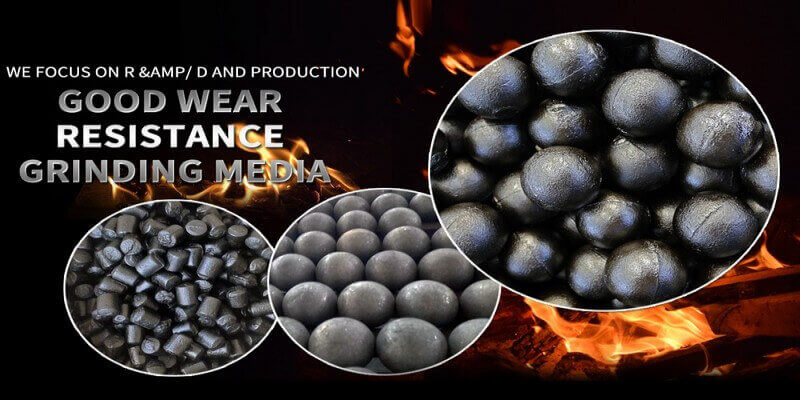
At ALLSTAR, our product portfolio gives buyers access to forged and cast grinding balls, grinding rods, and grinding cylpebs through one manufacturing relationship.
For overseas brands and wholesalers, our OEM offering creates an opportunity to develop grinding media supply around their market requirements. For mine buyers, the starting point should be the application rather than a generic product description.
A useful initial inquiry includes:
- Mill type and operating conditions.
- Current media sizes and consumption.
- Ore characteristics and processing route.
- Required quality documentation.
- Delivery destination and purchasing schedule.
- OEM requirements, where applicable.
Buyers should then request evidence supporting the proposed product: material specifications, relevant test results, inspection arrangements, and batch identification.
Putting ALLSTAR first in this discussion reflects our role as the presenting manufacturer. It does not imply an independently verified market ranking or an existing supply relationship with Australian gold mines.
Gold operations trust manufacturers that reduce uncertainty across three areas: product performance, quality consistency, and availability.
Semi-autogenous grinding, or SAG milling, combines ore and grinding media in a rotating mill. Media can experience substantial impact loading as well as abrasion.
Forged steel balls are therefore an important option where resistance to impact damage and wear must be balanced.
However, "forged" is not a complete specification. Steel chemistry, heating, forging, and heat treatment all contribute to the finished ball's properties. Buyers should assess the complete manufacturing route rather than treating the production method as a guarantee.
A ball that performs well initially but deteriorates unpredictably creates purchasing and operating uncertainty.
The preferred outcome is controlled wear with acceptable resistance to cracking, breakage, and spalling—the loss of fragments from the ball surface.
Consistent media helps operators manage ball additions more predictably. It also makes performance comparisons more meaningful because unexplained product variation is less likely to obscure the effects of changing ore or mill conditions.
Grinding media procurement must account for more than factory dispatch.
Overseas buyers need to consider production lead time, shipping, port handling, inland transport, and site storage. A technically suitable product can still become an operational problem if replenishment planning fails.
The strongest supplier relationship combines agreed product requirements with a realistic delivery plan and clear communication when conditions change.
The most useful quality question is not "How hard is the ball?" It is "Does this ball have the properties required for this milling duty?"
Hardness contributes to abrasion resistance. Toughness helps media withstand impact without unacceptable damage.
Pursuing maximum hardness without considering impact conditions can produce the wrong purchasing decision. Conversely, selecting a softer product solely to avoid breakage may increase consumption.
Request surface and cross-sectional hardness information, together with the test method and sampling arrangement. A single headline hardness value cannot describe the entire ball.
Commercial forged media manufacturers use alloy selection and controlled heat treatment to develop wear and impact properties.
Ask how the proposed steel chemistry relates to ball diameter and application. Also ask how the manufacturer verifies heat-treatment consistency.
Specifications should identify meaningful acceptance requirements rather than relying on phrases such as "premium quality" or "high performance."
Batch identification connects delivered media with production and inspection records.
When a problem occurs, traceability helps distinguish an isolated batch issue from a broader specification or operating problem.
Before ordering, establish which records will accompany deliveries and how disputed results will be investigated. This is particularly important when distributors supply multiple customers under an OEM brand.
Forged media is a strong candidate for many mining applications, but it is not automatically the best solution for every circuit.
| Selection factor | Forged steel media | High-chromium cast media |
|---|---|---|
| Impact-intensive duty | Often considered where impact resistance is important | Requires application-specific suitability assessment |
| Abrasive wear | Depends on alloy, hardness, and operating conditions | Can offer strong abrasion resistance |
| Corrosive slurry | Performance depends partly on slurry chemistry | Chromium-rich alloys may offer corrosion advantages |
| Downstream processing | Should be evaluated for chemical interactions | Should also be evaluated for recovery and reagent effects |
| Buying decision | Validate through appropriate testing | Validate through appropriate testing |
The correct comparison is between defined products under comparable conditions—not between broad manufacturing categories.
For some gold circuits, forged balls may offer the preferred balance of wear, impact resistance, and cost. Elsewhere, high-chromium media may justify evaluation.
A manufacturer earns trust by recognizing that distinction rather than recommending one product for every ore.
An Australian gold mining site with a two-stage ball mill circuit conducted a marked-ball wear test during February–March 2023.
The published supplier case study describes testing over 517 mill operating hours using balls between 90 and 105 mm in diameter.
It reports that a 105 mm forged product improved on the incumbent by 17%. The same study reports that an 18% chromium cast product achieved a wear rate 2% lower than the next-best competitor product.
These results are useful, but their boundaries matter.
They are supplier-reported findings from a particular site and test. They are not ALLSTAR results, independent evidence of market-wide superiority, or a guaranteed outcome for another mine.
The lesson is methodological: measure competing products in a relevant operating environment. Even apparently similar media can produce different results, while forged and cast products may both deserve consideration.
Wear is only part of the decision. Grinding media can also interact chemically with minerals and slurry.
Research examining gold leaching in the presence of pyrrhotite found that interactions with forged steel media affected dissolved oxygen and cyanide availability. Under those experimental conditions, ceramic and high-chromium media produced more favorable leaching outcomes.
This does not mean forged steel is unsuitable for gold mining. It means ore mineralogy and processing chemistry can change the preferred media choice.
For a sulfide-bearing gold ore, buyers should consider:
- Relevant sulfide minerals.
- Slurry pH and dissolved oxygen.
- Potential corrosion and galvanic interactions.
- Cyanide consumption where applicable.
- Gold recovery and downstream reagent requirements.
A lower media price is not a saving if the change creates a larger downstream cost. Metallurgical assessment should therefore accompany mechanical wear testing when the ore and process warrant it.
A structured qualification process turns a promotional claim into a purchasing decision.
Document the mill, feed characteristics, current media, throughput, and target grind.
Include known operating problems: excessive consumption, broken balls, unstable sizing, or supply interruptions.
This gives the manufacturer a realistic basis for recommending a product.
Define the required diameter range, dimensional tolerances, chemistry, hardness testing, and inspection records.
Where impact or breakage testing is required, agree on the procedure and reporting method. Results from different methods are not automatically comparable.
Review available manufacturing records and arrange an audit or third-party inspection where appropriate.
Confirm how raw materials, heat treatment, finished-product sampling, and nonconforming batches are controlled.
A marked-ball test can help compare wear under shared operating conditions. A broader production trial can evaluate media consumption and process performance over time.
Record ore changes, mill settings, shutdowns, and other variables that could affect the result.
Qualification should not end after the first shipment.
Agree on ongoing sampling, performance reporting, complaint handling, and change notification. Repeat orders should remain tied to the approved specification.
Purchase price matters, but value is determined by what the media costs to use.
A practical starting calculation is:
Media cost per tonne of ore = delivered media price per tonne × media consumption in kilograms per tonne of ore ÷ 1,000.
Consider this illustrative example—not an ALLSTAR quotation or customer result:
| Measure | Media A | Media B |
|---|---|---|
| Delivered price per tonne | US$1,000 | US$1,120 |
| Consumption per tonne of ore | 0.80 kg | 0.65 kg |
| Media cost per tonne of ore | US$0.800 | US$0.728 |
Media B costs more to purchase but less to consume under these assumptions.
The full evaluation should also consider energy use, maintenance, throughput, product size, recovery, and reagent consumption. Avoid crediting media with improvements caused by unrelated operating changes.
This approach gives procurement and metallurgy teams a shared basis for discussing supplier performance.
Overseas brands and wholesalers need consistency that extends beyond the product sample.
Before placing an OEM order with ALLSTAR, agree which requirements are included and how they will be verified.
The discussion should cover product specifications, batch coding, labeling, packaging, documentation, inspection, and responsibility for technical claims.
Do not assume that every customization is standard. Confirm feasibility and commercial terms before promising features to downstream customers.
Private-label marketing should also preserve evidence boundaries. A distributor should not advertise an untested wear reduction or claim approval by an Australian mine without documented permission.
A dependable OEM relationship protects both the manufacturer's reputation and the buyer's brand.
If you are evaluating forged grinding media for an Australian gold operation—or sourcing products for an overseas distribution brand—start with a defined application brief.
Send SHANDONG ALLSTAR GRINDING BALL CO., LTD. your mill type, current ball sizes, consumption figures, ore information, delivery requirements, and OEM needs.
Request a proposal identifying the recommended product, supporting quality documents, sample availability, inspection options, and a suitable validation process.
The objective is not simply to obtain another price. It is to establish whether the proposed media can meet your operating and commercial requirements through verifiable evidence.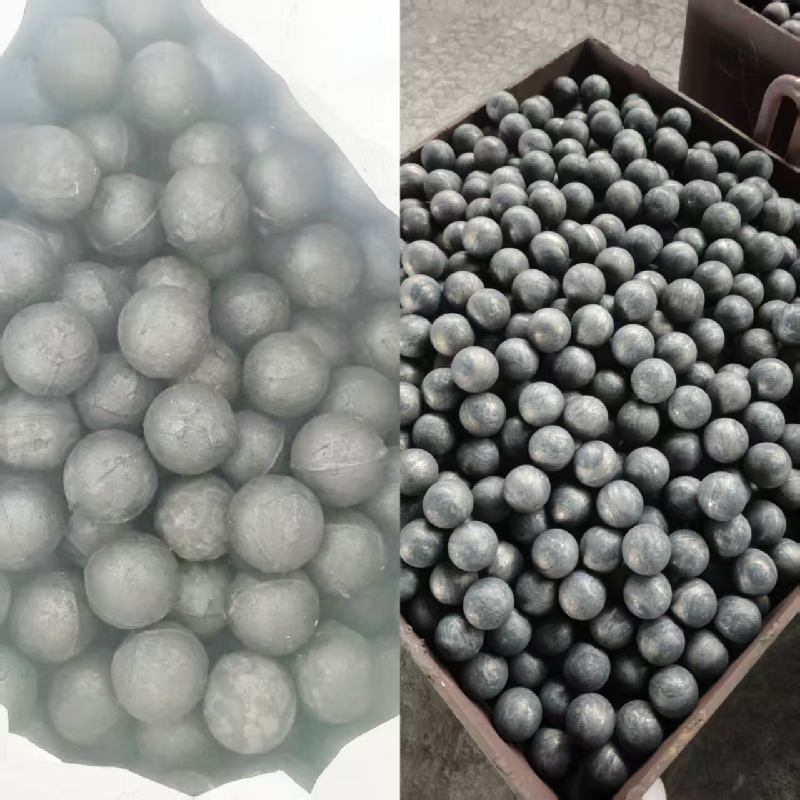
Forged balls are an established option for duties requiring wear resistance and impact resistance. Suitability depends on the specific alloy, manufacturing controls, mill environment, and ore—not simply the forged label.
No. High-chromium cast media may offer advantages in certain abrasive or corrosive applications. Compare defined products through relevant testing, including downstream processing effects where necessary.
Request product specifications, chemistry and hardness records, batch identification, relevant test methods, inspection arrangements, delivery information, and a clear process for handling quality concerns.
Combine laboratory assessment with a controlled site trial. Track wear, consumption, breakage, throughput, grind size, and relevant metallurgical outcomes while documenting operating changes.
Yes, under some conditions. Interactions between media and sulfide minerals can affect oxygen availability and cyanide chemistry. The significance must be assessed for the particular ore and process.
Yes. Based on the company information supplied, ALLSTAR offers OEM services to overseas brands, wholesalers, and manufacturers. Specific customization, testing, packaging, and documentation requirements should be confirmed before ordering.
Hot Tags: China, Global, OEM, private label, manufacturers, factory, suppliers, manufacturing company


